Health
What are quick tips for Great Dane heart conditions?
Ensure regular vet check-ups and maintain a balanced diet to support heart health. Exercise should be moderate and tailored to avoid overexertion.

Quick answer
What are quick tips for Great Dane heart conditions?
Ensure regular vet check-ups and maintain a balanced diet to support heart health. Exercise should be moderate and tailored to avoid overexertion.
Great Dane heart conditions can be serious and require attention. These issues can affect your dog's quality of life and longevity.
New owners, especially those unfamiliar with large breeds, often struggle with the nuances of heart care for their Great Danes. Additionally, owners of aging dogs might find themselves facing these challenging health issues.
This guide is not medical advice. If your dog shows pain, sudden behavior change, or worsening symptoms, consult a licensed veterinarian.
Some links may be affiliate links. We may earn a commission at no extra cost to you. We only suggest products we believe are helpful for dog owners.
We research and check what we publish, but we do not warrant that any figure, date, price, or statement is accurate, complete, or current, and we accept no liability for any loss, cost, injury, or other harm arising from the use of this site. Use it as one reference among several. You remain responsible for your own decisions and for your dog's care - confirm anything that matters with a licensed veterinarian or another qualified professional before you act on it. Full disclaimer.
Check this first
Recognizing when a heart condition in your Great Dane becomes an emergency is crucial. Some signs require immediate veterinary attention, while others may allow for monitoring. Understanding these differences can help you respond quickly and effectively.
Red-Flag Signs Needing Immediate Attention: - Severe lethargy or weakness. If your Great Dane can't get up or seems excessively tired, this is a major red flag. - Difficulty breathing or persistent coughing. If your dog is panting heavily or struggling to breathe, call your vet right away. - Swollen abdomen or signs of bloat. This can indicate serious conditions like GDV, which can be fatal without prompt treatment. - Unexplained fainting or collapsing. If your Great Dane loses consciousness, you should rush them to a vet immediately.
Mild Cases to Monitor: - Occasional coughing or wheezing. If it is infrequent and not accompanied by other severe symptoms, keep an eye on it but consult your vet if it persists. - Slight lethargy. If your dog seems a bit off but still engages in normal activities, you may monitor them for changes. - Reduced appetite or mild digestive issues. If your Great Dane is still drinking water and showing some interest in food, you can wait before calling the vet but don’t hesitate if symptoms worsen.
Always trust your instincts. If you're unsure, it's better to err on the side of caution and consult your veterinarian. Quick action can make a significant difference in the health outcomes for your beloved Great Dane.
If any of these apply, call your vet or an emergency clinic now. The rest of this page is for the cases that are not an emergency.
Great Dane heart conditions can be serious and affect their daily life. These gentle giants often face issues like dilated cardiomyopathy, which can lead to weakness, coughing, or even collapse. Owners may notice their Great Dane tiring quickly during walks or showing signs of distress after minimal exertion.
Heart conditions are relatively common in Great Danes, especially as they age. Many owners report these issues, particularly with dilated cardiomyopathy, which can significantly impact a dog's quality of life.
Great Danes are prone to specific heart conditions, such as dilated cardiomyopathy (DCM). This genetic predisposition can lead to weakened heart muscles and reduced blood flow. Their large size also places extra strain on their hearts, making them more vulnerable to these issues.
Environmental factors like diet, stress, and lack of exercise can contribute to heart conditions. Feeding a high-quality diet and ensuring regular physical activity are essential for heart health. Additionally, stressful situations can exacerbate existing conditions, so creating a calm home environment is crucial.
If you notice any unusual symptoms, like coughing, lethargy, or difficulty breathing, contact your vet immediately. These could be signs of serious heart conditions that require prompt attention.
Avoiding certain behaviors can help improve your Great Dane's heart conditions. Here are some common mistakes owners make that can hinder progress.
Start here: Great Dane Most Common Genetic Disorders: What to Screen For
See all Great Dane health problems, which breeds are prone to heart conditions, or the full Great Dane breed guide for temperament, exercise needs and ownership costs.
Managing Great Dane heart conditions typically takes several months of consistent care and monitoring. You'll want to regularly check in with your vet and adjust treatments as necessary.
Success looks like your Great Dane showing improved energy levels, a balanced diet that's tailored to their needs, and stable health check-ups that indicate their heart condition is under control.
When Sarah adopted Max, her gentle giant, she quickly noticed he seemed less energetic than expected. After a vet visit, she learned Max had dilated cardiomyopathy, a common heart condition in Great Danes. Determined to help him, Sarah worked closely with her vet to create a specialized diet and exercise plan. They monitored his progress, adjusting his routine as needed. Over time, Sarah saw improvements in his stamina and overall joy. Max now enjoys daily walks and playtime, balancing activity with rest.
Key takeaway: Proactive vet care and a tailored approach can significantly improve the quality of life for Great Danes with heart conditions.
Great Danes are prone to specific heart conditions such as dilated cardiomyopathy, which can be hereditary. Factors like diet, exercise, and overall health can also influence their heart health. Regular veterinary check-ups are crucial for early detection.
To help prevent heart conditions in your Great Dane, focus on a balanced diet and regular exercise. Avoid overfeeding and maintain a healthy weight. Schedule routine vet visits to monitor their heart health.
Look for signs like fatigue, coughing, difficulty breathing, and a swollen abdomen. If your Great Dane shows any of these symptoms, it's essential to consult a veterinarian promptly. Early intervention can make a significant difference.
While training won't cure heart conditions, it can help manage your dog's overall behavior and stress levels. A calm and well-trained Great Dane may experience less anxiety, which can be beneficial for their heart health.
Treatment options vary based on the specific heart condition diagnosed. Medications, dietary changes, and in some cases, surgery may be necessary. Always follow your veterinarian's recommendations for the best outcome.
Yes, a heart-healthy diet rich in omega-3 fatty acids and low in sodium can be beneficial for Great Danes with heart conditions. Consult your vet for tailored dietary advice that suits your dog's needs.
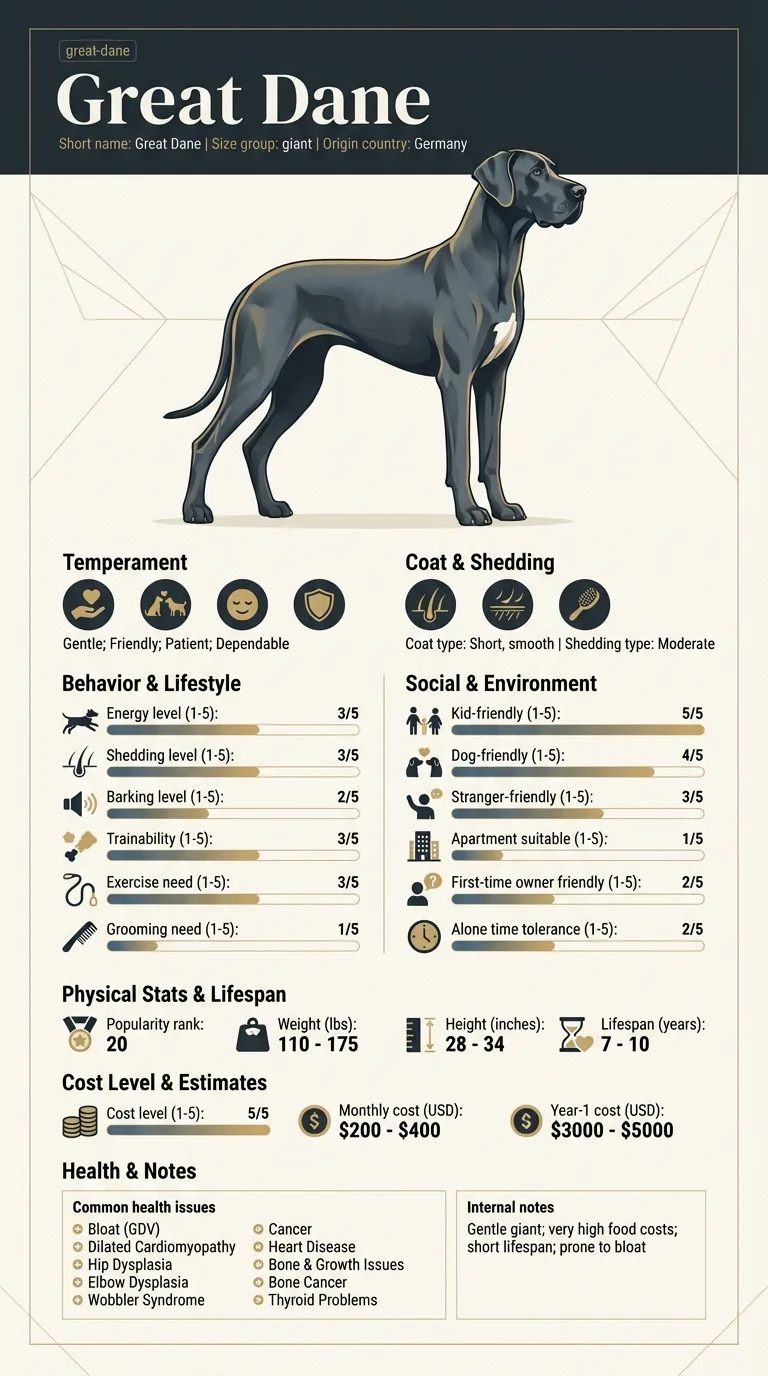
The lifespan of a Great Dane with heart conditions can be affected significantly by the severity of the condition and management. With proper care, some may live comfortably for several years, but their lifespan may be shorter than the average 7-10 years.
Yes, older Great Danes are more susceptible to heart conditions due to age-related changes in their cardiovascular system. Regular check-ups with your veterinarian can help catch any issues early.
Managing a Great Dane's heart condition may involve medication, dietary changes, and controlled exercise. Always follow your vet's specific recommendations for the best results.
Some bloodlines may have a higher prevalence of genetic heart issues. Researching a breeder’s health testing practices can help you find healthier puppies.
You should seek immediate veterinary care if your Great Dane shows severe difficulty breathing, collapses, or has a prolonged episode of coughing. Quick action can be crucial in these situations.
Ensure regular vet check-ups and maintain a balanced diet to support heart health. Exercise should be moderate and tailored to avoid overexertion.
Watch for symptoms like lethargy, coughing, and difficulty breathing. Early detection is key to managing heart conditions effectively.
Incorporate a low-sodium diet and moderate exercise into your Great Dane's routine. Stress reduction through training can also aid their heart health.
Treating heart conditions can range from a few hundred to several thousand dollars depending on the required medications and procedures. Budget for ongoing vet visits and treatments.
Generally, yes, but monitor their activity levels and stress during play. A calm environment is beneficial for their heart health.
A one-page prep sheet for this condition: the signs, the questions to ask, what to get priced. Unlocks here.
You get: Vet visit prep sheet
No spam. One-click unsubscribe. See our privacy policy.
Preview page 1 before you decide.