Health
What are Golden Retriever von Willebrand's disease (vWD1) quick tips?
Keep your dog calm and avoid rough play to prevent injuries. Regular vet check-ups are essential for managing vWD1 effectively.
Golden Retriever von Willebrand's disease (vWD1) is a genetic bleeding disorder that can affect your dog's health significantly.
Typically, owners of Golden Retrievers may face challenges with vWD1, especially if their dog experiences unusual bleeding or bruising. First-time dog owners may find this condition particularly concerning, as they navigate the complexities of canine health.
This guide is not medical advice. If your dog shows pain, sudden behavior change, or worsening symptoms, consult a licensed veterinarian.
Some links may be affiliate links. We may earn a commission at no extra cost to you. We only suggest products we believe are helpful for dog owners.
Golden Retriever von Willebrand's disease (vWD1) is a genetic bleeding disorder that affects the blood's ability to clot properly. Day-to-day, this can lead to excessive bleeding from minor cuts, prolonged bleeding after surgery, or spontaneous bleeding episodes. It's particularly concerning for active Golden Retrievers who may injure themselves while playing.
Von Willebrand's disease is more common in Golden Retrievers than in many other breeds. It affects approximately 1 in 100 dogs, but the prevalence can be higher in certain lines.
Golden Retrievers are prone to von Willebrand's disease (vWD1) due to their genetic makeup. This inherited condition affects blood clotting and is more common in this breed. If your Golden exhibits symptoms, it's essential to understand that genetics play a significant role.
Environmental factors can also impact your Golden's health. Stressful situations or injuries can trigger bleeding episodes. Keeping your dog calm and safe from accidents is vital to minimize risks related to this condition.
If your Golden Retriever displays signs of anxiety or fear that may lead to accidents, consider consulting a trainer. They can help address behavioral issues and create a more relaxed environment for your dog.
Consult your vet if you notice any unusual bleeding or if your Golden has been diagnosed with vWD1. Regular check-ups are essential to manage this condition effectively and ensure your dog's health.
Managing von Willebrand's disease (vWD1) in your Golden Retriever typically takes ongoing effort. With proper care, you can expect to see improvements in your dog's health and quality of life within a few months. Regular vet visits and consistent monitoring are essential.
Success means your Golden Retriever experiences fewer bleeding episodes and maintains a happy, active lifestyle. You'll also feel more confident in managing their health and understanding their needs.
Avoiding common mistakes can help manage Golden Retriever von Willebrand's disease (vWD1) more effectively. Here are some behaviors to steer clear of.
You should seek immediate veterinary attention if your dog exhibits any of the following symptoms: - Excessive bleeding from cuts or during surgery - Blood in urine or stool - Unexplained bruising or swelling - Persistent nosebleeds - Weakness or lethargy after minor injuries These signs suggest your dog may be experiencing a serious bleeding episode, which requires urgent medical intervention.
On the other hand, mild cases can often be monitored at home. If your dog has a known diagnosis of vWD1 but shows no severe symptoms, keep an eye on their behavior and health. In these instances, a plan can be developed with your vet to manage their condition effectively.
For example, if your Golden has had a minor cut that stops bleeding quickly and shows no other concerning signs, you can observe them at home. Monitoring their daily activities and keeping track of any changes can help you gauge their well-being.
Being aware of these distinctions can help ensure your Golden Retriever receives the right care at the right time. If you're ever in doubt, it’s always safer to consult your vet.

When Sarah adopted Bella, her Golden Retriever, she quickly noticed that Bella bruised easily and had prolonged bleeding from minor cuts. After a vet visit, Sarah learned Bella had von Willebrand's disease (vWD1). This news was overwhelming, but Sarah was determined to help her dog. She began a routine of regular check-ups, a special diet, and careful monitoring of Bella's activity level. Over time, Bella's condition improved, and Sarah learned how to manage it effectively, allowing Bella to live a happy, active life.
Key takeaway: With the right care and knowledge, you can manage your Golden Retriever's vWD1 and ensure they lead a fulfilling life.
Golden Retriever von Willebrand's disease (vWD1) is a genetic bleeding disorder that affects the blood's ability to clot. This means dogs with vWD1 may bleed excessively from minor injuries or during surgery. It’s important to recognize the signs and consult your vet for proper management.
vWD1 is inherited from the dog's parents, so if your Golden Retriever has it, it likely came from a genetic predisposition. Breeders should perform genetic testing to avoid passing this condition to puppies. If your dog exhibits symptoms, get a diagnosis from your vet.
Managing vWD1 involves regular vet check-ups and monitoring for bleeding episodes. Your vet may recommend avoiding high-risk activities that could lead to injuries. It's also crucial to inform your vet before any surgical procedures.
Yes, you can train your Golden Retriever with vWD1, but be mindful of their physical activities. Focus on low-impact training and avoid rough play that could lead to injuries. Positive reinforcement methods work best for this breed.
There are treatments like desmopressin that can help manage bleeding episodes. However, this should only be given under the guidance of your vet. Regular monitoring and proper care are key to managing your dog's condition.
Signs of bleeding include excessive bruising, nosebleeds, or prolonged bleeding from cuts. If you notice any of these symptoms, contact your vet immediately. Early intervention can help manage the condition more effectively.
Preventing complications involves regular vet visits, avoiding high-risk situations, and keeping your dog calm and safe. Always have a plan in place for emergencies, especially if your dog is injured. Open communication with your vet is essential.
If your Golden Retriever shows any signs of bleeding, such as nosebleeds or excessive bruising, contact your vet immediately. It's crucial to get a professional diagnosis to determine if it's related to von Willebrand's disease (vWD1) or another issue.
Yes, older Golden Retrievers can show signs of von Willebrand's disease (vWD1), especially if they have a genetic predisposition. Regular check-ups can help catch any symptoms early, so be vigilant as your dog ages.
When training a Golden Retriever with von Willebrand's disease (vWD1), focus on gentle techniques and avoid high-impact activities. Keep training sessions short and positive to ensure your dog remains engaged without overexertion.
While there's no specific diet for von Willebrand's disease (vWD1), a well-balanced diet can support your dog's overall health. Consult your vet for personalized dietary recommendations that can help manage your dog's health.
Golden Retrievers can inherit von Willebrand's disease (vWD1) due to genetics. It's important to understand that this bleeding disorder is not caused by anything you've done; it's a hereditary condition that can affect certain breeds.
Keep your dog calm and avoid rough play to prevent injuries. Regular vet check-ups are essential for managing vWD1 effectively.
Use positive reinforcement and focus on low-impact activities. Avoid any training that could lead to injuries.
Apply pressure to the wound and contact your vet immediately. Quick action can help manage bleeding effectively.
Yes, von Willebrand's disease is more common in Golden Retrievers than in some other breeds. Responsible breeding practices can help reduce its prevalence.
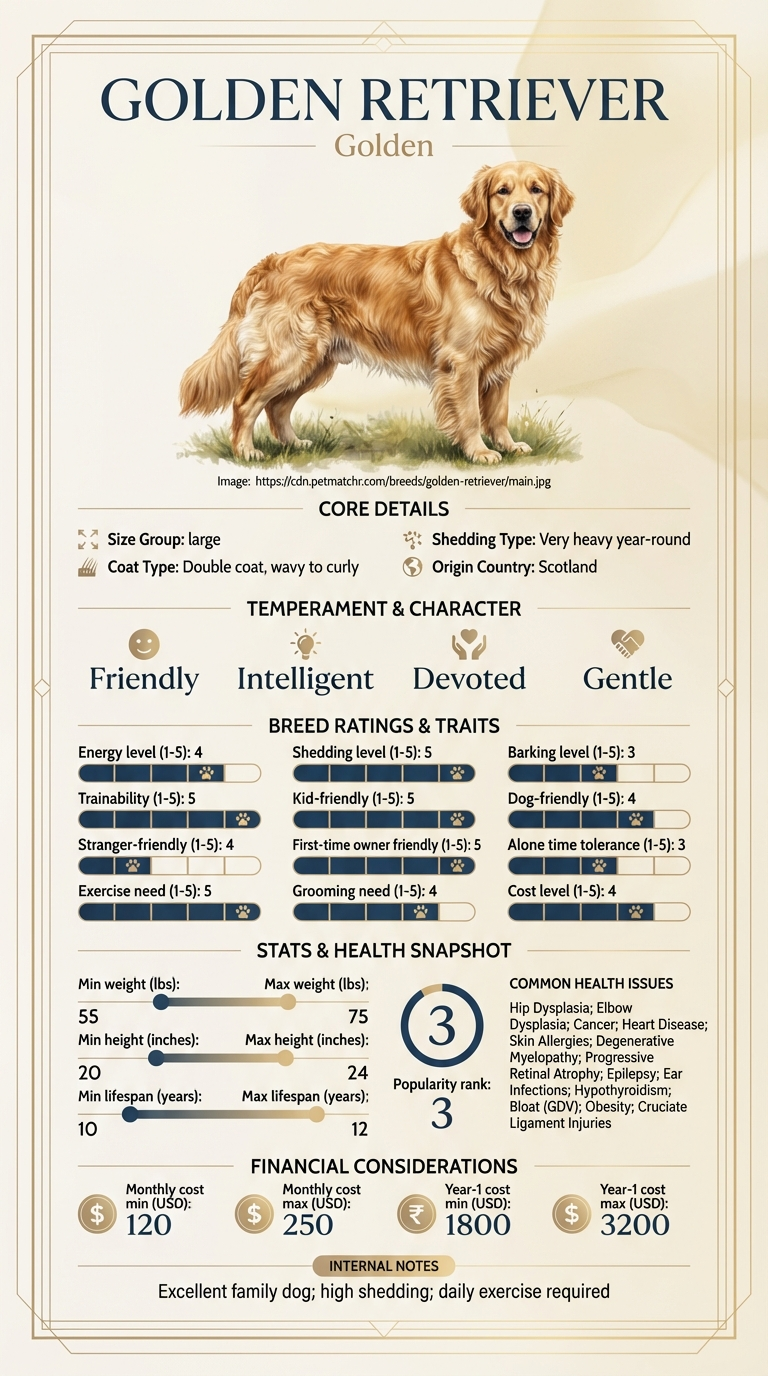
Managing vWD1 can vary but may include regular vet visits, medication, and emergency care. Expect costs to range from $120 to $250 monthly.

