Living
What is the key takeaway?
This is a sample quick answer for validation purposes.

Quick answer
What is the key takeaway?
This is a sample quick answer for validation purposes.
Learn why Golden Retrievers develop separation anxiety and follow a clear, step-by-step plan to help your dog stay calm when you leave the house.
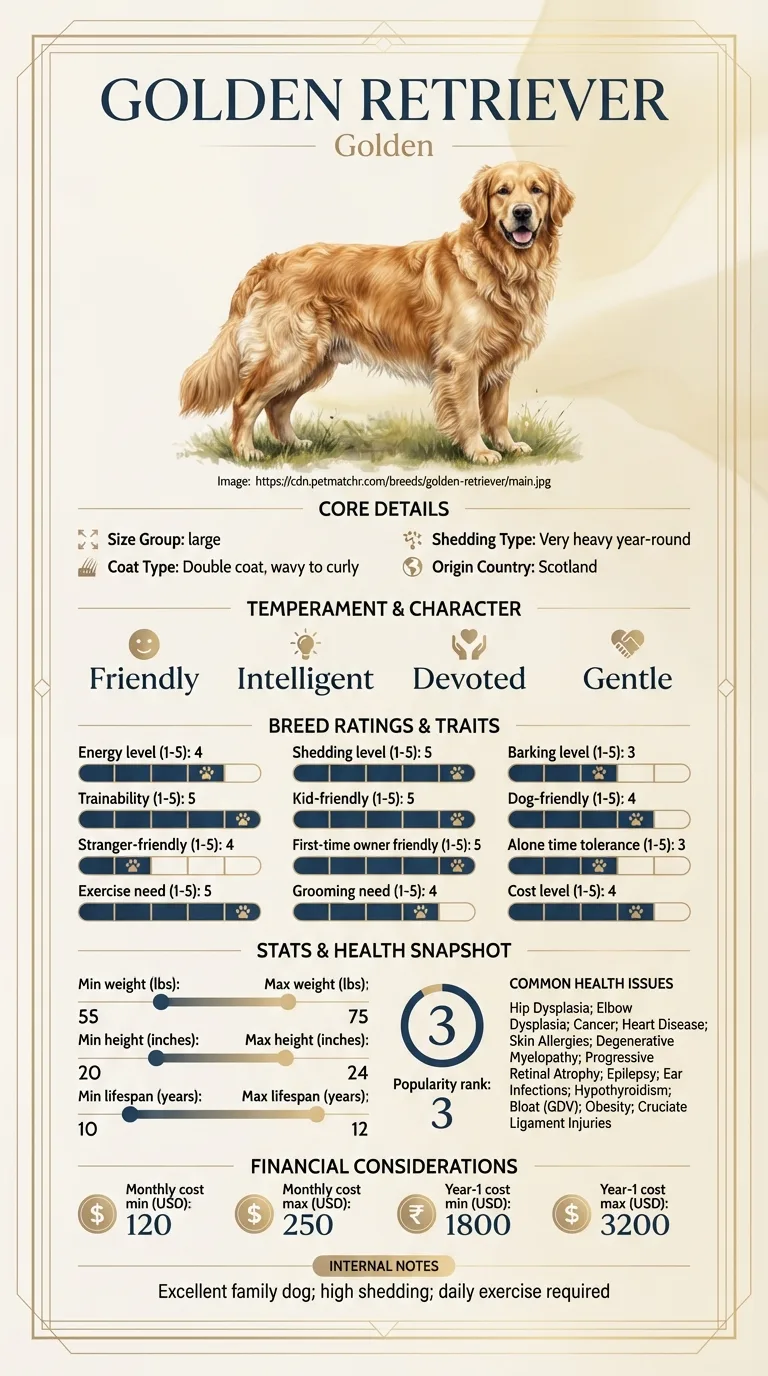
Owners of this breed often face this issue due to natural instincts.
This guide is not medical advice. If your dog shows pain, sudden behavior change, or worsening symptoms, consult a licensed veterinarian.
Some links may be affiliate links. We may earn a commission at no extra cost to you. We only suggest products we believe are helpful for dog owners.
We research and check what we publish, but we do not warrant that any figure, date, price, or statement is accurate, complete, or current, and we accept no liability for any loss, cost, injury, or other harm arising from the use of this site. Use it as one reference among several. You remain responsible for your own decisions and for your dog's care - confirm anything that matters with a licensed veterinarian or another qualified professional before you act on it. Full disclaimer.
If your Golden Retriever cries, barks or destroys things whenever you leave, you’re not alone. This breed bonds deeply with their people and can struggle when suddenly left alone.
Common for this breed.
Very people-oriented temperament and constant human contact
Sudden change in routine (new job schedule, moving, breakup, etc.)
If your Golden is breaking teeth or nails trying to escape, losing weight, or you’re getting complaints from neighbors, it’s time to get professional help.
If behavior changes suddenly or is severe.
Start here: Golden Retriever Most Common Genetic Disorders: Screening
See all Golden Retriever health problems, which breeds are prone to separation anxiety, or the full Golden Retriever breed guide for temperament, exercise needs and ownership costs.
Varies by dog, typically weeks to months.
Most adult Golden Retrievers can eventually learn to stay alone for 4–6 hours at a time, but you can’t jump from 'never alone' to '6 hours alone' overnight.





The behaviours owners notice first are usually the ones a neighbour reports: sustained howling or barking that starts within minutes of the door closing, scratching or chewing at the door or its frame, and house-soiling from a dog that is otherwise reliably clean.
What separates separation anxiety from boredom is the timing and the intensity. A bored dog chews something interesting at some point during the day. An anxious dog begins to panic as you prepare to leave — pacing, following you from room to room, drooling, refusing food — and the worst of the behaviour happens in the first fifteen to thirty minutes. Drool marks on the door, worn nails, or a dog that is still panting when you get home all point that way.
Goldens are over-represented in this problem for a straightforward reason. The breed was selected for close, sustained co-operation with a handler; being near people is what it was built to do. That is the same trait that makes them excellent family dogs, and it does not have an off switch when the family leaves.
The core of every evidence-based approach is the same: teach the dog that being alone is unremarkable, in doses small enough that it never panics.
Start below the threshold where distress begins. For some dogs that is thirty seconds; for others it is picking up your keys and sitting back down. Build up gradually and only when the previous step is genuinely boring to the dog. Progress is measured in weeks, and the single most common mistake is moving too fast because a good day looks like a cure.
Two things make it harder. Leaving the dog for a full working day while you are training undoes the training, so cover — a walker, daycare, a family member — is part of the plan rather than a luxury. And punishment for the mess or the noise makes it worse, because the behaviour is fear, not disobedience.
If the dog is injuring itself, breaking out of crates, or making no progress after several weeks, that is the point to involve your vet. Severe cases are treated with a combination of behaviour work and medication, and a veterinary behaviourist can assess whether that is appropriate.
A typical case starts the way most owners find out: a neighbour mentions howling, or a camera shows the dog pacing and drooling within ten minutes of the door closing. The damage is at the door, not in the middle of the room, and the food left down at breakfast is untouched at lunch. Week one is measurement, not training. The owner records what actually happens and finds the point at which the dog starts to worry — often before the door even opens, at the sound of keys. That point, not the clock, is where the plan starts. Weeks two to six are absences short enough to stay boring: keys picked up and put down, the door opened and closed, then thirty seconds outside, then two minutes. Cover during the working day — a walker, daycare, a family member — runs alongside, because a dog left to panic for eight hours undoes the training done that morning. Progress is not linear; a good week is often followed by a setback for no visible reason. Cases that stall here are the ones that need a vet rather than more repetitions. Self-injury, escape attempts, or no movement after several weeks of consistent work are the signals to ask about referral to a veterinary behaviourist, where behaviour work and medication are considered together.
Key takeaway: Absence training only works below the threshold where the dog starts to panic — find that point first, and arrange daytime cover so the training is not undone every afternoon.
Some mild anxiety improves with age and routine, but true separation anxiety usually needs training. Waiting and hoping often makes the pattern deeper and harder to change.
A second dog adds more energy, cost and training needs. If your Golden is attached to you, not just lonely, another dog may not fix the core issue – and you now have two untrained dogs.
Good calming products can take the edge off and make training easier, but they’re not magic. Think of them as support for a solid training plan, not the entire solution.
Mild cases often improve within a few weeks of consistent absence training. Moderate to severe cases usually take months, and progress is rarely linear — a good week is often followed by a setback for no obvious reason. Anyone promising a quick fix is describing a different problem.
Only if the dog is already comfortable in the crate. For a dog that panics when alone, a crate can turn distress into injury — broken nails, damaged teeth, and worse. If the dog scrabbles, drools or tries to escape, use a dog-proofed room instead and talk to your vet before crating.
This is a sample quick answer for validation purposes.
Behaviour changes often start with pain. The prep sheet for this page covers what to rule out, and what to ask.
You get: Vet visit prep sheet
No spam. One-click unsubscribe. See our privacy policy.
See a sample page before you decide.