Behavior
What are quick tips for managing behavior in Golden Retrievers?
Establish a routine, provide daily exercise, and engage in training sessions regularly. Positive reinforcement can help improve behavior effectively.

Quick answer
What are quick tips for managing behavior in Golden Retrievers?
Establish a routine, provide daily exercise, and engage in training sessions regularly. Positive reinforcement can help improve behavior effectively.
Understanding the differences between Golden Retriever purebreds and mixed breeds is vital for potential dog owners. This choice can affect health, temperament, and training needs.
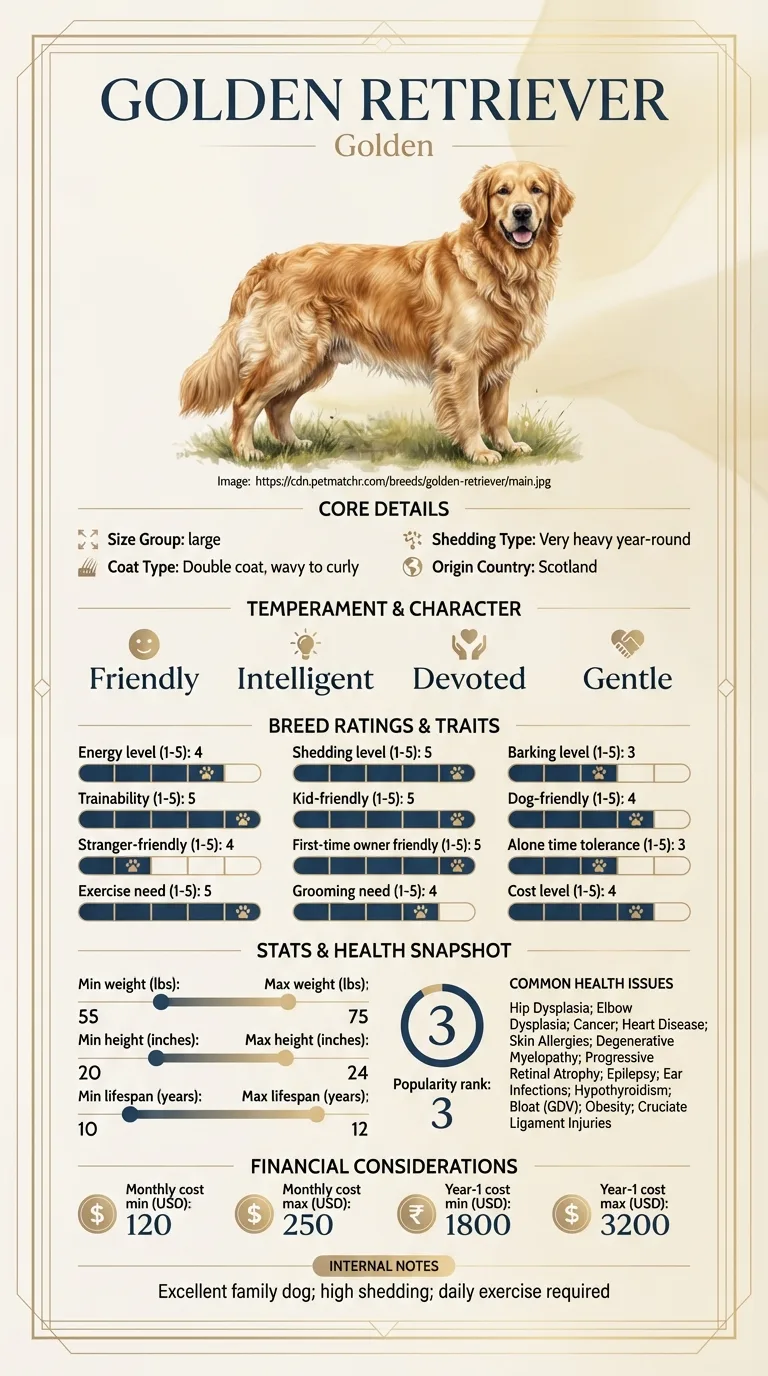
First-time dog owners, families with kids, and people living in varied environments often face this dilemma. They want a loving companion but need to consider factors like health risks and training needs.
This guide is not medical advice. If your dog shows pain, sudden behavior change, or worsening symptoms, consult a licensed veterinarian.
Some links may be affiliate links. We may earn a commission at no extra cost to you. We only suggest products we believe are helpful for dog owners.
We research and check what we publish, but we do not warrant that any figure, date, price, or statement is accurate, complete, or current, and we accept no liability for any loss, cost, injury, or other harm arising from the use of this site. Use it as one reference among several. You remain responsible for your own decisions and for your dog's care - confirm anything that matters with a licensed veterinarian or another qualified professional before you act on it. Full disclaimer.
Check this first
Call your vet immediately if you notice any of the following red-flag signs: sudden lethargy, persistent vomiting, difficulty breathing, or severe pain. These symptoms can indicate serious health issues that require prompt treatment. Also, if your Golden Retriever displays unusual aggression or fear, don't hesitate to seek professional help.
On the other hand, mild cases can often be monitored. If your dog is having minor behavioral issues, such as pulling on the leash or being a bit more anxious than usual, you can create a plan to address these concerns. Consistent training and positive reinforcement typically help resolve these less urgent issues.
Remember to observe your Golden Retriever closely. If you notice changes in appetite, minor anxiety, or occasional barking, these can often be managed with patience and training. However, always err on the side of caution.
If anything feels off, a quick call to the vet can provide peace of mind.
If any of these apply, call your vet or an emergency clinic now. The rest of this page is for the cases that are not an emergency.
When considering Golden Retriever purebred vs. mixed breeds, owners often face specific challenges. A purebred Golden may exhibit more predictable traits, but they can come with higher health risks. For example, purebreds are 1.9 times more likely to develop cancer compared to their mixed-breed counterparts, which can lead to increased stress and potential medical costs.
Golden Retrievers, whether purebred or mixed, often encounter these problems. Many owners report a range of behavior issues, especially in purebreds, making awareness of these challenges essential. Understanding these dynamics can help owners make informed decisions.
Golden Retrievers, as a popular purebred, may inherit specific health issues from their lineage. This can include genetic predispositions to conditions like hip dysplasia or certain types of cancer. Mixed breeds often have a wider genetic diversity, which can sometimes lead to fewer inherited health problems.
Environmental factors also play a significant role in a dog's health and behavior. Stressful living conditions, like a noisy city environment or lack of space for exercise, can exacerbate issues in both purebred and mixed breeds. Additionally, inadequate socialization or training can lead to behavioral problems in any dog.
If you notice persistent anxiety or behavioral issues, consider speaking with your vet. They can rule out any underlying health problems or suggest appropriate treatments. Regular check-ups are also essential for monitoring breed-specific health risks like hip dysplasia or other concerns.
Avoiding these common mistakes can help improve your Golden Retriever's behavior and overall well-being. Here are some key pitfalls to watch out for.
Start here: Golden Retriever Most Common Genetic Disorders: Screening
See all Golden Retriever health problems, which breeds are prone to purebred vs mixed breeds, or the full Golden Retriever breed guide for temperament, exercise needs and ownership costs.
You can expect to see progress in understanding the differences between Golden Retrievers and mixed breeds within a few weeks. Care should show results in 2-3 months with consistent effort.
Success means being confident in your dog's traits and needs, knowing how to manage their behavior, and feeling secure in your choice of a purebred or mixed breed Golden.
Sarah, a busy nurse in Chicago, always dreamed of having a Golden Retriever. She faced a dilemma between adopting a purebred or a mixed breed. After doing her research, she chose a mixed breed, hoping to avoid common health issues. Initially, her dog, Max, struggled with anxiety and barking, which led to sleepless nights. With the help of a local trainer and consistent routines, Sarah learned to manage Max's behavior. Over time, they developed a strong bond, and Max became much calmer. Sarah realized that while Max was different from a purebred, he brought just as much joy to her life.
Key takeaway: Choosing a mixed breed can be just as rewarding as a purebred, especially when you invest in training and understand their unique needs.
Golden Retrievers can experience behavior issues whether they are purebred or mixed. These problems may arise from genetics, environment, or training methods. Understanding these factors can help you address your dog's specific needs. This answer relates to Golden Retriever purebred vs. mixed breeds.
To stop behavior issues, start with consistent training and socialization. Use positive reinforcement techniques and provide plenty of exercise to keep your Golden engaged. If problems persist, consult a professional trainer for tailored advice.
While purebred Golden Retrievers may have a higher tendency for specific health issues, behavior problems can occur in both purebred and mixed breeds. Factors like upbringing and training play a significant role in shaping behavior.
Positive reinforcement training is highly effective for Golden Retrievers. Use treats, praise, and playtime to encourage good behavior. Consistency is key, so ensure everyone in the household follows the same training techniques.
Yes, mixed-breed Golden Retrievers may inherit different traits from their parent breeds. This can lead to variations in temperament and behavior. Understanding your dog's unique background can help tailor your approach to training and care.
Signs of struggle may include anxiety, aggression, or excessive barking. If you notice these behaviors, it may be time to reassess your dog's training and socialization. Seeking advice from a veterinarian or trainer can provide clarity.
Golden Retriever purebreds are statistically more prone to certain health issues, such as cancer and hip dysplasia. In contrast, mixed breeds tend to have a lower risk of these genetic problems. This means that while purebreds can be more predictable in temperament, mixed breeds may offer better overall health.
Yes, mixed breed Golden Retrievers can exhibit similar temperament traits, such as friendliness and intelligence. However, their behavior can vary based on the other breeds in their lineage. It's essential to meet the individual dog to gauge its temperament.
Training can be similar for both purebred and mixed breed Golden Retrievers, as both are generally intelligent and eager to please. However, mixed breeds might inherit diverse traits from their parent breeds, which can influence their training responsiveness. Tailoring training methods to fit each dog's unique personality is key.
Purebred Golden Retrievers may exhibit certain behavioral issues, such as separation anxiety, due to their strong bond with families. While mixed breeds can also experience this, it's important to understand that each dog is unique. Early socialization and training can help mitigate these issues.
When deciding between a purebred and a mixed breed Golden Retriever, consider factors such as health risks, temperament, and training needs. Purebreds may offer predictability in behavior but come with potential health concerns. Mixed breeds can be healthier but may present more variability in temperament.
Establish a routine, provide daily exercise, and engage in training sessions regularly. Positive reinforcement can help improve behavior effectively.
Training costs can range from $200 to $1,500 depending on the type of classes or private sessions you choose. Factor this into your overall ownership costs.
Be aware of common health issues like hip dysplasia and skin allergies. Regular vet check-ups can help catch problems early.
A one-page prep sheet for this condition: the signs, the questions to ask, what to get priced. Unlocks here.
You get: Vet visit prep sheet
No spam. One-click unsubscribe. See our privacy policy.
Preview page 1 before you decide.