Behavior
What are quick tips for managing PRA in Golden Retrievers?
Create a familiar space, use voice commands, and avoid moving furniture to help your dog navigate safely. Regular vet visits are crucial for monitoring their condition.

Quick answer
What are quick tips for managing PRA in Golden Retrievers?
Create a familiar space, use voice commands, and avoid moving furniture to help your dog navigate safely. Regular vet visits are crucial for monitoring their condition.
Golden Retriever progressive retinal atrophy (PRA) is a serious condition that leads to progressive vision loss in your dog.
Owners of Golden Retrievers, especially those with older dogs, often face this challenge. Many are concerned about their pet's well-being and how to best support them as they cope with vision loss.
This guide is not medical advice. If your dog shows pain, sudden behavior change, or worsening symptoms, consult a licensed veterinarian.
Some links may be affiliate links. We may earn a commission at no extra cost to you. We only suggest products we believe are helpful for dog owners.
We research and check what we publish, but we do not warrant that any figure, date, price, or statement is accurate, complete, or current, and we accept no liability for any loss, cost, injury, or other harm arising from the use of this site. Use it as one reference among several. You remain responsible for your own decisions and for your dog's care - confirm anything that matters with a licensed veterinarian or another qualified professional before you act on it. Full disclaimer.
Check this first
You should call your vet immediately if you notice the following red flags: sudden changes in behavior, such as confusion or disorientation; severe changes in vision, like bumping into objects; or signs of pain, like whining or excessive blinking. These symptoms suggest that your dog's condition may be worsening or that something else is affecting their eyes.
In less urgent cases, you can monitor your dog for mild signs of PRA. These may include slow or gradual vision loss, difficulty seeing in low light, or a slight change in how they navigate familiar spaces. Keeping a close eye on these symptoms will help you track any progression in the condition.
Always keep your vet in the loop about any changes in your dog’s behavior or vision. Your vet can guide you on when to be concerned and what steps to take next. Regular check-ups are essential, especially for conditions like PRA that can progress over time.
If any of these apply, call your vet or an emergency clinic now. The rest of this page is for the cases that are not an emergency.
Golden Retriever progressive retinal atrophy (PRA) is a genetic eye disorder that leads to gradual vision loss. Day-to-day, you may notice your Golden Retriever bumping into furniture or hesitating in unfamiliar spaces. This condition often starts with difficulty seeing in low light and can progress to complete blindness over time.
PRA is relatively common in Golden Retrievers, with estimates suggesting that about 10-15% of the breed may be affected. Regular eye exams can help catch this issue early, allowing for better management of your dog's vision health.
Golden Retrievers are prone to genetic conditions like progressive retinal atrophy (PRA) due to their breeding history. This inherited disease affects the retina, leading to gradual vision loss. It's essential to understand that PRA is more prevalent in certain lines of Golden Retrievers.
Environmental factors can also contribute to eye health issues in Golden Retrievers. Poor nutrition, lack of regular veterinary check-ups, and exposure to harmful substances can exacerbate genetic predispositions. It's crucial to provide a healthy environment to support your dog's overall well-being.
If you notice any changes in your dog's vision, such as bumping into objects or reluctance to move, consult your vet promptly. Regular check-ups are essential for early detection of PRA and other health issues. Your vet can recommend treatments or management strategies to help your dog cope.
Many owners unknowingly contribute to worsening Golden Retriever progressive retinal atrophy (PRA). Here are some common mistakes to avoid and better alternatives to consider.
Start here: Golden Retriever Most Common Genetic Disorders: Screening
See all Golden Retriever health problems, which breeds are prone to progressive retinal atrophy pra, or the full Golden Retriever breed guide for temperament, exercise needs and ownership costs.
Managing Golden Retriever progressive retinal atrophy (PRA) is a long-term commitment. You may start noticing changes in your dog's vision within the first few months of diagnosis. Over the next few years, the progression can vary, but many dogs adjust well to their new limitations with time, patience, and care.
Success means your dog learns to navigate their environment with confidence despite vision loss. This can include mastering basic commands, using scent and sound to find their way, and maintaining a happy and active lifestyle.
When Emily adopted Max, her Golden Retriever, she never expected to face the challenges of progressive retinal atrophy (PRA). At first, Emily noticed Max bumping into furniture and hesitating on walks. After a vet confirmed PRA, she felt overwhelmed. But instead of giving up, Emily sought help from a dog trainer experienced in working with visually impaired dogs. Together, they developed a routine that included teaching Max verbal cues and using scent trails to guide him. Over time, Max learned to navigate his home confidently and even enjoyed playing fetch with his favorite squeaky toy, relying more on his other senses.
Key takeaway: With patience and the right training, it’s possible for dogs with PRA to lead fulfilling lives. A supportive owner can make all the difference in helping their dog adapt.
PRA is usually inherited and is caused by genetic mutations specific to Golden Retrievers. If your dog has PRA, it may be due to genetics, particularly if their parents or littermates also had the condition. Regular vet check-ups can help catch issues early.
Managing PRA involves creating a safe environment for your dog and helping them adapt to their vision loss. Use consistent layouts, avoid moving furniture, and provide voice commands to guide them. Training can help your dog navigate their surroundings confidently.
Currently, there is no cure for PRA, but certain treatments may help manage symptoms. Consulting with a veterinary ophthalmologist can provide options, including dietary supplements and specialized care for vision-impaired dogs.
To help your Golden Retriever cope with vision loss, maintain a consistent environment and use tactile cues. Engage in low-impact activities that don't require sight, like scent games, and always provide reassurance and positive reinforcement during training.
Signs of PRA can include difficulty navigating in low light, bumping into objects, or hesitance in unfamiliar environments. If you notice these behaviors, consult your veterinarian for a comprehensive eye examination.
Yes, progressive retinal atrophy is a common genetic issue in Golden Retrievers. Responsible breeding practices can help reduce its prevalence, so always ask about the genetic history of the parents when considering a puppy.
Early signs of Golden Retriever progressive retinal atrophy (PRA) may include difficulty seeing in low light and bumping into objects. You might also notice your dog hesitating to navigate familiar areas. If you observe these changes, consult your vet for a proper diagnosis.
Yes, older Golden Retrievers can develop progressive retinal atrophy (PRA), though it is often hereditary. If your senior dog shows signs of vision loss, it's important to get them checked by your veterinarian. Early detection can help manage the condition more effectively.
To help your Golden Retriever with progressive retinal atrophy (PRA), maintain a consistent home environment and keep furniture in the same place. You can also engage in training exercises that enhance their other senses. Always consult your vet for tailored advice and support.
No, progressive retinal atrophy (PRA) is not painful. It primarily affects vision as the retinal cells deteriorate. However, your dog may feel disoriented or anxious due to their changing vision, so providing a stable environment is crucial.
If you suspect your Golden Retriever has progressive retinal atrophy (PRA), schedule an appointment with your veterinarian. They can perform tests to confirm the diagnosis and discuss management options. Early intervention can help improve your dog's quality of life.
Create a familiar space, use voice commands, and avoid moving furniture to help your dog navigate safely. Regular vet visits are crucial for monitoring their condition.
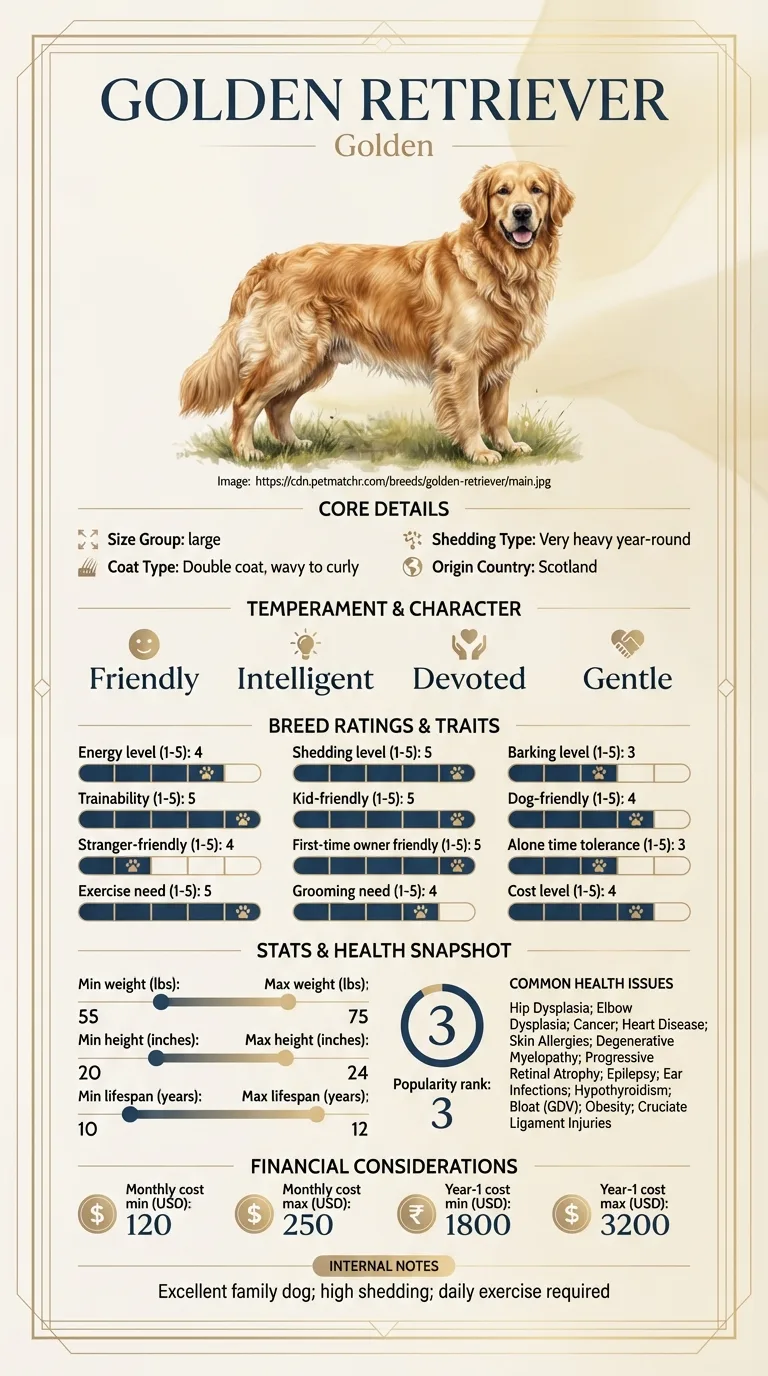
Monthly costs can range from $120 to $250, depending on your dog's needs and any specialized treatments. Factor in regular vet visits and any adaptive equipment.
If you notice signs of PRA, such as difficulty seeing in low light or bumping into things, consult your veterinarian for a thorough eye examination.
Yes, training is essential to help your dog adjust to vision loss. Focus on verbal commands and positive reinforcement to build their confidence.
A one-page prep sheet for this condition: the signs, the questions to ask, what to get priced. Unlocks here.
You get: Vet visit prep sheet
No spam. One-click unsubscribe. See our privacy policy.
Preview page 1 before you decide.
