Training
What are quick tips to manage Golden Retriever excessive barking?
Provide plenty of exercise, use training commands like 'quiet,' and avoid reinforcing barking by giving attention when they bark. Consistency in training is crucial.

Quick answer
What are quick tips to manage Golden Retriever excessive barking?
Provide plenty of exercise, use training commands like 'quiet,' and avoid reinforcing barking by giving attention when they bark. Consistency in training is crucial.
Golden Retriever excessive barking can be a real challenge for owners, often leading to frustration and misunderstandings.
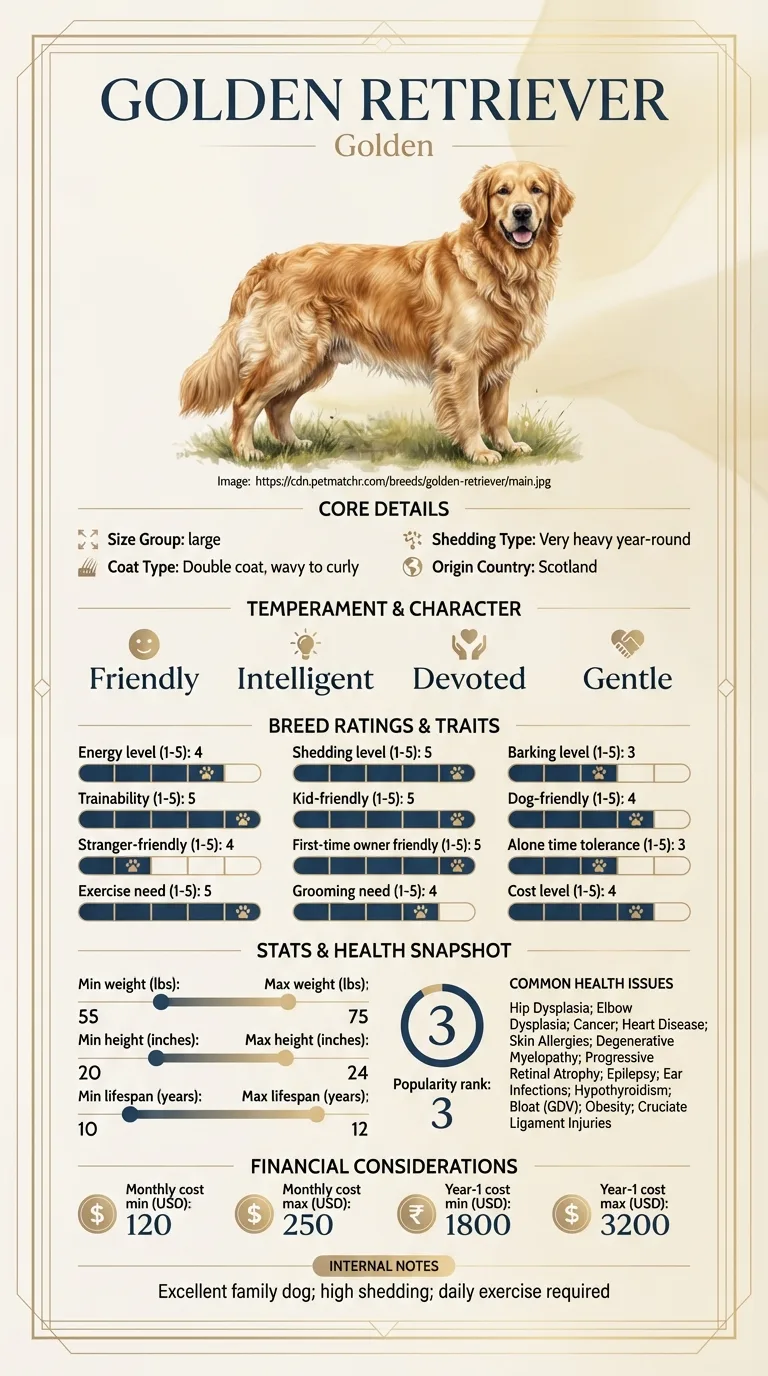
Typically, new dog owners or busy families with hectic schedules find themselves struggling with this issue. Those who live in apartments or close-knit neighborhoods may especially notice the noise, as their Golden Retriever's barking can disturb neighbors and disrupt the peace.
This guide is not medical advice. If your dog shows pain, sudden behavior change, or worsening symptoms, consult a licensed veterinarian.
Some links may be affiliate links. We may earn a commission at no extra cost to you. We only suggest products we believe are helpful for dog owners.
We research and check what we publish, but we do not warrant that any figure, date, price, or statement is accurate, complete, or current, and we accept no liability for any loss, cost, injury, or other harm arising from the use of this site. Use it as one reference among several. You remain responsible for your own decisions and for your dog's care - confirm anything that matters with a licensed veterinarian or another qualified professional before you act on it. Full disclaimer.
Golden Retriever excessive barking is a common issue that many owners face. These friendly and intelligent dogs often bark to communicate, alert, or express excitement. Daily life with a Golden who barks excessively can be challenging, especially when they bark at passing cars, strangers, or even the mailman. This behavior can lead to frustration for owners and potential complaints from neighbors.
Excessive barking is relatively common among Golden Retrievers. While they are generally well-mannered, many Goldens may bark more than expected, especially if they are not adequately trained or socialized. Understanding this behavior is crucial for owners to manage it effectively.
Golden Retrievers are naturally vocal dogs, which means they may bark more than other breeds. Their friendly and alert nature can lead them to bark at strangers, other dogs, or even just to get attention. Additionally, their intelligence and high energy levels require mental and physical stimulation; if they feel bored or under-exercised, they may resort to barking as a way to express frustration.
The environment plays a big role in excessive barking. If a Golden Retriever is left alone for long periods, they might bark out of loneliness or separation anxiety. Living in a noisy area, such as near busy streets or construction sites, can also trigger barking as they react to unfamiliar sounds. Lastly, a lack of proper training or socialization can lead to a dog barking excessively to communicate discomfort or alert their owners.
If your Golden Retriever's excessive barking continues despite your efforts, it may be time to consult a professional trainer. A trainer can assess your dog's behavior, help you identify triggers, and provide personalized strategies to address the barking issue effectively.
If your dog's barking seems sudden or is accompanied by signs of distress, such as whining, pacing, or other behavioral changes, it’s a good idea to consult your veterinarian. They can rule out any underlying health issues or anxiety disorders that may be causing the excessive barking.
Start here: Golden Retriever Most Common Genetic Disorders: Screening
See all Golden Retriever health problems, which breeds are prone to excessive barking, or the full Golden Retriever breed guide for temperament, exercise needs and ownership costs.
With consistent training and patience, you can expect to see improvements in your Golden Retriever's excessive barking within 4 to 8 weeks.
Success looks like your dog barking less frequently, responding better to commands, and being calmer in situations that previously triggered excessive barking.
Here are some common mistakes that can unintentionally encourage your Golden Retriever's excessive barking, along with safer alternatives to help manage the behavior.
While barking is a normal behavior for dogs, excessive barking can sometimes indicate a serious issue. It’s essential to know when to intervene and when to monitor the situation. Here are some signs that suggest you should contact your vet immediately:
- Sudden Onset: If your Golden Retriever suddenly starts barking excessively and it's out of character for them, it could signal pain or distress. - Signs of Distress: Look for signs like pacing, whining, or excessive drooling alongside the barking. These can indicate anxiety or fear that requires professional help.
- Injury: If the barking is accompanied by visible injuries or if your dog seems to favor a limb, this could be a serious issue. - Health Changes: Changes in appetite, energy level, or behavior combined with excessive barking warrant a vet visit. These could indicate underlying health problems such as pain or illness.
- Barking at Nothing: If your dog barks at seemingly empty spaces or non-existent sounds, it may be a sign of neurological issues.
On the other hand, there are cases where it’s best to take a wait-and-see approach:
- Environmental Triggers: If your Golden is barking at noises like sirens or other dogs, it may just be a reaction to their environment. Monitor the situation and consider training to help reduce this behavior. - Boredom or Lack of Exercise: Excessive barking can stem from boredom.
If your dog is getting enough exercise and mental stimulation, this might just be a phase. - Attention Seeking: If your Golden barks for attention but shows no signs of distress, you can work on ignoring the behavior to discourage it.
Understanding these signs can help you decide when to act quickly and when to calmly address the barking with training and patience.

Emily, a busy nurse in Chicago, loved her Golden Retriever, Max. However, she was struggling with his excessive barking, especially in the evenings when she came home exhausted. Max would bark at every passing car and even at the mailman. This left Emily feeling overwhelmed and frustrated. She decided to tackle the problem by enrolling in a training class focused on barking control. With the help of a trainer, Emily learned to redirect Max's barking using positive reinforcement techniques. They practiced commands like 'quiet' and rewarded him with treats when he complied. After a few weeks of dedication, Max started to respond better, barking less often and relaxing when visitors arrived. Emily also learned the importance of giving Max enough exercise, which helped reduce his energy levels and barking triggers. Now, their evenings are much quieter, and Emily can enjoy her time at home with Max without the constant barking.
Key takeaway: With patience and the right training techniques, you can significantly reduce your Golden Retriever's excessive barking.
Golden Retrievers may bark excessively for a variety of reasons, including boredom, anxiety, or a desire for attention. It's important to observe what triggers the barking, such as strangers passing by or being left alone. Identifying the cause can help you address the issue effectively.
To stop Golden Retriever excessive barking, start by providing regular exercise and mental stimulation to reduce boredom. Training techniques, such as teaching the 'quiet' command and rewarding calm behavior, can also be effective. Consistency is key, so ensure everyone in the household applies the same rules.
Yes, training methods like positive reinforcement can be very effective. Use treats and praise when your Golden remains quiet during triggers. Gradually expose them to the situations that cause barking while rewarding calm behavior to help them learn to stay quiet.
Yes, separation anxiety is a common cause of excessive barking in Golden Retrievers. If your dog barks when you leave, consider gradually training them to be alone for short periods, rewarding them for calmness. You might also explore interactive toys to keep them occupied.
If your Golden Retriever barks at strangers, start socializing them from a young age. Introduce them to various people, rewarding calm behavior. If they continue to bark, work on commands like 'leave it' or 'quiet' to redirect their focus and reduce barking.
Golden Retrievers may bark excessively due to boredom, anxiety, or a need for attention. They are naturally vocal dogs, and if they are not getting enough exercise or mental stimulation, they may resort to barking out of frustration.
If your Golden Retriever barks excessively when left alone or in stressful situations, it could indicate separation anxiety. Look for other signs like destructive behavior or pacing, and consider consulting a vet or trainer for help.
If your older Golden Retriever starts barking excessively, it may be due to health issues or cognitive decline. Schedule a vet appointment to rule out any medical concerns, and consider adjusting their routine to provide more comfort and engagement.
Yes, positive reinforcement training is effective for reducing excessive barking in Golden Retrievers. Reward your dog for quiet behavior and redirect them with commands or toys when they start barking. Consistency is key in training.
If your Golden Retriever's excessive barking persists despite your efforts, it's a good idea to consult a professional dog trainer or behaviorist. They can provide personalized guidance and strategies tailored to your dog's needs.
Provide plenty of exercise, use training commands like 'quiet,' and avoid reinforcing barking by giving attention when they bark. Consistency in training is crucial.
A Golden Retriever typically needs at least 1-2 hours of exercise daily. Regular walks, playtime, and mental stimulation can help reduce barking caused by boredom.
While some owners consider anti-bark collars, they should be used cautiously. It's often better to address the root cause through training and behavior modification.
Behaviour changes often start with pain. The prep sheet for this page covers what to rule out, and what to ask.
You get: Vet visit prep sheet
No spam. One-click unsubscribe. See our privacy policy.
Preview page 1 before you decide.