Behavior
What are some quick tips for Golden Retriever back problems?
Keep your Golden at a healthy weight and provide low-impact exercise. Avoid letting them jump from heights to reduce strain on their back.

Quick answer
What are some quick tips for Golden Retriever back problems?
Keep your Golden at a healthy weight and provide low-impact exercise. Avoid letting them jump from heights to reduce strain on their back.
Golden Retriever back problems can be a serious concern for dog owners. These issues often stem from their long spine and short legs.
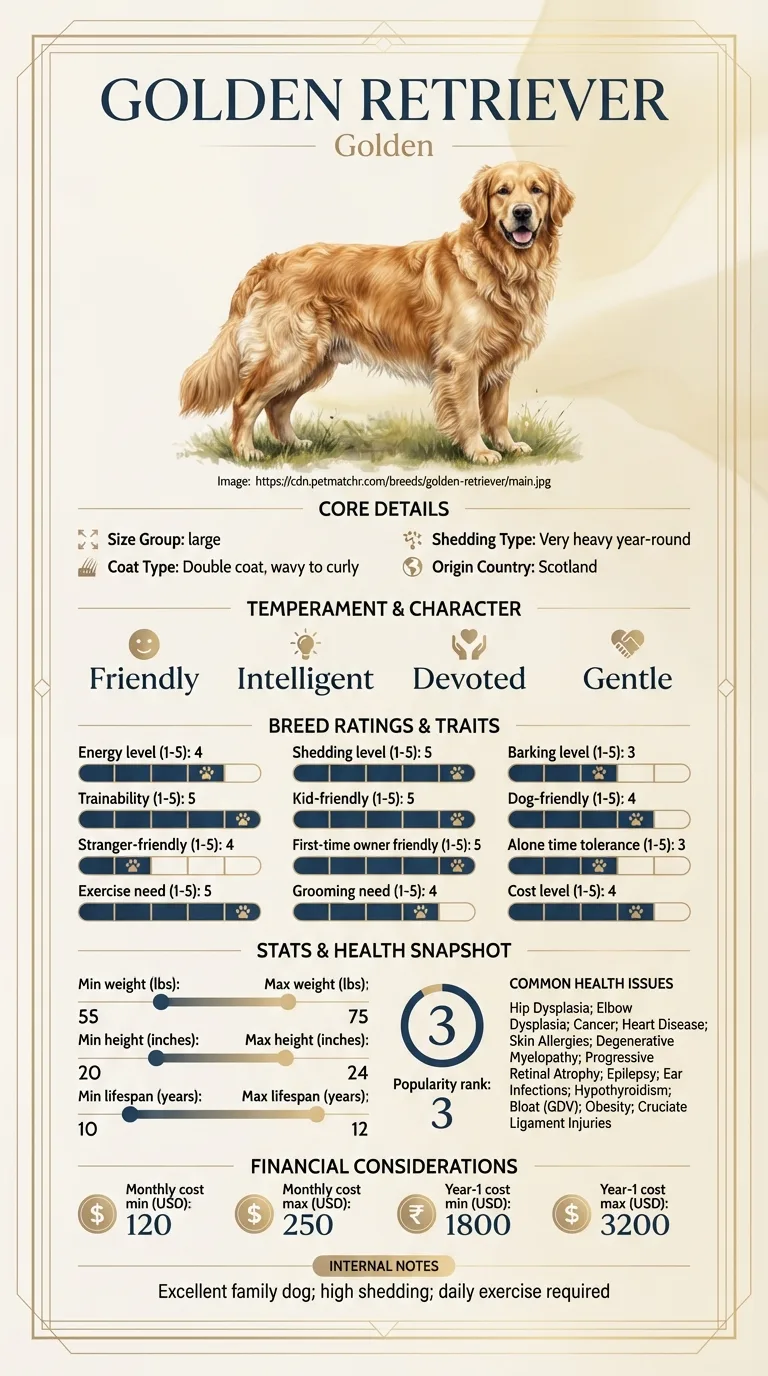
Typically, first-time dog owners or busy families may struggle with these issues. They might not know how to recognize the signs or what preventive measures to take.
This guide is not medical advice. If your dog shows pain, sudden behavior change, or worsening symptoms, consult a licensed veterinarian.
Some links may be affiliate links. We may earn a commission at no extra cost to you. We only suggest products we believe are helpful for dog owners.
We research and check what we publish, but we do not warrant that any figure, date, price, or statement is accurate, complete, or current, and we accept no liability for any loss, cost, injury, or other harm arising from the use of this site. Use it as one reference among several. You remain responsible for your own decisions and for your dog's care - confirm anything that matters with a licensed veterinarian or another qualified professional before you act on it. Full disclaimer.
Check this first
Recognizing when Golden Retriever back problems require immediate veterinary attention can be crucial. If your dog is showing severe signs of pain, such as yelping, reluctance to move, or difficulty standing, these are red flags. Additionally, if you notice any signs of paralysis, incontinence, or loss of control over their legs, you should call your vet immediately.
These symptoms can indicate serious conditions that need urgent care.
On the other hand, mild back issues like occasional stiffness or minor limping can often be monitored at home. If your Golden seems to be moving normally after some rest, you might not need to rush to the vet. Keeping an eye on their activity levels and comfort can help determine the next steps.
A gradual return to normal activity, along with gentle stretching, may be beneficial, but always consult your vet for personalized advice.
If any of these apply, call your vet or an emergency clinic now. The rest of this page is for the cases that are not an emergency.
Golden Retriever back problems can be a significant concern for owners. These issues often manifest as difficulty in movement, discomfort while playing, or reluctance to jump. This breed is prone to back problems due to their long spine and short legs, making them susceptible to injuries and degenerative conditions.
Back problems are quite common in Golden Retrievers, especially as they age or if they engage in high-impact activities. Many owners report seeing signs of back issues after their dog reaches middle age, making it essential to monitor their activity levels and weight.
Golden Retrievers have long spines and relatively short legs, making them more prone to back problems. Their body structure can lead to excessive strain on their back, especially as they age. Additionally, certain genetic factors inherent to the breed can predispose them to back issues.
Environmental factors such as obesity, lack of exercise, and jumping from heights can exacerbate back problems. If a Golden Retriever is not given appropriate support when climbing stairs or getting in and out of vehicles, this can lead to injury. Moreover, improper training techniques that encourage jumping can also contribute to back strain.
If your Golden exhibits signs of pain, such as reluctance to move, whining, or changes in posture, it's crucial to consult your vet. Early intervention can prevent further complications and help manage existing issues effectively.
Here are some common mistakes owners make that can worsen back problems in Golden Retrievers, along with safer alternatives.
Start here: Golden Retriever Most Common Genetic Disorders: Screening
See all Golden Retriever health problems, which breeds are prone to back problems, or the full Golden Retriever breed guide for temperament, exercise needs and ownership costs.
You may start to see improvements in your Golden Retriever's back problems within 4 to 6 weeks of consistent care and follow-up with your vet.
Success means your dog shows less discomfort, improved mobility, and can engage in regular activities without pain.
Meet Sarah, a busy nurse in Chicago, who adopted a Golden Retriever named Max. Initially, Max struggled with back problems, often limping after playtime. After consulting with her vet, Sarah learned that dedicated exercises and weight management could help. She started a gentle training routine focused on strengthening Max's back and reducing stress on his joints. Within weeks, Max not only regained his energy but also enjoyed longer walks without discomfort.
Key takeaway: With patience and proper training, many Golden Retrievers can overcome back problems and lead active, happy lives.
Golden Retrievers often have back problems due to their long spine and relatively short legs. This physical structure can lead to strain and injury over time, especially if they engage in high-impact activities. Regular check-ups with a vet can help identify early signs of back issues.
To prevent back problems, ensure your Golden Retriever maintains a healthy weight and gets regular, low-impact exercise. Activities like swimming or gentle walks can strengthen their muscles without putting too much strain on their back. Additionally, avoid letting them jump on and off furniture.
Signs of back problems can include difficulty standing up, reluctance to play, or changes in posture. You might also notice your dog seems to be in pain when moving or is less active than usual. If you see these signs, consult your veterinarian promptly.
Training can help alleviate back problems by teaching your Golden Retriever commands to limit jumping and encourage gentle behavior. Teach them to wait for assistance getting in and out of vehicles or onto furniture to avoid unnecessary strain. Consistent training and positive reinforcement work best.
Treatment for back problems can vary from physical therapy to medication and, in severe cases, surgery. Your vet may suggest exercises to strengthen the back muscles or recommend anti-inflammatory medications for pain relief. Always consult your vet for the best treatment options.
Yes, older Golden Retrievers are generally more susceptible to back problems. As they age, the risk of conditions like degenerative disc disease increases, making regular check-ups with your vet essential to monitor their spinal health.
You can help your Golden Retriever by providing a soft, supportive bed and limiting their jumping or rough play. Gentle exercises, like short walks, can also help maintain their strength without putting too much strain on their back.
If your Golden Retriever shows persistent signs of discomfort, such as excessive whining, altered gait, or difficulty with normal activities, it's time to consult your vet. Early intervention can prevent more serious issues from developing.
To prevent back problems in your Golden Retriever, ensure they maintain a healthy weight and get regular exercise without excessive jumping. Additionally, consider a balanced diet and avoid activities that could strain their back, such as rough play.
Keep your Golden at a healthy weight and provide low-impact exercise. Avoid letting them jump from heights to reduce strain on their back.
Look for signs like whining, a stiff gait, or reluctance to move. If your dog shows these signs, it's time to see the vet.
Create a comfortable resting area and consider using ramps to help them access furniture without jumping. Regular gentle stretches can also help.
A one-page prep sheet for this condition: the signs, the questions to ask, what to get priced. Unlocks here.
You get: Vet visit prep sheet
No spam. One-click unsubscribe. See our privacy policy.
Preview page 1 before you decide.
