DogBreedCompass
← Back to breed profile

German Shorthaired Pointer Most Common Genetic Disorders

Family history can be useful, but it cannot predict every health outcome for an individual GSP.

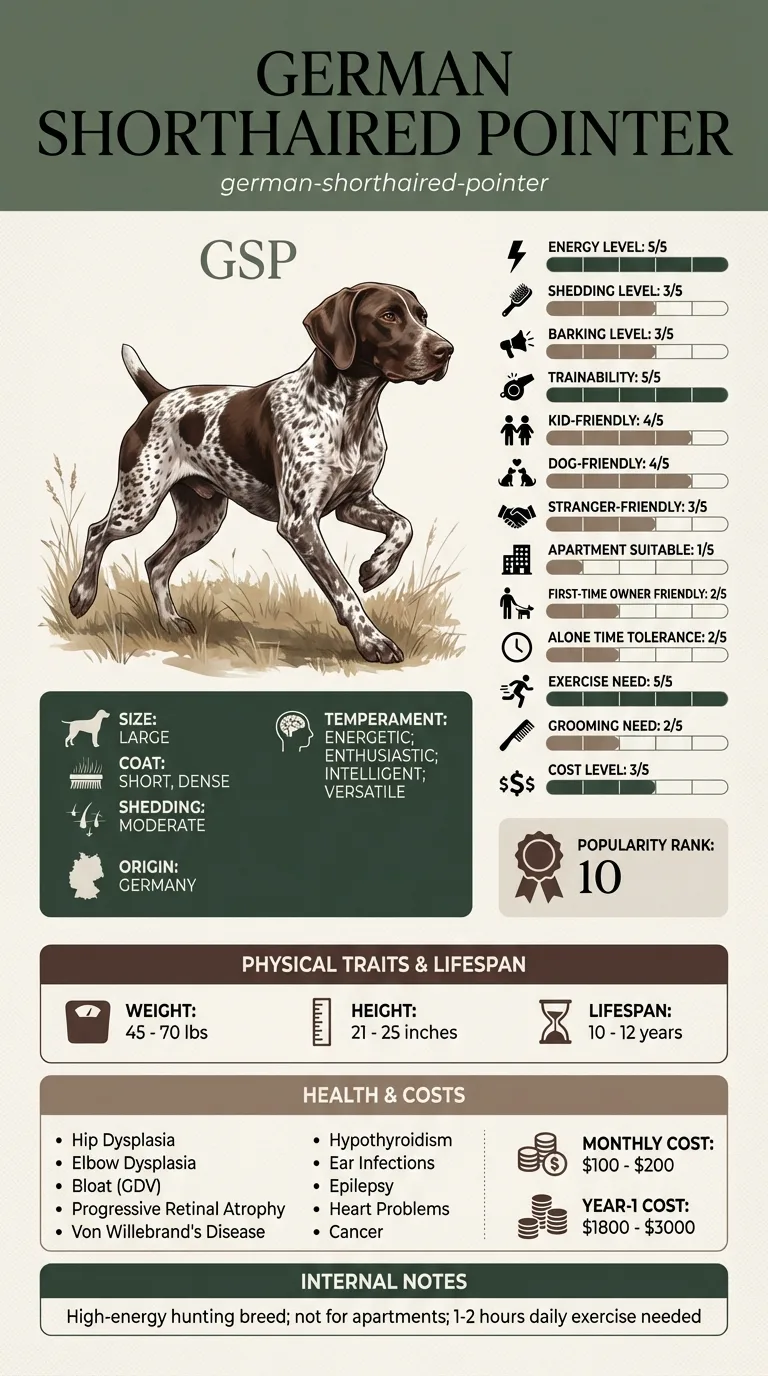
German Shorthaired Pointer Most Common Genetic Disorders infographic

Prospective owners comparing breeders, and current owners who want to understand a new symptom or a family-health history, often need a clear starting point without assuming their dog has a disorder.

Important reminder

This guide is not medical advice. If your dog shows pain, sudden behavior change, or worsening symptoms, consult a licensed veterinarian.

Some links may be affiliate links. We may earn a commission at no extra cost to you. We only suggest products we believe are helpful for dog owners.

What this problem looks like

The German Shorthaired Pointer breed information includes several health concerns that owners may want to discuss with a veterinarian. Some named conditions can involve inherited risk; others, including bloat and ear infections, should not be treated as proof of a genetic disorder. Individual risk and care needs vary.

Common triggers

  • A known family history or incomplete health records
  • A new change in movement, stamina, vision, bleeding, appetite, or behavior
  • A sudden illness or injury that needs assessment rather than self-diagnosis
  • Questions about a puppy, an adopted dog, or an active adult GSP

This page does not estimate prevalence. The listed concerns are breed-level health topics to understand and discuss; they do not establish how likely a condition is for any one German Shorthaired Pointer.

Why this happens

Breed factors

Some conditions named in the breed information, such as progressive retinal atrophy and von Willebrand's disease, are commonly discussed in an inherited-health context. Other listed concerns may be multifactorial or have causes that differ between dogs. A veterinarian can help separate family-history questions from a current medical concern.

Environment factors

Daily activity, nutrition, injury, age, exposure, and general health can influence how a dog feels and functions. Environmental factors do not explain every problem, and they should not replace an examination when a dog is unwell.

What you can try

At-home strategies

  • Keep copies of veterinary records and any reliable family-health information with your dog's routine care notes.
  • Notice patterns without making a diagnosis: record when symptoms began, what changed, and whether activity, appetite, or behavior is affected.
  • Use calm, low-stress handling practice so your GSP is more comfortable with routine checks and veterinary visits.
  • Follow your veterinarian's guidance on exercise and daily care if your dog has pain, reduced stamina, or another diagnosed concern.

When to consider a trainer

A qualified trainer can help with cooperative-care skills, such as calm handling and stationing, when those skills support veterinary care. A trainer does not diagnose or treat a medical condition.

When to talk to your vet

Talk to a veterinarian about persistent symptoms, a newly observed concern, or questions prompted by family history. Seek emergency veterinary care for collapse, difficulty breathing, repeated unproductive retching, marked abdominal distress, or other sudden severe signs.

Realistic expectations

The right timeline depends on the concern and the individual dog. Some questions can be addressed at a routine appointment, while new or severe signs may need prompt assessment.

Success means you have an appropriate veterinary plan for your dog, understand what changes to monitor, and avoid assuming a breed-level risk list is an individual diagnosis.

German Shorthaired Pointer Most Common Genetic Disorders: Mistakes to Avoid

A breed-level health list is a conversation starter, not a diagnosis. Some conditions may involve inherited risk, while others can be influenced by anatomy, age, environment, activity, or factors that are not fully known.

  • Hip and elbow dysplasia: These joint conditions are included in the breed health information. Changes in comfort, gait, willingness to jump, or exercise tolerance deserve veterinary attention.
  • Progressive retinal atrophy and von Willebrand's disease: These are inherited-condition names in the breed information. A veterinarian can explain what a dog's family history, signs, and medical record do or do not show.
  • Hypothyroidism, epilepsy, and heart problems: These concerns can have different causes and signs. New seizures, weakness, collapse, or major behavior changes should be assessed promptly by a veterinarian.
  • Bloat (GDV), cancer, ear infections, and other illness: These are also listed health concerns, but not every concern on a breed health list is a genetic disorder. Sudden abdominal distress, repeated unproductive retching, collapse, or trouble breathing warrants emergency veterinary care.

Making a practical health plan for a GSP

Keep records of your German Shorthaired Pointer's family history when it is available, routine veterinary visits, medication, and any changes you observe at home. For a puppy or a dog new to your household, ask the veterinarian which questions are most useful for that dog's age and history.

Avoid treating a breed risk list as proof that a symptom has one cause. Limping, reduced stamina, itching, digestive upset, or a behavior change can have many explanations. A timely examination is safer than trying to diagnose from a list online.

For an active GSP, steady conditioning, an age-appropriate activity plan, and attention to recovery after exercise can make it easier to notice when something has changed. Your veterinarian can tailor advice to the individual dog.

When a GSP Health Concern Is an Emergency

Seek emergency veterinary care if your German Shorthaired Pointer collapses, has trouble breathing, has repeated unproductive retching, develops a swollen or painful abdomen, has a seizure that is new or prolonged, cannot stand, or shows sudden severe weakness or pain. These signs can have many causes, but they should not be explained away as a breed-related genetic concern at home.

For milder but persistent changes such as a recurring limp, stiffness, lower exercise tolerance, vision changes, unusual bleeding, appetite changes, or a notable shift in behavior, arrange a prompt veterinary appointment. Note when the change began and what you observe, then follow the veterinarian's advice on activity and care.

Do not give human medication or use strenuous exercise to test whether your GSP will improve. A veterinary examination is the safest way to determine what the signs may mean for your individual dog.

Using a Health List as a Starting Point

A family adopting an adult German Shorthaired Pointer received limited background information and noticed that the dog tired more quickly on longer outings. Instead of assuming the change was caused by a genetic disorder, they recorded when it occurred and arranged a veterinary visit. The veterinarian used the dog's history and examination to guide the next steps. The family kept the care plan practical: they followed the veterinarian's activity guidance, saved records, and watched for meaningful changes rather than trying to diagnose from a breed list.

Key takeaway: Breed information is most useful when it helps owners ask better questions and seek individual veterinary guidance.

Frequently asked questions

What health concerns are listed for German Shorthaired Pointers?

The breed information for this page lists hip and elbow dysplasia, progressive retinal atrophy, von Willebrand's disease, hypothyroidism, epilepsy, heart problems, cancer, bloat, and ear infections as health concerns. A list of breed concerns does not mean an individual German Shorthaired Pointer will develop any of them.

Does family history tell me whether my GSP will have a genetic disorder?

Family history can help frame questions for a veterinarian, especially when a breeder or previous owner can provide records. It cannot diagnose a dog or guarantee that a condition will or will not occur.

Can training prevent German Shorthaired Pointer most common genetic disorders?

You cannot train away an inherited condition. Training can still be useful for calm handling, cooperative veterinary visits, and following activity restrictions your veterinarian recommends.

When should I talk to a vet about my GSP's health?

Arrange a veterinary visit for persistent or concerning changes such as limping, reduced activity, vision changes, unusual bleeding, seizures, or changes in appetite or behavior. Seek urgent care for collapse, breathing difficulty, or signs of acute abdominal distress.

How can I support my German Shorthaired Pointer's long-term health?

Ask for advice that reflects your dog's age, symptoms, medical history, and family information. A veterinarian may recommend examination, monitoring, or other next steps based on those details rather than a breed label alone.

Quick answers

View more answers
Health

What are quick tips for German Shorthaired Pointer genetic health concerns?

Keep a concise record of your GSP's family history, health changes, activity tolerance, and veterinary visits. Bring it to appointments so your veterinarian can assess the full picture.

Health

Will every German Shorthaired Pointer develop a genetic disorder?

No. A breed-level list identifies concerns worth knowing about; it does not predict the health of every individual dog.

Training

Can training help a GSP with health care?

Training cannot stop a genetic condition, but cooperative-care skills can make handling and veterinary visits less stressful for an active GSP.

Costs

What does genetic health care cost for a GSP?

Costs vary widely with the concern, the dog's needs, and local veterinary services. A veterinarian can help you understand appropriate next steps before you make a care plan.

Related DogBreedCompass guides

  • German Shorthaired Pointer breed profileReview the breed profile for everyday care, activity needs, and temperament context.
  • German Shorthaired Pointer anxiety guideLearn how the breed's high energy and daily routine can shape adjustment at home.
  • adopting a German Shorthaired PointerExplore what to consider before bringing home a German Shorthaired Pointer.
  • German Shorthaired Pointer rescue guideFind rescue-focused guidance for reviewing the available history and planning care for a German Shorthaired Pointer new to your home.
  • German Shorthaired Pointer vs Vizsla comparisonCompare the German Shorthaired Pointer with another active sporting breed when deciding which dog's everyday needs fit your household.

Related guides