Behavior
What are quick tips for managing German Shepherd obesity?
Limit treats and portion sizes, increase exercise, and consider a weight management dog food. Regular vet check-ups can help monitor progress.

Quick answer
What are quick tips for managing German Shepherd obesity?
Limit treats and portion sizes, increase exercise, and consider a weight management dog food. Regular vet check-ups can help monitor progress.
German Shepherd obesity is a growing concern that can lead to serious health issues. It’s crucial for owners to understand how to manage their dog's weight effectively.
Many first-time owners or busy families may struggle with German Shepherd obesity. They might not realize how easily these dogs can gain weight, especially if they don’t have enough exercise or if their diet is not properly managed.
This guide is not medical advice. If your dog shows pain, sudden behavior change, or worsening symptoms, consult a licensed veterinarian.
Some links may be affiliate links. We may earn a commission at no extra cost to you. We only suggest products we believe are helpful for dog owners.
We research and check what we publish, but we do not warrant that any figure, date, price, or statement is accurate, complete, or current, and we accept no liability for any loss, cost, injury, or other harm arising from the use of this site. Use it as one reference among several. You remain responsible for your own decisions and for your dog's care - confirm anything that matters with a licensed veterinarian or another qualified professional before you act on it. Full disclaimer.
Check this first
Recognizing when German Shepherd obesity becomes a serious issue is crucial. If your dog shows signs of severe lethargy, difficulty breathing, or is struggling to walk, it's time to call your vet immediately. These symptoms can indicate serious health complications that need urgent attention.
On the other hand, if your German Shepherd is slightly overweight but still energetic and playful, you can monitor their condition with a plan. Start by adjusting their diet and increasing exercise gradually. Track their weight weekly and consult your vet for guidance on the best course of action.
It's essential to take action, but not every case is an emergency.
Here’s a quick breakdown of what to watch for:
If any of these apply, call your vet or an emergency clinic now. The rest of this page is for the cases that are not an emergency.
German Shepherd obesity is a growing concern for many dog owners. This condition can lead to serious health issues, including joint problems and reduced lifespan. Day-to-day, it might look like your GSD being lethargic, struggling to keep up on walks, or having trouble with basic movements.
Obesity is quite common among German Shepherds, with estimates suggesting that over 50% of GSDs may be overweight. This breed's tendency to gain weight can be exacerbated by their high energy needs and the challenge of balancing their diet with sufficient exercise.
German Shepherds, or GSDs, are large, powerful dogs that require a lot of exercise. Their strong build and natural instinct to guard can lead to inactivity if not properly stimulated. If they are bored or not exercised enough, they may gain weight quickly.
Obesity in German Shepherds can also stem from their environment. A sedentary lifestyle, lack of access to outdoor spaces, or overfeeding can contribute significantly. Additionally, owners may unintentionally provide too many treats or table scraps, which adds extra calories.
If you notice significant weight gain or if your dog is having trouble losing weight despite changes in diet and exercise, consult your veterinarian. They can rule out any underlying health issues and help create a safe weight loss plan.
Avoiding these common mistakes can help your German Shepherd achieve a healthier weight.
Start here: German Shepherd Most Common Genetic Disorders: Screening
See all German Shepherd health problems, which breeds are prone to obesity, or the full German Shepherd breed guide for temperament, exercise needs and ownership costs.
With consistent effort, you can start seeing improvements in your German Shepherd's weight in about 4 to 6 months.
Success means your dog is maintaining a healthy weight, has more energy, and enjoys increased mobility and activity levels.
Meet Sarah, a busy nurse in Dallas who struggled with her German Shepherd, Max, being overweight. After noticing Max had trouble keeping up during walks and seemed lethargic, she decided it was time for a change. Sarah consulted her vet, who helped her create a balanced diet and exercise plan tailored for Max. They started with short walks and gradually increased their duration. Sarah also began incorporating playtime with fetch in the backyard. Over six months, Max lost the extra weight and became more energetic and playful, with a newfound zest for life.
Key takeaway: With commitment to a proper diet and regular exercise, you can successfully manage your German Shepherd's obesity and improve their quality of life.
Signs of obesity in a German Shepherd include difficulty feeling their ribs, a noticeable lack of waistline, and reduced energy levels. You might also notice they tire quickly during walks or playtime. Regular vet check-ups can help monitor their weight.
To combat German Shepherd obesity, focus on a balanced diet and regular exercise. Gradually reduce their food intake and incorporate daily walks or playtime to increase activity levels. Consistency is key to achieving and maintaining a healthy weight.
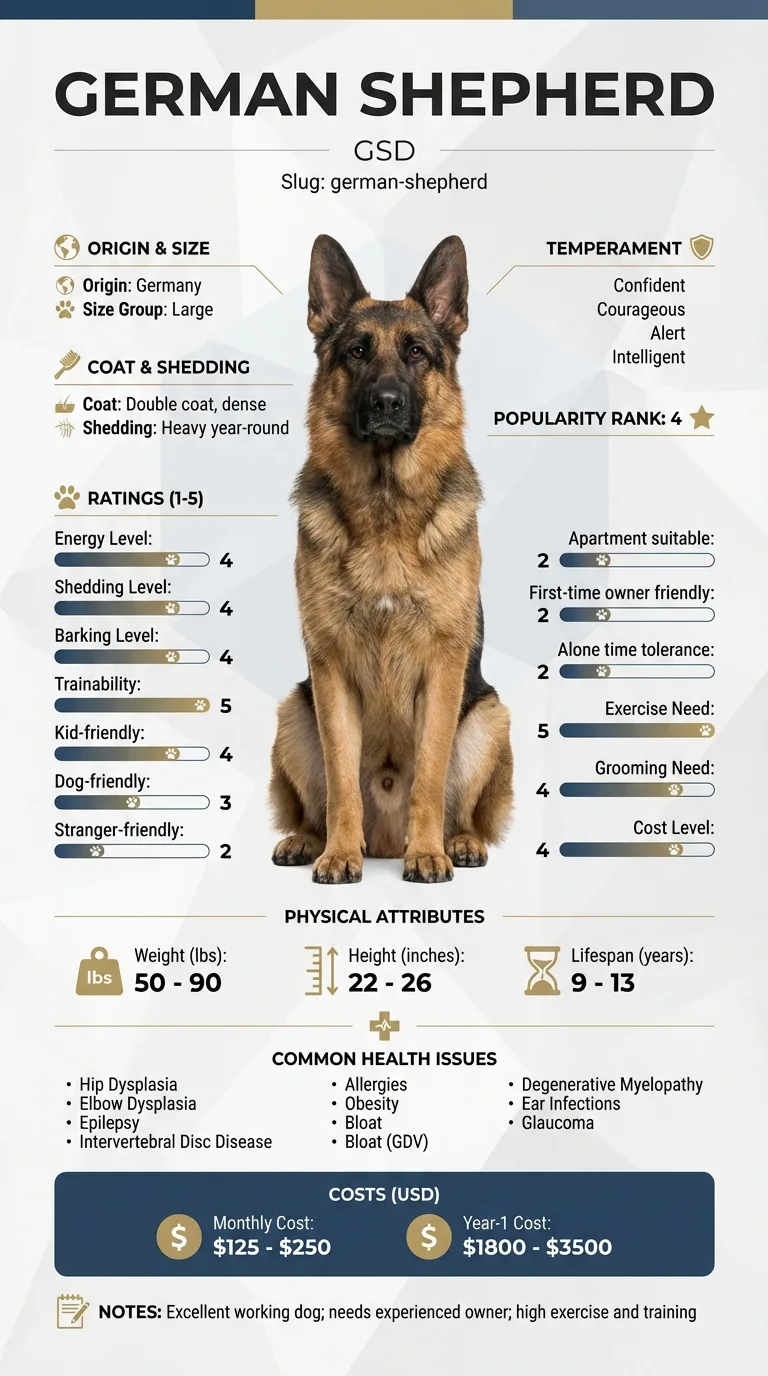
A healthy weight for a German Shepherd typically ranges from 50 to 90 pounds, depending on their size and build. Regular vet check-ups can help determine the right weight for your dog. Keep an eye on their body condition to ensure they stay within this range.
Yes, incorporating training exercises like fetch or agility can help your German Shepherd lose weight. Positive reinforcement during training sessions encourages them to stay active. Make training fun to keep them engaged and motivated.
Aim for at least 1 to 2 hours of exercise each day for your German Shepherd. This can include walks, runs, or interactive play. Adjust the intensity based on their age and fitness level to keep them healthy.
Yes, obesity can lead to serious health issues like joint problems, diabetes, and heart disease in German Shepherds. Maintaining a healthy weight is crucial for their overall well-being. Regular vet visits can help monitor their health.
A high-quality, balanced diet that is appropriate for their age and activity level is essential. Look for dog food formulated for weight management and control portion sizes. Consult your vet for specific dietary recommendations.
Preventing obesity involves providing a balanced diet and ensuring your German Shepherd gets plenty of exercise. Aim for at least 1-2 hours of physical activity each day. Additionally, avoid excessive treats and table scraps.
If your older German Shepherd is gaining weight, consult your vet for a tailored diet and exercise plan. Older dogs may require different nutritional needs and lower intensity workouts. Regular exercise can help maintain their health and prevent further weight gain.
Yes, obesity can lead to serious health issues in German Shepherds, including joint problems, diabetes, and heart disease. Managing their weight is crucial to ensuring a longer, healthier life. Regular vet visits can help catch any related health issues early.
Even with regular exercise, obesity can occur if your German Shepherd is consuming more calories than they burn. Factors like age, metabolism, and diet can play a significant role. Tracking their food intake and adjusting portions can help manage their weight effectively.
Limit treats and portion sizes, increase exercise, and consider a weight management dog food. Regular vet check-ups can help monitor progress.
Check for a visible waist and feel for their ribs without excessive fat covering. If you can't see or feel their ribs easily, they may be overweight.
Weight loss should be gradual, ideally 1-2% of their body weight per week. Rapid weight loss can be harmful, so be patient and consistent.
Absolutely! Training sessions can serve as both mental stimulation and exercise, making them an excellent way to help manage weight.
A mix of walks, playtime, and training exercises for 1-2 hours daily is ideal. Adjust the routine based on your dog's age and fitness level.
A one-page prep sheet for this condition: the signs, the questions to ask, what to get priced. Unlocks here.
You get: Vet visit prep sheet
No spam. One-click unsubscribe. See our privacy policy.
See a sample page before you decide.
Early access list
The free prep sheet covers the same-day warning signs, a symptom log and the questions to ask. We are considering a fuller kit that adds a cost worksheet for the usual tests and treatments (US price ranges with their sources) and a plain-English guide to ways of covering the bill. It is not built yet; this list tells us whether it is worth building.
One email, no spam, unsubscribe anytime. Information only, not veterinary advice.