Health
What are quick tips for managing French Bulldog cardiomyopathy?
Keep your French Bulldog at a healthy weight, provide regular vet check-ups, and ensure they get moderate exercise. Monitor their diet and reduce stress as much as possible.

Quick answer
What are quick tips for managing French Bulldog cardiomyopathy?
Keep your French Bulldog at a healthy weight, provide regular vet check-ups, and ensure they get moderate exercise. Monitor their diet and reduce stress as much as possible.
French Bulldog cardiomyopathy is a serious heart condition that affects many Frenchies.
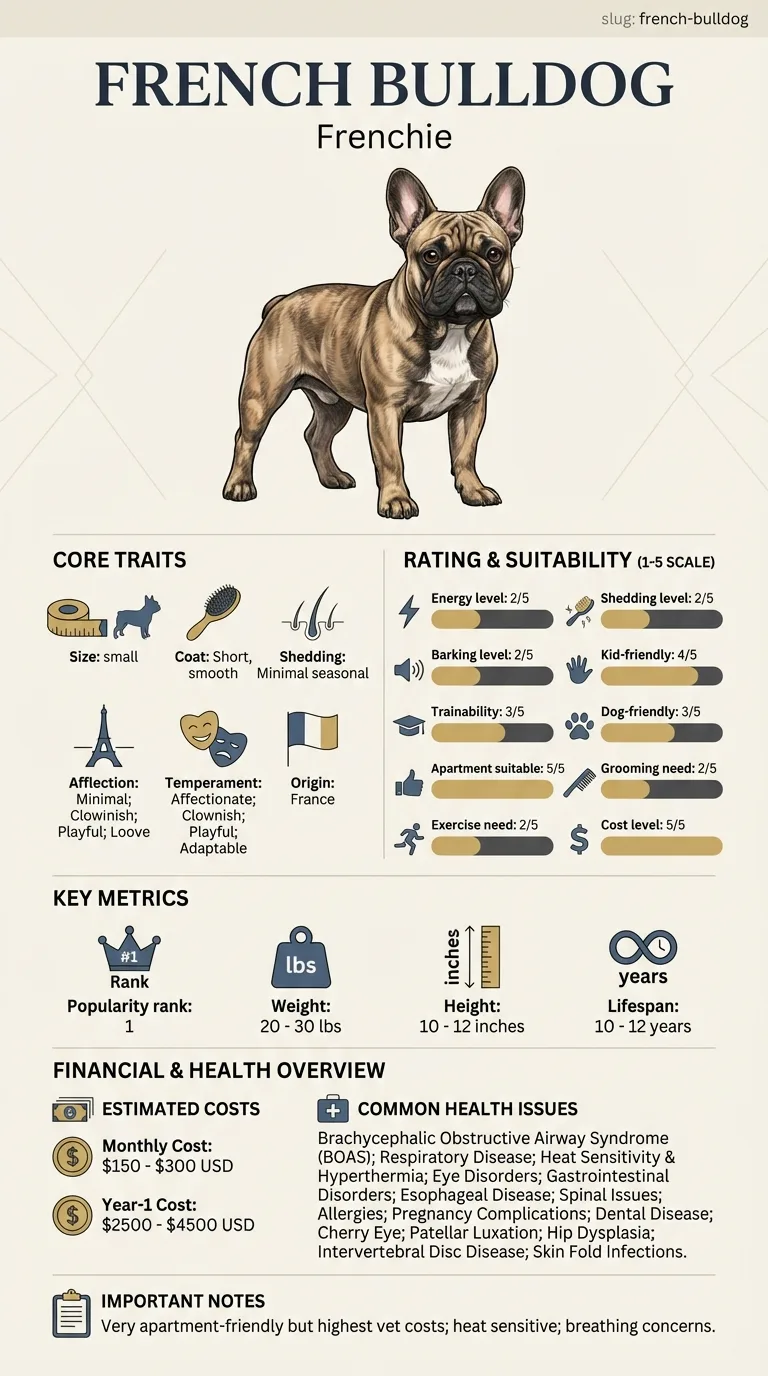
Owners of French Bulldogs, especially those who are first-time pet parents or live in urban areas, often face challenges with this condition. The combination of their small size and unique health predispositions can make them more vulnerable to heart-related issues.
This guide is not medical advice. If your dog shows pain, sudden behavior change, or worsening symptoms, consult a licensed veterinarian.
Some links may be affiliate links. We may earn a commission at no extra cost to you. We only suggest products we believe are helpful for dog owners.
We research and check what we publish, but we do not warrant that any figure, date, price, or statement is accurate, complete, or current, and we accept no liability for any loss, cost, injury, or other harm arising from the use of this site. Use it as one reference among several. You remain responsible for your own decisions and for your dog's care - confirm anything that matters with a licensed veterinarian or another qualified professional before you act on it. Full disclaimer.
Check this first
Knowing when to act is crucial for your French Bulldog. If you notice severe symptoms, it's time to call your vet immediately. Signs like rapid breathing, fainting, or persistent coughing could indicate a serious condition that requires urgent attention.
If any of these apply, call your vet or an emergency clinic now. The rest of this page is for the cases that are not an emergency.
French Bulldog cardiomyopathy is a serious heart condition that affects the breed's quality of life. This condition can lead to symptoms like coughing, fatigue, and difficulty breathing, which can be distressing for both the dog and its owner. If your Frenchie seems less energetic or has trouble exercising, it might be time to consult a vet about potential heart issues.
Cardiomyopathy is relatively common in French Bulldogs, especially as they age. It's important for owners to stay vigilant and monitor their pets for any signs of heart trouble throughout their lives.
French Bulldogs are prone to cardiomyopathy due to their genetic makeup. This breed is known for having heart-related issues, especially as they age. Their compact structure may also contribute to an increased risk of heart disease.
Factors such as poor diet, lack of exercise, and obesity can exacerbate heart problems in French Bulldogs. Stressful environments or exposure to extreme temperatures can also negatively impact their heart health.
If your French Bulldog shows signs of lethargy, coughing, or difficulty breathing, it’s essential to consult your vet immediately. Regular check-ups are crucial for early detection of heart issues, so keep an eye on their health.
Avoiding common mistakes can help manage French Bulldog cardiomyopathy more effectively. Here are some behaviors that may inadvertently worsen the condition and safer alternatives.
See all French Bulldog health problems, which breeds are prone to cardiomyopathy, or the full French Bulldog breed guide for temperament, exercise needs and ownership costs.
Managing French Bulldog cardiomyopathy can take several months to see significant improvement. Regular vet check-ups, medication, and lifestyle adjustments should be consistently followed.
Success looks like a stabilized condition for your Frenchie, with fewer symptoms and a happier, more active life. You'll notice improved energy levels and a reduction in distress signs.
In less severe cases, you can monitor your Frenchie at home. Symptoms such as occasional coughing or slight lethargy can often be managed with a watchful eye and a plan for veterinary follow-up. Keep track of any changes in behavior or energy levels.

Maggie, a busy nurse in Chicago, noticed her French Bulldog, Leo, was unusually lethargic and had trouble catching his breath. After a vet visit confirmed cardiomyopathy, she felt overwhelmed by the responsibility of managing his health. With a tailored treatment plan that included medication and regular exercise, Maggie learned to monitor Leo's symptoms closely. Over time, she adjusted his diet and started gentle daily walks. Leo gradually regained his playful spirit, and Maggie found joy in their new routine.
Key takeaway: Staying proactive and informed about French Bulldog cardiomyopathy can lead to better management of your dog's health and a more fulfilling life together.
French Bulldog cardiomyopathy can be caused by genetic factors, leading to heart muscle disease. This condition may also be exacerbated by obesity, poor diet, and lack of exercise. Regular vet check-ups are essential for early detection and management.
To help prevent French Bulldog cardiomyopathy, maintain a healthy diet and ensure regular exercise. It's crucial to monitor their weight and consult your vet for a proper health plan. Preventive care is key to keeping your Frenchie’s heart healthy.
Symptoms of cardiomyopathy may include coughing, difficulty breathing, lethargy, or fainting. You might notice your Frenchie being less active or having a decreased appetite. If you observe any of these signs, consult your vet immediately.
While there is no cure for French Bulldog cardiomyopathy, treatment options like medication can help manage symptoms. Vets may prescribe heart medications, diet changes, and exercise modifications to improve your dog's quality of life. Regular follow-ups are important.
Yes, cardiomyopathy can be hereditary in French Bulldogs. Responsible breeding practices can help reduce the risk. If you're considering getting a Frenchie, choose a reputable breeder who screens for genetic conditions.
Yes, older French Bulldogs may experience more severe symptoms of cardiomyopathy. Their overall health and presence of other conditions can also complicate the situation, making regular vet check-ups even more critical.
To help prevent cardiomyopathy, ensure your French Bulldog maintains a healthy weight and gets regular exercise. A balanced diet and routine vet visits can also contribute to overall heart health.
While there is no cure for cardiomyopathy, treatment options like medications can help manage the condition. Regular veterinary care is essential to monitor your French Bulldog's health and adjust treatments as needed.
Keep your French Bulldog at a healthy weight, provide regular vet check-ups, and ensure they get moderate exercise. Monitor their diet and reduce stress as much as possible.
Aim for at least twice a year for routine check-ups, or more frequently if your vet recommends it. Regular monitoring is crucial for early detection of any heart-related issues.
While training won't cure cardiomyopathy, it can improve your dog's overall behavior and reduce stress. Focus on gentle training techniques and positive reinforcement.
Avoid foods high in sodium and fillers, which can exacerbate heart issues. Consult your vet for a diet plan tailored to your Frenchie's health needs.
A one-page prep sheet for this condition: the signs, the questions to ask, what to get priced. Unlocks here.
You get: Vet visit prep sheet
No spam. One-click unsubscribe. See our privacy policy.
Preview page 1 before you decide.