Behavior
What are quick tips for English Springer Spaniel cruciate ligament injuries?
Maintain a healthy weight and ensure regular, moderate exercise for your English Springer Spaniel. Avoid high-impact activities to reduce the risk of injury.

Quick answer
What are quick tips for English Springer Spaniel cruciate ligament injuries?
Maintain a healthy weight and ensure regular, moderate exercise for your English Springer Spaniel. Avoid high-impact activities to reduce the risk of injury.
English Springer Spaniel cruciate ligament injuries can lead to serious mobility issues for your dog. Understanding these injuries is crucial for their health and well-being.
Owners of active English Springer Spaniels often face this problem. Busy families, dog enthusiasts, or first-time owners may not recognize the signs early enough, leading to further complications.
This guide is not medical advice. If your dog shows pain, sudden behavior change, or worsening symptoms, consult a licensed veterinarian.
Some links may be affiliate links. We may earn a commission at no extra cost to you. We only suggest products we believe are helpful for dog owners.
We research and check what we publish, but we do not warrant that any figure, date, price, or statement is accurate, complete, or current, and we accept no liability for any loss, cost, injury, or other harm arising from the use of this site. Use it as one reference among several. You remain responsible for your own decisions and for your dog's care - confirm anything that matters with a licensed veterinarian or another qualified professional before you act on it. Full disclaimer.
Check this first
If your English Springer Spaniel shows signs of a cruciate ligament injury, it's crucial to know when to seek immediate veterinary help. Look for these red-flag symptoms that indicate an emergency:
- Severe limping or inability to bear weight on the affected leg. - Noticeable swelling around the knee joint. - Signs of extreme pain, like whining or growling when moving or being touched. - Rapid breathing or unusual lethargy, which could indicate shock.
These symptoms suggest a serious injury that requires prompt medical attention. Delaying treatment can lead to more extensive damage and a longer recovery time.
On the other hand, if your dog is limping mildly or seems to be moving around without significant distress, you may monitor the situation at home. Here are some signs to watch for:
- Mild limping that improves with rest. - Some stiffness after exercise but no swelling. - Normal behavior and appetite.
In these cases, a watch-and-wait approach may be appropriate. However, keep a close eye on your dog’s condition. If symptoms worsen or don’t improve within a few days, don’t hesitate to contact your vet for advice. Being proactive can help prevent further injury and ensure your English Springer Spaniel stays healthy and happy.
If any of these apply, call your vet or an emergency clinic now. The rest of this page is for the cases that are not an emergency.
English Springer Spaniel cruciate ligament injuries are common and can be quite painful. These injuries often manifest as limping or difficulty in rising, especially after physical activity. Owners might notice their dog favoring one leg, showing reluctance to walk or play, and exhibiting signs of discomfort.
Cruciate ligament injuries are relatively common in English Springer Spaniels, particularly due to their active nature. Many owners report these injuries, especially in older dogs or those that are overweight. It's essential to monitor their activity levels to help prevent these injuries.
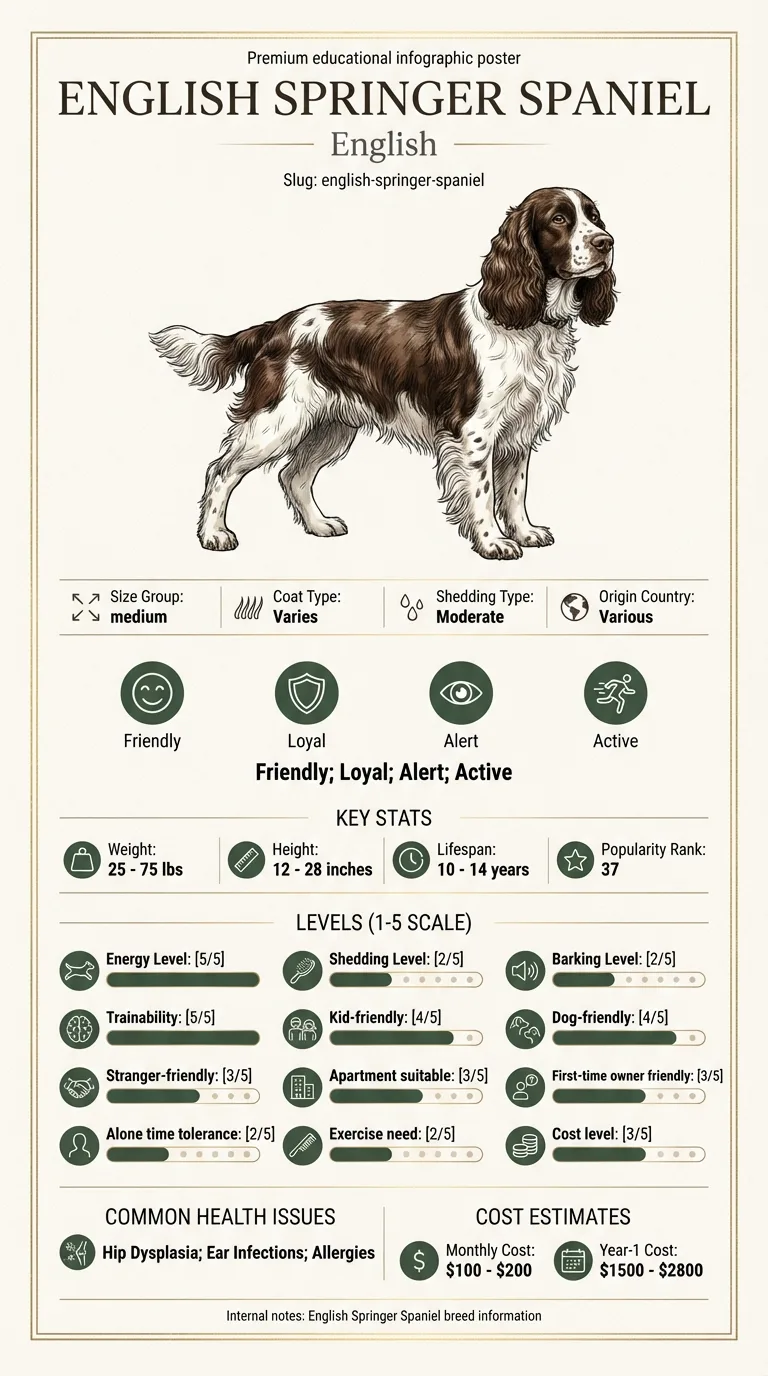
English Springer Spaniels are medium-sized dogs with a high energy level. Their active nature can lead to joint stress, making them more susceptible to cruciate ligament injuries. Additionally, their build may predispose them to certain injuries, especially if they engage in rough play or sudden movements.
An environment lacking proper exercise can contribute to weight gain, increasing the strain on your dog's knees. Slippery surfaces, like tile or hardwood floors, can also lead to slips and falls, raising the risk of injuries. Finally, inadequate warm-up or cool-down during exercise may heighten the chance of ligament issues.
If your English Springer Spaniel exhibits signs of pain or limping, it’s crucial to consult your vet. They can assess whether there’s a cruciate ligament injury and recommend a treatment plan tailored to your dog’s needs.
Avoiding these common mistakes can help you manage and prevent English Springer Spaniel cruciate ligament injuries more effectively.
Start here: English Springer Spaniel Most Common Genetic Disorders: Screening
See all English Springer Spaniel health problems, which breeds are prone to cruciate ligament injuries, or the full English Springer Spaniel breed guide for temperament, exercise needs and ownership costs.
You can expect to see improvements in your English Springer Spaniel's condition within 4 to 6 weeks of starting a tailored rehabilitation program.
Success looks like your dog returning to normal activity levels with reduced pain and a stronger knee, allowing them to run and play without discomfort.
When Sarah adopted Max, her English Springer Spaniel, she was excited for their adventures together. However, after a few months, Max started limping and was diagnosed with a cruciate ligament injury. At first, Sarah was overwhelmed, worried about the costs and the long road to recovery. She began researching how to stop English Springer Spaniel cruciate ligament injuries and consulted her vet about rehabilitation options. With a mix of physical therapy and a careful exercise plan, Max gradually regained strength. By the end of two months, he was back to chasing squirrels in the park, and Sarah felt a huge relief. Their bond grew even stronger through this journey, as she learned to be more attuned to Max’s needs.
Key takeaway: With the right care and patience, you can help your English Springer Spaniel recover from cruciate ligament injuries and enjoy an active life again.
English Springer Spaniels can be prone to cruciate ligament injuries due to their active lifestyle and medium size. Factors like obesity, lack of exercise, or sudden movements can increase the risk. Regular vet check-ups and maintaining a healthy weight are crucial for preventing these injuries.
To help prevent cruciate ligament injuries in your English Springer Spaniel, focus on maintaining a healthy weight, providing regular low-impact exercise, and avoiding high-impact activities. Additionally, consult with your vet about joint supplements that may support your dog's knee health.
Signs of cruciate ligament injuries include limping, vocalizing when moving, or reluctance to play. If your dog seems to be in pain or has swelling in the knee, it's essential to consult your vet for a proper diagnosis and treatment plan.
Treatment for cruciate ligament injuries may include rest, anti-inflammatory medications, or surgery depending on the severity. Your vet will recommend the best approach based on your dog's specific needs and condition.
Training methods focused on strengthening your dog's muscles can help prevent injuries. Low-impact exercises such as swimming or controlled leash walks can build strength without stressing the knees. Always consult a trainer or vet before starting a new exercise routine.
Recovery time for cruciate ligament injuries can vary based on the treatment method. If surgery is performed, it may take several months for full recovery, during which physical therapy can be beneficial. Your vet will provide a tailored recovery plan.
Signs of a cruciate ligament injury include limping, reluctance to put weight on the affected leg, and swelling around the knee. If your dog shows any of these symptoms, it’s essential to consult a veterinarian for an accurate diagnosis.
To help prevent cruciate ligament injuries, keep your English Springer Spaniel at a healthy weight and provide regular, low-impact exercise. Avoid excessive jumping or running on hard surfaces, and consider incorporating strength training exercises to support their joints.
Yes, older English Springer Spaniels may be more prone to cruciate ligament injuries due to natural wear and tear on their joints. As dogs age, their ligaments can weaken, making them more susceptible to injuries during physical activity.
If your English Springer Spaniel is limping, showing signs of pain, or has difficulty moving, it’s essential to see a vet promptly. Early diagnosis and treatment can prevent further damage and improve recovery outcomes.
Maintain a healthy weight and ensure regular, moderate exercise for your English Springer Spaniel. Avoid high-impact activities to reduce the risk of injury.
Look for limping, difficulty in climbing stairs, or reluctance to play as early signs of potential injuries. A prompt vet visit can help catch issues early.
Consider joint supplements and a balanced diet to support your dog's knee health. Regular vet check-ups will help monitor any changes.
If you notice signs of injury, limit your dog's activity and consult your vet immediately for a thorough examination and treatment options.
A one-page prep sheet for this condition: the signs, the questions to ask, what to get priced. Unlocks here.
You get: Vet visit prep sheet
No spam. One-click unsubscribe. See our privacy policy.
Preview page 1 before you decide.