DogBreedCompass
← Back to breed profile

Understanding English Springer Spaniel Bloat (Gastric Dilatation-Volvulus/GDV)

English Springer Spaniel bloat is a serious, life-threatening condition that affects many dogs. (English Springer Spaniel bloat (gastric dilatation-volvulus/gdv))

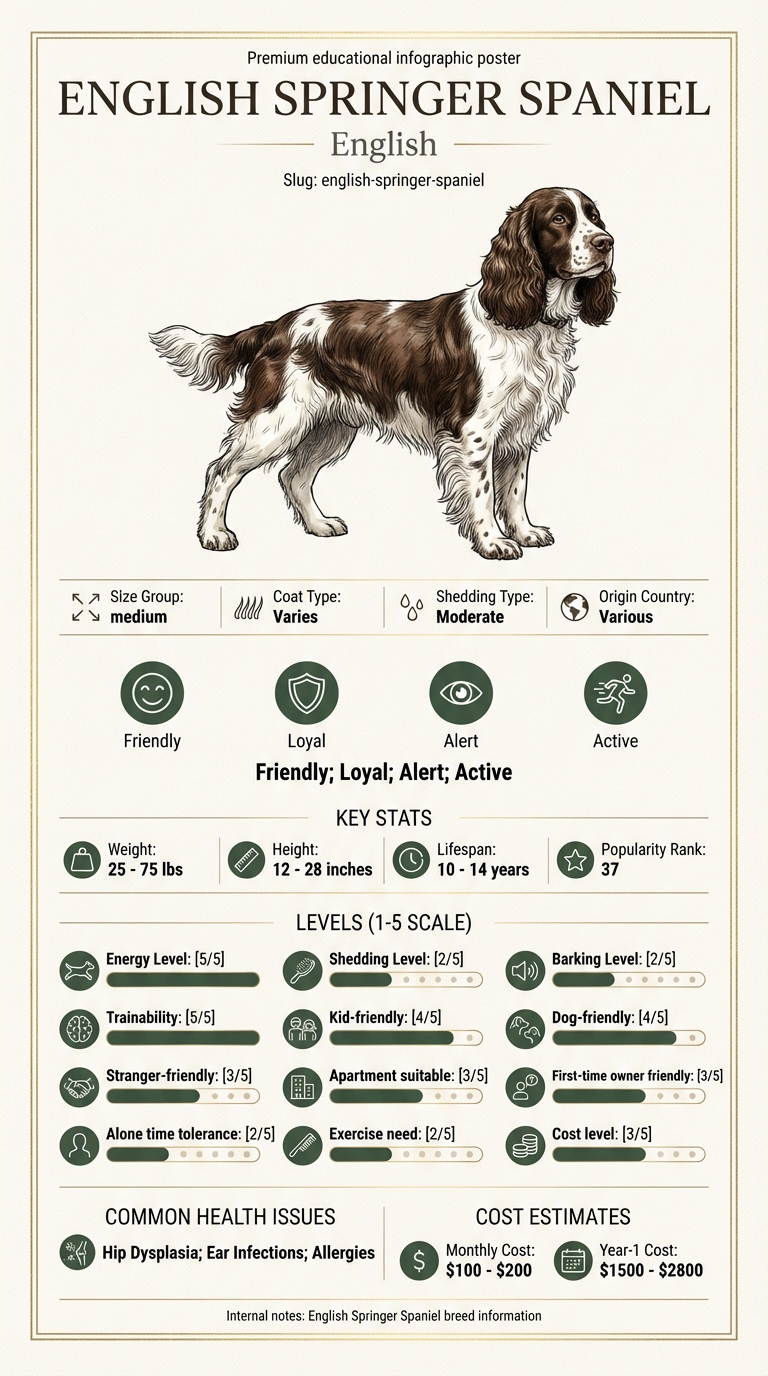
Understanding English Springer Spaniel Bloat (Gastric Dilatation-Volvulus/GDV) infographic

Owners of English Springer Spaniels, especially those who are new to the breed, often face challenges with this problem. It can be particularly troubling for families with busy schedules who may miss early warning signs.

Important reminder

This guide is not medical advice. If your dog shows pain, sudden behavior change, or worsening symptoms, consult a licensed veterinarian.

Some links may be affiliate links. We may earn a commission at no extra cost to you. We only suggest products we believe are helpful for dog owners.

What this problem looks like

English Springer Spaniel bloat, medically known as gastric dilatation-volvulus (GDV), is a serious condition that can occur suddenly. This life-threatening issue arises when the stomach fills with gas and twists, preventing the release of gas and leading to severe pain and shock. Owners often notice signs such as a distended abdomen, excessive drooling, restlessness, or attempts to vomit without success.

Common triggers

  • Rapid eating or drinking
  • Intense exercise after meals
  • Stressful situations
  • Genetic predisposition

Bloat is relatively common in English Springer Spaniels and can occur in any dog, but medium to large breeds are at higher risk. While not every English Springer Spaniel will experience bloat, it's essential to be vigilant, as the condition can escalate quickly and requires immediate veterinary attention.

Why this happens

Breed factors

English Springer Spaniels can be prone to bloat due to their deep-chested build. This breed's anatomy makes them more susceptible to stomach twisting, especially after eating or drinking. Genetics may also play a role, as some lines are more likely to develop this condition.

Environment factors

Bloat can be triggered by factors like rapid eating, excessive drinking, or vigorous exercise right after meals. Stressful environments, such as loud noises or changes in routine, can also increase the risk. Owners should be aware of their dog's eating habits and surroundings.

What you can try

At-home strategies

  • Feed smaller, more frequent meals instead of one large meal to reduce stomach pressure.
  • Use slow-feed bowls or puzzle feeders to help your dog eat more slowly.
  • Avoid exercise for at least an hour after eating. This includes running or playing.
  • Keep your dog calm during mealtimes and consider using a quiet space for feeding.

When to consider a trainer

If your English Springer Spaniel shows signs of stress or anxiety around mealtime, a trainer can help with behavior modification techniques. Training can also assist with feeding routines and anxiety management.

When to talk to your vet

If you notice your dog displaying symptoms of bloat, such as a swollen abdomen, restlessness, or attempts to vomit without success, contact your vet immediately. Bloat is a serious condition that requires prompt attention.

Realistic expectations

It typically takes several weeks to months to manage and prevent English Springer Spaniel bloat effectively. Early intervention and consistent practices are key.

Success means your English Springer Spaniel shows fewer signs of discomfort, has a more regular eating schedule, and maintains a healthy weight without episodes of bloat.

Mistakes that make this worse – English Springer Spaniel bloat (gastric dilatation-volvulus/gdv)

Avoiding these common mistakes can help manage English Springer Spaniel bloat (gastric dilatation-volvulus/GDV) effectively. Here are some behaviors to watch out for.

  • Feeding large meals at once - This can increase the risk of bloat. Instead, feed smaller, more frequent meals throughout the day.
  • Allowing vigorous exercise right after eating - This can lead to stomach twisting. Wait at least an hour after meals before engaging in intense activities.
  • Ignoring signs of distress - If your English Springer Spaniel shows signs of discomfort, such as pacing or excessive drooling, consult your vet immediately.
  • Overfeeding or giving too many treats - This can lead to an upset stomach. Stick to recommended portion sizes and treat sparingly.
  • Not maintaining a consistent feeding schedule - Irregular feeding can upset their digestive system. Keep a regular schedule to promote stability.
  • Using elevated food bowls - Some studies suggest this could increase bloat risk. Try feeding from a flat bowl instead.
  • Neglecting regular vet check-ups - Regular health assessments can catch potential issues early. Make sure to schedule check-ups as recommended.

When English Springer Spaniel Bloat is an Emergency

Bloat, or gastric dilatation-volvulus (GDV), is a serious condition that requires immediate veterinary attention. Recognizing the signs can be lifesaving for your English Springer Spaniel. If you notice your dog displaying severe symptoms such as a bloated abdomen, unproductive attempts to vomit, excessive drooling, restlessness, or signs of distress, call your vet right away. These are red flags indicating that your dog may be experiencing life-threatening bloat.

On the other hand, if your English Springer Spaniel shows mild signs such as slight discomfort, a slightly distended belly, or minor lethargy, you can monitor them at home. Keep an eye on their behavior and appetite. If the symptoms do not improve or worsen, seek veterinary advice. Creating an action plan for these mild cases can help you feel prepared, but always err on the side of caution with bloat.

In summary, immediate veterinary care is crucial if your dog exhibits any severe symptoms of bloat. For mild cases, careful observation is key, but don’t hesitate to consult your vet if you have any concerns about your dog’s health.

Understanding English Springer Spaniel Bloat (Gastric Dilatation-Volvulus/GDV) - When English Springer Spaniel Bloat is an Emergency

Finding Calm for Charlie: A Springer Spaniel's Journey

Emma, a busy nurse in Seattle, was worried about her English Springer Spaniel, Charlie. He had experienced bloat twice in a year, leaving her frantic and unsure what to do. After consulting her vet, Emma learned to adjust Charlie's diet, feed him smaller meals, and space out exercise. She also incorporated calming techniques to reduce his anxiety around mealtime. Over time, Charlie became more relaxed, and Emma felt more confident in managing his health.

Key takeaway: With the right diet adjustments and anxiety management, you can significantly reduce the risk of bloat in your English Springer Spaniel.

Frequently asked questions

Why does my English Springer Spaniel have bloat (gastric dilatation-volvulus/GDV)?

Bloat occurs when the stomach fills with gas and twists, obstructing blood flow. Factors like eating too quickly, stress, and genetics can contribute. It's crucial to monitor your dog and consult a vet if you notice any signs.

How can I stop English Springer Spaniel bloat (gastric dilatation-volvulus/GDV)?

To prevent bloat, feed your English Springer Spaniel smaller, more frequent meals instead of one large meal. Encourage slow eating by using special slow-feed bowls or puzzle toys. Regular exercise and avoiding vigorous activity right after eating can also help.

What are the signs of bloat in English Springer Spaniels?

Signs of bloat include a swollen abdomen, restlessness, excessive drooling, and attempts to vomit without success. If you notice these symptoms, seek emergency veterinary care immediately. Early intervention is vital for the best outcome.

What is the treatment for English Springer Spaniel bloat (gastric dilatation-volvulus/GDV)?

Treatment typically involves emergency surgery to untwist the stomach and may require additional procedures, such as a gastropexy to prevent recurrence. The cost for treatment can range from $1,500 to $7,500, depending on the severity and location of the veterinary care.

Can bloat happen to any dog, or is it specific to English Springer Spaniels?

While bloat can occur in any breed, certain breeds, like English Springer Spaniels, are at higher risk. Factors such as age, size, and eating habits contribute to the likelihood of bloat. Always stay informed about your dog's health.

Are there any long-term effects of bloat on my English Springer Spaniel?

Many dogs recover well after treatment for bloat, but there can be long-term health issues if the stomach was severely damaged. Regular vet check-ups are essential to monitor your dog's health after an episode.

How can I prepare for the possibility of bloat in my English Springer Spaniel?

Educate yourself on the signs of bloat and have your vet's contact information readily available. Consider discussing preventative measures with your vet, including diet and exercise routines tailored to your dog's specific needs.

What are the early signs of bloat (gastric dilatation-volvulus) in English Springer Spaniels?

Early signs of English Springer Spaniel bloat can include restlessness, unproductive attempts to vomit, and a swollen abdomen. If you notice these symptoms, it’s crucial to contact your veterinarian immediately, as GDV can become life-threatening quickly.

Can English Springer Spaniel bloat (gastric dilatation-volvulus) happen to older dogs?

Yes, older English Springer Spaniels are at a higher risk for bloat (gastric dilatation-volvulus). Their digestive systems may become less efficient with age, making it essential to monitor them for symptoms and consult your vet for preventive care.

How can I help prevent bloat (gastric dilatation-volvulus) in my English Springer Spaniel?

To help prevent English Springer Spaniel bloat, feed smaller, more frequent meals rather than one large meal. Also, avoid vigorous exercise immediately before or after eating, and consider using a slow feeder to reduce gulping.

What should I do if my English Springer Spaniel shows signs of bloat (gastric dilatation-volvulus)?

If your English Springer Spaniel shows signs of bloat, such as a distended belly or excessive drooling, take them to the vet immediately. Time is critical in treating GDV, as it can lead to serious complications if not addressed quickly.

Is bloat (gastric dilatation-volvulus) a hereditary issue in English Springer Spaniels?

Yes, bloat (gastric dilatation-volvulus) can have a hereditary component in English Springer Spaniels. If you have a family history of GDV in your dog’s lineage, it's important to discuss this with your vet for tailored preventive strategies.
Quick answers

View more answers
Behavior

What are quick tips for preventing English Springer Spaniel bloat (gastric dilatation-volvulus/GDV)?

Feed smaller, more frequent meals and use slow-feed bowls to prevent rapid eating. Avoid exercise right after meals to reduce stress on the stomach.

Health

What should I do if my English Springer Spaniel shows signs of bloat?

If you notice a swollen abdomen or other signs of bloat, take your dog to the vet immediately. Time is crucial for treatment.

Living

Is bloat in English Springer Spaniels common?

Bloat is more common in certain breeds, including English Springer Spaniels, but it can happen to any dog. Stay vigilant and monitor your dog’s eating habits.

Costs

What is the cost range for treating bloat in dogs?

The cost for treating bloat can range from $1,500 to $7,500, depending on the severity and necessary treatments. It’s wise to prepare for possible emergency expenses.

Training

Are there specific training techniques for English Springer Spaniels to avoid bloat?

Training techniques include teaching your dog to eat slowly and remain calm during meal times. Positive reinforcement can help establish good eating habits.

Related DogBreedCompass guides

Related guides