Living
What are quick tips for choosing an English Cocker Spaniel?
Research both purebreds and mixed breeds to understand their traits and health issues. Consider your lifestyle and how much time you can dedicate to training and exercise.

Quick answer
What are quick tips for choosing an English Cocker Spaniel?
Research both purebreds and mixed breeds to understand their traits and health issues. Consider your lifestyle and how much time you can dedicate to training and exercise.
Deciding between an English Cocker Spaniel purebred or a mixed breed can be tough. Each option comes with unique traits and challenges.
New dog owners, families with kids, or those looking for a specific temperament often face this dilemma. They want to ensure they choose a dog that fits their home and lifestyle while being aware of potential health concerns.
This guide is not medical advice. If your dog shows pain, sudden behavior change, or worsening symptoms, consult a licensed veterinarian.
Some links may be affiliate links. We may earn a commission at no extra cost to you. We only suggest products we believe are helpful for dog owners.
We research and check what we publish, but we do not warrant that any figure, date, price, or statement is accurate, complete, or current, and we accept no liability for any loss, cost, injury, or other harm arising from the use of this site. Use it as one reference among several. You remain responsible for your own decisions and for your dog's care - confirm anything that matters with a licensed veterinarian or another qualified professional before you act on it. Full disclaimer.
Check this first
Understanding when to act quickly with your English Cocker Spaniel is crucial. If you notice any severe symptoms, it's important to call your vet immediately. Signs of distress can include difficulty breathing, excessive vomiting, seizures, or sudden lethargy.
These are serious red flags that need urgent attention.
On the other hand, if your dog is experiencing mild issues like occasional barking or slight anxiety, these can usually be monitored at home. Creating a calm environment and using training techniques may help. Always keep an eye on their behavior and note any changes.
In general, trust your instincts. If you’re ever in doubt about your dog's condition, it’s better to consult a veterinarian. They can provide the best guidance tailored to your dog's specific needs.
If any of these apply, call your vet or an emergency clinic now. The rest of this page is for the cases that are not an emergency.
The debate between English Cocker Spaniel purebred and mixed breeds often revolves around health, temperament, and adaptability. Purebreds can exhibit specific health issues, including a higher likelihood of developing conditions like cancer compared to mixed breeds. This issue can affect day-to-day life, as owners may experience anxiety about their dog's health and long-term well-being.
This problem is quite common among English Cocker Spaniels, especially for those who are purebred. Many owners notice health concerns manifesting as early as a few years into their dog's life, leading to increased vet visits and care considerations.
English Cocker Spaniels, being a breed with specific lineage, can carry genetic predispositions. These can lead to health issues or behavioral traits that may manifest differently compared to mixed breeds. For example, purebreds may be more prone to certain health problems like hip dysplasia or ear infections, which can influence their behavior.
The environment plays a crucial role in shaping your dog's behavior. Factors such as lack of exercise, insufficient socialization, and inconsistent training can contribute to issues. A stressful home environment or changes in routine can also lead to anxiety or behavioral problems in your English Cocker Spaniel.
If you notice sudden changes in behavior, such as excessive barking or aggression, it’s essential to consult your vet. These changes can sometimes indicate underlying health issues that need attention.
Avoiding certain behaviors can help you manage the challenges of English Cocker Spaniel purebred vs. mixed breeds. Here are some common mistakes and safer alternatives.
Start here: English Cocker Spaniel Most Common Genetic Disorders
See all English Cocker Spaniel health problems, which breeds are prone to purebred vs mixed breeds, or the full English Cocker Spaniel breed guide for temperament, exercise needs and ownership costs.
With consistent care and a steady routine, you can expect noticeable improvements in behavior within 3 to 6 months. Deeper issues may take longer to resolve, often requiring ongoing dedication.
Success means your English Cocker Spaniel, whether purebred or mixed, shows reduced anxiety and better behavior in social settings. You'll notice a more relaxed and confident dog.
Emily, a first-time dog owner, adopted Max, a purebred English Cocker Spaniel. Initially, Max struggled with separation anxiety, barking and pacing whenever Emily left the house. After consulting a trainer, Emily learned to gradually increase the time Max spent alone. Over three months, Max became more comfortable, allowing Emily to leave without distress. They also practiced basic commands and socialization at the dog park, which helped Max become more relaxed around other dogs.
Key takeaway: Patience and consistent training can help your English Cocker Spaniel overcome anxiety issues, whether purebred or mixed.
English Cocker Spaniel purebreds have a predictable appearance and temperament, while mixed breeds can vary widely. Purebreds might be more prone to certain health issues, like cancer, compared to mixed breeds. Understanding these differences can help potential owners make informed decisions.
Behavior can vary significantly based on genetics and upbringing. Purebreds may exhibit traits specific to their lineage, while mixed breeds often have a blend of behaviors from both parent breeds. Training and socialization play a crucial role in shaping behavior.
Start with basic obedience training and consistent routines. Use positive reinforcement methods, like treats and praise, to encourage good behavior. Regular exercise and mental stimulation can also help reduce anxiety and unwanted behaviors.
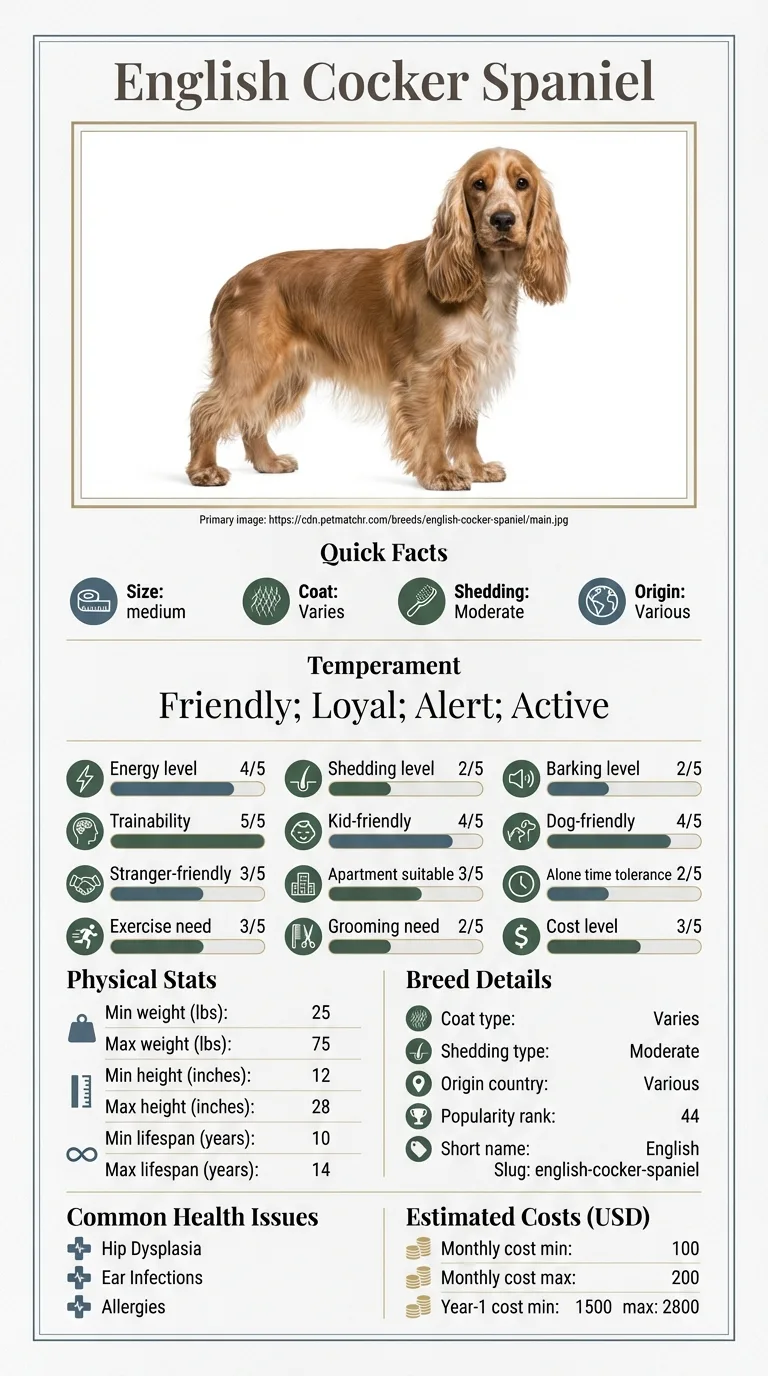
Some common health concerns include hip dysplasia, ear infections, and allergies. Regular vet check-ups and a healthy diet can help manage these risks. Be proactive about your dog's health to catch any issues early.
Consider factors like health concerns, temperament, and your lifestyle. Purebreds may come with a higher likelihood of specific health issues, while mixed breeds can offer more unpredictability but might be healthier. Evaluate what fits best for your family.
Typically, purebreds can be more expensive due to breeding costs and demand. Initial costs, such as adoption or purchase, can range from $1,500 to $2,800 in the first year. Factor in ongoing expenses like grooming and veterinary care.
Yes, mixed breed English Cocker Spaniels may inherit a wider variety of health traits than purebreds. This can sometimes make them less prone to certain genetic diseases that are common in purebreds, like hip dysplasia or allergies.
When adopting an English Cocker Spaniel mix, consider the size, temperament, and exercise needs of both breeds involved. Mixed breeds may have unpredictable traits, so it's essential to understand their potential behavior and health issues.
To help your purebred English Cocker Spaniel adjust to a mixed breed companion, introduce them slowly and supervise their interactions. Positive reinforcement and gradual exposure will help both dogs feel comfortable with each other.
Training methods can be similar for both purebred and mixed breed English Cocker Spaniels, but individual temperament may vary. It's essential to assess each dog's personality and adapt your training approach accordingly.
Consult a vet if your English Cocker Spaniel shows signs of distress, unusual behavior, or specific health concerns like persistent itching or ear infections. Early intervention is crucial for addressing potential health issues, especially in purebreds.
Research both purebreds and mixed breeds to understand their traits and health issues. Consider your lifestyle and how much time you can dedicate to training and exercise.
Gradual desensitization, providing engaging toys, and establishing a consistent routine can help ease separation anxiety.
Monthly costs typically range from $100 to $200, covering food, grooming, and veterinary expenses.
Grooming is needed regularly, about every 4 to 6 weeks, to keep their coat healthy and free of mats.
A one-page prep sheet for this condition: the signs, the questions to ask, what to get priced. Unlocks here.
You get: Vet visit prep sheet
No spam. One-click unsubscribe. See our privacy policy.
Preview page 1 before you decide.