English Cocker Spaniel Cruciate Ligament Injuries: What You Need to Know
Quick answer
What are quick tips for managing cruciate ligament injuries?
To manage English Cocker Spaniel cruciate ligament injuries, keep your dog at a healthy weight and limit high-impact activities. Regular, controlled exercise will help strengthen the muscles around the knee. Always consult your vet if you have concerns.
English Cocker Spaniel cruciate ligament injuries can lead to significant pain and mobility issues for your dog. Understanding this problem is crucial for their well-being.
Owners of English Cocker Spaniels, especially those who are active or have young dogs, may face challenges with these types of injuries. Busy families and first-time dog owners might not recognize the signs or understand the necessary care.
Important reminder
This guide is not medical advice. If your dog shows pain, sudden behavior change, or worsening symptoms, consult a licensed veterinarian.
Some links may be affiliate links. We may earn a commission at no extra cost to you. We only suggest products we believe are helpful for dog owners.
We research and check what we publish, but we do not warrant that any figure, date, price, or statement is accurate, complete, or current, and we accept no liability for any loss, cost, injury, or other harm arising from the use of this site. Use it as one reference among several. You remain responsible for your own decisions and for your dog's care - confirm anything that matters with a licensed veterinarian or another qualified professional before you act on it. Full disclaimer.
Check this first
When English Cocker Spaniel Cruciate Ligament Injuries Are an Emergency
It's crucial to know when an English Cocker Spaniel's cruciate ligament injuries require immediate attention. If your dog shows signs of severe pain, cannot bear weight on the affected leg, or has swelling in the knee area, these are red flags. Additionally, if you notice your dog is unusually lethargic or refuses to eat, you should call your vet right away.
If any of these apply, call your vet or an emergency clinic now. The rest of this page is for the cases that are not an emergency.
What this problem looks like
English Cocker Spaniel cruciate ligament injuries can be a painful and frustrating issue for both dogs and their owners. These injuries usually manifest as limping, difficulty standing, or an unwillingness to engage in physical activities. Owners may notice their dog favoring one leg or having trouble climbing stairs, which can lead to a drastic change in their everyday behavior.
Common triggers
Excessive jumping or running on hard surfaces
Sudden changes in direction during play
Obesity, which increases stress on joints
Cruciate ligament injuries are relatively common in English Cocker Spaniels, particularly due to their active nature. Studies suggest that around 20% of this breed may experience some form of knee injury in their lifetime, often due to their playful and energetic demeanor.
Why this happens
Breed factors
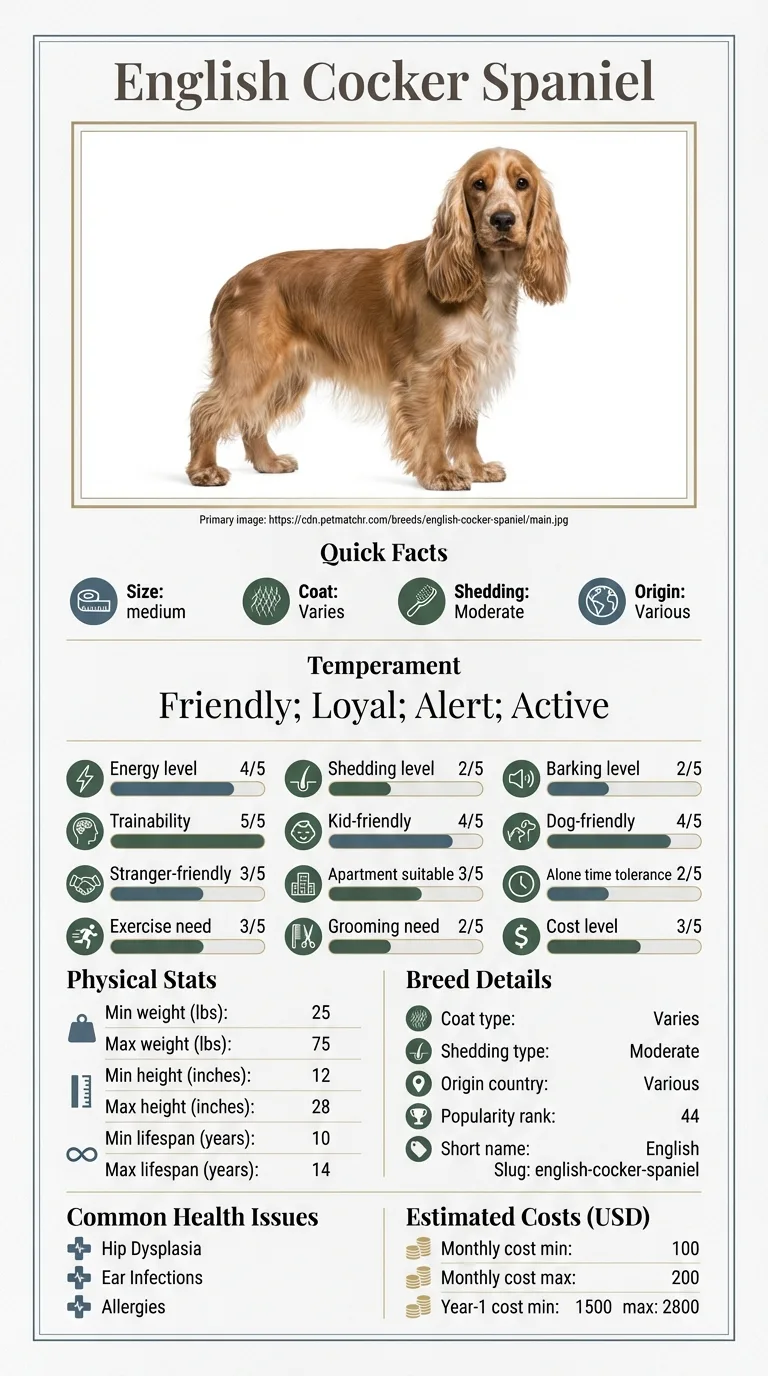
English Cocker Spaniels are medium-sized dogs that can be prone to certain genetic factors, which may increase their risk of cruciate ligament injuries. Their active nature and energetic play can put stress on their knees, especially if they engage in high-impact activities. Additionally, this breed often has a longer lifespan, which can lead to wear and tear on their joints over time.
Environment factors
Environmental factors can also contribute to cruciate ligament injuries in English Cocker Spaniels. Slippery floors and uneven surfaces can increase the risk of falls and accidents. Furthermore, lack of proper exercise or obesity can lead to weakened muscles that fail to support the ligaments properly, making injuries more likely.
What you can do at home (once it is not an emergency)
When to talk to your vet
If you notice any limping, swelling, or signs of pain in your dog’s legs, it's important to contact your veterinarian. They can assess the injury and recommend treatment options, which may include medication or physical therapy.
At home, alongside your vet's plan
Ensure your home is dog-proof by removing slippery rugs and providing secure footing on floors.
Incorporate low-impact exercises such as swimming or gentle walks to strengthen your dog's muscles without straining their joints.
Maintain a healthy weight by monitoring their diet and ensuring they get regular, appropriate exercise.
Mistakes that make Cruciate Ligament Injuries worse
Avoiding these common mistakes can help manage and prevent English Cocker Spaniel cruciate ligament injuries more effectively. Here are some behaviors to steer clear of.
Ignoring early signs of injury: Many owners overlook subtle signs like limping or reluctance to play. Not addressing these symptoms early can lead to more severe problems.
Allowing excessive jumping: Encouraging your dog to jump off furniture or over obstacles can strain their knees. Instead, create a safe environment that minimizes high jumps.
Over-exercising: While English Cocker Spaniels need regular exercise, too much can cause joint stress. Stick to moderate walks and play sessions, especially on hard surfaces.
Neglecting weight management: Excess weight puts extra pressure on your dog's joints. Ensure a balanced diet and regular exercise to maintain a healthy weight.
Skipping professional guidance: Some owners try DIY remedies for injuries. Always consult a vet for a proper diagnosis and treatment plan to avoid worsening the condition.
Forgetting to use supportive gear: Owners might not consider using knee braces or supportive harnesses. These tools can provide extra stability during recovery or prevention.
Postponing rehabilitation: After an injury, some owners rush their pets back to normal activity. Follow a vet-recommended rehabilitation program to ensure a safe return to play.
More English Cocker Spaniel health & behavior issues
Recovery from English Cocker Spaniel cruciate ligament injuries generally takes 4 to 6 months. You'll likely see improvements in the first few weeks with proper care and rehabilitation.
Success means your dog regains full mobility without pain. They should be able to return to normal activities like walking, running, and playing without limping.
When to Watch and Wait
In less severe cases, you can monitor your English Cocker Spaniel at home. If your dog shows mild limping, slight stiffness, or seems to have a reduced range of motion but is otherwise active and eating normally, you should keep an eye on the situation. Creating a comfortable space where your dog can rest can also help during this time.
English Cocker Spaniel Cruciate Ligament Injuries: What You Need to Know - When to Watch and Wait
Emily and Max's Journey to Recovery
Emily, a busy nurse living in a small apartment, noticed her English Cocker Spaniel, Max, limping after their daily walks. After a vet visit, she learned he had a cruciate ligament injury. Initially overwhelmed, she followed the vet’s advice on rest and physical therapy.
With time and dedication, Max slowly improved. Emily learned to adjust their playtime activities, focusing on gentle exercises. Eventually, Max was back to his playful self, running around with his favorite toys.
Key takeaway: With patience and the right care, recovery from English Cocker Spaniel cruciate ligament injuries is possible. Regular vet guidance and a tailored exercise plan can make all the difference.
Frequently asked questions
Why does my English Cocker Spaniel have cruciate ligament injuries?
English Cocker Spaniel cruciate ligament injuries can occur due to a combination of genetics, age, and activity level. These injuries are common in active breeds, especially with improper jumping or landing. Maintaining a healthy weight and avoiding excessive strain can help reduce the risk.
How can I stop my English Cocker Spaniel from getting cruciate ligament injuries?
To prevent English Cocker Spaniel cruciate ligament injuries, focus on gradual exercise increases and proper warm-up routines. Incorporate low-impact activities and ensure your dog has a balanced diet to maintain a healthy weight. Regular veterinary check-ups can also help identify any predispositions to injury.
What are the symptoms of cruciate ligament injuries in English Cocker Spaniels?
Common symptoms of cruciate ligament injuries include limping, difficulty in movement, and swelling around the knee. Your English Cocker Spaniel may also show signs of pain when putting weight on the affected leg. If you notice these signs, consult your vet promptly.
What treatments are available for cruciate ligament injuries in English Cocker Spaniels?
Treatment options for English Cocker Spaniel cruciate ligament injuries vary from rest and physical therapy to surgical intervention. Surgery may be recommended for severe cases to stabilize the knee. Your vet will help determine the best approach for your dog.
Is surgery necessary for all English Cocker Spaniel cruciate ligament injuries?
Not all English Cocker Spaniel cruciate ligament injuries require surgery. Minor injuries may heal with rest and rehabilitation. However, if your dog is active or the injury is severe, surgery is often recommended to ensure long-term joint stability.
Can older English Cocker Spaniels experience cruciate ligament injuries?
Yes, older dogs can be more prone to cruciate ligament injuries due to age-related wear and tear. Regular vet check-ups and maintaining a healthy weight can help reduce the risk.
How can I prevent English Cocker Spaniel cruciate ligament injuries?
Preventative measures include ensuring your dog maintains a healthy weight, engaging in low-impact exercise, and practicing safe play habits. Training your dog to avoid jumping and rough play can also be beneficial.
When should I take my English Cocker Spaniel to the vet for a cruciate ligament injury?
If your dog shows persistent signs of pain, swelling, or limping, it's time to visit the vet. Early intervention can prevent further damage and improve recovery outcomes.
Are certain activities worse for English Cocker Spaniels with a history of cruciate ligament injuries?
Yes, high-impact activities like running on hard surfaces or jumping can exacerbate existing injuries. It's best to stick to low-impact exercises and consult your vet for tailored recommendations.
What are quick tips for managing cruciate ligament injuries?
To manage English Cocker Spaniel cruciate ligament injuries, keep your dog at a healthy weight and limit high-impact activities. Regular, controlled exercise will help strengthen the muscles around the knee. Always consult your vet if you have concerns.
Health
How can I help my injured English Cocker Spaniel recover?
Support your injured English Cocker Spaniel's recovery with a calm environment, limited activity, and a proper diet. Follow your vet's recommendations for rehabilitation and consider physical therapy for best results.
Health
What should I do if my English Cocker Spaniel shows signs of pain?
If your English Cocker Spaniel shows signs of pain, such as limping or reluctance to move, take them to the vet as soon as possible. Early intervention can make a significant difference in recovery.
A fuller vet-visit kit for English Cocker Spaniel Cruciate Ligament Injuries
The free prep sheet covers the same-day warning signs, a symptom log and the questions to ask. We are considering a fuller kit that adds a cost worksheet for the usual tests and treatments (US price ranges with their sources) and a plain-English guide to ways of covering the bill. It is not built yet; this list tells us whether it is worth building.
One email, no spam, unsubscribe anytime. Information only, not veterinary advice.