Behavior
What are quick tips for managing anesthesia sensitivity in English Cocker Spaniels?
Always inform your vet about your dog's anesthesia sensitivity. Ask for alternative drugs or dosages tailored to their needs.

Quick answer
What are quick tips for managing anesthesia sensitivity in English Cocker Spaniels?
Always inform your vet about your dog's anesthesia sensitivity. Ask for alternative drugs or dosages tailored to their needs.
English Cocker Spaniel anesthesia sensitivity can be a serious concern for owners. It affects how your dog responds to anesthesia during procedures.
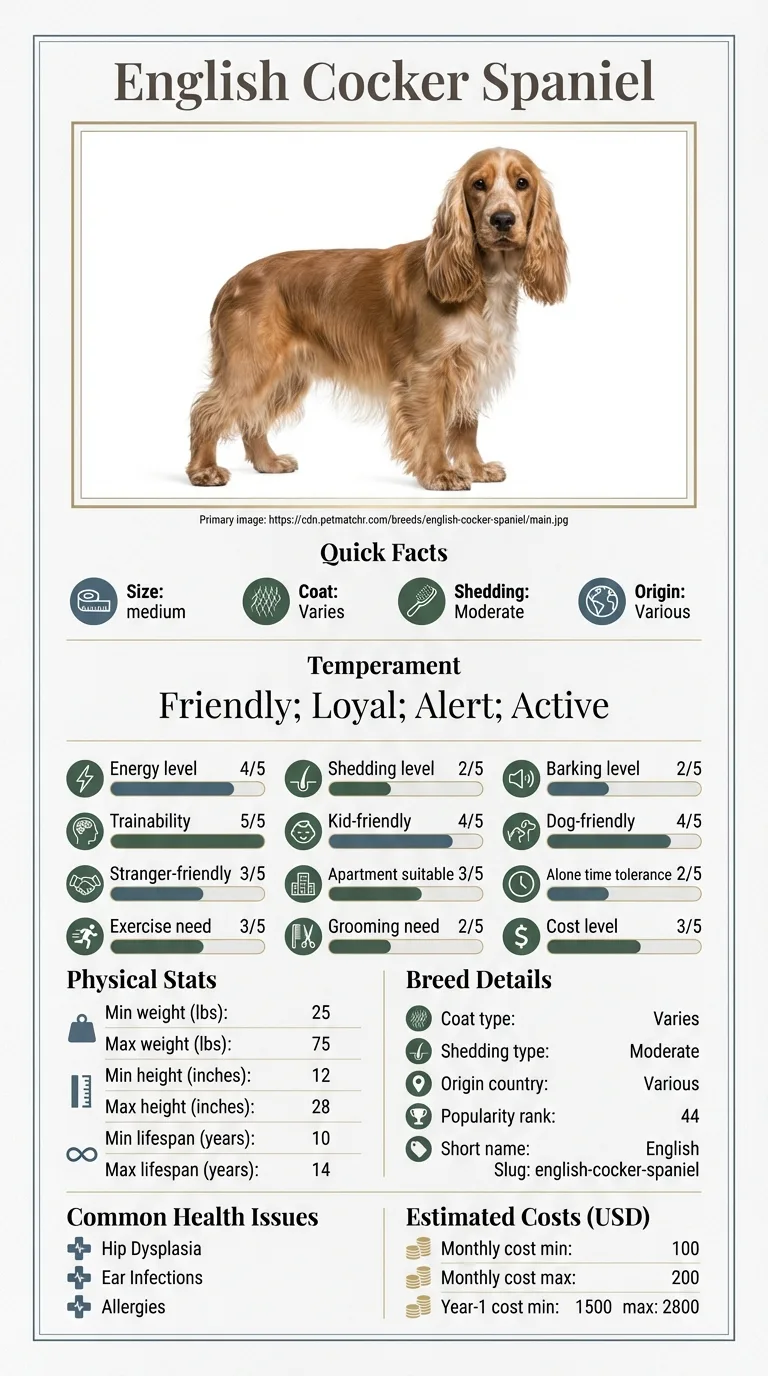
Owners of English Cocker Spaniels, especially those with dogs needing surgery or regular vet visits, may find themselves particularly worried. First-time dog owners might feel overwhelmed, unsure how to handle their dog's sensitivity.
This guide is not medical advice. If your dog shows pain, sudden behavior change, or worsening symptoms, consult a licensed veterinarian.
Some links may be affiliate links. We may earn a commission at no extra cost to you. We only suggest products we believe are helpful for dog owners.
We research and check what we publish, but we do not warrant that any figure, date, price, or statement is accurate, complete, or current, and we accept no liability for any loss, cost, injury, or other harm arising from the use of this site. Use it as one reference among several. You remain responsible for your own decisions and for your dog's care - confirm anything that matters with a licensed veterinarian or another qualified professional before you act on it. Full disclaimer.
Check this first
Recognizing when anesthesia sensitivity in your English Cocker Spaniel is an emergency can be crucial for their health. If your dog exhibits severe reactions such as difficulty breathing, excessive drooling, or loss of consciousness after anesthesia, you should call your vet immediately. Other red flags include seizures or extreme lethargy that doesn’t improve over time.
In less severe cases, you can monitor your dog at home. If they show mild signs like slight disorientation or temporary drowsiness, keep a close eye on them. Ensure they are comfortable and hydrated, and give them time to recover.
If these symptoms persist beyond a day or worsen, consult your vet for advice.
It's important to have a plan in place if your English Cocker Spaniel has known anesthesia sensitivity. Discussing this condition with your vet ahead of any procedures can help manage their care effectively. Always err on the side of caution; when in doubt, reach out to your veterinarian for guidance.
If any of these apply, call your vet or an emergency clinic now. The rest of this page is for the cases that are not an emergency.
English Cocker Spaniel anesthesia sensitivity is a concerning issue for many owners. This sensitivity can manifest during routine procedures, such as dental cleanings or surgeries, where anesthetics are required. Affected dogs may experience unusual reactions, making recovery more challenging and leading to increased anxiety for both the pet and the owner.
Anesthesia sensitivity is relatively common among English Cocker Spaniels, with many owners reporting varying degrees of sensitivity. While not every dog will experience severe reactions, awareness and caution are advised, especially for those with known health issues.
English Cocker Spaniels can have a genetic predisposition to anesthesia sensitivity. Their unique metabolism may affect how they process certain drugs, making them more vulnerable during procedures requiring anesthesia.
Environmental factors, such as stress during vet visits or previous traumatic experiences, can also contribute to anesthesia sensitivity. A lack of proper acclimatization to new places can heighten anxiety and sensitivity in these dogs.
Consult your vet if you notice severe reactions to anesthesia or if your dog has had multiple sensitivity issues. A veterinarian can assess underlying health problems and discuss safer anesthesia options.
Here are some common mistakes you might be making that can worsen your English Cocker Spaniel's anesthesia sensitivity. Instead of helping, these actions can lead to more stress for both you and your dog.
Start here: English Cocker Spaniel Most Common Genetic Disorders
See all English Cocker Spaniel health problems, which breeds are prone to anesthesia sensitivity, or the full English Cocker Spaniel breed guide for temperament, exercise needs and ownership costs.
Addressing anesthesia sensitivity in your English Cocker Spaniel typically takes 3 to 6 months of consistent care and management.
Success means your dog has a reduced reaction to anesthesia, allowing for safer veterinary procedures, and shows less anxiety about vet visits overall.
Rita, a first-time dog owner from San Diego, noticed her English Cocker Spaniel, Max, would panic during vet visits. After his first surgery, he reacted poorly to anesthesia, leaving Rita worried about future treatments. She consulted her vet and learned about training techniques to ease Max's anxiety. With patience, she used calming exercises and desensitization strategies during regular visits. Over six months, Max became much calmer at the vet, and his anxiety around anesthesia significantly decreased.
Key takeaway: With consistent training and support, even anxious dogs like Max can learn to cope better with anesthesia sensitivity.
English Cocker Spaniels may have anesthesia sensitivity due to their unique metabolism and genetics. Certain breeds, including English Cockers, can react differently to anesthetic drugs, making it crucial to inform your vet before any procedure. This answer relates to English Cocker Spaniel anesthesia sensitivity.
While you can't completely eliminate anesthesia sensitivity, you can minimize risks by working closely with your veterinarian. Discuss alternative anesthetics and ensure they have your dog's complete medical history to tailor the approach.
After anesthesia, be on the lookout for excessive grogginess, difficulty breathing, or unusual behavior. If any of these symptoms occur, contact your veterinarian immediately for guidance.
Yes, English Cocker Spaniels are at a higher risk for complications related to anesthesia due to their sensitivity. Always consult with your vet about any pre-existing health concerns, especially common issues like allergies or breathing problems.
Before anesthesia, ensure your dog has a thorough pre-anesthetic evaluation. This should include blood tests and discussing any previous reactions to anesthesia to help your vet make informed decisions.
If your English Cocker Spaniel shows signs of a bad reaction to anesthesia, such as difficulty breathing or excessive drooling, contact your vet immediately. They may need to adjust their approach or provide specific treatments to counteract the sensitivity.
Yes, older English Cocker Spaniels may be more prone to anesthesia sensitivity due to age-related health issues. It's essential to discuss any concerns with your vet before surgery or procedures requiring anesthesia.
To prepare your English Cocker Spaniel for anesthesia, ensure they are healthy and up-to-date on vaccinations. Discuss any previous reactions or sensitivities with your vet, who may recommend pre-anesthetic testing or alternative options.
Some breeds, including the English Cocker Spaniel, may have a higher likelihood of anesthesia sensitivity due to genetic factors. It's important to inform your vet about your dog's breed and any known sensitivities during consultations.
Always inform your vet about your dog's anesthesia sensitivity. Ask for alternative drugs or dosages tailored to their needs.
Ensure your dog is healthy and receives a pre-anesthetic evaluation to identify any potential issues. Discuss any concerns with your vet.
If you notice any adverse reactions like excessive lethargy or breathing issues, contact your veterinarian immediately. Prompt action is crucial.
A one-page prep sheet for this condition: the signs, the questions to ask, what to get priced. Unlocks here.
You get: Vet visit prep sheet
No spam. One-click unsubscribe. See our privacy policy.
See a sample page before you decide.
Early access list
The free prep sheet covers the same-day warning signs, a symptom log and the questions to ask. We are considering a fuller kit that adds a cost worksheet for the usual tests and treatments (US price ranges with their sources) and a plain-English guide to ways of covering the bill. It is not built yet; this list tells us whether it is worth building.
One email, no spam, unsubscribe anytime. Information only, not veterinary advice.