Behavior
What are quick tips for managing Doberman Pinscher neurologic disease?
Ensure your dog has a balanced diet, regular exercise, and consistent veterinary check-ups to catch any issues early.

Quick answer
What are quick tips for managing Doberman Pinscher neurologic disease?
Ensure your dog has a balanced diet, regular exercise, and consistent veterinary check-ups to catch any issues early.
Doberman Pinscher neurologic disease can pose serious challenges for both dogs and their owners. Understanding this condition is crucial for their well-being.
Typically, owners of Dobermans may struggle with neurologic disease, especially those who are first-time dog parents or those unaware of the breed's health risks. This condition can be particularly concerning for busy families or individuals who rely on their dogs for companionship.
This guide is not medical advice. If your dog shows pain, sudden behavior change, or worsening symptoms, consult a licensed veterinarian.
Some links may be affiliate links. We may earn a commission at no extra cost to you. We only suggest products we believe are helpful for dog owners.
We research and check what we publish, but we do not warrant that any figure, date, price, or statement is accurate, complete, or current, and we accept no liability for any loss, cost, injury, or other harm arising from the use of this site. Use it as one reference among several. You remain responsible for your own decisions and for your dog's care - confirm anything that matters with a licensed veterinarian or another qualified professional before you act on it. Full disclaimer.
Check this first
Recognizing when neurologic disease in your Doberman Pinscher requires immediate veterinary attention can be crucial. Emergency signs include severe disorientation, seizures, sudden loss of coordination, and inability to stand or walk. If your dog is showing any of these symptoms, call your vet or emergency animal clinic right away.
On the other hand, if your Doberman is experiencing mild symptoms like slight wobbliness or occasional trembling, these may not indicate an emergency. In such cases, monitor their behavior and keep track of any changes. It's important to have a plan in place, which can include scheduling a vet visit for a thorough examination.
Always err on the side of caution. If you're unsure, it's better to reach out to a professional. Your veterinarian can guide you on whether to wait and monitor or seek immediate help.
If any of these apply, call your vet or an emergency clinic now. The rest of this page is for the cases that are not an emergency.
Doberman Pinschers are known for their loyalty and intelligence, but they can face serious health issues like neurologic disease. This condition may manifest as twitching, difficulty walking, or even seizures. Owners may notice their dogs struggling with coordination or changes in behavior, which can be distressing.
Neurologic disease is relatively common in Doberman Pinschers, with some studies showing a 291% higher risk compared to other breeds. This makes awareness and early identification crucial for treatment and management.
Doberman Pinschers are genetically predisposed to certain neurologic diseases. Their strong, confident nature can sometimes mask signs of discomfort until the condition becomes severe. This breed's unique neurological structure may make them more susceptible to conditions like Wobbler Syndrome.
Environmental factors, such as stress and lack of proper training, can exacerbate neurologic issues in Dobermans. High-stress situations, like frequent loud noises or changes in their routine, can trigger anxiety. Additionally, improper training techniques can lead to behavior problems that stress them further.
If you notice persistent symptoms such as coordination problems, unusual behavior changes, or signs of pain, contact your vet immediately. Early intervention is crucial for managing neurologic diseases effectively.
Here are common mistakes that can worsen Doberman Pinscher neurologic disease or delay improvement. Avoiding these behaviors can help your dog lead a healthier life.
Start here: Doberman Pinscher Most Common Genetic Disorders: Screening
See all Doberman Pinscher health problems, which breeds are prone to neurologic disease, or the full Doberman Pinscher breed guide for temperament, exercise needs and ownership costs.
Managing Doberman Pinscher neurologic disease typically takes several months of consistent care and veterinary follow-up. Owners should expect to see gradual improvements over this period, with some dogs responding better than others.
Success looks like a noticeable reduction in symptoms, improved behavior, and a better quality of life for the dog. Owners should feel empowered with effective training techniques and a solid support system.
Sarah, a busy nurse in Atlanta, adopted Max, a Doberman Pinscher who suddenly started showing signs of neurologic disease. He would have tremors and sometimes struggled to walk straight. Sarah felt overwhelmed and unsure about how to help him. After researching, she found a local vet who specialized in neurologic issues. Together, they developed a training plan and made some lifestyle adjustments. With patience and consistency, Sarah noticed that Max's symptoms began to improve. He became more stable on his feet and even regained some of his playful energy. They now enjoy long walks and playtime together, and Sarah feels more confident as a dog owner.
Key takeaway: With the right support and consistent training, managing a Doberman Pinscher with neurologic disease can lead to a better quality of life for both the dog and the owner.
Doberman Pinschers are genetically predisposed to certain neurologic diseases due to their breeding history. Factors like age, genetics, and environmental influences can contribute to the development of these conditions. Regular veterinary check-ups can help catch any issues early. This answer relates to Doberman Pinscher neurologic disease.
While you can't completely prevent neurologic disease, you can reduce the risk by providing a healthy diet, regular exercise, and routine veterinary care. Early identification of symptoms can lead to better management and treatment options. Always consult your vet for tailored advice.
Symptoms can include weakness, loss of coordination, seizures, or changes in behavior. If you notice these signs, it's important to get your Doberman evaluated by a veterinarian. Early intervention is key to better outcomes.
Positive reinforcement training can help manage behavioral changes associated with neurologic disease. Tailored training plans should focus on maintaining your dog's physical and mental stimulation. Consult a professional trainer for strategies suited to your dog's needs.
The prognosis varies depending on the specific condition and its severity. Some dogs can lead relatively normal lives with proper management, while others may experience significant challenges. Regular veterinary follow-ups are crucial to monitor your dog's health.
Early signs of neurologic disease in Doberman Pinschers can include unsteady walking, difficulty in coordination, or changes in behavior. If you notice your Doberman struggling to stand or showing signs of confusion, it’s important to consult a vet.
Yes, older Doberman Pinschers may experience more severe symptoms of neurologic disease due to age-related health decline. Their bodies might not cope as well with the disease, making early detection and treatment even more crucial.
If your Doberman Pinscher shows signs of neurologic disease, it's essential to schedule a vet appointment promptly. The vet can perform tests to diagnose the issue and recommend a treatment plan tailored to your dog's needs.
Training a Doberman Pinscher with neurologic disease may require patience and specialized techniques. Focus on positive reinforcement methods and keep training sessions short, as your dog may have difficulty concentrating for long periods.
Yes, certain neurologic diseases can have a genetic component in Doberman Pinschers. If you have concerns about your dog’s lineage, discussing this with a breeder or vet can provide insights into potential risks.
Ensure your dog has a balanced diet, regular exercise, and consistent veterinary check-ups to catch any issues early.
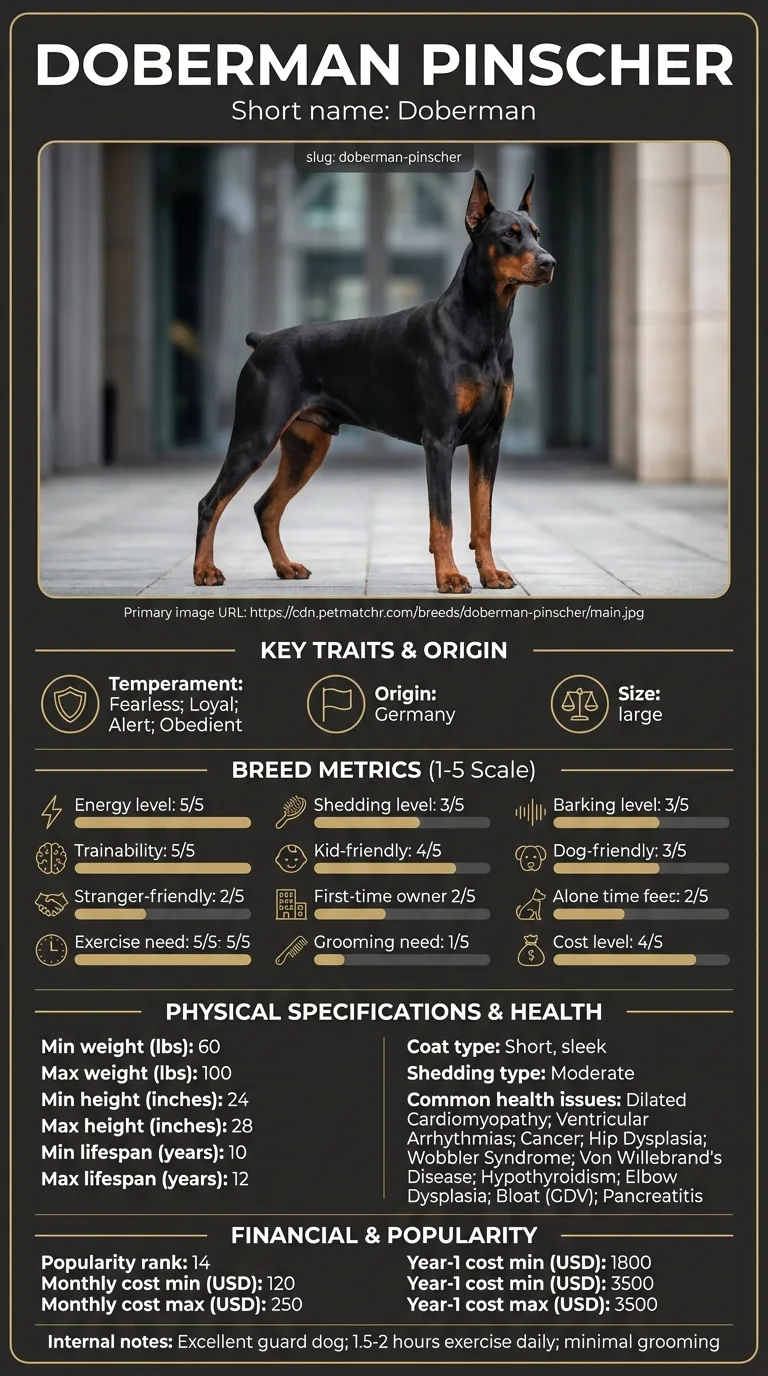
Monthly care costs for a Doberman Pinscher typically range from $120 to $250, depending on health needs and veterinary care.
Regular health checks should include screenings for heart conditions, hip dysplasia, and neurologic assessments.
Yes, tailored training can improve behavior and quality of life for dogs with neurologic issues. Positive reinforcement is recommended.
A one-page prep sheet for this condition: the signs, the questions to ask, what to get priced. Unlocks here.
You get: Vet visit prep sheet
No spam. One-click unsubscribe. See our privacy policy.
See a sample page before you decide.
Early access list
The free prep sheet covers the same-day warning signs, a symptom log and the questions to ask. We are considering a fuller kit that adds a cost worksheet for the usual tests and treatments (US price ranges with their sources) and a plain-English guide to ways of covering the bill. It is not built yet; this list tells us whether it is worth building.
One email, no spam, unsubscribe anytime. Information only, not veterinary advice.