DogBreedCompass
← Back to breed profile

Doberman Pinscher Gastric Dilatation-Volvulus (GDV/Bloat): What You Need to Know

Gastric dilatation-volvulus, or GDV/bloat, is a serious condition that can affect Doberman Pinschers. (Doberman Pinscher gastric dilatation-volvulus (gdv/bloat))

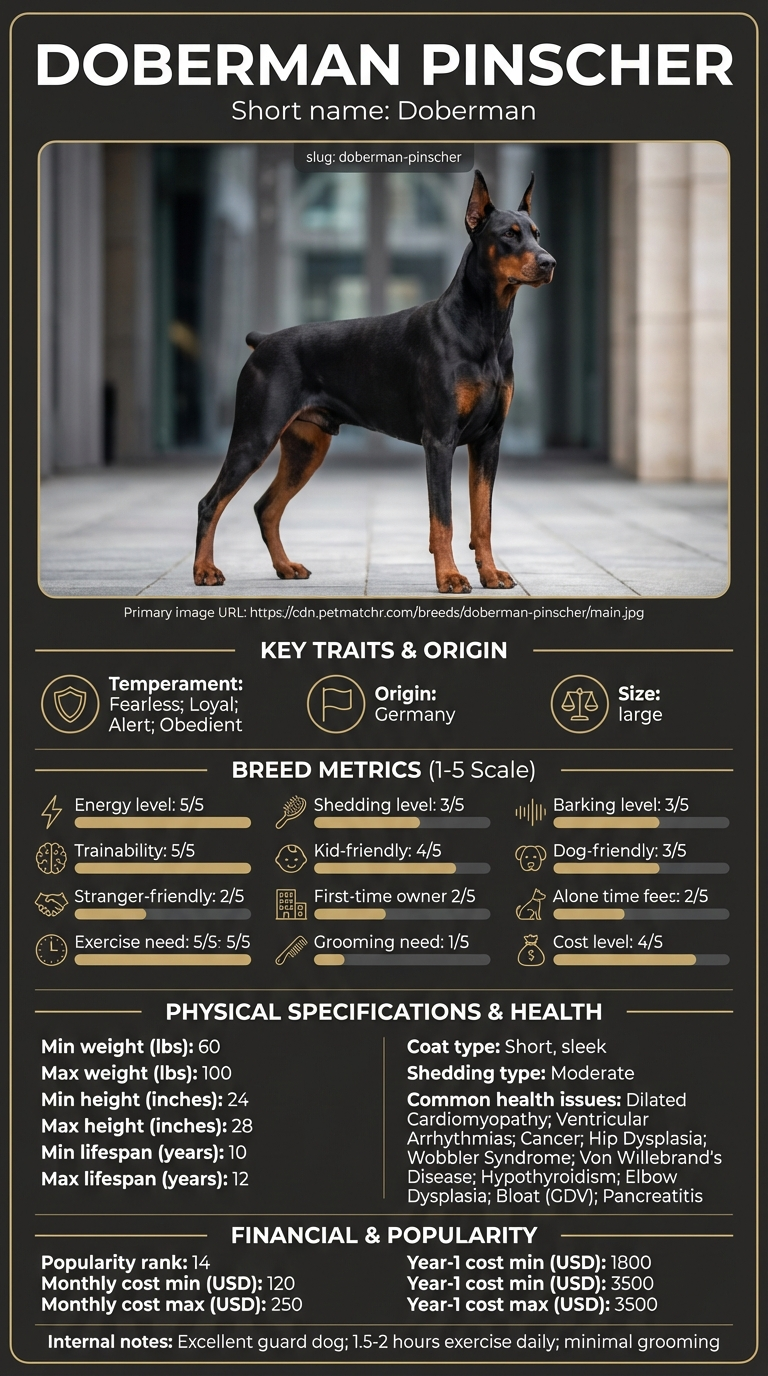
Doberman Pinscher Gastric Dilatation-Volvulus (GDV/Bloat): What You Need to Know infographic

Owners of Doberman Pinschers, especially those who are new to the breed, often face this challenge. This condition can be particularly distressing for families who love their dogs and want to ensure their health.

Important reminder

This guide is not medical advice. If your dog shows pain, sudden behavior change, or worsening symptoms, consult a licensed veterinarian.

Some links may be affiliate links. We may earn a commission at no extra cost to you. We only suggest products we believe are helpful for dog owners.

What this problem looks like

Doberman Pinscher gastric dilatation-volvulus (GDV/bloat) is a serious and life-threatening condition where the stomach fills with gas and twists. This can happen suddenly and is often triggered by eating large meals or exercising right after eating. It’s a common issue in large breeds like Dobermans, so awareness is crucial for owners.

Common triggers

  • Eating large meals quickly
  • Exercising immediately after meals
  • Stressful situations or anxiety

Gastric dilatation-volvulus occurs in Doberman Pinschers more frequently than in many other breeds. It's important for owners to recognize the signs, as this condition can escalate quickly and requires immediate veterinary attention.

Why this happens

Breed factors

Doberman Pinschers are prone to gastric dilatation-volvulus (GDV) due to their deep, narrow chests. This breed's size and structure can cause their stomachs to twist, especially when they eat too quickly or exercise right after a meal. Additionally, genetic factors may make some Dobermans more susceptible to this serious condition.

Environment factors

Environmental factors also play a role in GDV. Stressful situations, such as loud noises or changes in routine, can trigger anxiety, leading to rapid eating or drinking. Feeding habits, like offering one large meal a day, can increase the risk, as can engaging in vigorous activity shortly after eating.

What you can try

At-home strategies

  • Feed smaller meals more frequently, ideally 2-3 times a day, to reduce stomach stress.
  • Use a slow feeder bowl to encourage your Doberman to eat slowly, minimizing gulping.
  • Create a calm eating environment by reducing distractions and noise during meal times.
  • Limit vigorous exercise for at least an hour after meals to allow for proper digestion.
  • Monitor your dog's behavior for signs of anxiety or stress and provide a comfortable space for relaxation.

When to consider a trainer

If your Doberman shows signs of anxiety during meals or other stressful situations, consider consulting a professional dog trainer. They can help address behavioral issues and introduce techniques to manage stress effectively.

When to talk to your vet

If you notice symptoms like bloating, restlessness, or difficulty breathing, seek immediate veterinary assistance. GDV is a life-threatening condition that requires urgent medical intervention.

Realistic expectations

Working through Doberman Pinscher gastric dilatation-volvulus (gdv/bloat) concerns typically takes several weeks. During this time, it's important to establish routine feeding practices and monitor your dog's behavior closely.

Success means your Doberman is eating comfortably without signs of distress and is maintaining a healthy weight. You'll also notice improved overall behavior and reduced anxiety around feeding times.

Mistakes that make this worse

Avoiding certain behaviors can help manage your Doberman Pinscher's gastric dilatation-volvulus (GDV/bloat). Here are common mistakes owners make and safer alternatives to consider.

  • Feeding large meals at once: This can increase the risk of bloat. Instead, divide meals into smaller portions throughout the day.
  • Allowing vigorous exercise after eating: This can stress the stomach. Wait at least an hour after meals before high-energy activities.
  • Ignoring early signs of distress: Symptoms like restlessness or a bloated stomach are serious. Always consult a vet if you notice these signs.
  • Overlooking the importance of hydration: Dehydration can worsen bloat. Ensure your Doberman has constant access to fresh water.
  • Not monitoring food type: Some foods can increase gas production. Choose high-quality, easily digestible dog food.
  • Neglecting regular vet check-ups: Routine visits can help catch health issues early. Schedule regular appointments to keep your Doberman healthy.

When Doberman Pinscher Gastric Dilatation-Volvulus (GDV/Bloat) is an Emergency

Recognizing when Doberman Pinscher gastric dilatation-volvulus (GDV/bloat) is an emergency is crucial. This life-threatening condition can escalate quickly, so it's vital to know the warning signs. If your Doberman shows severe abdominal swelling, restlessness, or attempts to vomit without success, these are red flags. Call your vet immediately if you notice these symptoms.

Other symptoms that indicate an emergency include excessive drooling, a rapid heart rate, and pale gums. If your dog is in severe pain or shows signs of shock, such as weakness or collapse, don’t wait. These signs require urgent veterinary attention.

On the other hand, if your Doberman exhibits mild signs like slight bloating or mild discomfort, you can monitor the situation closely. Keep a watchful eye on their behavior and appetite. If symptoms worsen or persist for more than a few hours, it’s best to consult your vet. Having a plan to address minor cases will help you avoid panic while still ensuring your dog's safety.

Doberman Pinscher Gastric Dilatation-Volvulus (GDV/Bloat): What You Need to Know - When Doberman Pinscher Gastric Dilatation-Volvulus (GDV/Bloat) is an Emergency

Sarah and Max's Journey with GDV

Sarah, a first-time Doberman owner, was alarmed when her dog Max started showing signs of discomfort after meals. After researching, she learned about gastric dilatation-volvulus (gdv/bloat) and realized the risks. With the vet's guidance, Sarah adjusted Max's feeding schedule to smaller, more frequent meals and encouraged him to eat slowly using a special bowl. Over time, Max became more comfortable, and Sarah felt relief knowing she was managing the risk effectively.

Key takeaway: Establishing a proper feeding routine and monitoring your Doberman can significantly reduce the risk of gastric dilatation-volvulus (gdv/bloat).

Frequently asked questions

What is Doberman Pinscher gastric dilatation-volvulus (gdv/bloat)?

Doberman Pinscher gastric dilatation-volvulus (gdv/bloat) is a serious condition where the stomach fills with gas and twists, leading to a life-threatening emergency. Symptoms can include a swollen abdomen, restlessness, and attempts to vomit without producing anything. Quick veterinary intervention is crucial.

What causes gastric dilatation-volvulus (gdv/bloat) in Doberman Pinschers?

While the exact cause of gastric dilatation-volvulus (gdv/bloat) isn't fully understood, factors like eating large meals quickly, high-stress environments, or genetic predisposition can increase the risk. Dobermans, especially those with a family history of the condition, are particularly vulnerable.

How can I prevent my Doberman from getting gastric dilatation-volvulus (gdv/bloat)?

To help prevent gastric dilatation-volvulus (gdv/bloat), feed your Doberman smaller, more frequent meals instead of one large meal. Additionally, avoid vigorous exercise immediately after eating and consider using elevated feeding bowls. Regular vet check-ups can also help monitor for risk factors.

What should I do if I think my Doberman has gdv/bloat?

If you suspect your Doberman has gastric dilatation-volvulus (gdv/bloat), seek emergency veterinary care immediately. Time is critical, as this condition can progress rapidly and may require surgical intervention to save your dog's life.

Are there any training methods to reduce the risk of gastric dilatation-volvulus (gdv/bloat)?

Training methods such as teaching your Doberman to eat slowly can help reduce the risk of gastric dilatation-volvulus (gdv/bloat). Use puzzle feeders or specially designed bowls that slow down eating. Positive reinforcement can make this process enjoyable for your dog.

Why does my Doberman Pinscher have gastric dilatation-volvulus (gdv/bloat)?

If your Doberman has experienced gastric dilatation-volvulus (gdv/bloat), it could be due to various factors, including genetics, stress, or dietary habits. Consulting with a veterinarian can help you identify specific triggers and preventative measures.

What are the early signs of gastric dilatation-volvulus (GDV/bloat) in Doberman Pinschers?

Early signs of GDV in Doberman Pinschers include restlessness, pacing, and attempts to vomit without producing anything. You may also notice a swollen abdomen and excessive drooling. If you see these symptoms, it's crucial to seek veterinary help immediately.

Can gastric dilatation-volvulus (GDV/bloat) happen to older Doberman Pinschers?

Yes, older Doberman Pinschers are at a higher risk for GDV due to age-related changes in their body. Regular vet check-ups become even more important as your dog ages. If your older Doberman shows signs of discomfort or bloating, contact your vet right away.

How can I reduce the risk of my Doberman Pinscher developing GDV/bloat?

To minimize the risk of GDV, feed your Doberman smaller, more frequent meals instead of one large meal. Avoid vigorous exercise right after eating and consider using a slow feeder to prevent gulping. These small changes can make a big difference in your dog's health.

Is gastric dilatation-volvulus (GDV/bloat) hereditary in Doberman Pinschers?

While there is no definitive answer, some studies suggest that genetic predisposition may play a role in GDV development. If you have a Doberman with a family history of bloat, discuss this with your vet for personalized preventive strategies.

What should I do if I suspect my Doberman Pinscher has GDV/bloat?

If you suspect GDV in your Doberman Pinscher, take them to the vet immediately. This condition can progress rapidly and is life-threatening. Quick action is essential to increase the chances of a positive outcome.
Quick answers

View more answers
Behavior

What are quick tips for Doberman Pinscher gastric dilatation-volvulus (gdv/bloat)?

Feed smaller meals throughout the day, avoid vigorous exercise after eating, and monitor for signs of distress. If your dog shows symptoms of bloat, seek veterinary help immediately.

Health

How can I tell if my Doberman is at risk for gdv/bloat?

Signs of risk include a family history of bloat, being a large breed, and eating quickly. Regular vet check-ups can help assess your dog's health.

Health

What are some common symptoms of gastric dilatation-volvulus (gdv/bloat)?

Common symptoms include a swollen abdomen, restlessness, excessive salivation, and attempts to vomit without success. If you notice these signs, contact your vet right away.

Training

Can training help prevent gastric dilatation-volvulus (gdv/bloat)?

Yes, training your Doberman to eat more slowly can help reduce the risk. Use puzzle feeders or slow-feed bowls to promote better eating habits.

Related DogBreedCompass guides

Related guides