Health
What should I feed a diabetic Doberman Pinscher?
Feed a balanced diet with low carbohydrates and high fiber to stabilize blood sugar levels.

Quick answer
What should I feed a diabetic Doberman Pinscher?
Feed a balanced diet with low carbohydrates and high fiber to stabilize blood sugar levels.
Doberman Pinscher diabetes is a serious health issue that can affect your dog’s quality of life. Understanding this condition is crucial for managing your pet's health.
Many Doberman owners face challenges when their beloved pets are diagnosed with diabetes. This includes families with older Dobermans or those who may not be familiar with managing chronic health issues.
This guide is not medical advice. If your dog shows pain, sudden behavior change, or worsening symptoms, consult a licensed veterinarian.
Some links may be affiliate links. We may earn a commission at no extra cost to you. We only suggest products we believe are helpful for dog owners.
We research and check what we publish, but we do not warrant that any figure, date, price, or statement is accurate, complete, or current, and we accept no liability for any loss, cost, injury, or other harm arising from the use of this site. Use it as one reference among several. You remain responsible for your own decisions and for your dog's care - confirm anything that matters with a licensed veterinarian or another qualified professional before you act on it. Full disclaimer.
Check this first
Recognizing when your Doberman Pinscher's diabetes is an emergency can save their life. If you notice any of the following red-flag signs, call your vet immediately:
- Sudden lethargy or weakness - Vomiting or diarrhea - Difficulty breathing or rapid breathing - Excessive thirst or urination changes - Seizures or disorientation
These symptoms can indicate serious complications like diabetic ketoacidosis, which requires urgent medical attention. On the other hand, if your Doberman is showing mild signs like increased hunger or occasional thirst, monitor them closely. While these can be concerning, they may not indicate an immediate crisis.
You can help manage their condition with a balanced diet and regular insulin injections. Schedule a follow-up appointment with your vet to discuss any changes in behavior or health. Keeping a log of their food intake and daily activities can also be beneficial. This way, you’ll be prepared to share important information during vet visits. Remember, staying proactive and informed is key to managing Doberman Pinscher diabetes effectively.
If any of these apply, call your vet or an emergency clinic now. The rest of this page is for the cases that are not an emergency.
Doberman Pinscher diabetes is an endocrine disorder that typically develops in older dogs. This condition can lead to increased thirst, frequent urination, weight loss, and lethargy. Managing diabetes in Dobermans requires careful attention to diet, exercise, and insulin administration, which can be quite challenging for owners.
Diabetes is relatively common in Doberman Pinschers, particularly in older adults. It's estimated that about 1 in 100 dogs will develop diabetes, but the risk is higher for this breed compared to others. Early detection and management are crucial to maintaining their quality of life.
Doberman Pinschers can be genetically predisposed to diabetes, particularly as they age. Their size and metabolism may also contribute to this risk, making them more vulnerable compared to smaller breeds.
Environmental factors, such as obesity and lack of exercise, play a significant role in developing diabetes. Poor diet and stress can also lead to weight gain, further increasing the risk.
Reach out to your vet if you notice symptoms such as increased thirst, frequent urination, or unexplained weight loss. Early intervention is key to managing diabetes effectively.
Avoiding certain common behaviors can help manage your Doberman Pinscher's diabetes more effectively. Here are some mistakes to watch out for.
Start here: Doberman Pinscher Most Common Genetic Disorders: Screening
See all Doberman Pinscher health problems, which breeds are prone to diabetes, or the full Doberman Pinscher breed guide for temperament, exercise needs and ownership costs.
Managing Doberman Pinscher diabetes typically takes 3 to 6 months to stabilize blood sugar levels. Regular vet visits and consistent treatment are crucial during this period.
Success looks like your Doberman maintaining stable blood glucose levels, showing improved energy, and a healthier weight. You'll also notice a better quality of life and fewer complications.
Marissa, a busy nurse in San Francisco, noticed her Doberman, Max, was drinking water constantly and losing weight. After a vet visit, she learned Max had diabetes. Initially overwhelmed, Marissa committed to a strict routine of insulin injections and a special diet. With patience, she adjusted to monitoring Max's blood sugar levels. After a few months, Max’s energy returned, and he was back to his playful self. Marissa felt a deep sense of relief and pride in managing his condition.
Key takeaway: Managing Doberman Pinscher diabetes requires dedication and routine, but with the right care, your dog can live a happy, healthy life.
Signs of diabetes in a Doberman Pinscher can include increased thirst and urination, weight loss despite a good appetite, and lethargy. If you notice these symptoms, it's crucial to consult your vet for a proper diagnosis.
Managing Doberman Pinscher diabetes involves a balanced diet, regular exercise, and consistent insulin treatment. Work closely with your vet to establish a feeding schedule and monitor blood sugar levels.
Common symptoms include excessive thirst, frequent urination, weight loss despite a good appetite, and lethargy. If you notice these signs, consult your veterinarian promptly.
While you can't prevent diabetes entirely, maintaining a healthy weight and diet can reduce the risk. Regular vet visits and monitoring for early signs are also crucial.
Treatment usually includes insulin therapy, dietary changes, and regular exercise. Your vet can help determine the right insulin dosage and monitor your dog's progress.
Initially, you should take your diabetic Doberman Pinscher to the vet every few weeks for monitoring. Once stabilized, check-ups every three to six months are typically sufficient.
Helping your Doberman adjust involves establishing a routine for feeding and insulin administration. Consistent care, along with positive reinforcement, can make the process smoother.
While diabetes is more common in older Doberman Pinschers, younger dogs can develop it too, especially if they have underlying health issues or obesity. Regular vet check-ups can help catch any potential problems early.
Managing your Doberman Pinscher's diabetes typically involves a consistent diet, regular exercise, and insulin injections as prescribed by your vet. Monitoring their blood sugar levels is also key to keeping them healthy.
There is some evidence that diabetes can have a genetic component in Doberman Pinschers. If you have concerns about your dog's risk, discussing family health history with your vet can provide valuable insights.
For a diabetic Doberman Pinscher, maintaining a stable routine is important. This includes regular feeding times, consistent exercise, and following your vet's guidelines for diet and insulin administration.
Feed a balanced diet with low carbohydrates and high fiber to stabilize blood sugar levels.
Establish a consistent feeding schedule, monitor weight, and keep track of insulin doses.
Regular exercise helps maintain a healthy weight and can regulate blood sugar levels.
Focus on positive reinforcement for behavior changes and establish a routine for insulin shots.
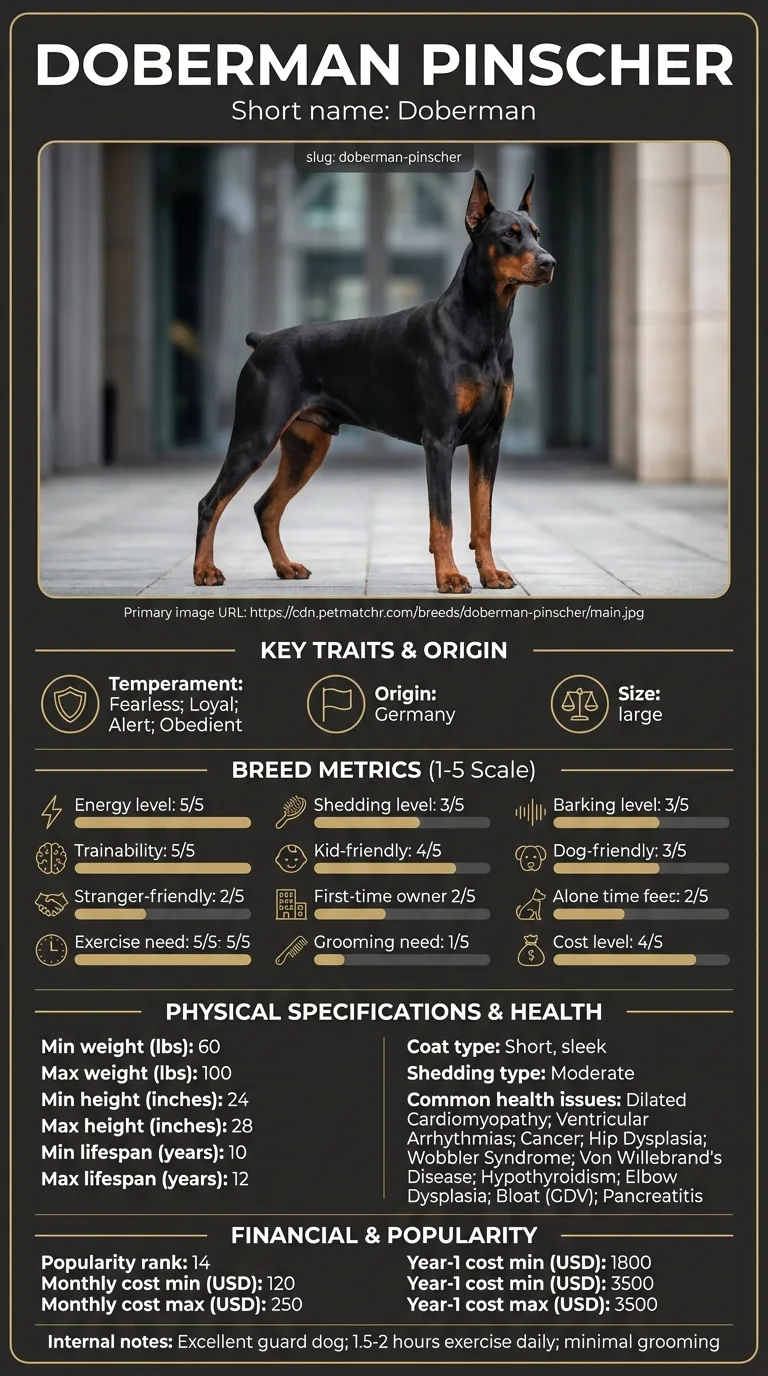
Expect monthly costs from $120 to $250 for insulin, vet visits, and dietary needs.
A one-page prep sheet for this condition: the signs, the questions to ask, what to get priced. Unlocks here.
You get: Vet visit prep sheet
No spam. One-click unsubscribe. See our privacy policy.
See a sample page before you decide.
Early access list
The free prep sheet covers the same-day warning signs, a symptom log and the questions to ask. We are considering a fuller kit that adds a cost worksheet for the usual tests and treatments (US price ranges with their sources) and a plain-English guide to ways of covering the bill. It is not built yet; this list tells us whether it is worth building.
One email, no spam, unsubscribe anytime. Information only, not veterinary advice.