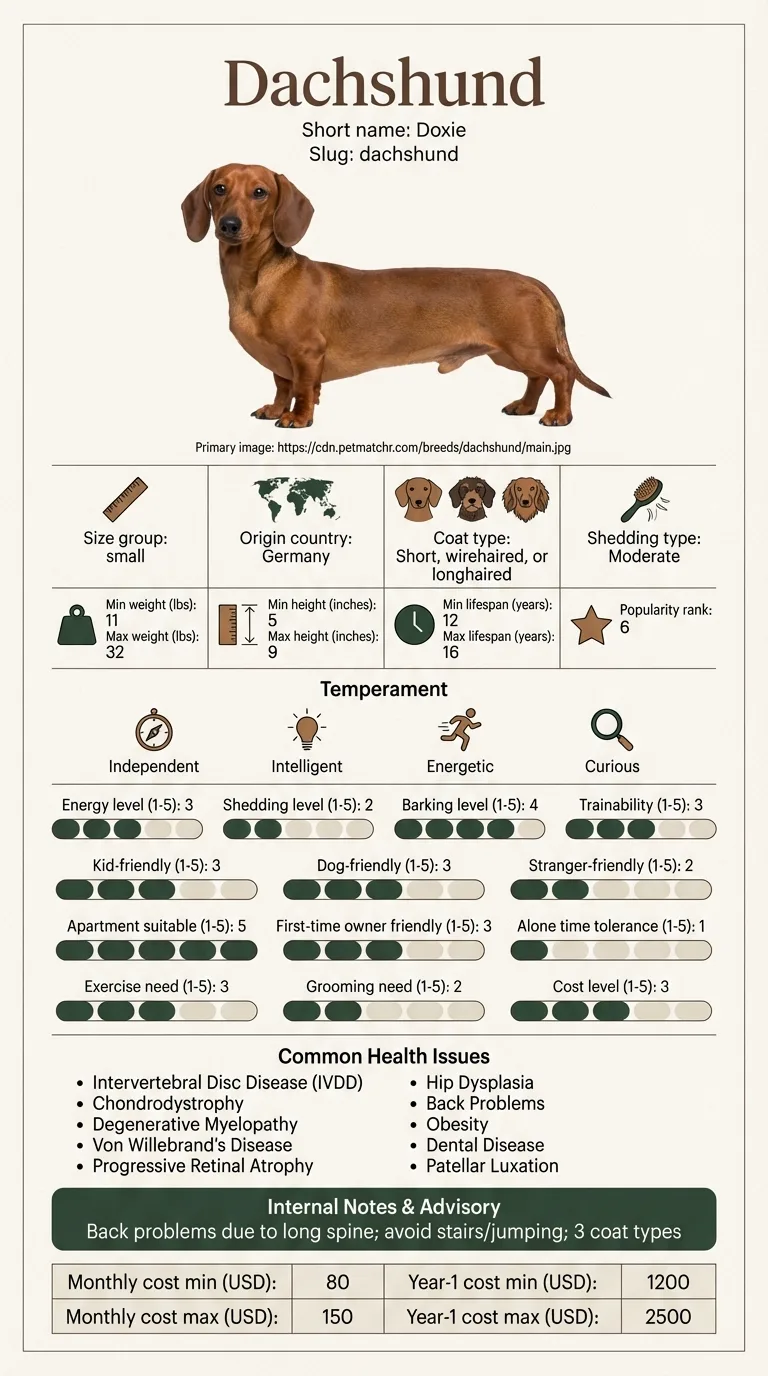
What are quick tips for Dachshund schnauzer comedo syndrome?
Regularly bathe your Dachshund with a gentle shampoo and brush them weekly to remove excess oil. Keep an eye on their skin and consult a vet if you notice any irritation or blackheads.
Dachshund schnauzer comedo syndrome is a skin condition that can cause discomfort and frustration for both dogs and their owners.

Owners of Dachshunds, especially those new to dog ownership, might struggle with this condition. It often affects dogs living in humid climates or those with less-than-ideal grooming routines.
This guide is not medical advice. If your dog shows pain, sudden behavior change, or worsening symptoms, consult a licensed veterinarian.
Some links may be affiliate links. We may earn a commission at no extra cost to you. We only suggest products we believe are helpful for dog owners.
Dachshund schnauzer comedo syndrome is a skin condition that can cause discomfort for your Doxie. It often appears as hair loss and bumps on the skin, particularly along the back. This syndrome is not just a cosmetic issue; it can lead to secondary infections and further skin problems if left untreated.
This syndrome is relatively common in Dachshunds, especially those with Schnauzer lineage. Many owners report noticing symptoms by the time their dog is a few years old. It’s important to monitor your dog's skin regularly and consult a vet if you see signs of this condition.
Dachshunds, particularly those with a wiry coat, can be prone to Schnauzer Comedo Syndrome due to genetic factors. This condition causes hair follicle inflammation, leading to blackheads and skin irritation. A lack of regular grooming can exacerbate these breed-specific issues.
Environmental factors like humidity, temperature, and exposure to allergens can also contribute to this condition. Poor diet and lack of proper skin care can worsen the situation. Stress and anxiety can lead to excessive scratching, further aggravating the skin.
If your Dachshund shows signs of anxiety or stress-related behavior, consider consulting a dog trainer. They can help with training techniques that promote relaxation and reduce anxiety.
If your Dachshund's skin condition worsens or does not improve with at-home care, it's time to talk to a vet. They can provide a proper diagnosis and recommend treatments such as medicated shampoos or other interventions.
You can expect to see improvements in your dog's skin condition within 4 to 8 weeks of implementing a consistent care routine.
Success means reduced hair loss and fewer skin lesions, leading to a healthier coat and more comfort for your Dachshund.
Understanding what not to do is key to managing Dachshund schnauzer comedo syndrome. Here are some common mistakes that can exacerbate the problem and safer alternatives to consider.
Understanding when Dachshund Schnauzer Comedo Syndrome is an emergency can help you respond effectively. Certain signs indicate that you should contact your vet immediately, while other milder symptoms can be monitored at home. If your dog experiences severe itching, open sores, or swelling, it's crucial to seek veterinary attention without delay.

When Sarah adopted Max, her Dachshund, she noticed he had patches of rough, hairless skin. After a vet visit, she learned Max had Schnauzer Comedo Syndrome. Determined to help him, Sarah followed a targeted skincare routine, including regular baths with medicated shampoo and a balanced diet. Over the next two months, Max's skin improved noticeably, and he became much more playful and energetic.
Key takeaway: A consistent skincare routine and proper nutrition can significantly improve your dog's condition and overall happiness.

Dachshund schnauzer comedo syndrome is a skin condition often seen in Dachshunds. It causes blackheads and skin irritation, primarily on the back and sides. This issue can lead to discomfort and potential infections if not managed properly.
This condition can occur due to genetics or improper grooming practices. Factors like oily skin and lack of regular baths can exacerbate the problem. If your Dachshund shows symptoms, it's best to consult a vet for insights.
Treatment often includes regular grooming and bathing with medicated shampoos. Your vet may recommend specific products to help manage the condition. Keeping the skin clean and dry can also prevent further issues.
To prevent the recurrence of this condition, maintain a consistent grooming routine. Regular baths and brushing can help reduce oil buildup. Also, ensure your Dachshund has a healthy diet to support skin health.
While not life-threatening, this syndrome can lead to more serious skin infections if untreated. It’s important to monitor your dog’s skin condition and seek veterinary care if you notice worsening symptoms.
Training itself won't cure the syndrome, but it can help in managing your dog's behavior during grooming. Positive reinforcement can make grooming sessions smoother, reducing stress for both you and your Dachshund.
Signs of Dachshund schnauzer comedo syndrome typically include blackheads or bumps on the skin, especially around the back and belly. You may also notice itching or irritation in affected areas. Regular grooming can help identify these issues early.
Yes, older Dachshunds may have a more challenging time managing Dachshund schnauzer comedo syndrome due to decreased skin elasticity and potential underlying health issues. It's essential to monitor any changes in their skin condition and consult your vet for tailored advice.
While no specific diet can prevent Dachshund schnauzer comedo syndrome, a balanced diet rich in omega fatty acids can promote healthy skin. Consult your vet for dietary recommendations that suit your dog's needs.
To manage discomfort, keep your dog's skin clean and dry. Regular baths with a gentle, vet-approved shampoo can help. If your dog seems to be in pain or excessively itching, visit your vet for further evaluation and treatment options.
If you notice persistent bumps, excessive itching, or signs of infection such as redness or swelling, it's time to see a vet. Early intervention can prevent more severe skin issues and improve your dog's comfort.
Regularly bathe your Dachshund with a gentle shampoo and brush them weekly to remove excess oil. Keep an eye on their skin and consult a vet if you notice any irritation or blackheads.
Treatments can range from $20 for shampoos to $150 for vet visits, depending on the severity. Regular grooming can also incur costs, so budget for ongoing care.
Yes, a balanced diet can improve skin health and reduce oiliness. Consult your vet to ensure your Dachshund's diet supports skin health.
Use a soft brush and a good quality medicated shampoo to manage the condition. Grooming tools that reach the skin without irritation are important for effective care.