Behavior
What are some quick tips for managing Dachshund pregnancy complications?
Keep your Dachshund calm and stress-free, maintain a balanced diet, and schedule regular vet visits to monitor her health.

Quick answer
What are some quick tips for managing Dachshund pregnancy complications?
Keep your Dachshund calm and stress-free, maintain a balanced diet, and schedule regular vet visits to monitor her health.
Dachshund pregnancy complications can be serious and require careful attention. These issues can affect both the mother and her puppies.
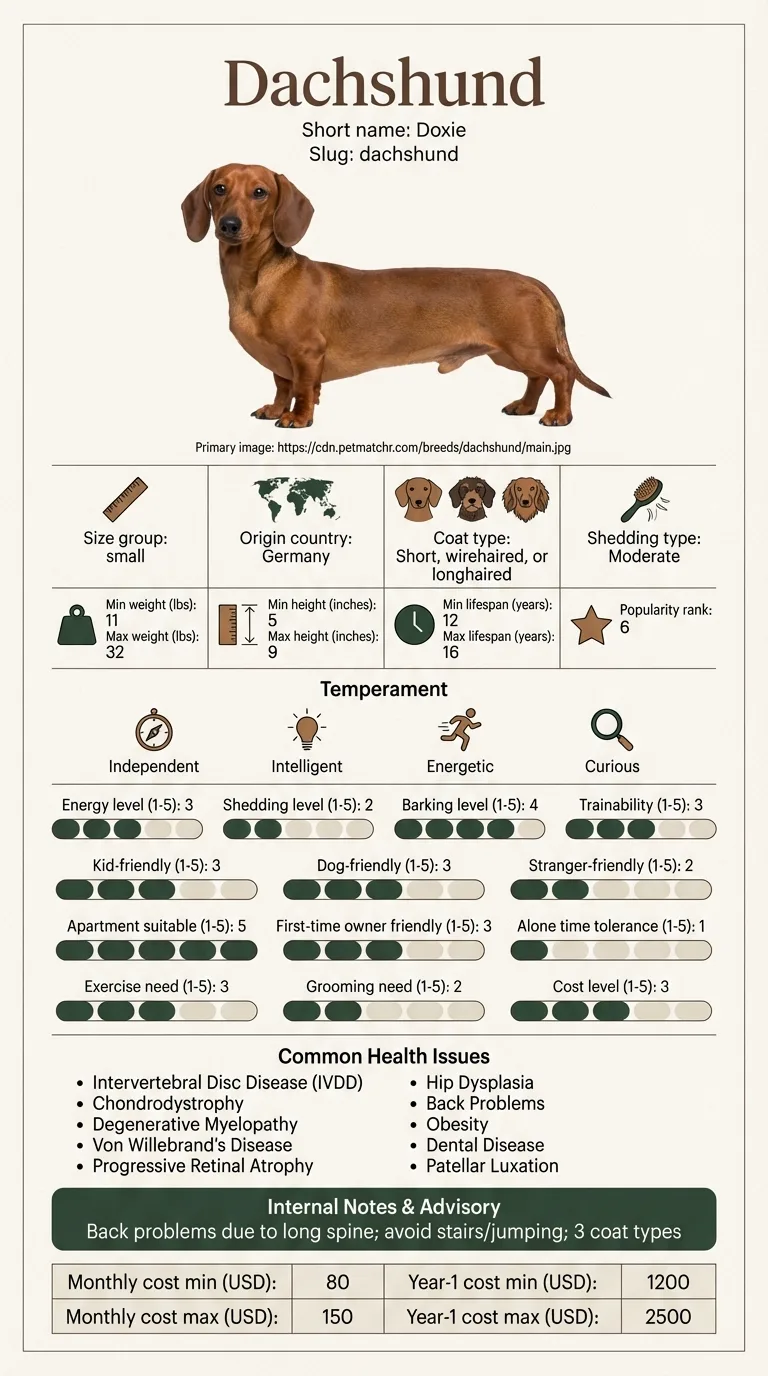
Typically, first-time Dachshund owners or those unaware of the breed's specific health risks face the most struggles. Additionally, owners who may not have experience with pregnant pets can find themselves overwhelmed by these complications.
This guide is not medical advice. If your dog shows pain, sudden behavior change, or worsening symptoms, consult a licensed veterinarian.
Some links may be affiliate links. We may earn a commission at no extra cost to you. We only suggest products we believe are helpful for dog owners.
We research and check what we publish, but we do not warrant that any figure, date, price, or statement is accurate, complete, or current, and we accept no liability for any loss, cost, injury, or other harm arising from the use of this site. Use it as one reference among several. You remain responsible for your own decisions and for your dog's care - confirm anything that matters with a licensed veterinarian or another qualified professional before you act on it. Full disclaimer.
Check this first
Identifying when Dachshund pregnancy complications are an emergency is crucial. Some signs require immediate veterinary attention, while others can be monitored at home.
Red-Flag Signs That Mean 'Call Your Vet Now': 1. Severe Bleeding: If your Dachshund is bleeding heavily, it could indicate a serious issue. 2. Prolonged Labor: If your dog has been in labor for more than two hours without delivering a puppy, it's time to seek help. 3. Distress Signs: Look for heavy panting, whining, or signs of pain. These can indicate that something is wrong. 4. Foul Odor: A bad smell from the vaginal area can signal infection. 5. Lethargy or Collapse: If your Dachshund seems unusually weak or collapses, don't wait—get to the vet.
Mild Cases to Monitor: 1. Mild Discomfort: If your dog shows mild signs of discomfort but is still active and eating, you can monitor her. 2. Light Discharge: A small amount of clear discharge is usually normal, but keep an eye on it. 3. Appetite Changes: If she's eating less but still drinking water, monitor her condition closely.
In these mild cases, have a plan ready. Keep track of any changes and consult your vet if you notice anything worsening. Always trust your instincts; if you feel something is off, it's better to be safe than sorry.
If any of these apply, call your vet or an emergency clinic now. The rest of this page is for the cases that are not an emergency.
Dachshund pregnancy complications can be concerning for owners. These small dogs are prone to various issues during pregnancy due to their long spines and unique body structure. Common signs include lethargy, excessive panting, and difficulty in movement, which can leave owners worried about their pet's health and the well-being of the puppies.
Pregnancy complications are relatively common in Dachshunds, with studies showing they are at a significantly higher risk compared to other breeds. This can lead to serious health risks for both the mother and her puppies, making it crucial for owners to be vigilant and informed.
Dachshunds have unique physical traits that can lead to pregnancy complications. Their long spines and short legs can put extra strain on their bodies during pregnancy. Additionally, they are prone to certain health issues that can complicate the pregnancy process.
The environment can also play a significant role in pregnancy complications. Stressful situations, inadequate nutrition, or lack of suitable exercise can impact a Dachshund's health during pregnancy. A chaotic home environment or exposure to toxins can further increase risks.
It's crucial to talk to a vet if you notice any signs of distress or complications, such as bleeding, severe vomiting, or lack of appetite. Regular vet check-ups during her pregnancy can help catch potential issues early.
Avoiding common mistakes can greatly improve your Dachshund's pregnancy experience. Here are some behaviors to steer clear of.
Start here: Dachshund Most Common Genetic Disorders: What to Screen For
See all Dachshund health problems, which breeds are prone to pregnancy complications, or the full Dachshund breed guide for temperament, exercise needs and ownership costs.
Expect to see improvements within 4 to 6 weeks after implementing a consistent care plan.
Successful management of Dachshund pregnancy complications will include regular veterinary check-ups, a balanced diet, and a supportive environment, leading to a healthy pregnancy and delivery.
Emily, a first-time Dachshund owner, noticed her pregnant dog, Daisy, was struggling with severe fatigue and lack of appetite. After consulting her vet, Emily learned that Dachshunds are prone to pregnancy complications, especially if they have underlying health issues. With the vet's advice, she adjusted Daisy's diet, added gentle exercise, and created a calm space for her to rest. Over time, Daisy became more energetic and managed to carry her puppies to term, giving birth to a healthy litter. Emily realized the importance of proactive care during pregnancy and how crucial it was to listen to her dog's needs.
Key takeaway: Understanding the unique health needs of your Dachshund during pregnancy can make all the difference in achieving a successful outcome.
Dachshunds can face pregnancy complications due to their unique physical structure and predisposition to certain health issues. Factors such as obesity, age, and pre-existing health conditions can also increase risks. It's essential to monitor your Dachshund closely during pregnancy and consult a vet for guidance.
Watch for signs like excessive vomiting, lethargy, or unusual discharge. If your Dachshund is not eating or shows signs of distress, these could indicate complications. Seeking veterinary care immediately is crucial if you notice any concerning symptoms.
To minimize risks, ensure your Dachshund maintains a healthy weight and receives proper nutrition. Regular vet check-ups throughout the pregnancy can help catch any potential issues early. Stress management and a comfortable environment are also important for a healthy pregnancy.
If complications arise, contact your veterinarian right away. They may recommend an ultrasound or other diagnostics to assess the situation. Depending on the severity, they might suggest medical treatment or even a cesarean section.
While training won't directly prevent pregnancy complications, it can help in managing your Dachshund's behavior during this time. Teaching commands like 'stay' can create a calmer environment, which is beneficial for both the mother and her puppies.
Common signs of pregnancy complications in Dachshunds include excessive vomiting, lethargy, and unusual discharge. If your dog shows these symptoms, it's crucial to consult a vet immediately.
To support your Dachshund during a complicated pregnancy, ensure she has a quiet, comfortable space. Monitor her closely and provide nutritious food, but consult your vet for specific dietary recommendations.
You should take your Dachshund to the vet if she shows any signs of distress or if you notice changes in her appetite or behavior. Regular vet visits are also essential to monitor her health throughout the pregnancy.
Yes, older Dachshunds face higher risks during pregnancy, including complications due to pre-existing health conditions. It's vital to have a thorough vet check-up to assess their overall health before breeding.
Dachshund pregnancy complications can arise from factors like genetic predispositions, existing health issues, or environmental stressors. Monitoring her health closely and working with a vet can help mitigate these risks.
Keep your Dachshund calm and stress-free, maintain a balanced diet, and schedule regular vet visits to monitor her health.
Look for signs like excessive whining, panting, or refusing to eat. If you notice any of these, contact your vet immediately.
Provide a high-quality dog food formulated for pregnant or nursing dogs to ensure she gets the necessary nutrients for her and her puppies.
A Dachshund's pregnancy typically lasts about 63 days, but it can vary. Regular vet check-ups can help you track her progress.
A one-page prep sheet for this condition: the signs, the questions to ask, what to get priced. Unlocks here.
You get: Vet visit prep sheet
No spam. One-click unsubscribe. See our privacy policy.
Preview page 1 before you decide.