Health
What are quick tips for managing Dachshund heart disease?
Manage your Dachshund's diet, keep them active with mild exercise, and schedule regular vet check-ups to monitor their heart health.

Quick answer
What are quick tips for managing Dachshund heart disease?
Manage your Dachshund's diet, keep them active with mild exercise, and schedule regular vet check-ups to monitor their heart health.
Dachshund heart disease is a serious issue that can affect your dog's quality of life. Understanding its signs and causes can help you take action.
Many Dachshund owners, especially first-time pet parents or those with aging dogs, find themselves overwhelmed when facing potential heart problems. They want to ensure their beloved companions remain healthy and happy.
This guide is not medical advice. If your dog shows pain, sudden behavior change, or worsening symptoms, consult a licensed veterinarian.
Some links may be affiliate links. We may earn a commission at no extra cost to you. We only suggest products we believe are helpful for dog owners.
We research and check what we publish, but we do not warrant that any figure, date, price, or statement is accurate, complete, or current, and we accept no liability for any loss, cost, injury, or other harm arising from the use of this site. Use it as one reference among several. You remain responsible for your own decisions and for your dog's care - confirm anything that matters with a licensed veterinarian or another qualified professional before you act on it. Full disclaimer.
Check this first
Call your vet immediately if you notice red-flag signs such as difficulty breathing, persistent coughing, or fainting. These symptoms often indicate that the heart is struggling significantly and requires urgent care. Additionally, if your Dachshund has a swollen abdomen or shows signs of extreme lethargy, don’t wait—get help right away.
On the other hand, mild symptoms like occasional coughing or decreased exercise tolerance might not mean an immediate emergency. You can monitor these issues by noting any changes in behavior, appetite, or energy. Keeping a record will help you discuss your concerns with your vet during routine visits.
It's essential to trust your instincts. If you're unsure whether a symptom is serious, it's better to err on the side of caution and consult your veterinarian. They can provide guidance on whether your Dachshund needs to be seen right away or if it’s safe to monitor the situation at home.
If any of these apply, call your vet or an emergency clinic now. The rest of this page is for the cases that are not an emergency.
Dachshund heart disease can manifest through symptoms like lethargy, coughing, and difficulty breathing. These small dogs are prone to heart issues, particularly dilated cardiomyopathy and heart murmurs, which can affect their quality of life. The stress of daily activities or even changes in routine can trigger these problems, making monitoring your Doxie's health crucial.
Heart disease is fairly common in Dachshunds, especially as they age. Regular vet check-ups can help catch early signs and manage the condition effectively.
Dachshunds are prone to certain congenital heart issues, like dilated cardiomyopathy and heart murmurs. These conditions can stem from genetic factors, especially in purebred lines. Additionally, their unique body structure may predispose them to heart-related concerns as they age.
Factors such as obesity, poor diet, and lack of exercise can contribute significantly to heart disease in Dachshunds. Stressful environments or lack of mental stimulation can also exacerbate health problems. Regular vet check-ups are crucial to monitor their heart health and catch any issues early.
If you notice symptoms like coughing, lethargy, or difficulty breathing, contact your vet. Regular vet visits are essential, especially as they age, to monitor heart health and consider preventative measures.
Understanding common mistakes can help you avoid worsening your Dachshund's heart disease. Here are some key behaviors to watch out for.
Start here: Dachshund Most Common Genetic Disorders: What to Screen For
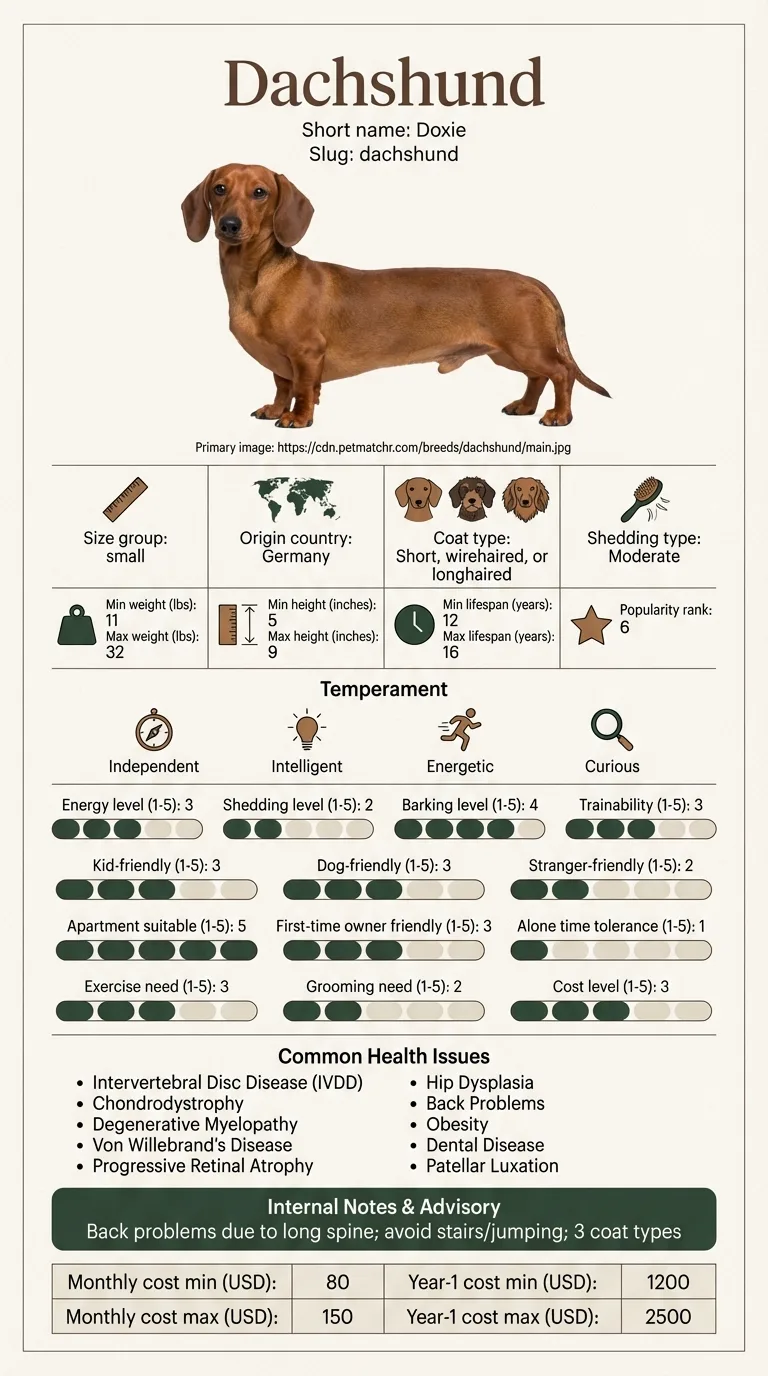
See all Dachshund health problems, which breeds are prone to heart disease, or the full Dachshund breed guide for temperament, exercise needs and ownership costs.
Managing Dachshund heart disease can take several weeks to months. Regular vet visits and monitoring are crucial.
Success means your Doxie experiences improved energy levels and quality of life, with symptoms well-managed through lifestyle changes and medication.
Maggie, a Dachshund from Texas, was diagnosed with heart disease at 8 years old. Her owner, Sarah, noticed Maggie was more tired than usual and had a persistent cough. After consulting their vet, they implemented a treatment plan that included medication, a low-sodium diet, and daily gentle exercise. Over a few months, Sarah saw Maggie regain some energy. While she still needed regular check-ups, Maggie was able to enjoy her daily walks again, albeit shorter and at a slower pace.
Key takeaway: Early detection and a proactive approach can significantly enhance your Dachshund's quality of life when dealing with heart disease.
Dachshund heart disease can be caused by genetic factors, poor diet, obesity, and lack of exercise. Regular vet check-ups can help catch early signs of heart issues.
To prevent Dachshund heart disease, maintain a balanced diet and keep your dog at a healthy weight. Regular exercise is also crucial, as it helps strengthen their heart and overall health.
Common symptoms of Dachshund heart disease include coughing, fatigue, a decreased appetite, and difficulty breathing. If you notice any of these signs, consult your vet immediately.
Treatment for Dachshund heart disease may include medication to manage symptoms, dietary changes, and sometimes surgery. Your vet will recommend the best course of action based on your dog's condition.
The life expectancy of a Dachshund with heart disease can vary depending on the severity and treatment. With proper care, some dogs may live several years, while others may have a shorter lifespan.
Yes, certain types of Dachshund heart disease, like dilated cardiomyopathy, can be hereditary. If you’re considering a Dachshund, it’s important to ask breeders about the health history of the puppy's parents.
Training is essential for all Dachshunds, including those with heart disease. Gentle, low-impact training can help keep your dog mentally stimulated without overexerting them.
Early signs of Dachshund heart disease can include coughing, fatigue, and difficulty breathing. You might also notice a decrease in their exercise tolerance. If you observe any of these symptoms, it’s crucial to consult a vet as soon as possible.
For older Dachshunds with heart disease, it's important to provide a comfortable living environment and maintain a low-stress routine. Regular vet check-ups and a proper diet can also help manage their condition. Always discuss any changes with your veterinarian.
Yes, certain types of heart disease in Dachshunds can be hereditary. If you have a family history of heart problems in your Doxie, it’s wise to monitor their health closely and discuss preventive measures with your vet.
To help prevent heart disease in Dachshunds, maintain a healthy weight, ensure regular exercise, and provide a balanced diet. Avoiding excessive stress and regular vet visits for heart check-ups can also be beneficial.
Dachshund heart disease can lead to lethargy, anxiety, and changes in appetite. You might notice your dog being less active or reluctant to play. Keeping a close eye on their behavior can help catch any worsening symptoms early.
Manage your Dachshund's diet, keep them active with mild exercise, and schedule regular vet check-ups to monitor their heart health.
Dachshunds should get about 30 minutes of moderate exercise daily to maintain a healthy weight and support heart health.
A low-sodium, high-quality diet can benefit a Dachshund with heart disease. Consult with your vet for specific dietary recommendations.
Yes, certain breeds, including Dachshunds, are more prone to heart issues due to genetics. Regular vet visits can help detect problems early.
Yes, stress can worsen heart conditions in Dachshunds. Creating a calm environment can help alleviate anxiety and support their heart health.
A one-page prep sheet for this condition: the signs, the questions to ask, what to get priced. Unlocks here.
You get: Vet visit prep sheet
No spam. One-click unsubscribe. See our privacy policy.
Preview page 1 before you decide.