Behavior
What are quick tips for Dachshund genetic load?
Focus on responsible breeding, regular vet check-ups, and early detection of health issues. Prioritize a balanced diet and appropriate exercise to minimize health risks.

Quick answer
What are quick tips for Dachshund genetic load?
Focus on responsible breeding, regular vet check-ups, and early detection of health issues. Prioritize a balanced diet and appropriate exercise to minimize health risks.
Dachshund genetic load refers to the accumulation of harmful genetic traits that can affect your dog’s health.
First-time Dachshund owners or those unaware of breed-specific health risks often struggle with genetic load. Additionally, owners of older Doxies may face challenges as they encounter health issues related to this genetic predisposition.
This guide is not medical advice. If your dog shows pain, sudden behavior change, or worsening symptoms, consult a licensed veterinarian.
Some links may be affiliate links. We may earn a commission at no extra cost to you. We only suggest products we believe are helpful for dog owners.
We research and check what we publish, but we do not warrant that any figure, date, price, or statement is accurate, complete, or current, and we accept no liability for any loss, cost, injury, or other harm arising from the use of this site. Use it as one reference among several. You remain responsible for your own decisions and for your dog's care - confirm anything that matters with a licensed veterinarian or another qualified professional before you act on it. Full disclaimer.
Check this first
Understanding when Dachshund genetic load is an emergency can save your pup's life. If your Doxie shows any severe symptoms, it’s crucial to contact your vet immediately. Red flags include sudden changes in behavior, extreme lethargy, difficulty breathing, or noticeable pain. These signs could indicate more serious health issues linked to genetic load, such as IVDD or other inherited conditions.
On the other hand, if your Dachshund is experiencing mild symptoms like slight lethargy or minor digestive issues, you can monitor them at home. It’s wise to keep track of the symptoms and any changes in your dog's behavior. Consider setting up a watch-and-wait plan to see if the issues resolve or worsen. Make sure to keep your vet informed about your observations, especially if your Doxie has a history of genetic-related health problems.
In summary, trust your instincts. When in doubt, it’s always better to err on the side of caution and consult your vet. They can help determine whether your Dachshund's symptoms require immediate attention or if it’s safe to keep an eye on them at home.
If any of these apply, call your vet or an emergency clinic now. The rest of this page is for the cases that are not an emergency.
Dachshund genetic load refers to the accumulation of harmful genetic traits that can affect the health and behavior of these beloved dogs. Daily, this may manifest as a range of health issues, including back problems and obesity, which can lead to vet visits and ongoing care. Owners may notice their Dachshund struggling with mobility or developing behavioral concerns due to discomfort, making it essential to understand and manage these risks.
Dachshunds are known to have a high genetic load, with significant rates of health concerns stemming from this issue. Many owners report challenges with their Dachshunds, particularly regarding back problems and obesity, making awareness vital for potential owners.
Dachshunds have a high genetic load due to selective breeding practices. This breed has been bred for specific traits, leading to a concentration of harmful genetic variants. These genetic issues can result in various health problems, making them more susceptible to conditions like Intervertebral Disc Disease (IVDD) and obesity.
Environmental factors can also contribute to the challenges Dachshunds face. Factors such as inadequate exercise, poor diet, and lack of mental stimulation can exacerbate genetic predispositions. Additionally, improper handling, like allowing them to jump from heights, can lead to injuries that worsen their genetic health issues.
Talk to your vet if you notice any concerning symptoms or if your Dachshund struggles with weight management. Regular check-ups will help monitor genetic health issues and ensure they are addressed promptly.
Avoiding these common mistakes can help you better manage your Dachshund's genetic load and promote a healthier lifestyle.
Start here: Dachshund Most Common Genetic Disorders: What to Screen For
See all Dachshund health problems, which breeds are prone to genetic load, or the full Dachshund breed guide for temperament, exercise needs and ownership costs.
Managing Dachshund genetic load is an ongoing process that can take several months. You'll likely start seeing improvements in your dog's behavior and health within 4 to 6 months of consistent care and follow-up with your vet.
Success means your Dachshund shows fewer signs of genetic health issues, has improved behavior, and demonstrates better overall well-being. You'll also feel more confident in handling potential health problems.
Emily adopted Max, a lovable Dachshund, who started showing signs of anxiety and back problems early on. After researching Dachshund genetic load, she learned about the importance of targeted training and health monitoring. With the help of a local trainer, Emily set up a routine that included gentle exercises and mental stimulation while avoiding activities that could strain Max's back. Over time, Max became more relaxed and healthy, allowing Emily to enjoy their walks and playtime without worry.
Key takeaway: Understanding the genetic challenges of Dachshunds helped Emily provide better care for Max. It shows the importance of tailored training and health management for breeds prone to genetic issues.
Dachshunds may have genetic load due to their breeding history, which can lead to a concentration of harmful genetic variants. This can increase the risk of health issues like Intervertebral Disc Disease (IVDD) and other conditions. Responsible breeding practices aim to reduce these risks, but not all breeders prioritize this.
To address Dachshund genetic load, consider adopting a dog from a responsible breeder who conducts genetic testing. Regular vet check-ups and monitoring for common health issues can also help manage genetic risks. If health problems arise, early intervention can make a significant difference.
Signs of genetic load may include frequent health issues, unusual physical traits, or developmental delays. If your Dachshund is experiencing repeated health problems, a veterinary consultation is essential. They can provide insights into whether these issues may be linked to genetic factors.
Training can help manage some behavioral aspects related to health issues in Dachshunds with genetic load. Positive reinforcement can promote good habits and reduce anxiety. However, it's crucial to focus on health management in conjunction with training efforts.
If your Dachshund shows health problems, consult with your veterinarian immediately. They can perform evaluations to determine if genetic load is a contributing factor. Prompt diagnosis can lead to better treatment options and improved quality of life for your dog.
A high genetic load in your Dachshund means there's a greater chance of inherited health issues. This could lead to problems such as back disorders, joint issues, or other conditions common in the breed. Monitoring their health closely and consulting a vet can help manage these risks.
Signs of genetic health issues in Dachshunds can include difficulty walking, excessive weight gain, or unusual lethargy. If you notice these symptoms, it's essential to consult with a veterinarian for a proper diagnosis and treatment options.
While you can't change a Dachshund's genetic background, you can focus on a healthy diet, regular exercise, and routine vet check-ups. Training and socialization can also help mitigate some behavioral issues linked to genetic predispositions.
Yes, older Dachshunds may show more signs of health issues related to their genetic load. As they age, conditions like Intervertebral Disc Disease or degenerative conditions can become more pronounced. Regular vet visits are crucial for early detection and management.
Breeding practices can significantly influence the genetic load in Dachshunds. Responsible breeders screen for genetic conditions and avoid breeding dogs with known health issues, which can help reduce the prevalence of harmful traits in the breed.
Focus on responsible breeding, regular vet check-ups, and early detection of health issues. Prioritize a balanced diet and appropriate exercise to minimize health risks.
Provide a nutritious diet, regular exercise, and mental stimulation. Ensuring a safe environment can help prevent injuries related to their genetic predispositions.
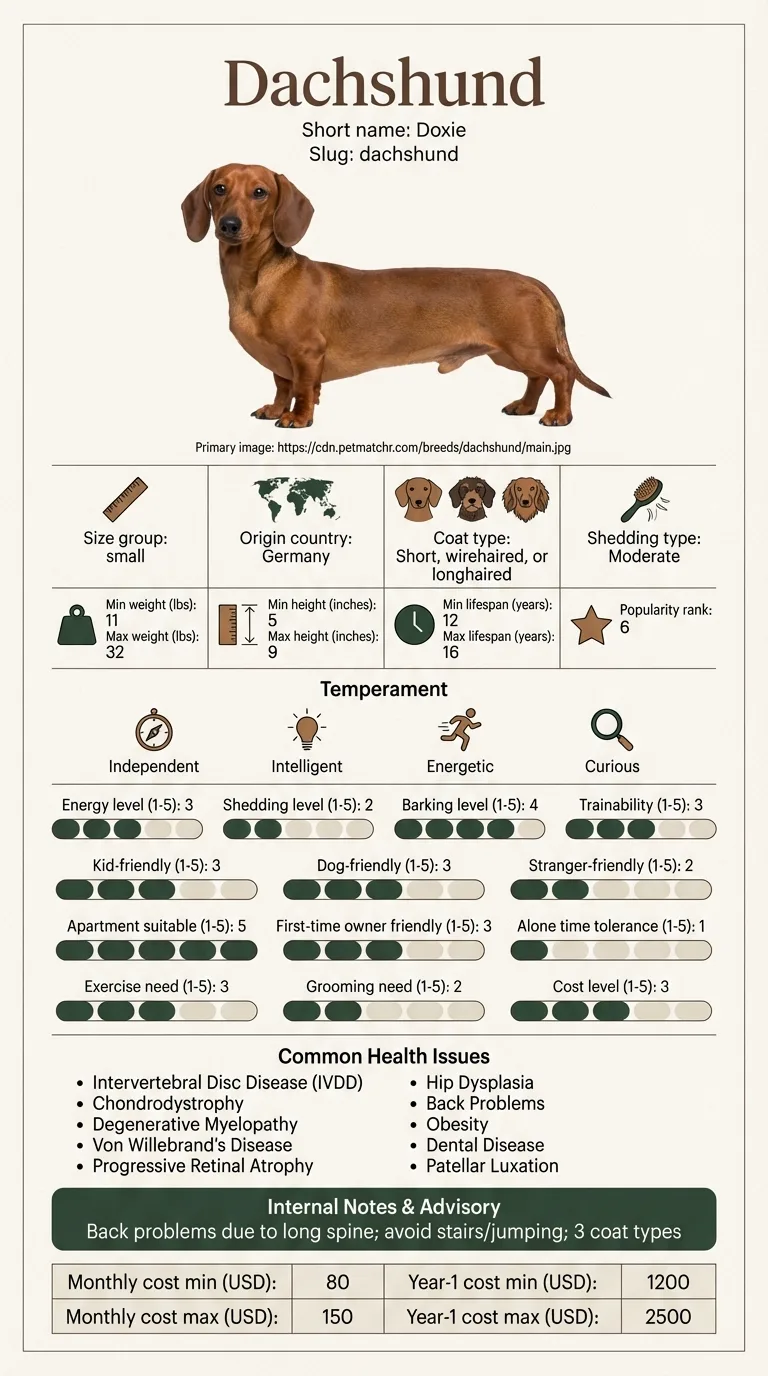
Managing health issues related to Dachshund genetic load can range from $80 to $150 monthly. Be prepared for additional costs if health problems arise.
Yes, training is important to address behavioral issues that may stem from health problems. It helps create a well-adjusted and happy dog.
A one-page prep sheet for this condition: the signs, the questions to ask, what to get priced. Unlocks here.
You get: Vet visit prep sheet
No spam. One-click unsubscribe. See our privacy policy.
Preview page 1 before you decide.