DogBreedCompass
← Back to breed profile

Dachshund Brachycephalic Airway Syndrome (BOAS)

Dachshund brachycephalic airway syndrome (BOAS) is a serious condition that affects their breathing, especially in warmer weather.

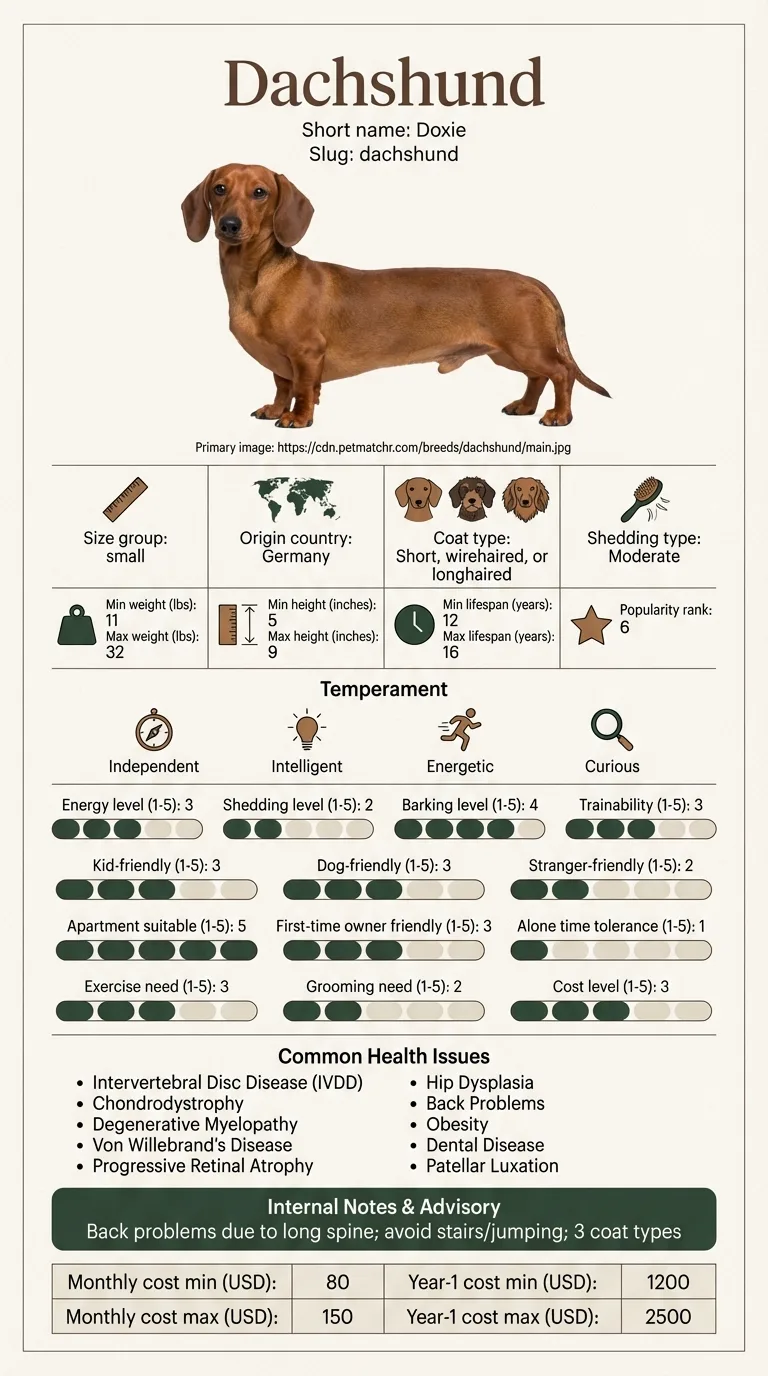
Dachshund Brachycephalic Airway Syndrome (BOAS) infographic

Owners of Dachshunds, especially first-time pet parents, may find this issue particularly challenging. Those living in warmer climates or engaging in high-energy activities with their Doxies need to be especially aware of these respiratory concerns.

Important reminder

This guide is not medical advice. If your dog shows pain, sudden behavior change, or worsening symptoms, consult a licensed veterinarian.

Some links may be affiliate links. We may earn a commission at no extra cost to you. We only suggest products we believe are helpful for dog owners.

What this problem looks like

Dachshund brachycephalic airway syndrome (boas) is a condition that affects many Dachshunds, leading to breathing difficulties. This issue can manifest as loud snoring, labored breathing, or even fainting during exercise or in hot weather. Owners may notice their Doxies struggling to catch their breath after short walks or when excited.

Common triggers

  • Heat and humidity, which can exacerbate breathing problems.
  • Overexertion during play or exercise.
  • Stress or anxiety, which can lead to heavy panting.

Brachycephalic airway syndrome (boas) is relatively common among Dachshunds due to their unique facial structure. While not every Dachshund will experience severe symptoms, many may show mild signs of the condition, especially as they age.

Why this happens

Breed factors

Dachshunds are not traditionally considered brachycephalic, but some may have a genetic predisposition that influences their airway structure. Their long bodies and short legs can lead to unique health challenges, including breathing issues. While BOAS is more common in breeds like Bulldogs, certain Dachshunds can still experience similar airway problems.

Environment factors

Environmental factors can exacerbate breathing difficulties in Dachshunds. Extreme heat or humidity can make it harder for them to breathe comfortably. Additionally, obesity can further restrict their airflow, leading to more severe symptoms.

What you can try

At-home strategies

  • Monitor your Dachshund's weight regularly to prevent obesity. A balanced diet and portion control can help maintain a healthy weight.
  • Keep your home cool during hot weather. Use fans or air conditioning to help your dog breathe easier.
  • Limit strenuous exercise in high temperatures. Opt for early morning or late evening walks when it's cooler.
  • Create a calm environment to reduce stress, which can worsen breathing issues. Use calming music or pheromone diffusers.

When to consider a trainer

If your Dachshund exhibits anxiety or stress-related behaviors, consider hiring a trainer. They can provide tailored strategies to help your dog feel more at ease.

When to talk to your vet

If you notice persistent coughing, wheezing, or difficulty breathing, contact your vet. These can be signs that your Dachshund needs medical attention or potential treatment for BOAS.

Realistic expectations

You should see improvements in your Dachshund's breathing within a few weeks of implementing changes. For more severe cases, surgical options may take longer to assess and recover from, usually several months.

Success looks like your Doxie being able to breathe more easily during exercise and not showing distress in warmer weather. You'll also notice reduced snoring and coughing at rest.

Mistakes that make this worse

Avoiding these common mistakes can help manage your Dachshund's brachycephalic airway syndrome (BOAS). Here are some behaviors that can inadvertently worsen the condition.

  • Ignoring signs of distress
  • Overexerting during exercise
  • Allowing excessive weight gain
  • Not monitoring temperature
  • Neglecting regular vet check-ups
  • Using harsh collars or leashes

When Dachshund Brachycephalic Airway Syndrome (BOAS) is an Emergency

Recognizing when Dachshund brachycephalic airway syndrome (BOAS) is an emergency is crucial for your dog's health. If you notice any severe signs, it’s time to call your vet immediately. These red-flag signs include excessive panting, blue-tinged gums, or difficulty breathing even while resting.

In contrast, mild cases can often be monitored at home. If your Dachshund experiences occasional snoring, minor coughing, or slight exercise intolerance, these are generally not emergencies. However, it's essential to keep a close eye and have a plan for improvement, especially during hot weather.

If your dog seems to be in distress or shows any change in behavior, don’t hesitate to reach out to your vet. Early intervention can make a significant difference in managing BOAS effectively.

Dachshund Brachycephalic Airway Syndrome (BOAS) - When Dachshund Brachycephalic Airway Syndrome (BOAS) is an Emergency

Emily and Her Doxie, Charlie

Emily, a first-time dog owner, was excited to bring home Charlie, her Dachshund. However, she quickly noticed he struggled to breathe, especially on hot days. After researching Dachshund brachycephalic airway syndrome (boas), she learned that keeping him cool and reducing strenuous activities could help. Emily adjusted his daily routine, keeping walks short and providing plenty of water. After a few weeks, Charlie seemed more comfortable and less panting, especially during playtime.

Key takeaway: Understanding your dog's specific needs is crucial. With adjustments and care, you can significantly improve their quality of life.

Frequently asked questions

What causes Dachshund brachycephalic airway syndrome (boas)?

Dachshund brachycephalic airway syndrome (boas) is caused by their unique skull shape, which leads to narrowed airways. This can result in breathing difficulties, especially in hot weather or during exercise. Genetics also plays a role, as certain bloodlines may be more prone to this condition.

How can I stop my Dachshund from having breathing issues?

To manage Dachshund brachycephalic airway syndrome (boas), keep your dog cool and avoid strenuous activities in hot weather. You can also consult your vet about weight management and possible surgical options to correct airway obstructions. Regular check-ups are crucial to monitor their condition.

What signs indicate my Dachshund has brachycephalic airway syndrome (boas)?

Common signs include labored breathing, snoring, coughing, or excessive panting. If your Dachshund seems to tire quickly during walks or has difficulty breathing, these could be signs of boas. Observing these behaviors can help you address the issue sooner.

Is training helpful for Dachshunds with brachycephalic airway syndrome (boas)?

While training alone won't fix breathing issues, it can help manage behaviors that may exacerbate the problem. Teaching your Dachshund calming commands and gradually introducing them to exercise can improve their overall wellbeing. Consistent positive reinforcement is key.

Can brachycephalic airway syndrome (boas) lead to other health problems?

Yes, if left untreated, Dachshund brachycephalic airway syndrome (boas) can lead to serious complications like respiratory distress or heatstroke. It's important to monitor your dog's breathing and consult a vet for any concerns, ensuring they remain healthy.

Can older Dachshunds develop brachycephalic airway syndrome (boas)?

Yes, older Dachshunds can develop brachycephalic airway syndrome (boas) as their airways may become weaker over time. Regular check-ups with your vet can help monitor any breathing difficulties that may arise as your dog ages.

What are the signs that my Dachshund might have brachycephalic airway syndrome (boas)?

Common signs include noisy breathing, excessive panting, and difficulty exercising. If your Dachshund shows signs of respiratory distress, such as blue-tinged gums or lethargy, seek veterinary help immediately.

How can I help my Dachshund manage their brachycephalic airway syndrome (boas) at home?

To manage dachshund brachycephalic airway syndrome (boas) at home, keep your dog cool and avoid strenuous activities, especially in warm weather. Consider using a harness instead of a collar to reduce pressure on the throat.

When should I consider surgery for my Dachshund's brachycephalic airway syndrome (boas)?

Surgery should be considered if your Dachshund experiences severe breathing issues that affect their quality of life. Discuss options with your vet, who can provide guidance based on your dog's specific condition.

Why does my Dachshund have brachycephalic airway syndrome (boas)?

Dachshunds are not classified as a brachycephalic breed; however, they can still experience breathing difficulties due to their unique body structure. Factors like obesity and inherited traits can increase the likelihood of airway issues.

Quick answers

View more answers
Behavior

What are quick tips for managing Dachshund brachycephalic airway syndrome (boas)?

Keep your Dachshund cool and avoid exercise during hot weather. Regular vet check-ups are essential for monitoring their health. If breathing issues worsen, consult your vet immediately.

Health

How can I tell if my Dachshund is overweight, affecting their breathing?

If your Dachshund has difficulty breathing or appears to have a broader waistline, they may be overweight. Regular weigh-ins and monitoring their food intake can help maintain a healthy weight.

Living

What type of exercise is suitable for a Dachshund with brachycephalic airway syndrome (boas)?

Short, gentle walks in cooler weather are best. Avoid intense activities that can cause overexertion, and always watch for signs of fatigue.

Related DogBreedCompass guides

  • Dachshund behavior problemsLearn more about common issues that Dachshunds face, including behavioral problems.
  • Dachshund separation anxiety guideFind tips to help your Dachshund cope with separation anxiety, which can be related to their health issues.
  • Dachshund cost breakdownExplore costs associated with owning a Dachshund, including health care costs related to BOAS.
  • Dachshund brachycephalic airway syndrome (boas) trainingUnderstand how to train your Dachshund to manage brachycephalic airway syndrome effectively.
  • Brachycephalic breeds overviewRead about other brachycephalic breeds and how they handle similar health challenges.

Related guides