Behavior
What are quick tips for Dachshund bone & growth issues?
To manage Dachshund bone & growth issues, provide a balanced diet, controlled exercise, and regular vet check-ups. Avoid jumping and stairs to protect their spine.

Quick answer
What are quick tips for Dachshund bone & growth issues?
To manage Dachshund bone & growth issues, provide a balanced diet, controlled exercise, and regular vet check-ups. Avoid jumping and stairs to protect their spine.
Dachshunds are adorable, but they can face serious bone & growth issues due to their unique body structure. These problems can affect their mobility and overall health.
First-time dog owners and families with young children may find it challenging to manage a Dachshund's specific needs. Also, owners of older Doxies may be particularly worried about maintaining their pet's health and comfort.
This guide is not medical advice. If your dog shows pain, sudden behavior change, or worsening symptoms, consult a licensed veterinarian.
Some links may be affiliate links. We may earn a commission at no extra cost to you. We only suggest products we believe are helpful for dog owners.
We research and check what we publish, but we do not warrant that any figure, date, price, or statement is accurate, complete, or current, and we accept no liability for any loss, cost, injury, or other harm arising from the use of this site. Use it as one reference among several. You remain responsible for your own decisions and for your dog's care - confirm anything that matters with a licensed veterinarian or another qualified professional before you act on it. Full disclaimer.
Check this first
Recognizing when your Dachshund is facing bone and growth issues is crucial. Some symptoms require immediate veterinary attention, while others can be monitored at home. Knowing the difference can save your dog from serious complications.
Call your vet right away if you notice any of the following red-flag signs: - Severe pain or unwillingness to move - Visible swelling or deformity in the limbs or spine - Sudden inability to bear weight on a leg - Difficulty breathing or lethargy - Unexplained bleeding or bruising
These signs indicate potentially serious conditions that need prompt action.
On the other hand, if your Dachshund shows mild symptoms, you can consider a watch-and-wait approach. Look for signs like: - Occasional limping or stiffness after exercise - Slight reluctance to jump or climb stairs - Minor swelling without pain - Changes in appetite or mild lethargy
In these cases, monitoring your Dachshund's behavior and implementing a gentle exercise plan can help. However, always err on the side of caution and consult your vet if you're unsure. Keeping a close eye on your dog's condition will help you decide the best course of action. Always remember, when in doubt, it's better to seek professional advice.
If any of these apply, call your vet or an emergency clinic now. The rest of this page is for the cases that are not an emergency.
Dachshund bone & growth issues are a common concern for this breed. These problems can manifest as pain, difficulty moving, or abnormal bone development. Due to their unique long spine structure, Dachshunds are particularly prone to conditions like Intervertebral Disc Disease (IVDD), which can lead to serious mobility issues if not addressed early.
Bone and growth issues in Dachshunds are relatively common, affecting many dogs as they age. It's estimated that around 20-25% of Dachshunds will experience some form of bone-related health issue in their lifetime, making it essential for owners to be aware of these risks.
Dachshunds are prone to specific bone and growth issues due to their long spines and short legs. This unique body structure can lead to conditions like Intervertebral Disc Disease (IVDD) and other skeletal problems. Additionally, their small size can make them more susceptible to injuries from jumping or rough play.
Environmental factors can also contribute to bone and growth issues. For example, inadequate exercise can lead to obesity, which puts extra strain on their bones and joints. A lack of proper nutrition during their growth stages can also hinder healthy bone development.
Consult a vet if you see signs of pain, such as reluctance to jump or play, difficulty walking, or noticeable limping. Regular check-ups are crucial for early detection of any potential growth issues or diseases that could arise as they age.
Avoiding these common mistakes can help improve your Dachshund's bone and growth issues.
Start here: Dachshund Most Common Genetic Disorders: What to Screen For
See all Dachshund health problems, which breeds are prone to bone growth issues, or the full Dachshund breed guide for temperament, exercise needs and ownership costs.
You can expect to see improvements in your Dachshund's bone and growth issues within 3 to 6 months of consistent care and follow-up with your vet.
Success means your Dachshund will show healthier growth patterns, increased mobility, and reduced discomfort during daily activities.
Sam, a new Dachshund owner, noticed that Daisy was struggling to keep up with her playful peers. After a vet visit, he learned that her growth issues were linked to her rapid growth and poor diet. Sam researched and adjusted Daisy's nutrition, started gentle exercises, and avoided high-impact activities. Within a few months, Daisy became more agile and playful, showing a huge improvement in her overall health and happiness.
Key takeaway: With proper care and attention to diet and exercise, you can help your Dachshund overcome bone and growth issues, leading to a happier, healthier life.
Dachshunds can experience bone and growth issues due to their unique body structure. Their long spine and short legs make them prone to conditions like Intervertebral Disc Disease. Rapid growth during puppyhood can also lead to joint and bone problems, making it essential to monitor their development.
To help prevent bone and growth issues, ensure your Dachshund has a balanced diet rich in nutrients. Regular, controlled exercise is crucial, as overexertion can strain their bones. Consulting your vet for tailored advice and preventive care is also vital.
Signs of bone and growth issues in Dachshunds include limping, reluctance to jump, or difficulty climbing stairs. You might also notice changes in their posture or unusual behavior when playing. If you observe any of these signs, seek veterinary advice promptly.
Yes, some bone and growth issues in Dachshunds can be hereditary. Conditions like hip dysplasia and Intervertebral Disc Disease can run in families. It's important to choose a responsible breeder who tests for these health issues.
Training that focuses on gentle exercise and proper leash walking can help manage situations that strain a Dachshund's bones. Avoiding jumping and rough play is key. Training should also include commands for slow movement and caution on stairs.
Supplements like glucosamine and omega-3 fatty acids may support joint health in Dachshunds. However, it's important to consult your veterinarian before starting any supplements to ensure they're appropriate for your dog's specific needs.
If your Dachshund shows any signs of discomfort, unusual movement, or behavioral changes, visit the vet. Early intervention can prevent progression of bone and growth issues. Regular check-ups are also essential for monitoring their health.
For older Dachshunds with bone and growth issues, gentle exercises and a balanced diet are key. Consider using joint supplements as recommended by your vet. Regular check-ups will help monitor their condition and adjust care as needed.
If your Dachshund shows persistent pain, unusual walking patterns, or you notice swelling in their limbs, it's time to see a vet. Early intervention can prevent further complications. Don't delay if your pet seems uncomfortable or in distress.
While some bone and growth issues are genetic, you can take steps to minimize risks. Avoid excessive jumping and stairs when they're young, and maintain a healthy weight through proper diet and exercise. Regular vet visits can help catch any issues early.
Training methods that emphasize gentle commands and positive reinforcement can help. Avoid high-impact activities and focus on low-stress exercises. This approach can help manage their weight and improve their overall well-being, reducing the risk of bone issues.
To manage Dachshund bone & growth issues, provide a balanced diet, controlled exercise, and regular vet check-ups. Avoid jumping and stairs to protect their spine.
Dachshunds need about 30 minutes of moderate exercise daily. This includes walks and playtime that doesn’t strain their bones.
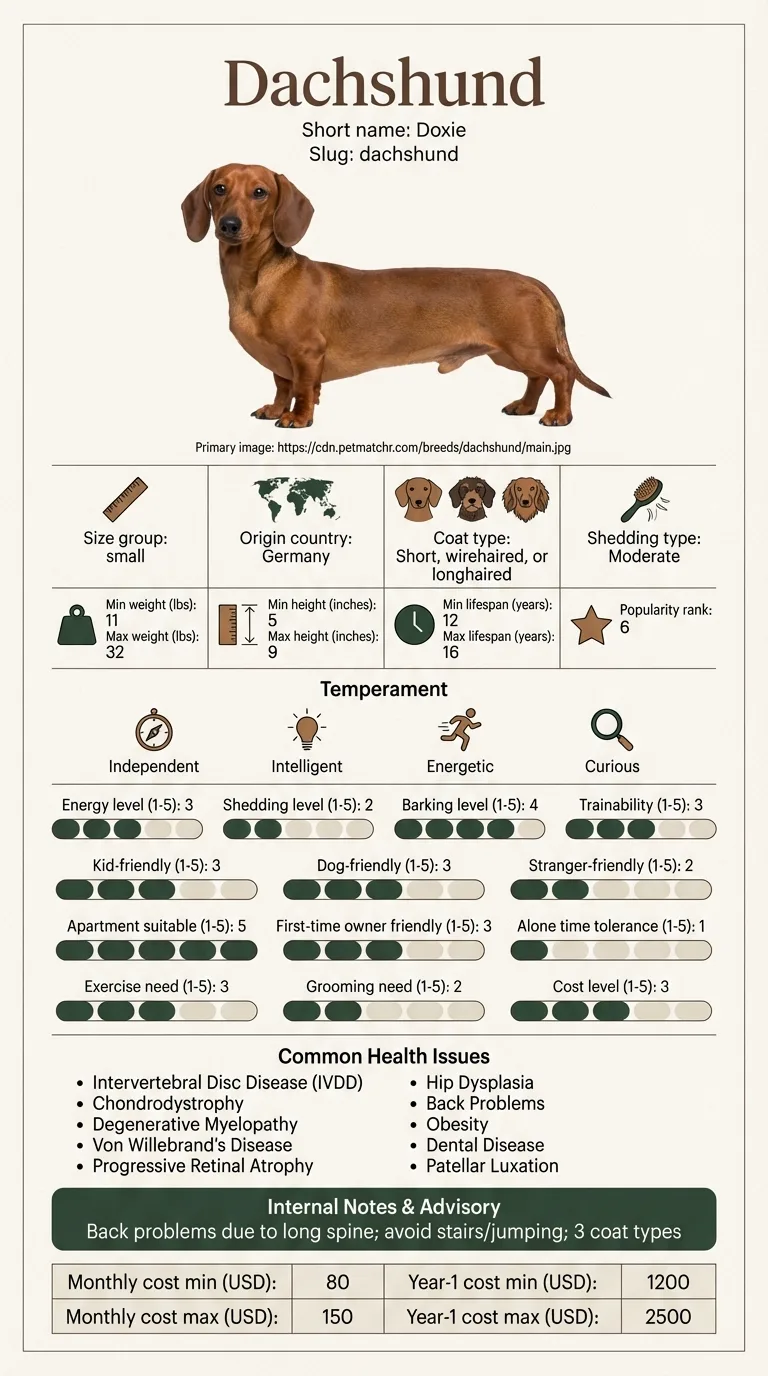
The monthly care costs for a Dachshund range from $80 to $150, depending on health needs and lifestyle. Budgeting for vet visits and food is essential.
Dachshunds are prone to health issues like IVDD, hip dysplasia, and obesity. Regular vet visits help catch these problems early.
Yes, training that promotes gentle movement and avoids risky activities can help manage growth issues. Focus on commands that encourage caution.
A one-page prep sheet for this condition: the signs, the questions to ask, what to get priced. Unlocks here.
You get: Vet visit prep sheet
No spam. One-click unsubscribe. See our privacy policy.
Preview page 1 before you decide.