Health
How to manage Collie (Rough Collie) genetic load?
Focus on regular vet check-ups and a balanced diet to manage health risks associated with genetic load.

Quick answer
How to manage Collie (Rough Collie) genetic load?
Focus on regular vet check-ups and a balanced diet to manage health risks associated with genetic load.
Collie (Rough Collie) genetic load refers to the potential health risks associated with inherited genetic issues.
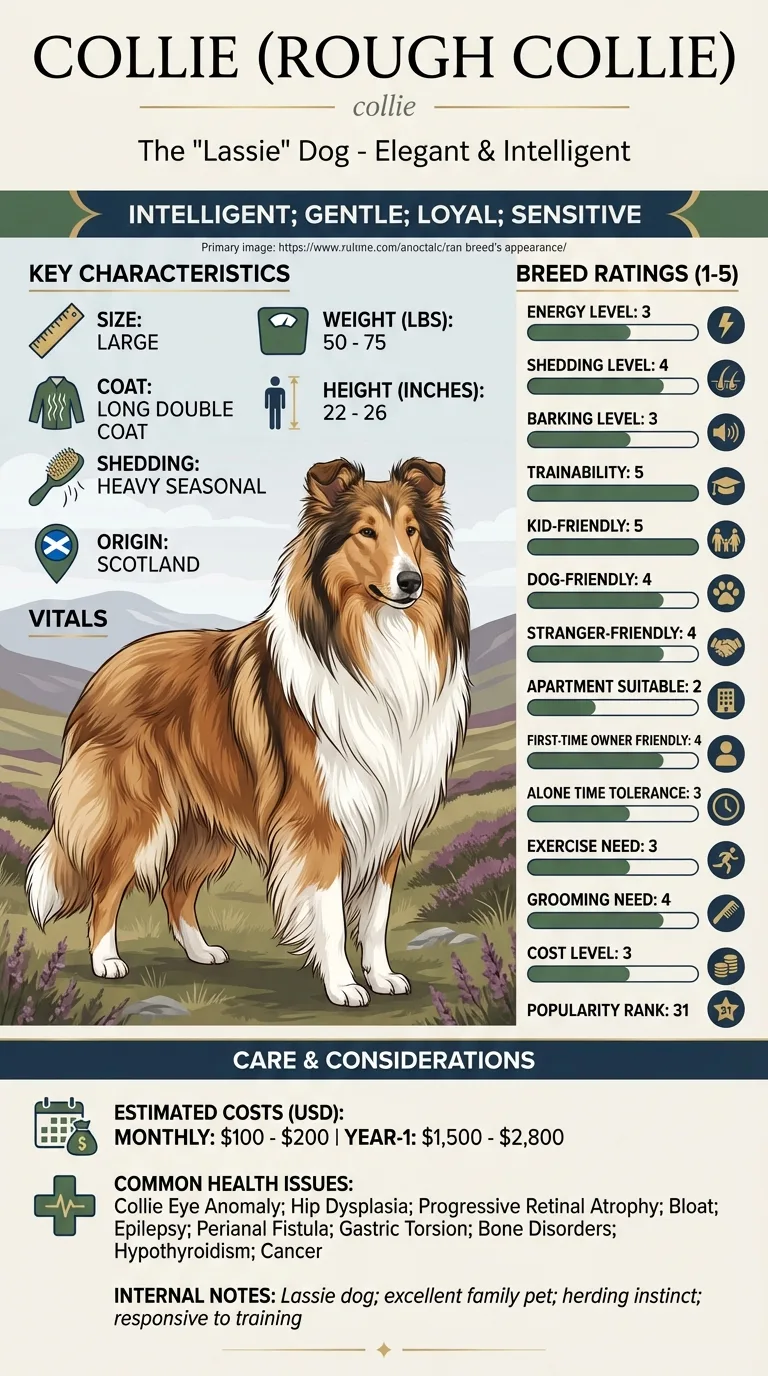
New and experienced Collie owners alike may struggle with genetic load, especially if they are unaware of the breed's predispositions. Those who want the best for their furry friends need to learn how to navigate these genetic challenges.
This guide is not medical advice. If your dog shows pain, sudden behavior change, or worsening symptoms, consult a licensed veterinarian.
Some links may be affiliate links. We may earn a commission at no extra cost to you. We only suggest products we believe are helpful for dog owners.
We research and check what we publish, but we do not warrant that any figure, date, price, or statement is accurate, complete, or current, and we accept no liability for any loss, cost, injury, or other harm arising from the use of this site. Use it as one reference among several. You remain responsible for your own decisions and for your dog's care - confirm anything that matters with a licensed veterinarian or another qualified professional before you act on it. Full disclaimer.
Check this first
Understanding when your Collie (Rough Collie) genetic load presents an emergency is crucial. Look for signs that indicate an immediate need for veterinary care. If your Collie shows severe symptoms like difficulty breathing, sudden collapse, or unresponsive behavior, these are red flags. Call your vet right away in these situations.
If any of these apply, call your vet or an emergency clinic now. The rest of this page is for the cases that are not an emergency.
The Collie (Rough Collie) can face significant challenges due to genetic load, which refers to the presence of harmful genetic variants. This condition can lead to various health issues, making it important for owners to be aware of potential problems. Daily life for a Collie affected by genetic load may include increased vet visits, treatments for specific conditions, or managing symptoms related to health issues.
Genetic load is a common concern in the Collie (Rough Collie) breed, with many dogs experiencing related health issues throughout their lives. This breed tends to have a higher concentration of genetic disorders compared to others, making awareness and proactive care essential for owners.
Collies, especially Rough Collies, can be prone to certain inherited conditions. These breed-specific genetic traits may lead to a higher concentration of harmful genetic variants. Common issues include eye problems and hip dysplasia, which can affect their overall health and behavior.
Environmental factors can also contribute to genetic load issues. Poor nutrition, lack of exercise, and inadequate veterinary care can exacerbate genetic predispositions. Stressful living conditions or inadequate socialization during critical development stages can lead to behavior problems.
If you notice any signs of health issues, such as difficulty seeing, limping, or changes in eating habits, schedule a vet visit. Early intervention can help manage genetic conditions and improve your dog's quality of life.
Avoiding common pitfalls can significantly improve your Collie’s genetic load issue. Here are mistakes to watch out for, along with safer alternatives.
Start here: Collie Most Common Genetic Disorders: What to Screen For
See all Collie health problems, which breeds are prone to genetic load, or the full Collie breed guide for temperament, exercise needs and ownership costs.
Addressing genetic load in your Collie may take several months. Consistent care and health monitoring are essential.
Success means your Collie shows fewer inherited health issues, has improved overall well-being, and responds positively to training.
When Sarah, a first-time dog owner, adopted Bella, her Rough Collie, she noticed some health issues right away. Bella had a tendency to develop anxiety and was often lethargic. After consulting a vet and attending a local training class focused on behavior issues, Sarah learned that Bella's symptoms were linked to genetic load. With a tailored training plan and regular vet check-ups, Sarah gradually saw improvements in Bella's energy levels and confidence. Bella became more engaged in daily activities, and their bond grew stronger through consistent training and care.
Key takeaway: Understanding and addressing your dog's genetic load can significantly improve their quality of life and strengthen your relationship.
Collies can inherit a high genetic load due to selective breeding practices that emphasize certain traits. This can lead to an increased risk of genetic disorders. Understanding this can help you manage their health better.
Reducing genetic load starts with responsible breeding practices, but as a pet owner, you can ensure regular health check-ups. Additionally, providing a balanced diet and maintaining a healthy lifestyle can help manage potential issues.
Common health issues in Collies include Collie Eye Anomaly, hip dysplasia, and progressive retinal atrophy. Regular veterinary visits can help catch these issues early, improving your dog's quality of life.
To mitigate problems from genetic load, focus on early detection through genetic testing and regular vet visits. Training and socialization can also help address behavioral issues resulting from genetic predispositions.
Look for breeders who conduct health screenings and genetic tests on their breeding dogs. This helps ensure that they are not passing on harmful genetic traits to their puppies.
Yes, training can help manage behaviors linked to genetic predispositions. Positive reinforcement techniques can build your dog's confidence and reduce anxiety, which may arise from genetic issues.
Signs include lethargy, changes in appetite, or behavioral issues like anxiety. If you notice these signs, consult your vet for guidance and potential solutions.
Signs of a high genetic load in your Collie (Rough Collie) may include frequent health issues, unusual behavior, or a shorter lifespan. Look for signs like persistent skin problems, lethargy, or any unexplained changes in behavior. If you notice any of these, it's a good idea to consult your vet.
For older Collies (Rough Collies), managing genetic load involves regular vet check-ups and addressing health issues promptly. Providing a balanced diet and appropriate exercise can also help maintain their health. Additionally, consider working with a vet for tailored care plans that suit their specific needs.
Yes, environmental factors can influence the expression of genetic load in your Collie (Rough Collie). Stressful situations, poor diet, and lack of exercise can exacerbate health issues related to genetic load. Ensuring a stable and healthy environment is crucial for your dog's overall wellbeing.
If your Collie (Rough Collie) displays anxiety that may be tied to genetic load, it’s essential to focus on training and behavioral techniques. Consider consulting a professional trainer or behaviorist who specializes in anxiety issues. Additionally, exploring calming products or supplements may provide relief.
Yes, a high genetic load can impact the trainability of your Collie (Rough Collie). Genetic predispositions may lead to certain behavior challenges or health issues that distract from training efforts. However, with the right approach and consistent training, many Collies can still thrive and learn effectively.
Focus on regular vet check-ups and a balanced diet to manage health risks associated with genetic load.
Consider genetic testing and choose a knowledgeable breeder to minimize risks.
Regular check-ups every 6-12 months are recommended for early detection of any genetic issues.
Yes, a nutritious diet can help support your dog's overall health and may mitigate some effects of genetic issues.
Absolutely! Training can help address behavioral problems and improve your dog's confidence.
A one-page prep sheet for this condition: the signs, the questions to ask, what to get priced. Unlocks here.
You get: Vet visit prep sheet
No spam. One-click unsubscribe. See our privacy policy.
See a sample page before you decide.
Early access list
The free prep sheet covers the same-day warning signs, a symptom log and the questions to ask. We are considering a fuller kit that adds a cost worksheet for the usual tests and treatments (US price ranges with their sources) and a plain-English guide to ways of covering the bill. It is not built yet; this list tells us whether it is worth building.
One email, no spam, unsubscribe anytime. Information only, not veterinary advice.