Behavior
What are quick tips for managing Cocker Spaniel legg-calvé-perthes disease?
Manage your dog's weight and provide a comfortable, low-impact exercise routine. Regular vet check-ups are crucial for monitoring the condition.

Quick answer
What are quick tips for managing Cocker Spaniel legg-calvé-perthes disease?
Manage your dog's weight and provide a comfortable, low-impact exercise routine. Regular vet check-ups are crucial for monitoring the condition.
Cocker Spaniel legg-calvé-perthes disease is a serious condition affecting your dog's hip joint. It can lead to pain and mobility issues if not addressed.
Owners of Cocker Spaniels, especially first-time dog parents or those with busy lifestyles, often find themselves unsure about how to recognize and manage this condition. Knowing how to stop Cocker Spaniel legg-calvé-perthes disease can help alleviate worries and ensure a happier, healthier pet.
This guide is not medical advice. If your dog shows pain, sudden behavior change, or worsening symptoms, consult a licensed veterinarian.
Some links may be affiliate links. We may earn a commission at no extra cost to you. We only suggest products we believe are helpful for dog owners.
We research and check what we publish, but we do not warrant that any figure, date, price, or statement is accurate, complete, or current, and we accept no liability for any loss, cost, injury, or other harm arising from the use of this site. Use it as one reference among several. You remain responsible for your own decisions and for your dog's care - confirm anything that matters with a licensed veterinarian or another qualified professional before you act on it. Full disclaimer.
Check this first
Legg-Calvé-Perthes disease can be serious, and knowing when to act is crucial. There are clear signs that indicate you should call your vet immediately. If your Cocker Spaniel is limping heavily, showing signs of extreme pain, or if you notice significant swelling around the hip area, these are red flags. Other alarming symptoms include sudden inability to bear weight on the affected leg or a noticeable change in behavior, such as excessive whining or hiding.
On the other hand, there are cases that can be monitored at home. If your Cocker Spaniel shows mild limping or stiffness but is still able to walk and play, you may not need to rush to the vet right away. Keep an eye on them for a day or two, and consider scheduling a vet appointment if the symptoms persist or worsen. It's essential to have a plan for monitoring their condition and to document any changes you observe.
Remember, early intervention can make a significant difference in your dog’s recovery. Don't hesitate to contact your vet if you're unsure about any symptoms. Better safe than sorry!
If any of these apply, call your vet or an emergency clinic now. The rest of this page is for the cases that are not an emergency.
Cocker Spaniel legg-calvé-perthes disease is a condition where the hip bone undergoes necrosis, leading to pain and mobility issues. Owners might notice their dog limping or favoring one leg, especially after exercise. This disease can significantly impact a Cocker Spaniel's quality of life, making daily activities challenging.
Legg-Calvé-Perthes disease is relatively common in Cocker Spaniels, particularly in younger dogs between 4 to 6 months old. It's important for owners to be aware of the signs and consult a vet early if they notice any symptoms.
Cocker Spaniels are prone to certain genetic conditions, including Legg-Calvé-Perthes disease. This disease is often seen in smaller breeds and may be linked to their hip structure and growth patterns. If your Cocker Spaniel's parents had hip issues, the risk increases for your dog.
Environmental factors such as obesity, lack of exercise, and improper nutrition can exacerbate the risk of Legg-Calvé-Perthes disease. Additionally, any trauma to the hip area can contribute to or worsen the condition. Keeping your Cocker Spaniel active and maintaining a healthy weight can help mitigate these risks.
If you notice limping, difficulty getting up, or signs of pain, it's essential to consult your vet. They can offer a diagnosis and discuss treatment options, which may include medication or more advanced therapies.
Avoiding these common mistakes can help manage Cocker Spaniel legg-calvé-perthes disease effectively.
Start here: Cocker Spaniel Most Common Genetic Disorders: Screening
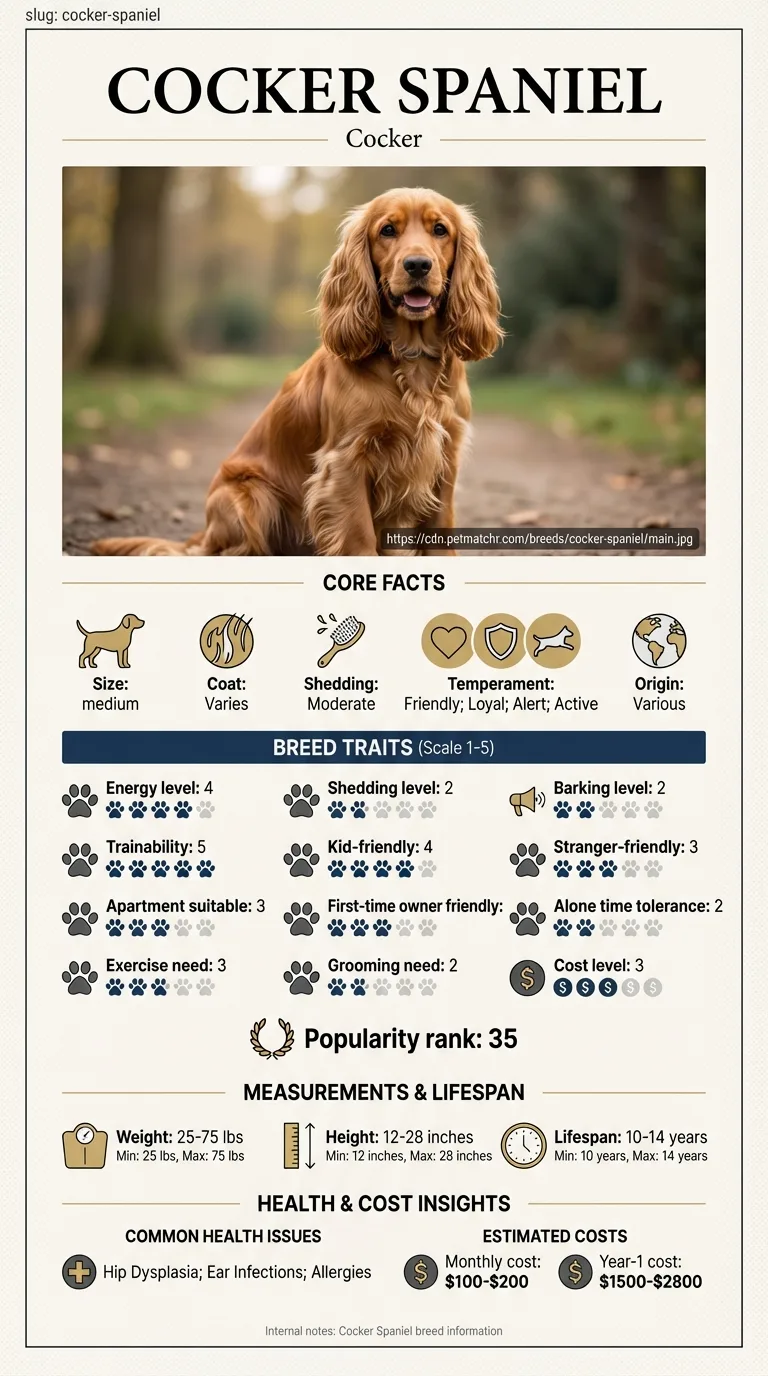
See all Cocker Spaniel health problems, which breeds are prone to legg calv perthes disease, or the full Cocker Spaniel breed guide for temperament, exercise needs and ownership costs.
It typically takes several weeks to months to manage Cocker Spaniel legg-calvé-perthes disease effectively.
Success means your Cocker is showing improved mobility and comfort, allowing them to engage more in daily activities.
When Sarah adopted Bella, her lively Cocker Spaniel, she was excited to have a new companion. However, Bella soon began limping and hesitating to jump onto the couch. After a vet visit, Sarah learned it was legg-calvé-perthes disease. Determined to help, she adjusted Bella's diet, incorporated gentle exercise, and followed a vet-recommended physical therapy plan. Over time, Bella's mobility improved, and she was back to her playful self, chasing her favorite toys.
Key takeaway: With patience and the right care plan, you can significantly improve your Cocker Spaniel's quality of life, even with legg-calvé-perthes disease.
Symptoms of Cocker Spaniel legg-calvé-perthes disease may include limping, difficulty walking, or reluctance to play. You might also notice muscle atrophy in the hind legs as the condition progresses. If you observe these signs, consult your vet for evaluation.
Treatment usually involves pain management and anti-inflammatory medications. In severe cases, surgery may be necessary to relieve pain and restore mobility. Always consult your veterinarian for the best treatment plan tailored to your dog's needs.
Common symptoms include limping, difficulty rising, and reluctance to exercise. You may also notice your dog chewing or licking at the affected hip. If you observe these signs, it's important to consult your veterinarian promptly.
While you can't completely prevent legg-calvé-perthes disease, you can reduce risk factors by maintaining a healthy weight and providing regular exercise. Avoid excessive jumping and rough play, which may stress the hips. Regular vet visits for health checks are also beneficial.
Not always. Many dogs can manage with conservative treatment, including rest and medication. However, if pain persists or mobility is severely affected, surgical options may be necessary. Your vet can help you decide the best course of action.
Legg-calvé-perthes disease typically affects younger dogs, usually between six months to one year old. However, older dogs can experience hip issues related to other conditions. It's important to monitor your older Cocker Spaniel and seek veterinary advice if they show any signs of discomfort.
Managing pain for a Cocker Spaniel with legg-calvé-perthes disease may involve medication prescribed by your vet, along with limited exercise to prevent further injury. Physical therapy can also help improve mobility and comfort. Always consult with your vet before starting any treatment.
In many cases, surgery may be necessary to remove the affected part of the hip bone to alleviate pain and restore function. Your vet will assess your Cocker Spaniel's condition to determine the best course of action. Early intervention often leads to better outcomes.
Manage your dog's weight and provide a comfortable, low-impact exercise routine. Regular vet check-ups are crucial for monitoring the condition.
Keep your dog on soft bedding and consider using joint supplements. Pain relief medications prescribed by your vet can also help alleviate discomfort.
Look for signs of limping, reluctance to play, or changes in behavior. Early detection can lead to better management of the disease.
A one-page prep sheet for this condition: the signs, the questions to ask, what to get priced. Unlocks here.
You get: Vet visit prep sheet
No spam. One-click unsubscribe. See our privacy policy.
Preview page 1 before you decide.