What are genetic disorders in Chihuahuas?
A genetic disorder is a condition influenced by inherited traits. Development, age, injury, environment, and other health factors can also affect a dog's health. A Chihuahua's breed name alone cannot tell you whether that individual dog has a disorder.
What Chihuahua most common genetic disorders are discussed here?
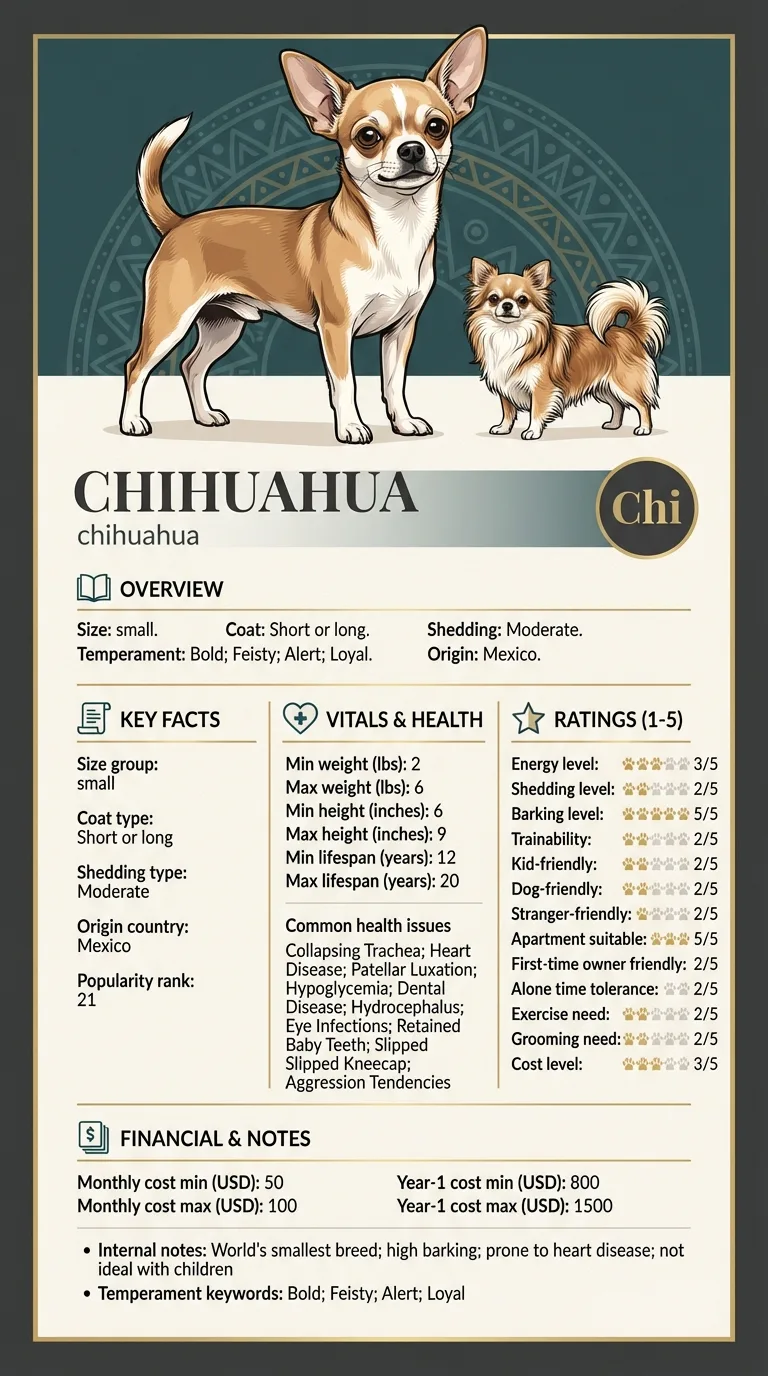
The page-matrix information for this topic names elbow dysplasia and dilated cardiomyopathy in relation to purebred dogs, but it does not provide Chihuahua-specific prevalence. The Chihuahua health information also lists concerns such as collapsing trachea, heart disease, and patellar luxation. These lists do not diagnose a dog or establish that any listed condition is inherited in an individual Chihuahua.
How do I stop Chihuahua most common genetic disorders from getting worse?
You cannot safely stop an inherited risk at home. Support your Chihuahua with regular veterinary care, a body condition your veterinarian considers healthy, observation of changes, and prompt assessment when a veterinarian recommends it. Do not use unapproved medicines or supplements.
Can Chihuahua most common genetic disorders training help?
Training cannot prevent or cure a genetic disorder. Gentle, force-free training can support cooperative handling, calm routines, and activity limits when your veterinarian advises them. Do not use training to push through pain, weakness, coughing, or reduced stamina.
What signs should I watch for in my Chihuahua?
Contact a veterinarian for a recurring limp, stiffness, reluctance to move or jump, coughing, reduced exercise tolerance, weakness, fainting, appetite changes, or a sudden behavior change. These signs are not specific to genetic disease and need professional evaluation.
What does patellar luxation mean for a Chihuahua?
Patellar luxation is listed in the Chihuahua health information in the page matrix. It concerns the kneecap, but a Chihuahua with limping or discomfort could have many possible causes. A veterinarian can assess the dog and advise on the next steps.
Should I worry if my Chihuahua coughs or has breathing changes?
The page-matrix health information lists collapsing trachea and heart disease as Chihuahua concerns. Coughing or breathing changes are not specific to either one, so do not try to distinguish the cause at home. Contact a veterinarian promptly, and seek urgent care for marked breathing difficulty.
Is cruciate ligament rupture a Chihuahua genetic disorder?
No. The source information notes cruciate ligament rupture as more common in mixed-breed dogs, not as proof of an inherited Chihuahua condition. A sudden limp or inability to bear weight still needs veterinary attention regardless of breed.
What should I ask about a Chihuahua's family health history?
Ask for available health and family-history information, including what the breeder or rescue knows about close relatives. Discuss the records with your veterinarian rather than treating them as a guarantee: inherited risk can be complex, and available records may be incomplete.
When should I take my Chihuahua to the vet?
Seek urgent help for collapse, fainting, breathing difficulty, sudden severe weakness, inability to stand, or severe pain. For persistent coughing, limping, stiffness, reduced stamina, appetite changes, or a quieter-than-usual dog, arrange a prompt veterinary appointment.
What should I expect after a Chihuahua health concern is found?
There is no one-size-fits-all timeline. It depends on the finding, its severity, the treatment plan, and how your Chihuahua responds. Your veterinarian can explain appropriate monitoring and daily adjustments for your dog.