Behavior
What are quick tips for managing PRA in Cavaliers?
Keep your home clutter-free and maintain a consistent layout to help your dog navigate safely. Use tactile cues like mats to signal different areas.

Quick answer
What are quick tips for managing PRA in Cavaliers?
Keep your home clutter-free and maintain a consistent layout to help your dog navigate safely. Use tactile cues like mats to signal different areas.
Cavalier King Charles Spaniel progressive retinal atrophy (PRA) leads to gradual vision loss, impacting your dog's quality of life.
Owners of Cavaliers, especially those who are first-time pet parents, may struggle with PRA. It can be especially tough for families with busy lifestyles who may not notice subtle changes in their pet's behavior.
This guide is not medical advice. If your dog shows pain, sudden behavior change, or worsening symptoms, consult a licensed veterinarian.
Some links may be affiliate links. We may earn a commission at no extra cost to you. We only suggest products we believe are helpful for dog owners.
We research and check what we publish, but we do not warrant that any figure, date, price, or statement is accurate, complete, or current, and we accept no liability for any loss, cost, injury, or other harm arising from the use of this site. Use it as one reference among several. You remain responsible for your own decisions and for your dog's care - confirm anything that matters with a licensed veterinarian or another qualified professional before you act on it. Full disclaimer.
Check this first
Understanding when Cavalier King Charles Spaniel progressive retinal atrophy (PRA) becomes an emergency versus when it can be monitored is crucial. If your dog shows signs of severe vision loss, such as bumping into objects or appearing disoriented, you should call your vet right away. These symptoms indicate that the condition may be progressing rapidly and requires immediate attention.
If any of these apply, call your vet or an emergency clinic now. The rest of this page is for the cases that are not an emergency.
Cavalier King Charles Spaniel progressive retinal atrophy (PRA) is a genetic eye disease that leads to gradual vision loss. This condition can start as early as 6 months and worsens over time, making it challenging for your dog to navigate their surroundings. Daily life may involve bumping into furniture or becoming easily disoriented, which can be distressing for both the dog and the owner.
PRA is relatively common in Cavaliers, affecting approximately 13% of the breed. Many owners may not notice symptoms until the condition becomes severe, making awareness and early diagnosis essential.
Cavalier King Charles Spaniels are genetically predisposed to conditions like Progressive Retinal Atrophy (PRA). This breed has a higher likelihood of developing eye diseases due to inherited traits. If you have a Cavalier, understanding their genetic background is crucial for monitoring their eye health.
Environmental factors can also influence the severity of PRA. For instance, poor lighting or a cluttered environment may make it harder for your dog to navigate as their vision declines. Regularly assessing their surroundings can help minimize risks related to their vision loss.
It's essential to consult your vet if you notice any changes in your dog's behavior or vision. They can assess the progression of PRA and discuss potential treatments or management strategies to maintain your dog's quality of life.
Avoiding common mistakes can significantly help manage Cavalier King Charles Spaniel progressive retinal atrophy (PRA). Here are some behaviors to watch out for.
Start here: Cavalier King Charles Spaniel Genetic Disorders: Screening
See all Cavalier King Charles Spaniel health problems, which breeds are prone to progressive retinal atrophy pra, or the full Cavalier King Charles Spaniel breed guide for temperament, exercise needs and ownership costs.
Managing Cavalier King Charles Spaniel progressive retinal atrophy (PRA) is a gradual process. Owners may notice changes in their dog's vision over several months to years, depending on the severity of the condition. Regular vet check-ups every six months can help monitor the progression and adapt care as needed.
Success means being proactive in managing your dog's comfort and quality of life. This includes creating a safe environment, using training techniques to aid navigation, and maintaining an emotional connection with your dog despite their vision loss.
In less severe cases, such as slight difficulty navigating in low light or minor changes in behavior, it’s essential to monitor your Cavalier's condition closely. Keep a journal of any changes you observe, and schedule regular vet check-ups. This proactive approach allows you to track the progression and adjust care as needed.

Sarah, a first-time dog owner in Seattle, adopted Lily, a Cavalier King Charles Spaniel, who was diagnosed with progressive retinal atrophy (PRA) shortly after adoption. At first, Sarah felt overwhelmed as Lily began to bump into furniture and struggle during walks. After researching and talking to her vet, Sarah learned to create a dog-friendly environment by removing hazards and using verbal cues to guide Lily. Over time, Lily adapted well, and Sarah found joy in their new communication methods, strengthening their bond.
Key takeaway: With patience, training, and a supportive environment, it’s possible to help a dog with PRA adjust to their new reality.
Cavalier King Charles Spaniel progressive retinal atrophy (PRA) is a genetic condition that leads to progressive vision loss. It affects the retina, the part of the eye that detects light and color. As the disease advances, your dog may struggle with night vision and eventually lose sight during the day.
To support your dog, keep their environment consistent and safe, minimizing obstacles. Consider using harnesses or leashes that provide support during walks. Training can also help them adapt to their changing vision.
Currently, there is no cure for PRA. However, managing the dog's environment and providing comfort can improve their quality of life. Speak with your veterinarian about potential options.
Symptoms include difficulty seeing in low light, bumping into objects, and hesitance during walks. If you notice these signs, consult your vet for a thorough eye examination.
Training involves using verbal cues and consistent routines to help your dog navigate their environment. Positive reinforcement is key to encourage confidence despite their vision challenges.
While PRA cannot be prevented if the dog is genetically predisposed, responsible breeding practices can help reduce the risk. Always choose reputable breeders who screen for genetic conditions.
Early signs of PRA in Cavalier King Charles Spaniels can include difficulty seeing in low light, bumping into objects, or hesitance when navigating familiar areas. If you notice these changes, it's important to consult your vet for an evaluation.
PRA can develop in Cavalier King Charles Spaniels as early as 1 to 2 years old, but symptoms may not be noticeable until they are older. Regular vet check-ups can help catch this condition early.
To help your Cavalier adjust, maintain a consistent environment by keeping furniture in the same place and using bright colors for toys. Training them with verbal cues can also aid in navigation.
Yes, many Cavalier King Charles Spaniels with PRA can still enjoy life with some adjustments. They often adapt well to their changing vision and continue to thrive in loving homes.
If you notice a rapid decline in your Cavalier's vision or other concerning symptoms, it's essential to consult your vet immediately. They can provide guidance on managing the condition and ensuring your dog's quality of life.
Keep your home clutter-free and maintain a consistent layout to help your dog navigate safely. Use tactile cues like mats to signal different areas.
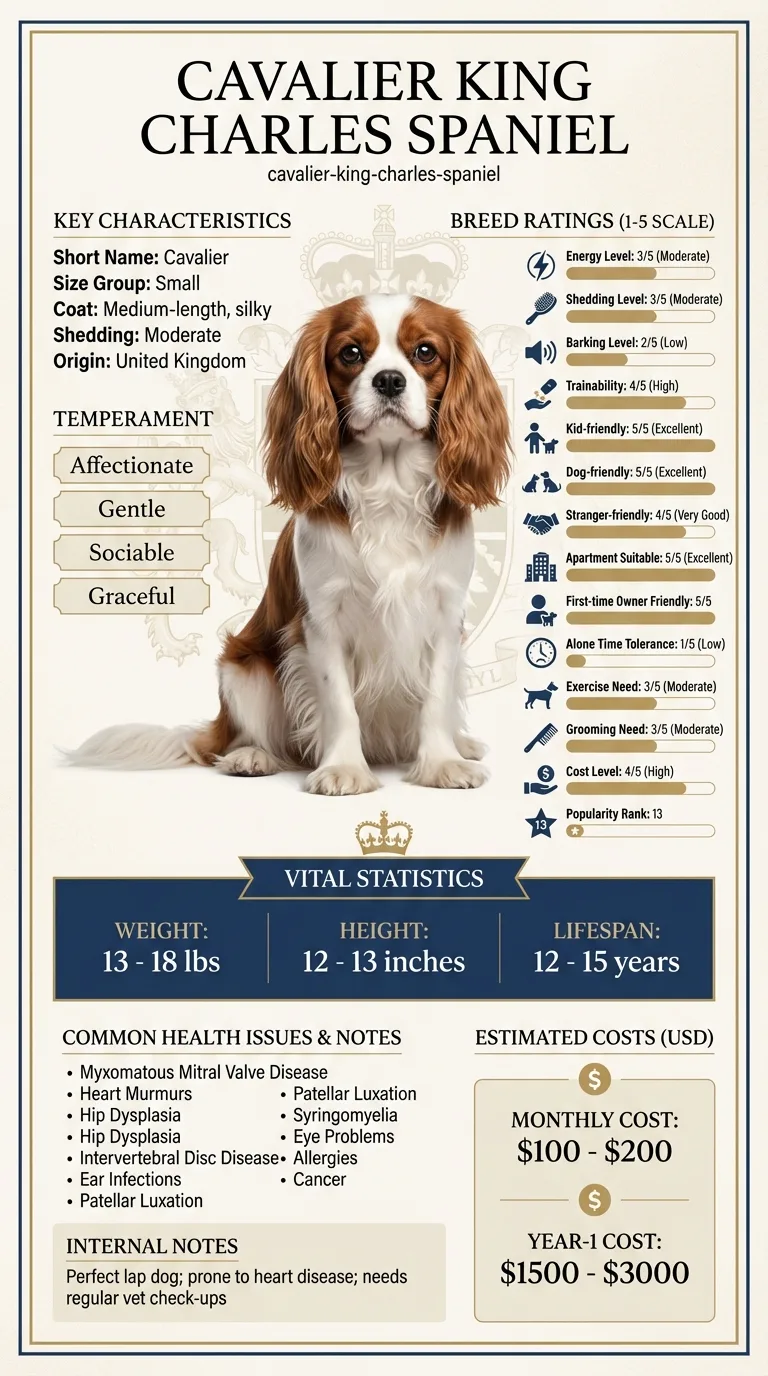
Expect monthly costs between $100 and $200 for routine vet visits and care. Additional expenses may arise from specialized treatments or therapies.
PRA itself is not painful, but the anxiety of losing vision can be distressing. Providing a stable environment can help reduce that stress.
Signs may include pacing, whining, or clinginess. Monitoring their behavior closely can help you identify when they need extra support.
Yes! Training can help them adjust to their environment using sound and touch. Focus on positive reinforcement to build their confidence.
A one-page prep sheet for this condition: the signs, the questions to ask, what to get priced. Unlocks here.
You get: Vet visit prep sheet
No spam. One-click unsubscribe. See our privacy policy.
Preview page 1 before you decide.