Health
What should I do if my Cane Corso has vwd1?
Contact your veterinarian for a detailed management plan. Regular check-ups are vital for monitoring the condition.
Cane Corso von Willebrand's disease (vWD1) is a genetic bleeding disorder that can lead to serious health issues.
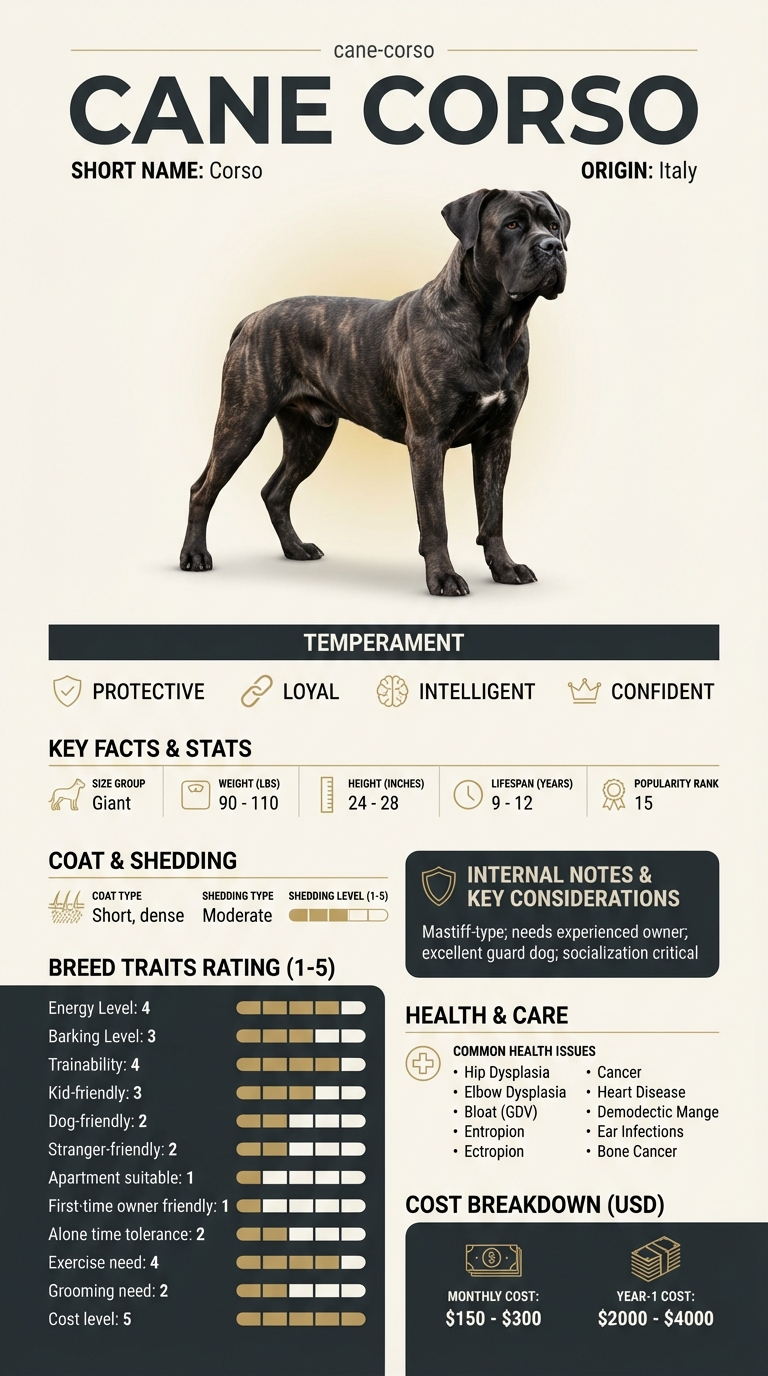
Typically, owners of Cane Corsos, especially those who are new to the breed or unaware of its health issues, may find themselves struggling with this condition. It's essential for them to be informed and proactive in managing their dog's health.
This guide is not medical advice. If your dog shows pain, sudden behavior change, or worsening symptoms, consult a licensed veterinarian.
Some links may be affiliate links. We may earn a commission at no extra cost to you. We only suggest products we believe are helpful for dog owners.
Cane Corso von Willebrand's disease (vWD1) is a genetic bleeding disorder that can significantly impact your dog's health. Daily life for a Cane Corso with vWD1 can involve frequent bruising, excessive bleeding from minor cuts, or prolonged bleeding after surgery. This condition can be alarming and requires careful management to ensure your dog remains safe and healthy.
Von Willebrand's disease (vWD1) is relatively common in Cane Corsos compared to other breeds. While not every Cane Corso will have this disorder, awareness and early testing can help identify those at risk.
Cane Corso von Willebrand's disease (vWD1) is a genetic bleeding disorder that affects blood clotting. This condition is inherited, meaning if one or both parents carry the gene, their offspring may develop vWD1. It's particularly prevalent in certain breeds, including the Cane Corso, which can lead to increased health risks for these dogs.
While vWD1 is primarily genetic, environmental factors can exacerbate symptoms. Stressful situations, such as injury or surgery, can lead to complications for a dog with this condition. Additionally, inadequate nutrition or a lack of proper veterinary care may hinder overall health and management of the disease.
If your Cane Corso shows signs of anxiety or stress that affect their behavior, consider consulting a professional trainer. Look for trainers experienced in working with large breeds and those familiar with medical conditions like vWD1. They can help with behavior management techniques tailored to your dog's needs.
If you notice unusual bleeding, such as nosebleeds or prolonged bleeding from minor cuts, contact your vet immediately. Regular check-ups are essential to monitor your Cane Corso's health and adjust care as needed. If your dog experiences significant changes in energy or appetite, it's time for a vet visit.
Managing Cane Corso von Willebrand's disease (vWD1) typically takes several months of regular veterinary visits and consistent care practices. Owners should expect to see improvements in their dog's condition within 3 to 6 months if they follow a tailored management plan.
Success means your Cane Corso experiences fewer bleeding episodes and leads a more normal life. This includes maintaining a healthy weight, receiving appropriate exercise, and having regular check-ups with the vet to monitor their condition.
Avoiding common mistakes can help improve your Cane Corso's experience with von Willebrand's disease (vWD1). Here are some behaviors to steer clear of.
Recognizing when Cane Corso von Willebrand's Disease (vWD1) is an emergency is crucial for your dog's wellbeing. If you notice any severe symptoms, it's important to contact your veterinarian immediately. Red-flag signs include excessive bleeding from minor cuts, unexplained bruising, or prolonged bleeding after surgery. These symptoms indicate that your dog may not be able to clot properly, and prompt medical attention is necessary.
On the other hand, if your Cane Corso has mild symptoms such as occasional nosebleeds or minor bleeding during play, you can monitor the situation. Create a plan with your veterinarian to track any changes in your dog's health. Keep an eye on their activity level and any new symptoms that may arise. If the bleeding becomes more frequent or severe, consult your vet.
In summary, immediate action is essential for severe cases of vWD1, while mild cases can be watched and planned for. Always err on the side of caution; if you are unsure about your dog's condition, reaching out to a professional is the best course of action.

When Sarah adopted Max, her Cane Corso, she quickly noticed he was more prone to bruising and had excessive bleeding from minor cuts. After consulting the vet, she learned Max had von Willebrand's disease (vWD1). Determined to help him, Sarah created a management plan that included regular vet visits, a balanced diet, and careful exercise routines. Over time, Max's bleeding episodes decreased, and he became more active and happy.
Key takeaway: With patience and the right care, managing Cane Corso von Willebrand's disease (vWD1) can lead to a healthier, happier life for your dog.
Cane Corso von Willebrand's disease (vwd1) is a genetic bleeding disorder that is inherited. This means that if your dog has it, it likely came from their parents. Regular vet check-ups can help identify such conditions early.
Managing vwd1 involves regular veterinary care, monitoring for bleeding, and avoiding high-risk activities. Your vet may recommend specific treatments or lifestyle adjustments to keep your dog safe.
Yes, Cane Corsos with vwd1 can be trained, but be cautious with physical activities that may lead to injury. Focus on obedience training and mental stimulation rather than high-impact exercises.
Signs can include excessive bleeding from minor injuries, nosebleeds, or blood in urine. If you notice any of these symptoms, it's crucial to consult your veterinarian immediately.
While there is no cure for vwd1, it can be managed. Treatment often includes regular monitoring and potential blood transfusions in severe cases. Your vet can guide you on the best approach.
Signs of von Willebrand's disease (vwd1) in a Cane Corso can include excessive bleeding from minor cuts, nosebleeds, or prolonged bleeding after surgery. You may also notice unusual bruising or blood in the urine. If you observe any of these symptoms, consult your vet promptly.
Yes, von Willebrand's disease (vwd1) is a genetic disorder passed down from parent dogs. This means that breeding dogs should be screened for vwd1 to prevent passing the condition to their puppies. Responsible breeding practices can help minimize the risk.
While von Willebrand's disease (vwd1) is primarily a genetic condition, older Cane Corsos may show symptoms if they were carriers. Regular vet check-ups are essential for early detection and management of any health issues, including vwd1.
Supporting a Cane Corso with vwd1 involves managing their environment to reduce injury risks, avoiding certain medications that could exacerbate bleeding, and working closely with your vet. Regular monitoring and customized care plans can help maintain their quality of life.
Yes, extra caution is needed during training. Avoid overly strenuous activities that could lead to injury or bleeding. Focus on gentle training techniques to ensure your Cane Corso remains safe while learning.
Contact your veterinarian for a detailed management plan. Regular check-ups are vital for monitoring the condition.
Moderate exercise is fine, but avoid high-impact activities to reduce injury risk. Focus on gentle walks and training.
Look for signs like excessive bleeding from cuts, nosebleeds, or unusual lethargy. If you notice these, consult your vet.
There are no specific foods for vwd1, but a balanced diet is crucial. Consult your vet for tailored dietary advice.
Create a calm environment and consider training to build confidence. Your vet may also recommend anxiety relief strategies.