Health
What are Bulldog (English) respiratory disease quick tips?
Keep your Bulldog cool and avoid strenuous activities in heat. Maintain a healthy weight to reduce strain on their lungs. Regular vet check-ups are essential for early detection.

Quick answer
What are Bulldog (English) respiratory disease quick tips?
Keep your Bulldog cool and avoid strenuous activities in heat. Maintain a healthy weight to reduce strain on their lungs. Regular vet check-ups are essential for early detection.
Bulldogs (English) are prone to respiratory disease, a serious condition affecting their breathing. Understanding this issue is crucial for their health and happiness. (Bulldog (English) respiratory disease)
New and experienced Bulldog owners alike often struggle with respiratory issues in their pets. Busy families, single owners, or anyone not familiar with the breed's specific needs may find it particularly challenging to recognize and manage these health concerns.
This guide is not medical advice. If your dog shows pain, sudden behavior change, or worsening symptoms, consult a licensed veterinarian.
Some links may be affiliate links. We may earn a commission at no extra cost to you. We only suggest products we believe are helpful for dog owners.
We research and check what we publish, but we do not warrant that any figure, date, price, or statement is accurate, complete, or current, and we accept no liability for any loss, cost, injury, or other harm arising from the use of this site. Use it as one reference among several. You remain responsible for your own decisions and for your dog's care - confirm anything that matters with a licensed veterinarian or another qualified professional before you act on it. Full disclaimer.
Check this first
It's crucial to know when Bulldog (English) respiratory disease becomes an emergency. If your Bulldog shows severe symptoms, it's time to call your vet immediately. Look for signs such as labored breathing, blue-tinged gums, or extreme lethargy.
These symptoms indicate that your dog may be struggling to get enough oxygen and needs urgent medical attention.
In less severe cases, you can monitor your Bulldog at home. If your dog has occasional coughing, slight wheezing, or seems slightly less energetic than usual, these may be signals to keep an eye on. Make a plan to check in with your vet if these mild symptoms persist or worsen over a few days.
Being proactive about your Bulldog's respiratory health can help prevent emergencies. Regular vet check-ups and staying aware of your dog's behavior are essential. If you're ever in doubt, err on the side of caution and consult with your vet for guidance.
If any of these apply, call your vet or an emergency clinic now. The rest of this page is for the cases that are not an emergency.
Bulldog (English) respiratory disease is a common issue that affects how these lovable dogs breathe. Due to their unique brachycephalic structure, Bulldogs often experience difficulty breathing, which can lead to wheezing, snorting, or coughing. This struggle can be frustrating for both the dog and the owner, especially during physical activity or in hot weather.
Unfortunately, respiratory disease is prevalent among Bulldogs, with a staggering 479% higher risk compared to non-brachycephalic breeds. Many Bulldogs face this issue at some point in their lives, making it important for owners to recognize the signs early and take action.
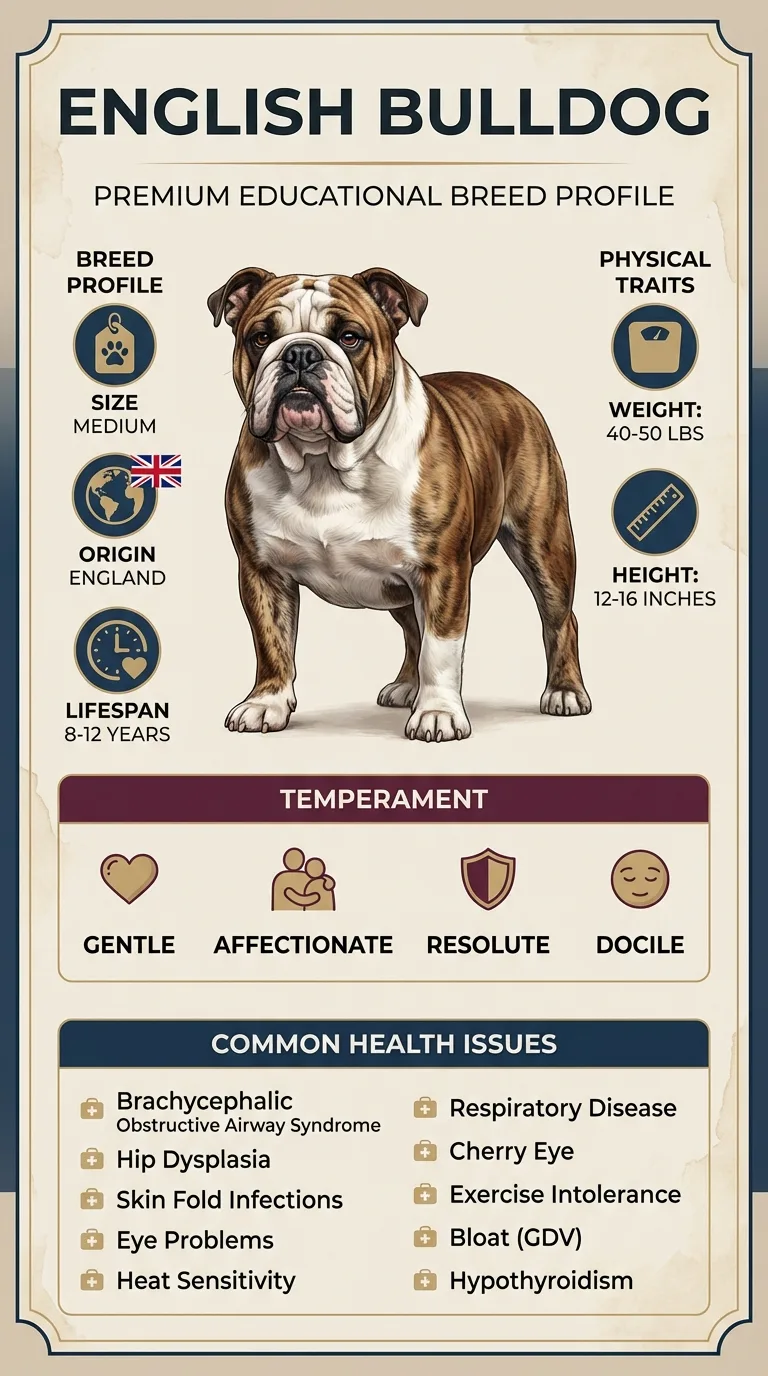
Bulldogs are brachycephalic, meaning they have short noses and flat faces. This anatomical structure leads to narrower airways, making it harder for them to breathe. They are also prone to various respiratory diseases, including Brachycephalic Obstructive Airway Syndrome, which can cause significant breathing difficulties.
Environmental factors can exacerbate respiratory issues in Bulldogs. Heat and humidity can lead to overheating, and exposure to allergens like pollen or smoke can further irritate their airways. Additionally, being overweight can put extra strain on their respiratory system.
Talk to your vet if your Bulldog exhibits persistent coughing, wheezing, or labored breathing. If you notice changes in their energy levels or appetite, it's crucial to seek professional advice.
When dealing with Bulldog (English) respiratory disease, it's crucial to avoid common mistakes that can worsen the condition. Here are some behaviors that owners should watch out for, along with safer alternatives.
Start here: English Bulldog Most Common Genetic Disorders: Screening
See all Bulldog health problems, which breeds are prone to respiratory disease, or the full Bulldog breed guide for temperament, exercise needs and ownership costs.
You can expect to see improvements in your Bulldog's respiratory issues within 4 to 12 weeks of implementing care and lifestyle changes.
Success means your Bulldog will breathe more easily during exercise, show less distress in hot weather, and have fewer coughing spells, allowing for a more active and enjoyable life.
Maria, a busy nurse in San Diego, was concerned when her Bulldog, Max, started coughing and struggling to breathe during walks. After consulting her vet, she learned that Max had a respiratory disease common in Bulldogs. With a tailored training plan focusing on gentle exercise and gradual acclimatization to heat, Maria was dedicated to helping Max. Over the next few months, she noticed significant improvement. Max could play fetch without gasping for air, and their walks became joyful again, not stressful.
Key takeaway: With patience and the right approach, you can significantly improve your Bulldog's quality of life despite respiratory challenges.
Bulldogs (English) are prone to respiratory diseases due to their short snouts, which can lead to breathing difficulties. These issues can be exacerbated by obesity, heat, and exercise. Regular vet check-ups can help identify and manage these problems early.
To manage respiratory disease in Bulldogs (English), keep them at a healthy weight and avoid strenuous exercise in hot weather. It's also important to provide a cool environment and avoid exposure to smoke or strong odors. Consulting with a vet for tailored advice is crucial.
Common signs include excessive panting, coughing, wheezing, or labored breathing. If your Bulldog seems lethargic or has difficulty breathing, it’s important to visit a vet immediately. Early intervention can make a significant difference.
While training cannot cure respiratory disease, positive reinforcement can help with calm behavior during walks. Avoid long walks or strenuous activities and focus on short, gentle training sessions. Always reward your dog for relaxed behavior.
Yes, smoke, pollution, and extreme temperatures can aggravate respiratory issues in Bulldogs (English). Ensure your home is smoke-free and consider using air purifiers to improve air quality. Avoid outdoor activities during high pollution days.
Signs of respiratory disease in Bulldogs include labored breathing, excessive snoring, coughing, and difficulty exercising. If you notice these symptoms, it's essential to consult your vet promptly to determine the cause and appropriate treatment.
While Bulldogs can still exercise, it's crucial to monitor their activity levels closely. Short, gentle walks in cooler weather are usually best, but avoid strenuous activities that may trigger breathing difficulties.
To help your Bulldog, provide a cool and well-ventilated environment. Keep them calm and avoid exposing them to extreme heat, as Bulldogs are sensitive to temperature changes. Regular vet check-ups are also important for managing their condition.
If your Bulldog shows persistent signs of respiratory distress, such as wheezing or blue-tinged gums, you should seek veterinary care immediately. Early intervention can prevent serious complications.
Yes, Bulldogs are significantly more prone to respiratory diseases due to their brachycephalic structure. They have a 479% higher risk compared to non-brachycephalic breeds, making it vital for owners to be vigilant about their health.
Keep your Bulldog cool and avoid strenuous activities in heat. Maintain a healthy weight to reduce strain on their lungs. Regular vet check-ups are essential for early detection.
Regular check-ups, at least once a year, are important for monitoring respiratory health. More frequent visits may be necessary for Bulldogs with existing issues.
Avoid exposing your Bulldog to smoke, strong perfumes, or hot, humid weather. These factors can worsen their breathing difficulties.
Stay calm and help your Bulldog to a cool, quiet place. Encourage them to breathe slowly and avoid any exertion until they feel better.
In some cases, surgery can help correct anatomical problems contributing to respiratory disease. A vet can evaluate if this is a necessary option for your Bulldog.
A one-page prep sheet for this condition: the signs, the questions to ask, what to get priced. Unlocks here.
You get: Vet visit prep sheet
No spam. One-click unsubscribe. See our privacy policy.
Preview page 1 before you decide.