Health
What are Bulldog (English) chondrodystrophy (cddy) quick tips?
Monitor their weight and ensure they have a comfortable bed to support their joints. Regular vet visits are essential for managing their health.

Quick answer
What are Bulldog (English) chondrodystrophy (cddy) quick tips?
Monitor their weight and ensure they have a comfortable bed to support their joints. Regular vet visits are essential for managing their health.
Bulldog (English) chondrodystrophy (CDDY) is a serious developmental disorder affecting bone growth.
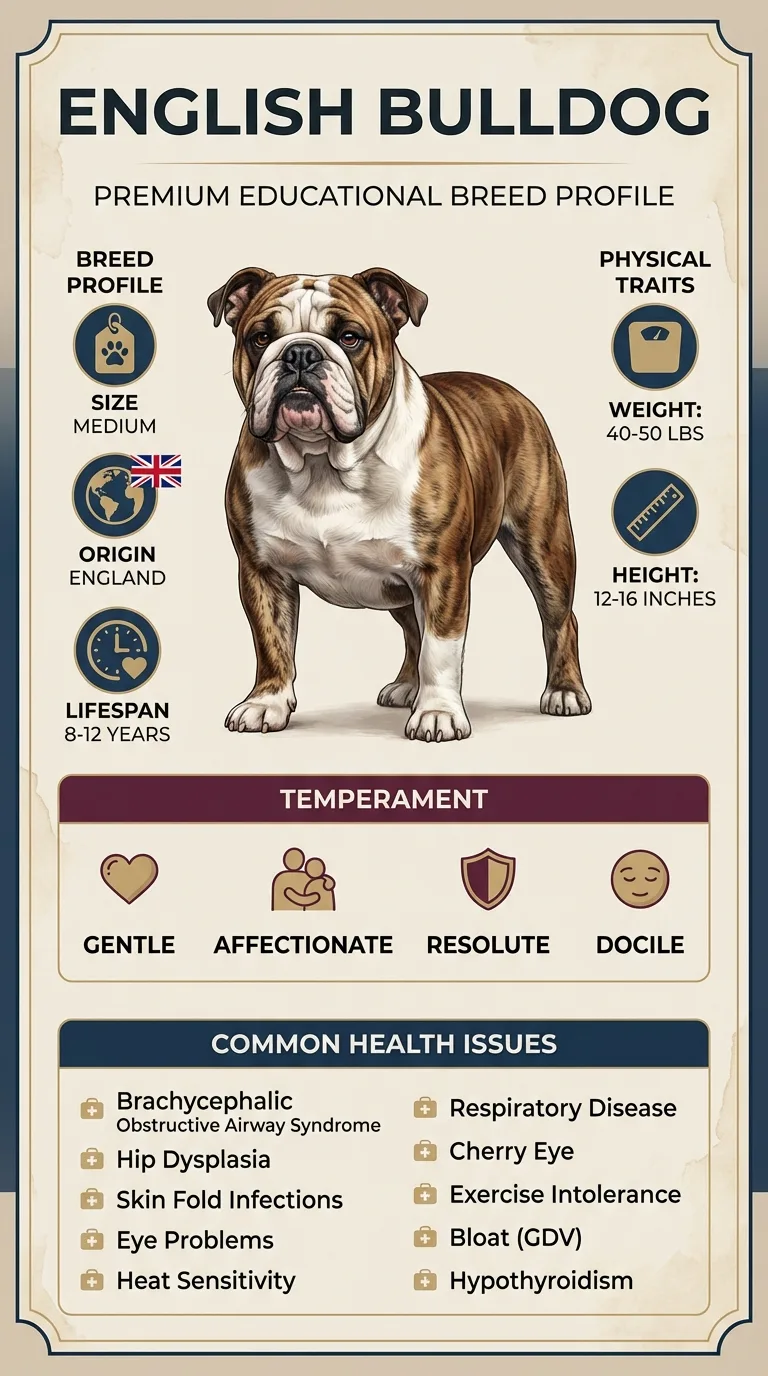
Typical owners facing this challenge include those who are passionate about their Bulldogs but may not be prepared for the medical complexities involved. First-time Bulldog owners or busy families may find it particularly overwhelming.
This guide is not medical advice. If your dog shows pain, sudden behavior change, or worsening symptoms, consult a licensed veterinarian.
Some links may be affiliate links. We may earn a commission at no extra cost to you. We only suggest products we believe are helpful for dog owners.
We research and check what we publish, but we do not warrant that any figure, date, price, or statement is accurate, complete, or current, and we accept no liability for any loss, cost, injury, or other harm arising from the use of this site. Use it as one reference among several. You remain responsible for your own decisions and for your dog's care - confirm anything that matters with a licensed veterinarian or another qualified professional before you act on it. Full disclaimer.
Check this first
Recognizing when Bulldog (English) chondrodystrophy (CDDY) is an emergency can be crucial for your dog's well-being. If your Bulldog shows severe symptoms, it’s time to call your vet immediately. Symptoms like intense pain, inability to walk, swelling, or visible deformities in the legs are red flags that require urgent attention.
If any of these apply, call your vet or an emergency clinic now. The rest of this page is for the cases that are not an emergency.
Bulldog (English) chondrodystrophy (cddy) is a developmental disorder that impacts bone growth and structure. This condition can lead to various physical challenges, including shortened limbs and spinal issues. Owners may notice their Bulldog struggling with mobility or showing signs of discomfort during daily activities.
Chondrodystrophy (cddy) is relatively common in Bulldogs, affecting a significant percentage of the breed. Many owners observe symptoms as early as puppyhood, making it a vital issue to monitor.
Bulldogs (English) are prone to chondrodystrophy (CDDY) due to their unique genetics. This breed has been selectively bred for certain traits, which can lead to developmental disorders affecting bone structure. The short legs and stocky build of Bulldogs can exacerbate these issues, making them more susceptible to CDDY.
Environmental factors can also contribute to CDDY in Bulldogs. Poor nutrition during early development or lack of proper exercise can aggravate bone health. Additionally, keeping Bulldogs in unsuitable living conditions, such as overly warm environments, can lead to stress and exacerbate health problems.
If you notice persistent limping, swelling in joints, or signs of pain, it’s essential to consult a vet. They can provide a thorough evaluation and recommend treatment options. Early intervention can significantly improve your Bulldog's quality of life and manage chondrodystrophy symptoms effectively.
Here are some common mistakes Bulldog (English) owners make that can worsen chondrodystrophy (cddy) symptoms. Avoiding these can help improve your dog's comfort and mobility.
Start here: English Bulldog Most Common Genetic Disorders: Screening
See all Bulldog health problems, which breeds are prone to chondrodystrophy cddy, or the full Bulldog breed guide for temperament, exercise needs and ownership costs.
Expect to see improvements within 4 to 6 months of consistent care and follow-up with your vet.
Success means your Bulldog (English) has better mobility, reduced discomfort, and improved quality of life. You'll notice them being more active and engaging in play without excessive fatigue.
On the other hand, if your Bulldog is experiencing mild discomfort, such as slight limping or stiffness after exercise, you can monitor these symptoms at home. Provide your dog with a comfortable resting area and limit strenuous activities. Keep an eye on their behavior and consult your vet if symptoms persist or worsen over time.

Samantha, a first-time dog owner in Seattle, adopted Charlie, an English Bulldog, only to discover he had chondrodystrophy (CDDY). At first, Charlie struggled with mobility and often seemed uncomfortable, which worried Samantha. After researching how to manage CDDY, she started a combination of gentle exercise, weight management, and specific training techniques. Over the next few months, Samantha noticed Charlie becoming more playful and less hesitant during walks, significantly improving their bond and his overall happiness.
Key takeaway: With patience and tailored care, Bulldogs with chondrodystrophy can live fulfilling lives. Consistent training and proper management are key to helping them thrive.
Bulldog (English) chondrodystrophy (cddy) is a developmental disorder that affects bone growth, often inherited from their parents. This condition can lead to abnormal body proportions, which may result in health issues like joint pain or mobility challenges. Regular vet check-ups can help monitor and manage these concerns.
To support a Bulldog (English) with chondrodystrophy (cddy), ensure they have a comfortable living environment. Providing joint supplements, balanced nutrition, and avoiding excessive exercise can help maintain their comfort. Consult your vet for tailored advice and treatment options.
Yes, training can be effective for Bulldogs (English) with chondrodystrophy (cddy). Focus on gentle, positive reinforcement techniques that respect their physical limitations. Short, fun training sessions can build confidence and strengthen your bond.
Common signs of chondrodystrophy (cddy) in Bulldogs (English) include unusual limb proportions, difficulty in movement, and signs of discomfort. If you notice these symptoms, it’s important to consult a vet for a proper diagnosis and treatment options.
Caring for a Bulldog (English) with chondrodystrophy (cddy) can be costly, with monthly expenses ranging from $150 to $350. This includes vet visits, medication, and special dietary needs. Budgeting for these costs can help ensure your dog receives the care they need.
Signs of Bulldog (English) chondrodystrophy (cddy) can include abnormal growth patterns, particularly in the limbs and spine. You may also notice stiffness, difficulty in movement, or discomfort when your dog is active. If you observe these changes, it's important to consult a vet.
While some cases of Bulldog (English) chondrodystrophy (cddy) may require surgical intervention, many dogs can be managed through weight control, physical therapy, and pain relief medications. Regular vet check-ups are crucial to adjust the management plan as needed.
Bulldog (English) chondrodystrophy (cddy) symptoms usually appear in puppies or young adults, often between 6 months and 2 years of age. Early detection can help in managing the condition effectively and improving your dog's quality of life.
Chondrodystrophy in Bulldogs can lead to complications that might shorten their lifespan if left untreated. However, with proper management, many Bulldogs live fulfilling lives. Regular veterinary care is essential to monitor their health.
Monitor their weight and ensure they have a comfortable bed to support their joints. Regular vet visits are essential for managing their health.
Limit high-impact activities and provide joint supplements as recommended by your vet. Maintaining a healthy weight is crucial.
Yes, with proper care and management, Bulldogs (English) with chondrodystrophy (cddy) can live fulfilling lives, though they may require special accommodations.
Use gentle, positive reinforcement techniques, keeping training sessions short and engaging to cater to their physical needs.
A one-page prep sheet for this condition: the signs, the questions to ask, what to get priced. Unlocks here.
You get: Vet visit prep sheet
No spam. One-click unsubscribe. See our privacy policy.
Preview page 1 before you decide.