Behavior
What are quick tips for managing PRA in Brussels Griffons?
Keep the home environment consistent and free of obstacles. Use verbal commands to guide them and ensure regular vet visits to monitor their health.

Quick answer
What are quick tips for managing PRA in Brussels Griffons?
Keep the home environment consistent and free of obstacles. Use verbal commands to guide them and ensure regular vet visits to monitor their health.
Brussels Griffon progressive retinal atrophy (PRA) leads to gradual vision loss in dogs. This condition can significantly impact your pet's quality of life.
Typical owners facing this issue often include those who have recently adopted a Brussels Griffon or those whose dogs have shown signs of vision problems. Owners may feel unsure about how to help their pets adapt to changes in sight and are looking for effective ways to manage the condition.
This guide is not medical advice. If your dog shows pain, sudden behavior change, or worsening symptoms, consult a licensed veterinarian.
Some links may be affiliate links. We may earn a commission at no extra cost to you. We only suggest products we believe are helpful for dog owners.
We research and check what we publish, but we do not warrant that any figure, date, price, or statement is accurate, complete, or current, and we accept no liability for any loss, cost, injury, or other harm arising from the use of this site. Use it as one reference among several. You remain responsible for your own decisions and for your dog's care - confirm anything that matters with a licensed veterinarian or another qualified professional before you act on it. Full disclaimer.
Check this first
Identifying when Brussels Griffon progressive retinal atrophy (PRA) becomes an emergency is crucial for your dog's well-being. If you notice sudden changes in your dog's vision, such as stumbling, bumping into objects, or excessive anxiety, these are red flags. You should contact your vet immediately if your dog seems disoriented or has difficulty navigating familiar spaces.
On the other hand, if your Brussels Griffon displays mild signs of vision loss, like hesitance in low light or occasional bumping into things, these may not be urgent. In such cases, you can monitor their behavior while implementing a plan to enhance their environment. Keep track of any changes and consult your vet for regular check-ups to manage the condition effectively.
If any of these apply, call your vet or an emergency clinic now. The rest of this page is for the cases that are not an emergency.
Brussels Griffon progressive retinal atrophy (PRA) is a genetic eye disorder that leads to gradual vision loss. This condition can significantly impact your dog's day-to-day life, as they may struggle with navigation and recognizing familiar faces. Common signs include bumping into objects, hesitance in unfamiliar environments, and increased reliance on other senses.
PRA is relatively common in Brussels Griffons, particularly in older dogs. While not every Brussels will develop this condition, awareness and early detection are crucial for better management.
Brussels Griffons are prone to genetic conditions like Progressive Retinal Atrophy (PRA). This condition is hereditary and affects their vision as they age, often leading to gradual blindness. Their small size and unique eye structure can make them more vulnerable to such issues.
Environmental factors like inadequate lighting or sudden changes in their surroundings can exacerbate their visual challenges. Stress and anxiety may also impact their overall well-being, making it harder for them to adapt to their condition.
Consult your vet if you notice sudden changes in your dog's eyesight, behavior, or if they seem to be in distress. Regular check-ups can help monitor the progression of PRA and address any additional health concerns.
Many owners unknowingly reinforce their Brussels Griffon's progressive retinal atrophy (PRA) problems. Here are some common mistakes to avoid, along with safer alternatives.
Start here: Brussels Griffon Most Common Genetic Disorders: Screening
See all Brussels Griffon health problems, which breeds are prone to progressive retinal atrophy pra, or the full Brussels Griffon breed guide for temperament, exercise needs and ownership costs.
Managing Brussels Griffon progressive retinal atrophy (PRA) typically takes several months to see meaningful changes. Consistent environmental adjustments and follow-up are crucial for success.
Success means your Brussels Griffon adapts to their vision loss, navigating their environment safely. They will show confidence in familiar areas and respond well to verbal cues.
Emily, a devoted dog mom, noticed her Brussels Griffon, Max, struggling to navigate their home. Over time, it became clear that Max had progressive retinal atrophy (PRA). Instead of feeling defeated, Emily reached out to a vet and a trainer. They developed a training plan focusing on verbal commands and scent work. With consistent practice and patience, Max learned to move confidently around the house, especially in familiar rooms. Emily created a safe space with minimal obstacles and started using sound cues to guide him. It took about six months, but Max adjusted beautifully to his changing vision, proving that with the right support and training, he could adapt.
Key takeaway: With dedication and the right strategies, owners can help their Brussels Griffons adjust to progressive retinal atrophy, ensuring they lead happy, fulfilling lives.
Brussels Griffon progressive retinal atrophy (PRA) is a genetic condition that leads to progressive vision loss. It typically starts with night blindness and can advance to daytime vision loss. Regular veterinary check-ups can help monitor this condition.
While there's no cure for PRA, you can help your dog adjust by keeping their environment consistent and free of hazards. Training them to navigate obstacles and using verbal commands can also support their mobility. Regular vet visits are crucial to track their condition.
Currently, there is no treatment to reverse PRA, but supportive measures can help your dog adapt. Preventive measures include selecting breeding lines that are tested for genetic health. Speak to a vet about the best practices for your dog's health.
Brussels Griffons with PRA can live a full life, often between 10 to 14 years, provided they receive proper care. While PRA impacts vision, it doesn't necessarily affect overall health. Regular vet check-ups can help monitor their condition.
Training a Brussels Griffon with PRA focuses on enhancing their other senses, like hearing and smell. Use verbal cues and consistent routines to help them navigate their environment. Patience and positive reinforcement are key.
Early signs of PRA in your Brussels Griffon may include difficulty seeing in low light, hesitance to navigate familiar spaces, or bumping into objects. You might notice them becoming more cautious during walks or avoiding stairs. If you observe these changes, consult your vet for a thorough eye examination.
Yes, Brussels Griffons with progressive retinal atrophy can still enjoy a fulfilling life. With proper adjustments and training, they can adapt to their vision loss. Keeping their environment consistent and providing mental stimulation can help them thrive despite their condition.
For older Brussels Griffons with PRA, creating a safe and familiar environment is crucial. Use consistent furniture arrangements and avoid moving items around. Additionally, consider using scents or sounds to guide them, and always be patient as they adjust to changes in their vision.
If you notice any changes in your Brussels Griffon's vision, it's important to see a vet promptly. Signs such as bumping into things, excessive blinking, or changes in behavior can indicate vision issues. Early intervention can help manage conditions like progressive retinal atrophy effectively.
Training a Brussels Griffon with progressive retinal atrophy focuses on positive reinforcement and consistency. Use verbal cues and touch to guide them, and practice in familiar spaces. Gradually introducing new environments with patience can help them adjust and feel secure.
Keep the home environment consistent and free of obstacles. Use verbal commands to guide them and ensure regular vet visits to monitor their health.
Watch for signs like night blindness or bumping into objects. If you suspect PRA, consult your vet for a proper diagnosis.
Currently, no supplements can cure PRA, but a balanced diet supports overall health. Always consult your vet before adding any supplements.
Yes, as their vision deteriorates, they may become more anxious or cautious. Providing a stable environment can help ease their anxiety.
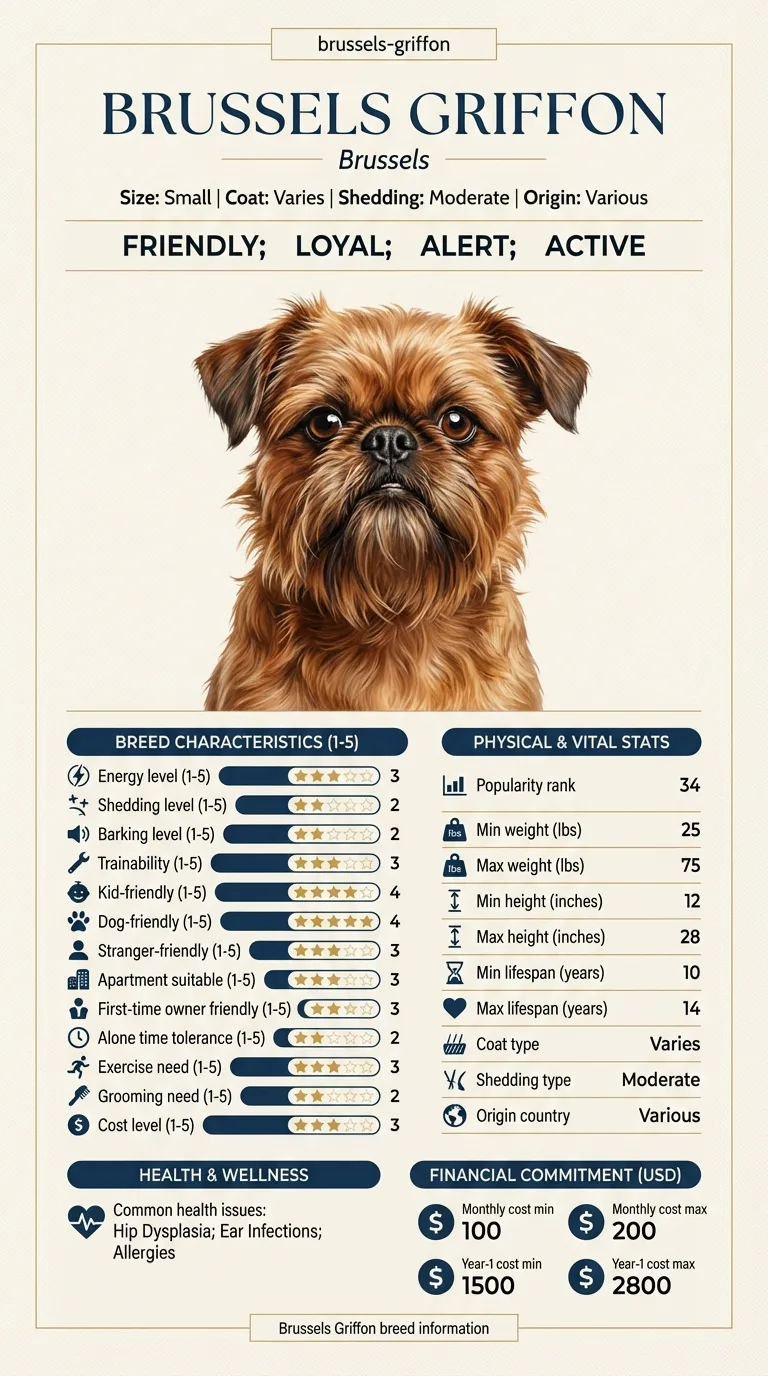
Caring for a Brussels Griffon, including those with PRA, typically ranges from $100 to $200 monthly. This includes routine vet visits and any special needs.
A one-page prep sheet for this condition: the signs, the questions to ask, what to get priced. Unlocks here.
You get: Vet visit prep sheet
No spam. One-click unsubscribe. See our privacy policy.
Preview page 1 before you decide.