Behavior
What are some quick tips for Boxer respiratory disease?
Keep your Boxer cool and avoid strenuous exercise in hot weather. Regular vet check-ups can help catch issues early.

Quick answer
What are some quick tips for Boxer respiratory disease?
Keep your Boxer cool and avoid strenuous exercise in hot weather. Regular vet check-ups can help catch issues early.
Boxer respiratory disease is a serious condition that affects breathing and overall health in Boxers. Understanding this issue is crucial for ensuring your dog's well-being.
Typical owners who face this issue include those with Boxers living in warmer climates or those who may not be fully aware of their dog's health risks. This includes first-time dog owners and families with active lifestyles.
This guide is not medical advice. If your dog shows pain, sudden behavior change, or worsening symptoms, consult a licensed veterinarian.
Some links may be affiliate links. We may earn a commission at no extra cost to you. We only suggest products we believe are helpful for dog owners.
We research and check what we publish, but we do not warrant that any figure, date, price, or statement is accurate, complete, or current, and we accept no liability for any loss, cost, injury, or other harm arising from the use of this site. Use it as one reference among several. You remain responsible for your own decisions and for your dog's care - confirm anything that matters with a licensed veterinarian or another qualified professional before you act on it. Full disclaimer.
Check this first
Red-flag signs include extreme difficulty breathing, persistent coughing, or bluish gums. If your Boxer is unable to exercise, collapses, or shows signs of distress, these are all emergencies. Don’t wait; your dog's health could be at serious risk.
On the other hand, mild cases can often be managed at home. If your Boxer has slight coughing, occasional wheezing, or shows mild lethargy, observe their behavior closely. Keep track of any changes, and ensure they are comfortable. Monitor them for a few days, but be ready to reach out to your vet if conditions worsen.
In summary, trust your instincts. If you feel your Boxer is struggling, it’s better to be safe and consult a vet. Early intervention can make a significant difference in their health outcomes.
If any of these apply, call your vet or an emergency clinic now. The rest of this page is for the cases that are not an emergency.
Boxer respiratory disease can be a serious issue for this breed, which is known for its playful and energetic nature. Day-to-day, owners might notice their Boxer having difficulty breathing, especially during exercise or hot weather. Common signs include coughing, wheezing, and excessive panting, which can be alarming for any dog owner.
Respiratory disease is quite common in Boxers, as they are 479% more likely to experience these issues compared to non-brachycephalic breeds. This makes it essential for Boxer owners to be vigilant and proactive about monitoring their dog's health.
Boxers are brachycephalic, meaning they have short muzzles. This structure can lead to narrowed airways and respiratory issues. Their active nature also makes them more prone to breathing difficulties during intense play or exercise.
Environmental factors like smoke, allergens, or extreme temperatures can exacerbate respiratory problems in Boxers. Stress and anxiety can also trigger breathing issues, especially in high-energy situations.
If your Boxer experiences frequent coughing, wheezing, or difficulty breathing, it's essential to consult a vet. They can evaluate your dog's respiratory health and recommend appropriate treatments or medications.
Avoiding common pitfalls can help your Boxer manage respiratory disease more effectively. Here are some mistakes to watch out for, along with safer alternatives.
Start here: Boxer Most Common Genetic Disorders: What to Screen For
See all Boxer health problems, which breeds are prone to respiratory disease, or the full Boxer breed guide for temperament, exercise needs and ownership costs.
You can expect to see improvements in your Boxer's respiratory health within 4 to 6 weeks of implementing changes. Consistent environmental adjustments and follow-up are key.
Success means your Boxer experiences fewer respiratory issues, can engage in regular exercise without excessive panting or coughing, and enjoys a better quality of life.
Samantha, a first-time Boxer owner in Denver, noticed her dog Bella struggled during walks, often panting heavily or coughing. After a visit to the vet, she learned that Boxers are prone to respiratory diseases. Determined to help Bella, Samantha researched ways to improve her breathing. She adjusted Bella's exercise routine to shorter, more frequent walks and focused on training techniques to keep her calm. Over the next few months, Bella's breathing improved significantly, and she could play without discomfort. Samantha also made sure Bella stayed cool during hot weather, which helped further.
Key takeaway: With the right training and lifestyle changes, you can help your Boxer manage respiratory disease and enjoy a healthier, happier life.
Boxers are brachycephalic dogs, which means they have short snouts. This breed is at a higher risk for respiratory problems due to their anatomy. Factors like obesity, heat, and exercise can aggravate these issues, making regular vet check-ups essential.
To manage Boxer respiratory disease, ensure your dog maintains a healthy weight, as obesity can worsen breathing difficulties. Regular vet visits are crucial for monitoring their respiratory health, and consider avoiding strenuous activities in hot weather.
Common symptoms include coughing, labored breathing, and decreased exercise tolerance. Watch for unusual sounds when breathing, like wheezing or snorting. If you notice any of these signs, consult your vet promptly.
Training your Boxer to respond to commands can help manage their activity levels. Focus on calm and controlled exercises to avoid overexertion. Positive reinforcement techniques work best for this energetic breed.
Yes, environmental factors like smoke, pollen, and extreme temperatures can aggravate respiratory conditions. Keep your Boxer indoors during high pollen seasons and avoid exposing them to smoke or harsh chemicals.
A balanced diet that helps maintain a healthy weight is key. Consider consulting your vet for specific dietary recommendations that can support your Boxer's overall health and reduce stress on their respiratory system.
Yes, older Boxers are more susceptible to respiratory issues. Regular vet check-ups can help catch problems early, especially as your dog ages.
Creating a calm environment, ensuring proper hydration, and avoiding extreme temperatures can help. However, always follow your vet's guidance for specific care instructions.
Treatments can vary, including medications to reduce inflammation or surgery to correct anatomical issues. Consult your vet for a personalized treatment plan best suited for your Boxer.
Keep your Boxer cool and avoid strenuous exercise in hot weather. Regular vet check-ups can help catch issues early.
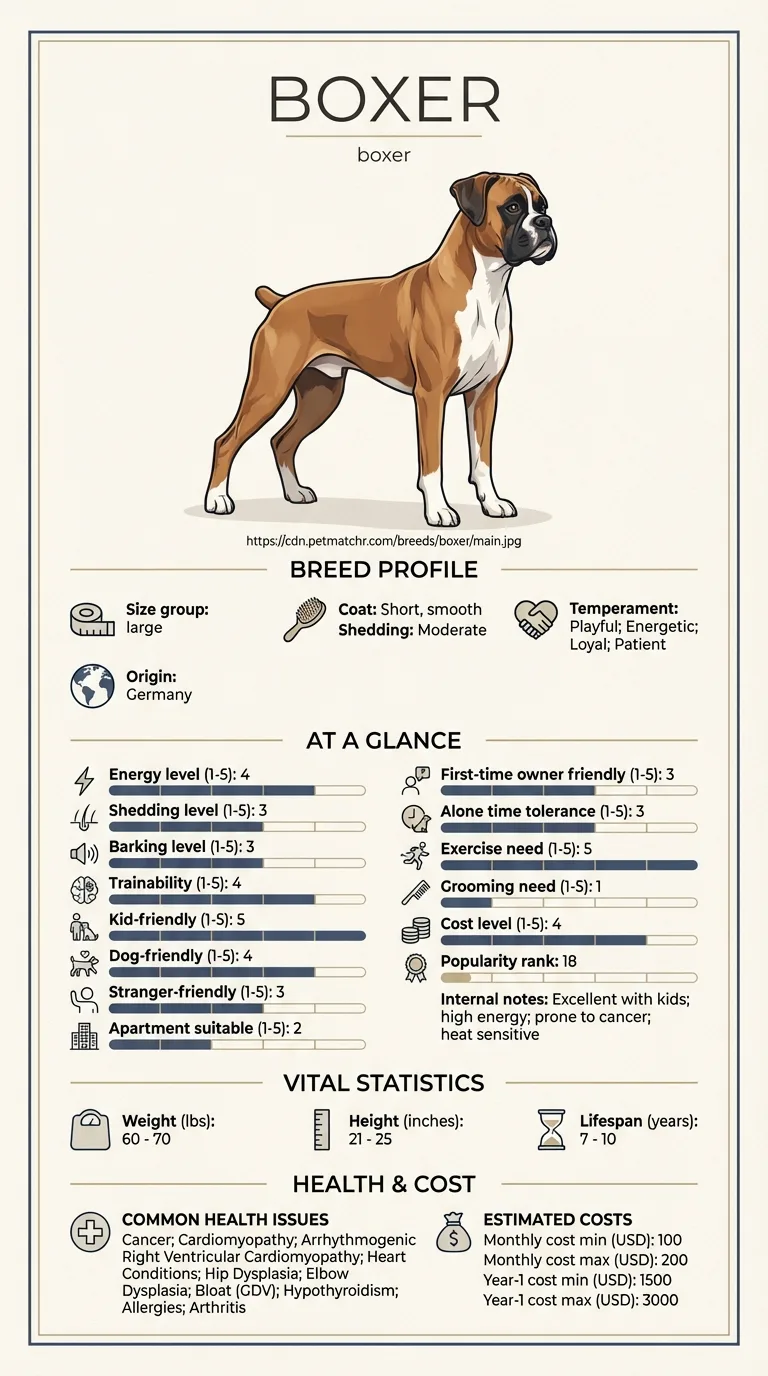
Managing respiratory disease can cost between $100 to $200 monthly, depending on vet visits and medications.
Boxers affected by respiratory diseases may have a lifespan of 7 to 10 years, but proper care can positively influence this.
Focus on short, controlled training sessions to avoid overexertion. Use positive reinforcement to encourage desired behaviors.
Provide a cool, well-ventilated environment and avoid exposing them to allergens. Indoor living is preferable, particularly in extreme weather.
A one-page prep sheet for this condition: the signs, the questions to ask, what to get priced. Unlocks here.
You get: Vet visit prep sheet
No spam. One-click unsubscribe. See our privacy policy.
Preview page 1 before you decide.