Behavior
What are quick tips for Boxer pregnancy complications?
Monitor her health closely and ensure she has a nutritious diet. Regular vet check-ups are essential for a healthy pregnancy.

Quick answer
What are quick tips for Boxer pregnancy complications?
Monitor her health closely and ensure she has a nutritious diet. Regular vet check-ups are essential for a healthy pregnancy.
Boxer pregnancy complications can be serious and require careful attention.
New Boxer owners, especially those unaware of the breed's health risks, often find themselves struggling with these complications. Additionally, experienced owners might face challenges when their dogs unexpectedly encounter pregnancy difficulties.
This guide is not medical advice. If your dog shows pain, sudden behavior change, or worsening symptoms, consult a licensed veterinarian.
Some links may be affiliate links. We may earn a commission at no extra cost to you. We only suggest products we believe are helpful for dog owners.
We research and check what we publish, but we do not warrant that any figure, date, price, or statement is accurate, complete, or current, and we accept no liability for any loss, cost, injury, or other harm arising from the use of this site. Use it as one reference among several. You remain responsible for your own decisions and for your dog's care - confirm anything that matters with a licensed veterinarian or another qualified professional before you act on it. Full disclaimer.
Check this first
Understanding when Boxer pregnancy complications are an emergency is crucial. Some signs indicate you should call your vet immediately, while others can be monitored at home. Pay close attention to your dog's symptoms and act accordingly.
If any of these apply, call your vet or an emergency clinic now. The rest of this page is for the cases that are not an emergency.
Boxer pregnancy complications can be a serious issue for expectant dog owners. These complications may manifest as difficulty during labor, low birth weight of puppies, or even health issues for the mother. Understanding the common triggers and how prevalent these problems are in Boxers can help you prepare and seek veterinary assistance when necessary.
Boxers have a notably higher risk of pregnancy complications, reported at 419% more than other breeds. This makes it crucial for owners to monitor their dogs closely and consult with a veterinarian throughout the pregnancy.
Boxers have a unique body structure that can lead to complications during pregnancy. Their larger size and muscular build increase the risk of issues like dystocia, which is when a dog has difficulty delivering pups. Additionally, Boxers are known to have certain genetic predispositions that can affect pregnancy.
The environment plays a crucial role in a Boxer's pregnancy health. Stressful situations, improper nutrition, and lack of proper veterinary care can contribute to complications. Factors like extreme heat or cold can also impact a pregnant Boxer's well-being.
If you notice severe symptoms like excessive vomiting, lethargy, or unusual discharge, contact your vet immediately. It's crucial to discuss any pregnancy complications, as timely intervention can make a significant difference.
Avoiding common mistakes can help manage Boxer pregnancy complications more effectively. Here are some behaviors that can inadvertently worsen the situation, along with safer alternatives.
Start here: Boxer Most Common Genetic Disorders: What to Screen For
See all Boxer health problems, which breeds are prone to pregnancy complications, or the full Boxer breed guide for temperament, exercise needs and ownership costs.
Expect to notice signs of improvement within a few weeks of implementing changes. Full recovery and successful management can take several months.
Success means your Boxer has a healthy pregnancy, shows fewer complications, and exhibits a calm demeanor. Regular vet check-ups and effective training will also help ensure the well-being of both the mother and her puppies.
If your Boxer shows any of these urgent signs, contact your vet without delay. Quick action can save your dog's life and that of her puppies.

For less severe symptoms, you may monitor your Boxer at home with a plan. Keep an eye on her condition and be ready to seek help if needed.

Always trust your instincts as a pet owner. If something feels off, it’s best to consult your vet. Being proactive is key to ensuring the health of your Boxer and her puppies.
Jessica, a first-time Boxer owner, was excited when her dog, Bella, became pregnant. However, Bella started showing signs of complications, like distress and difficulty breathing. After consulting her vet, Jessica learned that stress management and a proper diet were crucial. She began a gentle training program aimed at calming Bella, including short walks and relaxation techniques. Over time, Bella became more at ease, and with consistent vet check-ups, she had a safe delivery of healthy puppies.
Key takeaway: With the right support and training, managing Boxer pregnancy complications is possible. Understanding your dog's needs is key to a successful experience.
Common complications include difficulty during labor, low birth weight, and infections. Additionally, Boxers are at a higher risk for conditions like uterine inertia, where labor fails to progress. Regular vet check-ups can help identify and manage these risks.
To prevent complications, ensure your Boxer receives proper prenatal care from a veterinarian. Maintain a balanced diet and monitor her weight. It's also crucial to limit stress and provide a comfortable environment.
Signs of complications can include excessive lethargy, refusal to eat, or abnormal discharge. If you notice any unusual behavior, contact your veterinarian immediately for guidance. Early intervention can be critical.
Support your Boxer by providing a quiet, safe space where she can rest. Ensure she has a healthy diet formulated for pregnant dogs. Regular, gentle exercise can also help maintain her health during this time.
Schedule regular vet visits throughout her pregnancy, especially if she shows signs of complications. A vet can address any concerns and guide you on best practices. Don't hesitate to seek help if you notice unusual symptoms.
Training can help by teaching your Boxer to relax and follow commands, reducing stress. However, avoid strenuous training during her pregnancy. Focus on gentle, positive reinforcement techniques to help her feel secure.
Yes, older Boxers may be at a higher risk for pregnancy complications. As a dog ages, their overall health can decline, making it essential to have regular vet check-ups during pregnancy to monitor their condition.
Supporting your Boxer during a complicated pregnancy involves providing a stress-free environment, a balanced diet, and regular veterinary care. Ensure she has a comfortable space to rest and monitor her closely for any changes.
Even with proper care, Boxers can face pregnancy complications due to genetic factors, underlying health issues, or unforeseen circumstances. Regular vet visits can help identify potential risks early.
If your Boxer experiences a sudden complication, such as severe bleeding or difficulty breathing, seek veterinary care immediately. Quick action can make a significant difference in the health of both the mother and the puppies.
Monitor her health closely and ensure she has a nutritious diet. Regular vet check-ups are essential for a healthy pregnancy.
Create a calm space for her, limiting loud noises and disturbances. Gentle petting and quiet time can help her relax.
Contact your veterinarian immediately if she shows signs of distress or unusual behavior. Early intervention is key.
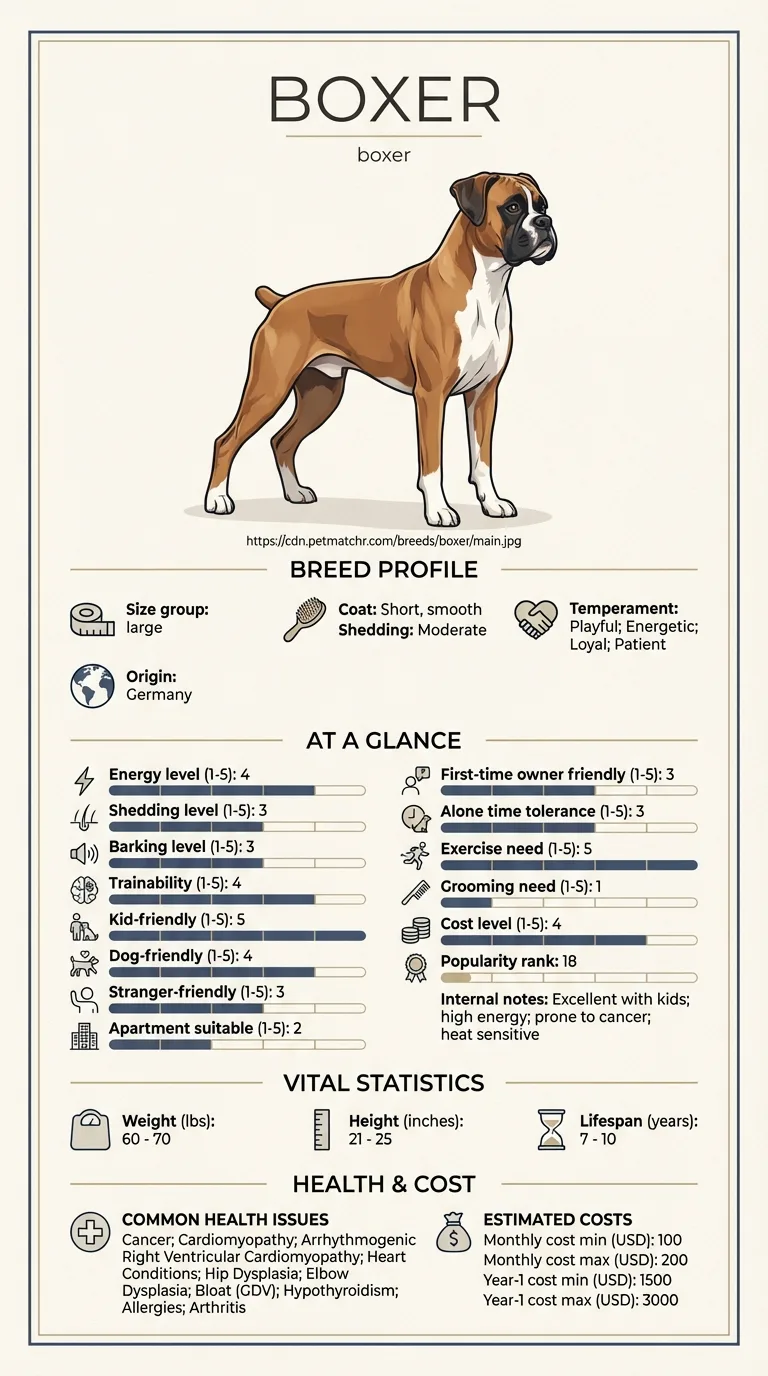
Expect costs to range from $1,500 to $3,000 in the first year, including vet visits, food, and supplies.
Focus on positive reinforcement and gentle commands. Avoid demanding training to keep her stress levels low.
A one-page prep sheet for this condition: the signs, the questions to ask, what to get priced. Unlocks here.
You get: Vet visit prep sheet
No spam. One-click unsubscribe. See our privacy policy.
See a sample page before you decide.
Early access list
The free prep sheet covers the same-day warning signs, a symptom log and the questions to ask. We are considering a fuller kit that adds a cost worksheet for the usual tests and treatments (US price ranges with their sources) and a plain-English guide to ways of covering the bill. It is not built yet; this list tells us whether it is worth building.
One email, no spam, unsubscribe anytime. Information only, not veterinary advice.