Behavior
What are some Boxer insurance claims quick tips?
Keep up with regular vet visits to catch health issues early. Exercise your Boxer to maintain a healthy weight and overall well-being.

Quick answer
What are some Boxer insurance claims quick tips?
Keep up with regular vet visits to catch health issues early. Exercise your Boxer to maintain a healthy weight and overall well-being.
Boxer insurance claims can be a significant concern for owners. Understanding why these claims occur is crucial for your Boxer’s health and your financial planning.
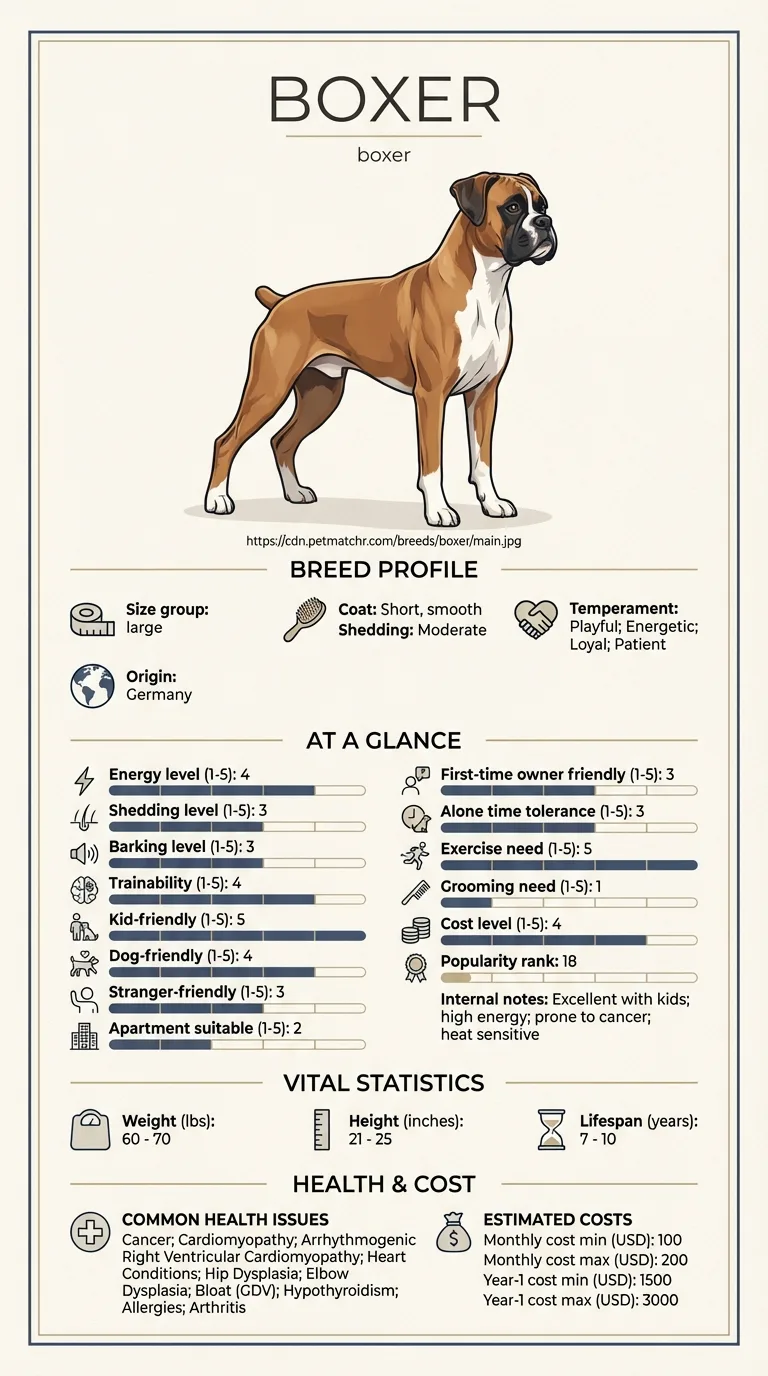
This issue often affects first-time Boxer owners or those who may not be prepared for the potential health risks associated with this breed. Families with kids who love their energetic Boxers might find themselves dealing with unexpected vet bills as their pets age.
This guide is not medical advice. If your dog shows pain, sudden behavior change, or worsening symptoms, consult a licensed veterinarian.
Some links may be affiliate links. We may earn a commission at no extra cost to you. We only suggest products we believe are helpful for dog owners.
We research and check what we publish, but we do not warrant that any figure, date, price, or statement is accurate, complete, or current, and we accept no liability for any loss, cost, injury, or other harm arising from the use of this site. Use it as one reference among several. You remain responsible for your own decisions and for your dog's care - confirm anything that matters with a licensed veterinarian or another qualified professional before you act on it. Full disclaimer.
Check this first
Understanding when to call your vet about Boxer insurance claims is crucial. Some situations require immediate attention, while others can be monitored at home. A red flag is if your Boxer shows repeated health issues that lead to claims, such as sudden lethargy, difficulty breathing, or persistent vomiting. These signs could indicate serious conditions like heart problems or gastrointestinal distress.
On the other hand, if your Boxer experiences mild symptoms like occasional allergies or minor skin irritations, it’s often safe to wait and observe. You can create a monitoring plan, checking for any changes over several days. Tracking these symptoms helps you determine if a vet visit is necessary later.
If you notice your Boxer having frequent accidents indoors or if they seem anxious during certain situations, this could also warrant a closer look. It might indicate anxiety or a behavioral issue that could lead to insurance claims. Consult your vet if these behaviors persist, but they may not require immediate emergency care.
If any of these apply, call your vet or an emergency clinic now. The rest of this page is for the cases that are not an emergency.
Boxer insurance claims can be a significant concern for owners, as these dogs often face various health issues. Common problems leading to claims include heart conditions, cancer, and hip dysplasia. This can lead to expensive veterinary bills, especially for a breed known for its high energy and potential health challenges.
Many Boxer owners experience insurance claims, particularly due to the breed's susceptibility to specific health problems. It's not unusual for these claims to arise, making it essential for owners to be proactive in managing their Boxer's health.
Boxers are known for their playfulness and high energy, which can sometimes lead to injuries. Their large size and enthusiasm can result in accidents that require medical attention, leading to insurance claims. Additionally, Boxers are prone to certain health conditions like heart issues and cancer, which can also increase the likelihood of claims.
The environment plays a significant role in the frequency of insurance claims. If a Boxer lives in a chaotic home or lacks proper training and socialization, they may exhibit anxiety or destructive behaviors. These factors can lead to injuries or health issues that necessitate veterinary care, resulting in claims.
If your Boxer frequently experiences injuries or shows signs of health issues, such as lethargy or unusual behavior, consult a veterinarian. They can help assess any underlying health problems that may contribute to increased insurance claims.
Here are common mistakes that can unintentionally worsen your Boxer's insurance claims situation. Avoiding these can lead to better outcomes.
Start here: Boxer Most Common Genetic Disorders: What to Screen For
See all Boxer health problems, which breeds are prone to insurance claims, or the full Boxer breed guide for temperament, exercise needs and ownership costs.
It typically takes 3 to 6 months to see significant changes in your Boxer's behavior related to insurance claims.
Success means a noticeable reduction in incidents leading to claims, improved overall behavior, and an understanding of how to manage your Boxer's specific needs.
Sam adopted Max, a lively Boxer, who quickly racked up insurance claims due to unexpected health issues. After some research, Sam learned that Boxers are prone to certain conditions, leading to frequent vet visits. Determined to help Max, Sam worked on training and behavior management. With consistent training and regular vet check-ups, Max's health stabilized, and the claims decreased significantly over time.
Key takeaway: Understanding your Boxer's health risks is key to preventing insurance claims and improving your dog's quality of life.
Boxers are prone to certain health issues, which can lead to more frequent insurance claims. Conditions like cancer, heart diseases, and hip dysplasia are common in this breed. Regular vet check-ups and preventive care can help manage some of these risks.
To reduce claims, focus on preventive health care and maintain a healthy lifestyle for your Boxer. This includes regular exercise, a balanced diet, and regular vet visits. Training and socialization can also help minimize behavior-related issues.
If your Boxer has frequent claims, consult with your veterinarian for a thorough health assessment. They may suggest changes in diet, exercise, or even training to help improve your dog's overall health. Keeping a close eye on any symptoms can also help catch issues early.
While insurance isn't mandatory, it can provide financial protection against unexpected health issues. Given their predisposition to certain health problems, insurance can be a smart investment for Boxer owners. Consider comparing policies to find one that suits your needs.
Training can help with behavior problems that might lead to health issues, such as anxiety or stress. Positive reinforcement training can make your Boxer more comfortable and relaxed, which may reduce the likelihood of health claims. Invest time in training to provide mental stimulation.
Yes, older Boxers often face more health challenges, which can result in increased insurance claims. Regular veterinary care is crucial to manage their health and catch any issues early.
Training your Boxer in basic obedience and addressing behavioral issues can lead to a healthier lifestyle. A well-trained Boxer is less likely to engage in risky behaviors that could lead to accidents or injuries.
When choosing pet insurance for your Boxer, look for policies that cover breed-specific conditions and have flexible payment options. Pay attention to exclusions, waiting periods, and coverage limits to find the best fit for your dog's needs.
Keep up with regular vet visits to catch health issues early. Exercise your Boxer to maintain a healthy weight and overall well-being.
Feed a balanced diet and ensure your Boxer gets enough exercise to prevent obesity-related issues.
Be aware of conditions like cancer, heart problems, and hip dysplasia, which are prevalent in Boxers.
Insurance costs for Boxers can range from $100 to $200 per month, depending on coverage and health history.
Consider enrolling in a local training class or using online courses focused on Boxer behavior and training techniques.
A one-page prep sheet for this condition: the signs, the questions to ask, what to get priced. Unlocks here.
You get: Vet visit prep sheet
No spam. One-click unsubscribe. See our privacy policy.
Preview page 1 before you decide.