Behavior
What are some quick tips for Border Collie obesity?
Limit treats, increase exercise, and maintain a consistent feeding schedule. Regular vet check-ups can also keep track of their weight.

Quick answer
What are some quick tips for Border Collie obesity?
Limit treats, increase exercise, and maintain a consistent feeding schedule. Regular vet check-ups can also keep track of their weight.
Border Collie obesity is a growing concern among dog owners. It can lead to serious health issues and affect your dog's quality of life.
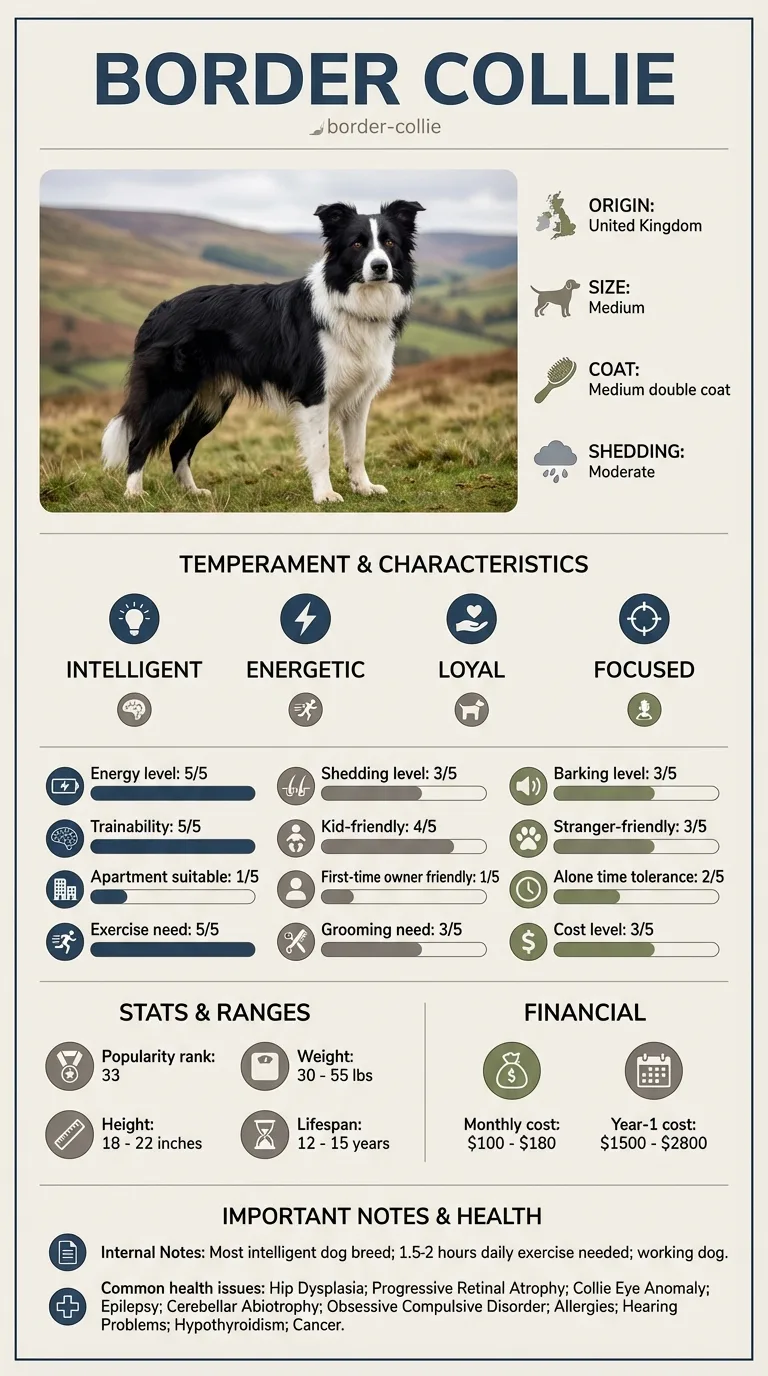
This issue often affects busy families, first-time dog owners, and anyone who may not fully understand their Border Collie's exercise and dietary needs.
This guide is not medical advice. If your dog shows pain, sudden behavior change, or worsening symptoms, consult a licensed veterinarian.
Some links may be affiliate links. We may earn a commission at no extra cost to you. We only suggest products we believe are helpful for dog owners.
We research and check what we publish, but we do not warrant that any figure, date, price, or statement is accurate, complete, or current, and we accept no liability for any loss, cost, injury, or other harm arising from the use of this site. Use it as one reference among several. You remain responsible for your own decisions and for your dog's care - confirm anything that matters with a licensed veterinarian or another qualified professional before you act on it. Full disclaimer.
Check this first
Noticing your Border Collie gaining weight can be concerning. It’s important to know when their obesity becomes an emergency and when it can be monitored. Emergency signs may include sudden lethargy, difficulty breathing, or an inability to move around comfortably. If your dog shows any of these symptoms, call your vet immediately.
On the other hand, if your Border Collie is simply gaining weight gradually and still seems active and healthy, you can monitor the situation. Consider adjusting their diet, increasing their exercise, and keeping an eye on their behavior. If you notice they are still playful and energetic, you may have time to implement lifestyle changes before it becomes serious.
Here’s a quick breakdown of when to act: - Emergency signs: Lethargy, labored breathing, refusal to eat or drink, or signs of pain. - Monitor: Gradual weight gain, mild fatigue, or a slight decrease in activity. Make a plan to address their weight but keep an eye on any changes.
If any of these apply, call your vet or an emergency clinic now. The rest of this page is for the cases that are not an emergency.
Border Collie obesity is a significant issue that can affect your dog's overall health and happiness. This breed, known for its intelligence and high energy levels, often struggles with weight management, especially if they don’t get enough exercise or have an improper diet. Daily life can look like a lethargic dog that avoids playtime and struggles with mobility, which can be heartbreaking for any owner.
Obesity is a prevalent issue among Border Collies, especially as they age. Many owners may not realize their dog is overweight until health problems arise. Regular check-ups and a keen eye on their diet and exercise can help prevent this common problem.
Border Collies are intelligent and energetic dogs that require significant physical activity to stay healthy. If they do not get enough exercise, they can easily gain weight. Their natural instinct to work and be active means that a sedentary lifestyle can lead to obesity.
The environment can greatly impact a Border Collie's weight. Factors like limited space for exercise, lack of outdoor activities, and easy access to high-calorie treats can contribute to obesity. Additionally, owners who may not understand their dog's exercise needs can inadvertently encourage weight gain.
If your dog experiences rapid weight gain or other health issues, it is crucial to consult a veterinarian. They can rule out underlying health problems and help you design a focused weight management plan.
Recognizing what not to do can be just as important as knowing the right steps to take. Here are common mistakes that can worsen Border Collie obesity, along with safer alternatives.
Start here: Border Collie Most Common Genetic Disorders: Screening
See all Border Collie health problems, which breeds are prone to obesity, or the full Border Collie breed guide for temperament, exercise needs and ownership costs.
Typically, it takes about 3 to 6 months to see significant weight loss in a Border Collie, depending on their starting weight and the changes made.
Success means achieving a healthy weight for your Border Collie, increased energy levels, and noticeable improvements in their overall health and behavior.
Jake, a busy nurse living in Chicago, had a Border Collie named Max who loved to snack. Max had gained weight due to a sedentary lifestyle and too many treats. After noticing Max's struggle to keep up during their daily walks, Jake sought guidance on how to stop Border Collie obesity. With the help of a vet, Jake adjusted Max's diet and introduced engaging exercise routines. Over six months, Max lost weight and became more energetic, allowing them to enjoy longer walks and playtime together.
Key takeaway: With consistent effort and the right support, managing Border Collie obesity is possible and leads to a healthier, happier dog.
Common signs of obesity in a Border Collie include difficulty in feeling the ribs, an obvious bulging belly, and reduced energy levels. If your dog struggles to keep up during walks or seems less playful, these could be indicators that they are carrying extra weight.
To stop Border Collie obesity, control their diet and ensure they get daily exercise. Aim for at least 1.5 to 2 hours of active play or walks each day. Monitoring their weight regularly can help catch any weight gain early.
Incorporate training that includes physical activity, like agility courses or fetch games. Positive reinforcement methods can encourage them to engage more in activities. Make sure to reward them with healthy treats rather than high-calorie snacks.
Yes, consider a high-protein, low-carb diet that supports their energy needs while managing weight. Consult your vet for specific dietary recommendations tailored to your dog's health and activity level.
Check their body condition with a simple test: you should be able to feel their ribs without excess fat covering. If you can't see their waist when looking from above, they may be overweight.
Older Border Collies may need special attention when it comes to weight loss. Consult your vet for a tailored diet plan and low-impact exercises, like gentle walks, to help manage their weight while ensuring they stay healthy and active.
Even with regular exercise, a Border Collie can become obese if their diet is not properly managed. Factors such as overfeeding, high-calorie treats, or medical conditions can contribute to weight gain, so it’s essential to evaluate their food intake along with their activity level.
Yes, stress can lead to changes in eating habits in Border Collies, potentially resulting in obesity. If your dog is experiencing anxiety or stress, addressing those issues may help improve their eating behavior and support healthier weight management.
A balanced, low-calorie diet is essential for a Border Collie struggling with obesity. Look for high-quality dog food that is specifically designed for weight management, and consult your vet for recommendations tailored to your dog's specific needs.
Limit treats, increase exercise, and maintain a consistent feeding schedule. Regular vet check-ups can also keep track of their weight.
Border Collies need at least 1.5 to 2 hours of exercise daily to stay fit and healthy.
Start by adjusting their diet and increasing exercise gradually. Consult your vet for a weight loss plan tailored to your dog.
Absolutely! Engaging training sessions can provide both physical activity and mental stimulation, which are crucial for weight management.
A one-page prep sheet for this condition: the signs, the questions to ask, what to get priced. Unlocks here.
You get: Vet visit prep sheet
No spam. One-click unsubscribe. See our privacy policy.
Preview page 1 before you decide.