Health
How can I spot genetic disorders in my Border Collie?
Look for signs like limping, eye problems, or behavioral changes. Regular vet check-ups are essential for early detection.

Quick answer
How can I spot genetic disorders in my Border Collie?
Look for signs like limping, eye problems, or behavioral changes. Regular vet check-ups are essential for early detection.
Border Collies are incredibly intelligent and active dogs, but they can be prone to certain genetic disorders. Understanding these health risks is vital for any owner.
Owners of Border Collies, especially first-time dog owners or those new to the breed, often struggle with understanding and addressing these genetic disorders. It can be daunting to navigate the health challenges that come with such a beloved and energetic breed.
This guide is not medical advice. If your dog shows pain, sudden behavior change, or worsening symptoms, consult a licensed veterinarian.
Some links may be affiliate links. We may earn a commission at no extra cost to you. We only suggest products we believe are helpful for dog owners.
We research and check what we publish, but we do not warrant that any figure, date, price, or statement is accurate, complete, or current, and we accept no liability for any loss, cost, injury, or other harm arising from the use of this site. Use it as one reference among several. You remain responsible for your own decisions and for your dog's care - confirm anything that matters with a licensed veterinarian or another qualified professional before you act on it. Full disclaimer.
Check this first
Noticing signs of genetic disorders in your Border Collie can be concerning. It's important to distinguish between emergencies and situations that can be monitored. If you see any severe symptoms, don’t wait: call your vet immediately.
If any of these apply, call your vet or an emergency clinic now. The rest of this page is for the cases that are not an emergency.
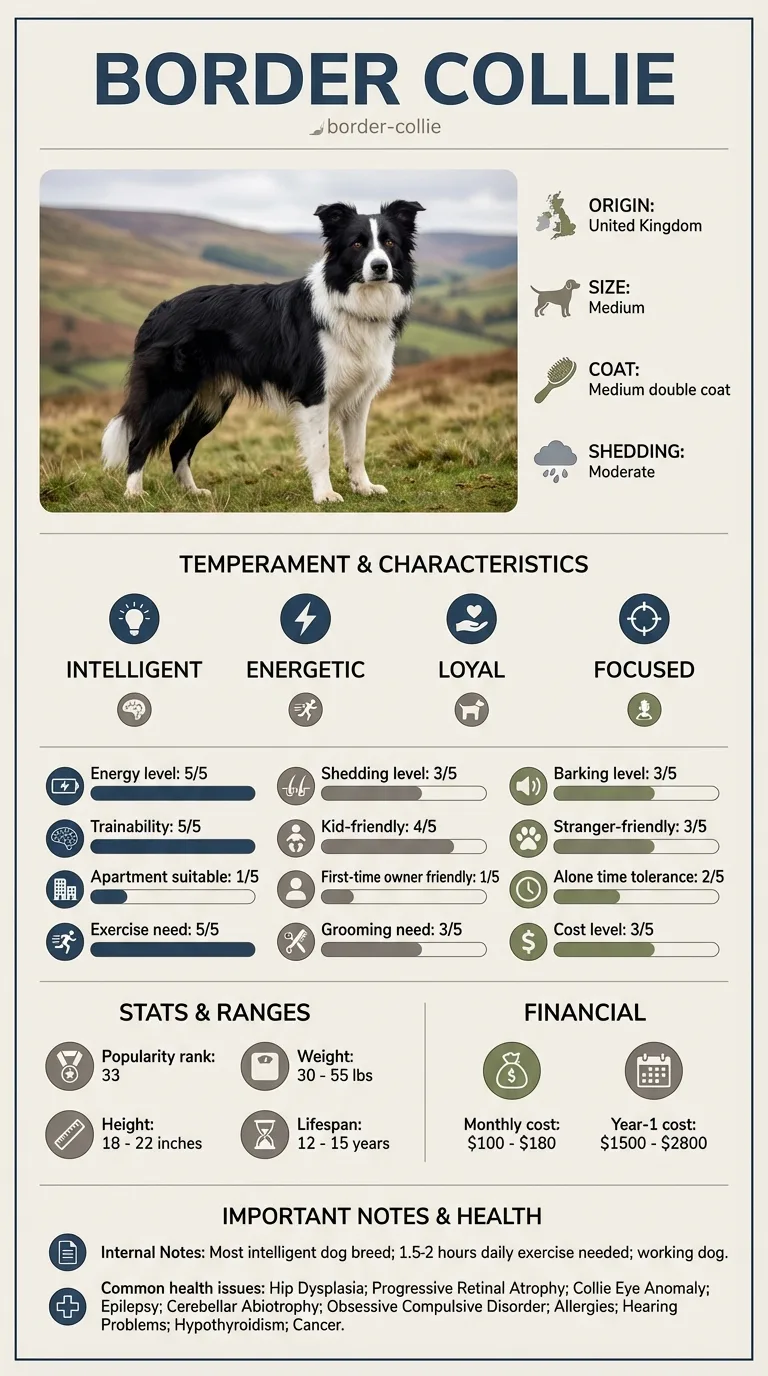
Border Collies are known for their intelligence and energy, but they can also face several genetic disorders that concern owners. The most common genetic disorders in Border Collies include Hip Dysplasia, Progressive Retinal Atrophy, and Collie Eye Anomaly. Day-to-day, these issues may manifest as mobility problems, vision changes, or even behavioral challenges, impacting your dog's quality of life.
Genetic disorders are relatively common in Border Collies, with studies showing that about 20-30% of them may develop one or more of these conditions during their lifetime. It's crucial for potential owners to be aware of these issues and seek responsible breeders who conduct health screenings.
Border Collies are known for their intelligence, but this can come with genetic predispositions to certain disorders. Common genetic disorders in this breed include hip dysplasia, progressive retinal atrophy, and collie eye anomaly. These issues often stem from selective breeding practices that prioritize traits like intelligence and energy over health.
Environmental factors can also play a role in the health of your Border Collie. Poor nutrition, lack of exercise, and insufficient mental stimulation can exacerbate genetic weaknesses. Stressful living conditions or improper care might trigger or worsen existing genetic disorders.
It's essential to talk to your vet if you notice any unusual symptoms, such as limping, changes in vision, or sudden behavioral changes. Early intervention can help manage genetic disorders effectively.
Avoiding these common mistakes can help improve your Border Collie's health and behavior. Here are some behaviors that might unintentionally worsen genetic disorders.
See all Border Collie health problems, which breeds are prone to most common genetic disorders, or the full Border Collie breed guide for temperament, exercise needs and ownership costs.
Managing genetic disorders in Border Collies typically takes several months to a few years. Early intervention can lead to better outcomes.
Success means your Border Collie maintains a good quality of life with minimized symptoms and effective management of their condition through regular vet visits and appropriate treatments.
When Sarah adopted Max, her energetic Border Collie, she quickly noticed he was limping after playtime. A vet visit revealed hip dysplasia, a common issue in the breed. Determined to give Max the best care, Sarah followed a strict exercise regimen and switched to a joint-friendly diet. Over time, Max's symptoms improved significantly, allowing him to enjoy daily walks again. Sarah learned to recognize his limits, ensuring he stays active without overexerting himself.
Key takeaway: With the right care and attention, managing common genetic disorders like hip dysplasia can lead to a happy, active life for your Border Collie.
Border Collies are prone to several genetic disorders, including Hip Dysplasia, Progressive Retinal Atrophy, and Collie Eye Anomaly. Regular vet check-ups and screenings can help catch these issues early. This answer relates to Border Collie most common genetic disorders.
While not all genetic disorders can be prevented, responsible breeding practices can reduce risks. Choose reputable breeders who screen for common health issues and ensure your dog maintains a healthy diet and exercise routine.
Genetic disorders in Border Collies often result from inherited traits from their parents. Understanding your dog's lineage can provide insight into potential health issues.
Watch for symptoms like difficulty walking, vision problems, or unusual behavior. If your Border Collie shows any concerning signs, consult your veterinarian for a thorough examination.
If your Border Collie is diagnosed with a genetic disorder, work closely with your vet to develop a treatment plan. This may include medication, special diets, or lifestyle changes to manage the condition.
Training can be beneficial, especially for behavioral issues related to genetic disorders. Positive reinforcement techniques can help your dog adapt and learn coping strategies.
Yes, there are genetic tests available that can screen for common genetic disorders in Border Collies. These tests can help you understand your dog's health risks and make informed decisions.
Yes, older Border Collies are more susceptible to certain genetic disorders. Conditions like hip dysplasia and progressive retinal atrophy can develop or worsen with age. Regular check-ups with a vet can help catch these issues early.
Signs of genetic disorders in Border Collies can include difficulty walking, changes in behavior, or vision problems. If your dog seems lethargic or has trouble with everyday activities, it's important to consult a vet for a proper evaluation.
Maintaining a healthy lifestyle for your Border Collie can help reduce the risk of genetic disorders. This includes regular exercise, a balanced diet, and routine veterinary check-ups. Additionally, consider choosing a reputable breeder who screens for genetic conditions.
Yes, some Border Collie bloodlines may be predisposed to specific genetic disorders. It's crucial to research the lineage of your dog and consult with breeders who prioritize health testing. This can help you make informed decisions about bringing a Border Collie into your home.
If you suspect your Border Collie has a genetic disorder, the best course of action is to schedule a visit with your vet. They can perform tests to diagnose the issue and discuss treatment options. Early intervention can make a significant difference in managing these conditions.
Look for signs like limping, eye problems, or behavioral changes. Regular vet check-ups are essential for early detection.
Ensure a balanced diet, regular exercise, and routine vet visits. Early intervention is key to managing health issues.
Treatment costs can vary widely, often ranging from $500 to $2,000 annually, depending on the disorder and required care.
Yes, training can help manage anxiety or behavioral issues stemming from genetic disorders. Use positive reinforcement techniques for the best results.
Common issues include Hip Dysplasia and Progressive Retinal Atrophy. Knowing these can help you watch for symptoms.
A one-page prep sheet for this condition: the signs, the questions to ask, what to get priced. Unlocks here.
You get: Vet visit prep sheet
No spam. One-click unsubscribe. See our privacy policy.
Preview page 1 before you decide.