Costs
What are quick tips for Border Collie insurance claims?
Regular vet check-ups and a healthy diet can help reduce claims. Keeping your dog active with training and exercise also lowers health risks.

Quick answer
What are quick tips for Border Collie insurance claims?
Regular vet check-ups and a healthy diet can help reduce claims. Keeping your dog active with training and exercise also lowers health risks.
Border Collie insurance claims can be a surprising reality for many owners. Understanding the reasons behind these claims is crucial for responsible pet ownership.
Typically, first-time Border Collie owners or those unaware of the breed's specific health needs often face challenges with insurance claims. Busy families or individuals who may not have the time to dedicate to extensive training or healthcare may also find themselves dealing with unexpected costs.
This guide is not medical advice. If your dog shows pain, sudden behavior change, or worsening symptoms, consult a licensed veterinarian.
Some links may be affiliate links. We may earn a commission at no extra cost to you. We only suggest products we believe are helpful for dog owners.
We research and check what we publish, but we do not warrant that any figure, date, price, or statement is accurate, complete, or current, and we accept no liability for any loss, cost, injury, or other harm arising from the use of this site. Use it as one reference among several. You remain responsible for your own decisions and for your dog's care - confirm anything that matters with a licensed veterinarian or another qualified professional before you act on it. Full disclaimer.
Check this first
Understanding when to act quickly can save your Border Collie’s life. Some insurance claims might signal urgent health issues, while others can be managed with care. Here’s how to differentiate between red flags that require immediate vet attention and cases you can monitor.
If any of these apply, call your vet or an emergency clinic now. The rest of this page is for the cases that are not an emergency.
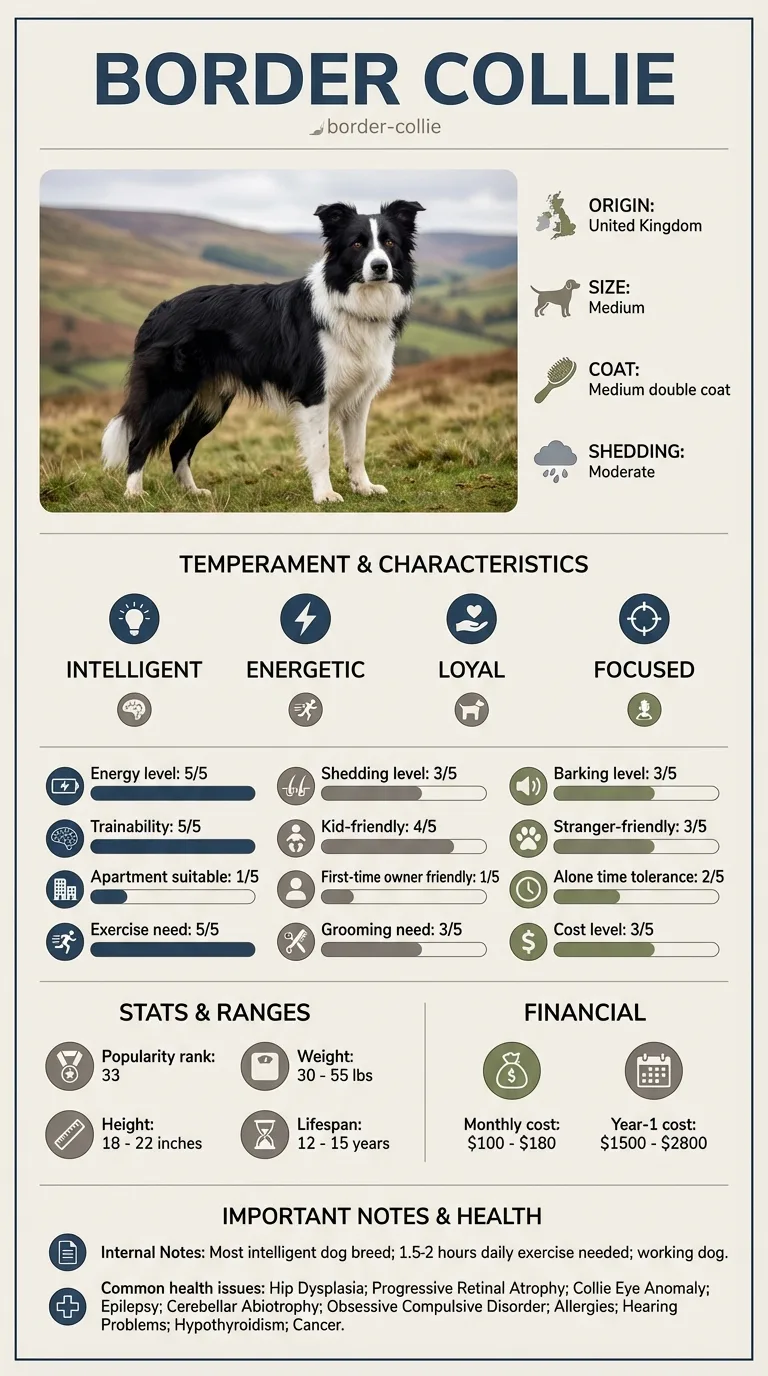
Border Collie insurance claims can be a significant issue for owners, reflecting the breed's unique health challenges. These dogs are known to be highly intelligent and energetic, but they are also prone to specific health problems that can lead to increased vet visits and insurance claims. Common issues like hip dysplasia and progressive retinal atrophy often trigger claims, making it vital for owners to understand the potential costs involved.
Insurance claims among Border Collies are relatively common due to their active lifestyle and various health concerns. Many owners report claims related to both routine and unexpected health issues, making it essential for potential owners to factor in these costs before bringing one home.
Border Collies are highly intelligent and energetic dogs. Their natural drive to work and play can lead to accidents or injuries, which may result in insurance claims. Additionally, their tendency toward obsessive behaviors can also contribute to health issues.
The environment plays a significant role in the health of Border Collies. Insufficient exercise or mental stimulation can lead to anxiety or destructive behaviors, increasing the likelihood of accidents. Living in a cramped space without enough room to run can also heighten these risks.
Consult your vet if your dog has frequent accidents or shows signs of distress. Health issues may be at play, and your vet can rule out medical conditions that could be contributing to their behavior.
Addressing Border Collie insurance claims requires understanding common mistakes that can worsen the situation. Here are some key behaviors to avoid.
Start here: Border Collie Most Common Genetic Disorders: Screening
See all Border Collie health problems, which breeds are prone to insurance claims, or the full Border Collie breed guide for temperament, exercise needs and ownership costs.
Addressing Border Collie insurance claims can take 3 to 6 months of consistent care and management.
Success means a reduction in claims and improved behavior, making your dog healthier and more manageable.
If your Border Collie exhibits any of the following signs, it’s crucial to call your vet immediately: sudden lethargy, uncontrollable vomiting, difficulty breathing, or signs of severe pain. Additionally, any unusual swelling, bleeding, or unresponsiveness are critical indicators.

There are instances where you might not need to rush to the vet. If your Border Collie shows mild symptoms such as seasonal allergies or occasional stomach upset, you can monitor their condition at home. Make sure to keep an eye on their behavior and overall health.

When Sarah adopted Max, a lively Border Collie, she quickly learned about the breed's common health issues. After a couple of unexpected vet visits, she discovered that Max had a tendency to develop health problems that led to insurance claims. Determined to manage this, Sarah educated herself about Max's needs and focused on a better training routine and regular vet check-ups. Over time, she noticed fewer health incidents and reduced claims, allowing her to enjoy more worry-free time with Max.
Key takeaway: With the right training and understanding of your dog's needs, you can reduce insurance claims and ensure a happier, healthier pet.
Border Collies are prone to certain health issues like hip dysplasia and eye problems that can lead to higher insurance claims. Regular vet check-ups and preventative care can help manage these risks. Understanding your dog's health history is crucial for anticipating potential claims.
To reduce insurance claims, ensure your Border Collie receives regular veterinary check-ups and proper training. Engaging in consistent exercise and mental stimulation can also prevent accidents and behavioral issues. Keeping your dog healthy and well-trained is key to minimizing risks.
Common health issues include hip dysplasia, eye conditions like progressive retinal atrophy, and allergies. These conditions often result in higher medical expenses. Keeping an eye on your dog's health and addressing problems early can help reduce claims.
Getting insurance for your Border Collie can be beneficial, especially given their predisposition to certain health issues. It can help cover unexpected medical expenses that arise from claims. Weigh the costs of premiums against potential health issues to decide what’s best for you.
Proper training can reduce the likelihood of accidents and behavior-related health issues, thus lowering insurance claims. A well-trained Border Collie is less likely to engage in destructive behaviors that could lead to injuries. Training also helps improve their overall well-being.
The average monthly insurance cost for a Border Collie ranges from $100 to $180. This can vary based on factors like age, health, and coverage level. Always shop around for the best plan that fits your needs.
Border Collies often have insurance claims due to genetic health issues like hip dysplasia and eye problems. Their high energy levels can also lead to injuries from accidents or overexertion. Understanding these risks can help you prepare and mitigate potential claims.
Yes, older Border Collies may have higher insurance claims due to age-related health issues such as arthritis and other chronic conditions. Regular vet visits and a tailored care plan can help manage these risks and keep your senior dog comfortable.
If your Border Collie has frequent claims, consider reassessing their lifestyle and health. A consultation with a vet can help identify underlying issues. Additionally, working with a trainer to address behavioral problems may also reduce claim frequency.
Effective training can significantly reduce the likelihood of insurance claims for Border Collies. A well-trained dog is less likely to engage in risky behaviors that lead to accidents. Focus on obedience training and socialization to enhance your dog's safety and well-being.
Regular vet check-ups and a healthy diet can help reduce claims. Keeping your dog active with training and exercise also lowers health risks.
Training reduces accidents and behavior problems, leading to fewer health issues and claims. It's essential for overall dog health.
Hip dysplasia, eye problems, and allergies are common issues leading to claims. Being proactive with health can help manage these.
While not mandatory, pet insurance can save you money in case of unexpected health issues. It's worth considering for peace of mind.
Regular exercise, a balanced diet, and mental stimulation can help prevent health issues that lead to claims. Keeping your Border Collie healthy is key.
A one-page prep sheet for this condition: the signs, the questions to ask, what to get priced. Unlocks here.
You get: Vet visit prep sheet
No spam. One-click unsubscribe. See our privacy policy.
Preview page 1 before you decide.