Behavior
What should I do if my Border Collie collapses?
Stop all physical activity immediately and ensure your dog is in a cool, shaded area. If they do not recover quickly, contact your vet for further advice.

Quick answer
What should I do if my Border Collie collapses?
Stop all physical activity immediately and ensure your dog is in a cool, shaded area. If they do not recover quickly, contact your vet for further advice.
Border Collie exercise-induced collapse (EIC) is a serious condition that can leave your dog in a vulnerable state during or after exercise.
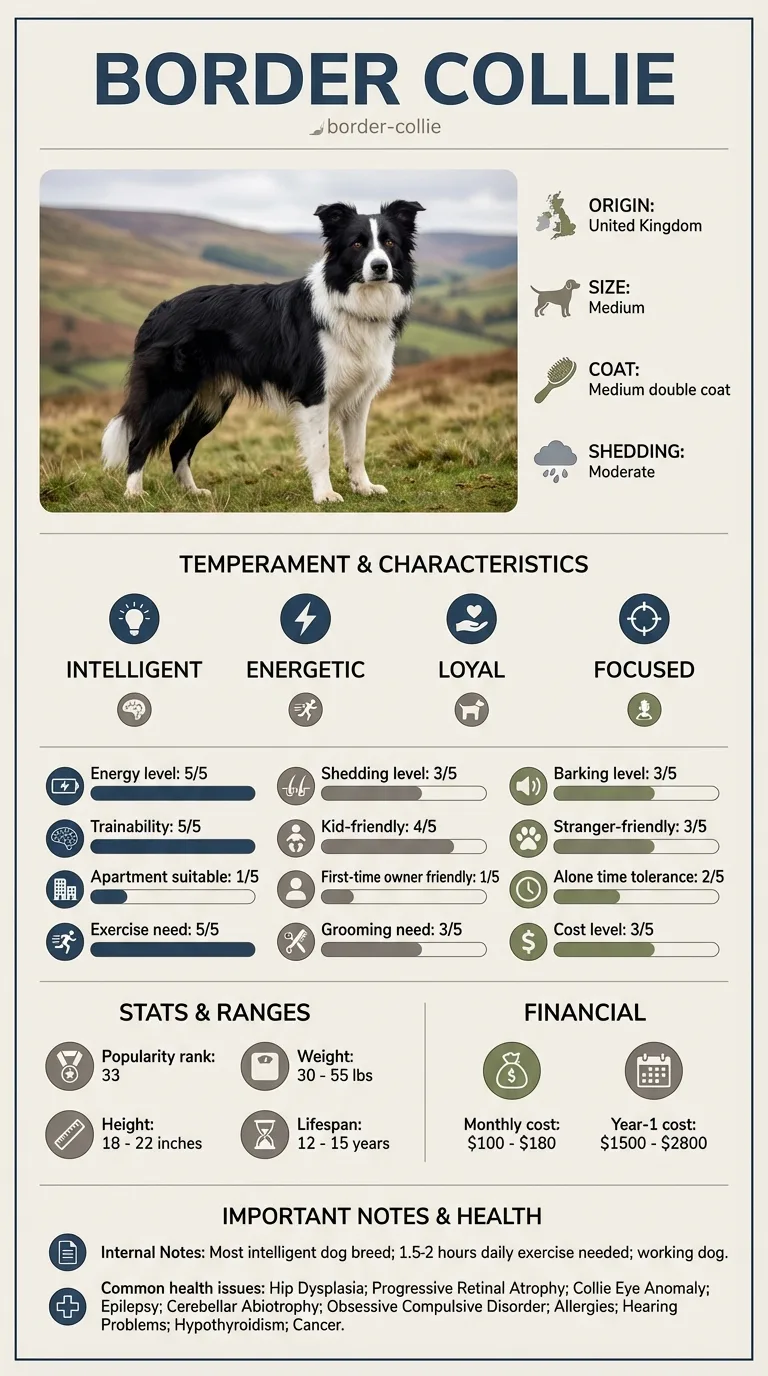
Owners of Border Collies, particularly those who are active and engage in regular exercise with their dogs, may struggle with this issue. It's a concern for families, working professionals, and active individuals who want to keep their canine companions healthy and engaged.
This guide is not medical advice. If your dog shows pain, sudden behavior change, or worsening symptoms, consult a licensed veterinarian.
Some links may be affiliate links. We may earn a commission at no extra cost to you. We only suggest products we believe are helpful for dog owners.
We research and check what we publish, but we do not warrant that any figure, date, price, or statement is accurate, complete, or current, and we accept no liability for any loss, cost, injury, or other harm arising from the use of this site. Use it as one reference among several. You remain responsible for your own decisions and for your dog's care - confirm anything that matters with a licensed veterinarian or another qualified professional before you act on it. Full disclaimer.
Check this first
Recognizing when your Border Collie is experiencing exercise-induced collapse (EIC) can be crucial. While mild cases can often be monitored, there are red flags indicating it's time to call your vet immediately. Keep an eye out for symptoms like prolonged weakness, difficulty breathing, or signs of confusion. If your dog collapses and doesn't regain consciousness quickly, don't hesitate—seek veterinary help right away.
On the other hand, if your Border Collie shows mild signs, such as temporary weakness after intense play or exercise, you might not need to rush to the vet. Instead, observe their behavior closely. Make sure they rest and hydrate, and allow some time for recovery. If they bounce back within a few minutes, it may just be a mild episode.
However, if these mild symptoms become more frequent or severe, it’s wise to consult your vet. Monitoring their exercise levels and adjusting their routine can also help. Remember to keep a record of any collapses or concerning behaviors to share with your vet during visits.
If any of these apply, call your vet or an emergency clinic now. The rest of this page is for the cases that are not an emergency.
Border Collie exercise-induced collapse (EIC) is a serious condition where your dog may suddenly collapse during or after intense exercise. This can happen after just a few minutes of running or playing, leaving owners startled and worried. EIC is particularly common in highly energetic breeds like Border Collies, who thrive on physical activity.
Around 20% of Border Collies may experience EIC, making it a notable concern for owners who engage their dogs in vigorous activities. Understanding this problem is essential for preventing potentially dangerous situations.
Border Collies are highly intelligent and energetic dogs, bred for herding. This breed often pushes themselves to the limit during physical activities, which can lead to exercise-induced collapse (EIC). EIC is a genetic condition that affects their ability to maintain energy levels during intense exercise.
Environmental factors can also contribute to EIC. Overheating, dehydration, or excessive excitement during play can trigger symptoms. If your Border Collie is not acclimated to the exercise intensity or the temperature, they may experience a collapse.
If your dog experiences a collapse or shows unusual symptoms during or after exercise, it’s important to consult your vet. They can help rule out other health issues and provide advice on managing your dog's exercise safely.
Avoiding certain behaviors can help manage your Border Collie's exercise-induced collapse (EIC). Here are common mistakes to steer clear of.
Start here: Border Collie Most Common Genetic Disorders: Screening
See all Border Collie health problems, which breeds are prone to exercise induced collapse eic, or the full Border Collie breed guide for temperament, exercise needs and ownership costs.
It typically takes several weeks to months to manage Border Collie exercise-induced collapse (EIC) effectively. This includes identifying triggers, adjusting exercise routines, and gradually care your dog to cope better.
Success means your Border Collie can participate in moderate exercise without collapsing, staying energetic and happy, while you gain confidence in managing their health.
Meet Sarah, a devoted Border Collie owner living in Colorado. Every time she took her dog, Max, for a run, he would suddenly collapse, leaving her worried and unsure of what to do. After researching, she learned about exercise-induced collapse (EIC) and consulted her vet for a tailored exercise plan. By gradually reducing Max's running time and mixing in low-intensity activities like swimming, Sarah began to see improvements. Now, Max enjoys safe exercise sessions without collapsing, and Sarah feels empowered as a responsible owner.
Key takeaway: Understanding and adapting to your dog's specific needs is essential for managing exercise-induced collapse (EIC) effectively.
Border Collie exercise-induced collapse (EIC) is a condition where affected dogs suddenly collapse during or after intense exercise. It is often triggered by high-energy activities like running or playing fetch. The good news is that this condition is manageable with proper care and training.
To manage Border Collie exercise-induced collapse (EIC), gradually increase your dog's exercise intensity. Monitor their activity closely and provide frequent breaks during playtime. Implementing a structured training routine can help reduce the risk of episodes.
Common symptoms of EIC include sudden weakness, loss of coordination, or collapse during exercise. Some dogs may also exhibit abnormal behavior, such as excessive panting or trembling. If you notice these signs, it's crucial to stop the activity and consult your vet immediately.
Currently, there is no cure for exercise-induced collapse (EIC), but it can be managed effectively. Many owners find success by avoiding high-intensity activities and focusing on low-impact exercises. Working with a veterinarian or a dog trainer can also help tailor a safe exercise plan.
Early signs of EIC in Border Collies may include a sudden loss of coordination or inability to stand after intense exercise. You might notice your dog becoming wobbly or lethargic during play. It’s important to observe these signs and consult a veterinarian if they occur.
Yes, EIC is believed to have a genetic component and can be inherited. If you have a Border Collie with EIC, it’s wise to inform the breeder and consider genetic testing for future litters. This can help reduce the risk of EIC in offspring.
To exercise a Border Collie with EIC, opt for shorter, more frequent play sessions instead of long, intense workouts. Focus on low-impact activities like walking or swimming, and monitor your dog closely for any signs of fatigue or distress during exercise.
You should see a vet if your Border Collie experiences repeated episodes of collapse or shows any concerning symptoms like difficulty breathing or prolonged lethargy. Your vet can help assess the situation and may recommend testing or specific management strategies.
While EIC is often identified in younger Border Collies, older dogs can show signs as well, especially if they have lower fitness levels. Keep an eye on their exercise tolerance and consult your vet if you notice any unusual behavior during activity.
Stop all physical activity immediately and ensure your dog is in a cool, shaded area. If they do not recover quickly, contact your vet for further advice.
Border Collies require about 1.5 to 2 hours of exercise daily to stay healthy and happy. Adjust their routine based on their physical condition and energy levels.
Yes, positive reinforcement training can help teach your Border Collie to recognize their limits. Incorporate plenty of breaks and avoid overly strenuous activities.
A one-page prep sheet for this condition: the signs, the questions to ask, what to get priced. Unlocks here.
You get: Vet visit prep sheet
No spam. One-click unsubscribe. See our privacy policy.
Preview page 1 before you decide.