Behavior
What are quick tips for managing Border Collie elongated soft palate?
Keep your dog at a healthy weight and avoid strenuous activities. Regular vet visits are crucial to monitor their condition.

Quick answer
What are quick tips for managing Border Collie elongated soft palate?
Keep your dog at a healthy weight and avoid strenuous activities. Regular vet visits are crucial to monitor their condition.
Border Collie elongated soft palate can lead to serious breathing issues, making it crucial for owners to recognize and address this condition.
Owners of Border Collies, especially first-time dog parents or those living in active households, often face challenges with this condition. It can be particularly concerning for those who enjoy outdoor activities or live in warm climates.
This guide is not medical advice. If your dog shows pain, sudden behavior change, or worsening symptoms, consult a licensed veterinarian.
Some links may be affiliate links. We may earn a commission at no extra cost to you. We only suggest products we believe are helpful for dog owners.
We research and check what we publish, but we do not warrant that any figure, date, price, or statement is accurate, complete, or current, and we accept no liability for any loss, cost, injury, or other harm arising from the use of this site. Use it as one reference among several. You remain responsible for your own decisions and for your dog's care - confirm anything that matters with a licensed veterinarian or another qualified professional before you act on it. Full disclaimer.
Check this first
Recognizing when your Border Collie's elongated soft palate is an emergency is crucial. If your dog experiences severe breathing difficulties, such as gasping for air, collapsing, or turning blue, you should contact your vet immediately. These are red-flag signs that require urgent attention to prevent serious health risks.
Additionally, if your Border Collie shows signs of extreme distress, such as persistent coughing, choking, or inability to exercise without panting excessively, this may indicate a worsening condition. Other concerning symptoms include excessive drooling, difficulty swallowing, or any sudden changes in behavior. These could signal complications related to their airway obstruction.
On the other hand, if your Border Collie has a mild case of elongated soft palate, you can monitor their symptoms at home. Light snoring or occasional coughing during sleep isn't usually alarming. You can manage these symptoms by ensuring your dog maintains a healthy weight and avoids strenuous activities that exacerbate breathing issues. Keeping your dog calm and avoiding extreme heat can also help manage mild cases effectively.
If any of these apply, call your vet or an emergency clinic now. The rest of this page is for the cases that are not an emergency.
Border Collie elongated soft palate is a common issue that affects their ability to breathe comfortably. This condition occurs when the soft palate is longer than normal, leading to airway obstruction. Owners may notice their Border Collie snoring, gagging, or having difficulty during exercise, especially in hot weather.
Elongated soft palate is relatively common in Border Collies due to their anatomy. Many owners report experiencing this issue, especially in active dogs that require a lot of exercise. It’s essential to monitor your pet’s breathing and consult with a vet if you notice any concerning signs.
Elongated soft palate is a common issue in Border Collies due to their unique anatomy. This breed has a narrower throat structure, which can lead to airway obstruction. Genetics play a significant role, as this trait can be inherited from their lineage.
Environmental factors like obesity and poor physical conditioning can worsen the symptoms. Stressful situations or high temperatures can also exacerbate breathing difficulties. Keeping your dog in a calm, comfortable environment helps mitigate these triggers.
Consult your vet if you notice persistent coughing, gagging, or difficulty breathing. They can assess the severity of the elongated soft palate and recommend treatments or surgical options if needed.
Identifying and correcting common mistakes can greatly improve your Border Collie's elongated soft palate issue. Here are some behaviors to avoid, along with safer alternatives.
Start here: Border Collie Most Common Genetic Disorders: Screening
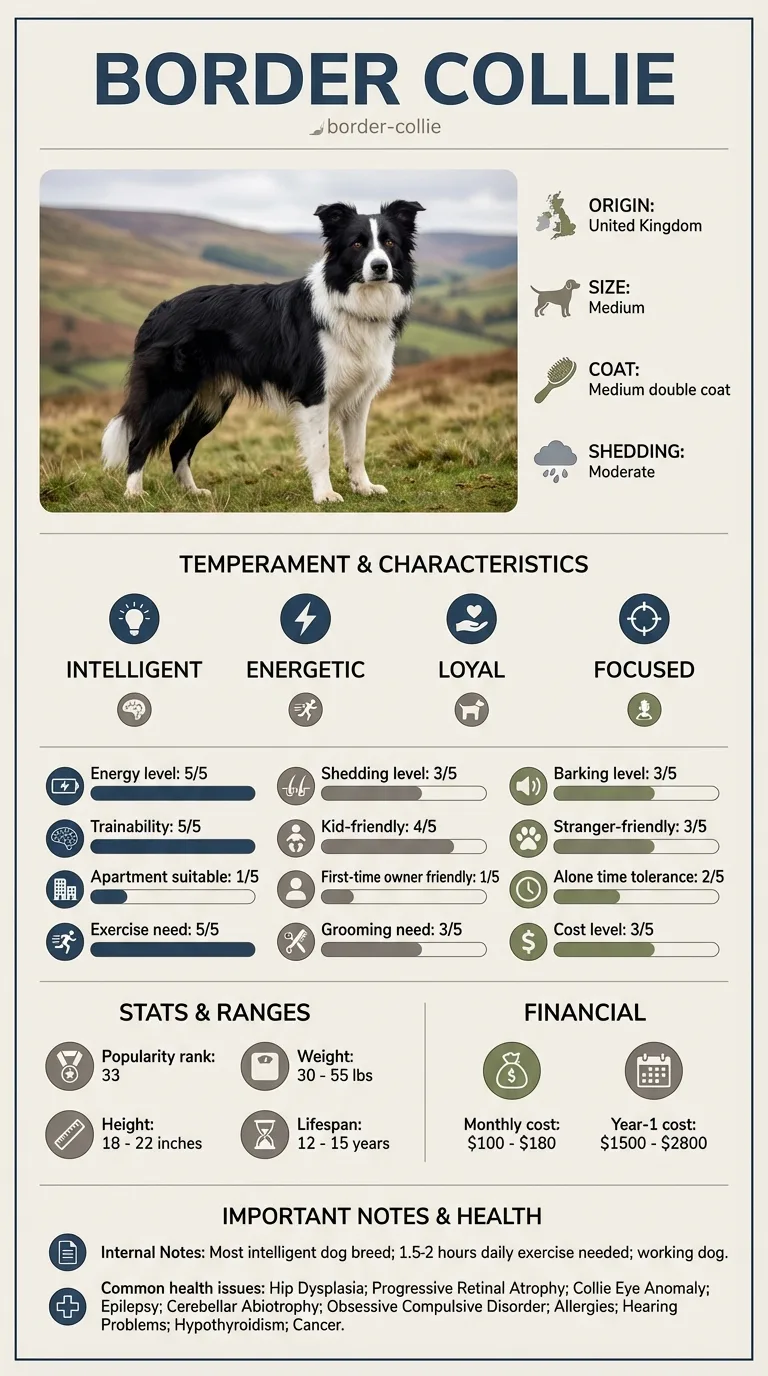
See all Border Collie health problems, which breeds are prone to elongated soft palate, or the full Border Collie breed guide for temperament, exercise needs and ownership costs.
Addressing a Border Collie elongated soft palate typically takes several weeks to months, depending on the severity and the care routine used.
Success means your dog experiences fewer breathing difficulties and can enjoy normal activities without excessive panting or coughing.
Emily, a first-time dog owner, noticed her Border Collie, Max, was panting heavily during walks and seemed to struggle while playing. After a vet visit, she learned that Max had an elongated soft palate. She began researching how to stop Border Collie elongated soft palate issues and implemented a combination of controlled exercise and specific training techniques. With patience and consistency, Emily saw significant improvements in Max's breathing over a few months, allowing him to enjoy longer walks and playtime without distress.
Key takeaway: Addressing breathing issues like an elongated soft palate requires diligence, but with proper training and care, your dog can lead a happier, healthier life.
An elongated soft palate is often a genetic issue, particularly in certain breeds like the Border Collie. Factors such as improper breeding can contribute to this condition, leading to airway obstruction and discomfort.
To help your Border Collie, focus on maintaining a healthy weight and avoiding strenuous activities that may exacerbate breathing difficulties. Consulting a vet for a proper diagnosis and potential surgical options is also recommended.
While training won't fix the anatomical issue, teaching your Border Collie to pace itself during exercise can help manage symptoms. Positive reinforcement for calm behavior is beneficial.
Surgery is sometimes necessary if your dog experiences severe breathing problems. A veterinarian can evaluate the severity and recommend the best course of action.
Avoid exposing your dog to extreme temperatures and ensure they have a calm environment. Regular vet check-ups are essential to monitor any changes in breathing.
Limit exercise to short, low-intensity sessions, especially on hot days. Always watch for signs of distress and have plenty of water available during walks.
Yes, while it's often seen in younger dogs, older Border Collies can develop breathing issues related to an elongated soft palate. If you notice any changes in their breathing patterns, it's best to consult your vet.
You can help by keeping your dog calm and avoiding strenuous activities that may trigger breathing difficulties. Additionally, consider using elevated food and water bowls to make it easier for them to eat and drink.
Not always. Surgery is often recommended for severe cases, but mild cases can sometimes be managed with lifestyle changes and training. Consulting your vet will help determine the best course of action.
Keep your dog at a healthy weight and avoid strenuous activities. Regular vet visits are crucial to monitor their condition.
Yes, training can help your dog learn to pace themselves during exercise, reducing stress on their breathing.
Contact your vet immediately if your dog is struggling to breathe. They can assess the situation and recommend treatment options.
Regular check-ups every 6 to 12 months are recommended to monitor any changes in your dog's health.
Not addressing an elongated soft palate can lead to serious breathing issues and reduced quality of life for your dog.
A one-page prep sheet for this condition: the signs, the questions to ask, what to get priced. Unlocks here.
You get: Vet visit prep sheet
No spam. One-click unsubscribe. See our privacy policy.
Preview page 1 before you decide.