DogBreedCompass
← Back to breed profile

Bloodhound Dilated Cardiomyopathy (DCM): What You Need to Know

Bloodhound dilated cardiomyopathy (DCM) is a serious heart condition that can affect your dog's health and longevity. Understanding it is crucial for every Bloodhound owner.

Bloodhound Dilated Cardiomyopathy (DCM): What You Need to Know infographic

Owners of Bloodhounds, especially those new to the breed or unfamiliar with canine heart issues, often face challenges in recognizing and managing DCM. This condition can be particularly concerning for families who want to ensure their dogs live long and healthy lives.

Important reminder

This guide is not medical advice. If your dog shows pain, sudden behavior change, or worsening symptoms, consult a licensed veterinarian.

Some links may be affiliate links. We may earn a commission at no extra cost to you. We only suggest products we believe are helpful for dog owners.

What this problem looks like

Bloodhound dilated cardiomyopathy (DCM) is a serious heart condition that can affect these loyal dogs. It typically manifests as lethargy, coughing, and difficulty breathing. This breed is particularly susceptible to DCM, making awareness and early detection crucial for their health.

Common triggers

  • Genetic predisposition
  • Age-related changes
  • Obesity and lack of exercise

Unfortunately, DCM is one of the most common cardiac diseases in Bloodhounds. Studies show that a significant percentage of Bloodhounds may develop this condition, especially as they age. Regular check-ups with a vet can help catch it early.

Why this happens

Breed factors

Bloodhounds are prone to dilated cardiomyopathy (DCM) due to genetic factors. This breed's heart structure can weaken, leading to reduced efficiency in pumping blood. As a large breed, they are also more susceptible to this condition compared to smaller dogs.

Environment factors

Environmental factors can contribute to DCM as well. Poor diet, lack of exercise, and obesity can exacerbate heart issues. Stressful situations or neglecting regular vet check-ups can also increase the risk of developing heart problems.

What you can try

At-home strategies

  • Maintain a healthy diet by providing high-quality dog food rich in essential nutrients. Avoid foods with fillers or harmful additives.
  • Encourage regular, moderate exercise to keep your Bloodhound's weight in check. Aim for daily walks and playtime to promote cardiovascular health.
  • Monitor your dog's behavior for signs of lethargy or breathing difficulties. Keep a journal of any changes and discuss them with your vet.

When to consider a trainer

If your Bloodhound shows signs of anxiety or becomes overly stressed, consider consulting a professional trainer. A trainer can help you develop a calm routine and teach your dog how to cope with stress effectively.

When to talk to your vet

Talk to your vet if you notice any symptoms like coughing, excessive fatigue, or difficulty breathing. Early intervention is crucial for managing DCM and improving your dog's quality of life.

Realistic expectations

Managing Bloodhound dilated cardiomyopathy (DCM) typically requires ongoing veterinary care and lifestyle adjustments. Significant changes may take a few months to notice, especially as you adapt their diet and exercise routines.

Success looks like stabilizing your Bloodhound's condition with regular vet check-ups, tailored nutrition, and a balanced exercise plan. You'll notice improved energy levels and a better quality of life for your pup.

Mistakes that make this worse

Many owners unintentionally make Bloodhound dilated cardiomyopathy (DCM) worse. Here are some common mistakes and safer alternatives to consider.

  • Ignoring symptoms: Owners may overlook signs of fatigue or coughing, thinking it's just normal behavior. Regular vet check-ups are crucial for early detection.
  • Overfeeding: Feeding too much can lead to obesity, increasing heart strain. Stick to recommended portion sizes and monitor your Bloodhound's weight.
  • Lack of exercise: Insufficient physical activity can worsen heart health. Ensure your Bloodhound gets regular exercise tailored to their energy level without overexertion.
  • Neglecting mental stimulation: Boredom can lead to stress and anxiety. Incorporate puzzle toys or training sessions to keep their minds engaged.
  • Skipping vet visits: Some owners may believe they can manage DCM without professional help. Regular vet visits are essential for monitoring the condition and adjusting treatments as needed.
  • Avoiding medications: Some may stop prescribed medications due to perceived side effects. Always consult your vet before making changes to medication routines.
  • Ignoring diet: Not considering heart-healthy diets can exacerbate DCM. Speak with your vet about nutrition that supports heart health.

When Bloodhound Dilated Cardiomyopathy (DCM) is an Emergency

It's crucial to know when Bloodhound dilated cardiomyopathy (DCM) becomes an emergency. If you notice sudden symptoms like difficulty breathing, fainting, or severe lethargy, call your vet immediately. These signs could indicate a critical situation that needs urgent attention.

On the other hand, if your Bloodhound is showing mild symptoms such as occasional coughing, slight fatigue, or a decreased interest in play, monitor their condition closely. While these signs may warrant a vet visit, they don't typically require immediate emergency care. Keep a detailed log of any changes to share with your vet.

Understanding the difference between normal and emergency situations can save your dog's life. If you're ever in doubt, it's better to err on the side of caution and consult your veterinarian.

Bloodhound Dilated Cardiomyopathy (DCM): What You Need to Know - When Bloodhound Dilated Cardiomyopathy (DCM) is an Emergency

Reggie’s Journey with DCM

Meet Sarah, a dedicated Bloodhound owner from Texas. When she noticed Reggie, her 5-year-old Bloodhound, becoming lethargic and coughing, she took him to the vet and learned he had dilated cardiomyopathy (DCM). With the vet's guidance, Sarah adjusted Reggie's diet to include heart-healthy foods and created a gentle exercise routine. Over several months, Reggie's energy returned, and he was able to enjoy walks again, though they were shorter than before. Sarah learned to monitor Reggie's symptoms closely, ensuring he stayed happy and comfortable.

Key takeaway: Early intervention and lifestyle changes can significantly improve the quality of life for a Bloodhound with dilated cardiomyopathy (DCM).

Frequently asked questions

What is Bloodhound dilated cardiomyopathy (DCM)?

Bloodhound dilated cardiomyopathy (DCM) is a serious heart condition that affects the breed. It causes the heart to become enlarged and unable to pump blood effectively. This can lead to sudden cardiac death, making early detection crucial.

Why does my Bloodhound have dilated cardiomyopathy (DCM)?

DCM is often genetic in Bloodhounds, meaning it can be inherited from their parents. Factors like diet, weight, and overall health also play a role in the development of this condition. Regular vet check-ups can help monitor your dog's heart health.

How can I manage Bloodhound dilated cardiomyopathy (DCM)?

Managing DCM involves regular veterinary visits to monitor your dog’s heart function. Medication may be prescribed to help manage symptoms and improve heart function. Additionally, maintaining a healthy diet and appropriate exercise can benefit their overall health.

What are the signs of DCM in Bloodhounds?

Signs of DCM can include coughing, lethargy, difficulty breathing, and fainting. If you notice any of these symptoms, it’s important to contact your veterinarian immediately. Early intervention can make a significant difference in management.

Can Bloodhound dilated cardiomyopathy (DCM) be prevented?

While DCM cannot be completely prevented, you can take steps to minimize its risk. Regular exercise, a balanced diet, and avoiding obesity can help keep your Bloodhound healthy. Genetic testing for breeding dogs can also help manage the risk of passing this condition to offspring.

What treatments are available for Bloodhound DCM?

Treatments for Bloodhound dilated cardiomyopathy (DCM) often include medication to manage symptoms and improve heart function. In some cases, dietary changes may also be recommended. Always consult your veterinarian to determine the best treatment plan for your dog.

How do I know if my Bloodhound is at risk for DCM?

If your Bloodhound has a family history of DCM or shows symptoms, they may be at risk. Regular veterinary check-ups that include heart screenings can help catch any issues early. Your vet can provide the best advice based on your dog's individual health.

What are the early signs of Bloodhound dilated cardiomyopathy (DCM)?

Early signs of Bloodhound dilated cardiomyopathy (DCM) can include lethargy, coughing, and difficulty breathing. If you notice these symptoms, it's crucial to consult your vet promptly for a thorough evaluation.

Can Bloodhound dilated cardiomyopathy (DCM) affect older dogs differently?

Yes, older Bloodhounds may exhibit more severe symptoms of dilated cardiomyopathy (DCM) due to other underlying health issues. Regular vet check-ups are essential for older dogs to monitor heart health and adjust care as needed.

How can I support my Bloodhound with dilated cardiomyopathy (DCM) at home?

You can support your Bloodhound by providing a low-stress environment, ensuring a balanced diet, and following your vet's recommendations for exercise. Monitoring for any changes in behavior or health is also key.

Are there specific training methods for Bloodhounds with DCM?

While training is important, it's crucial to avoid excessive physical exertion for Bloodhounds with dilated cardiomyopathy (DCM). Focus on positive reinforcement and short training sessions to keep them engaged without over-stressing their hearts.

When should I take my Bloodhound to the vet for dilated cardiomyopathy (DCM)?

If you notice signs like persistent coughing, rapid breathing, or unusual fatigue, it's time for a vet visit. Early detection and management of Bloodhound dilated cardiomyopathy (DCM) can significantly improve their quality of life.

Quick answers

View more answers
Health

What are Bloodhound dilated cardiomyopathy (DCM) quick tips?

Monitor your Bloodhound for signs of DCM like coughing or fatigue. Regular vet check-ups are crucial for early detection and management. Maintain a healthy diet and exercise routine to support heart health.

Training

How can I train my Bloodhound with DCM?

Training should focus on low-impact activities and mental stimulation. Avoid strenuous exercise that can stress their heart. Consistent, gentle training sessions can help keep them engaged without overexerting them.

Living

What should I feed a Bloodhound with DCM?

A balanced diet that supports heart health is essential. Consult your vet for specific dietary recommendations that consider your dog’s condition and overall health. Avoid overfeeding to prevent obesity.

Costs

Are there costs associated with managing Bloodhound DCM?

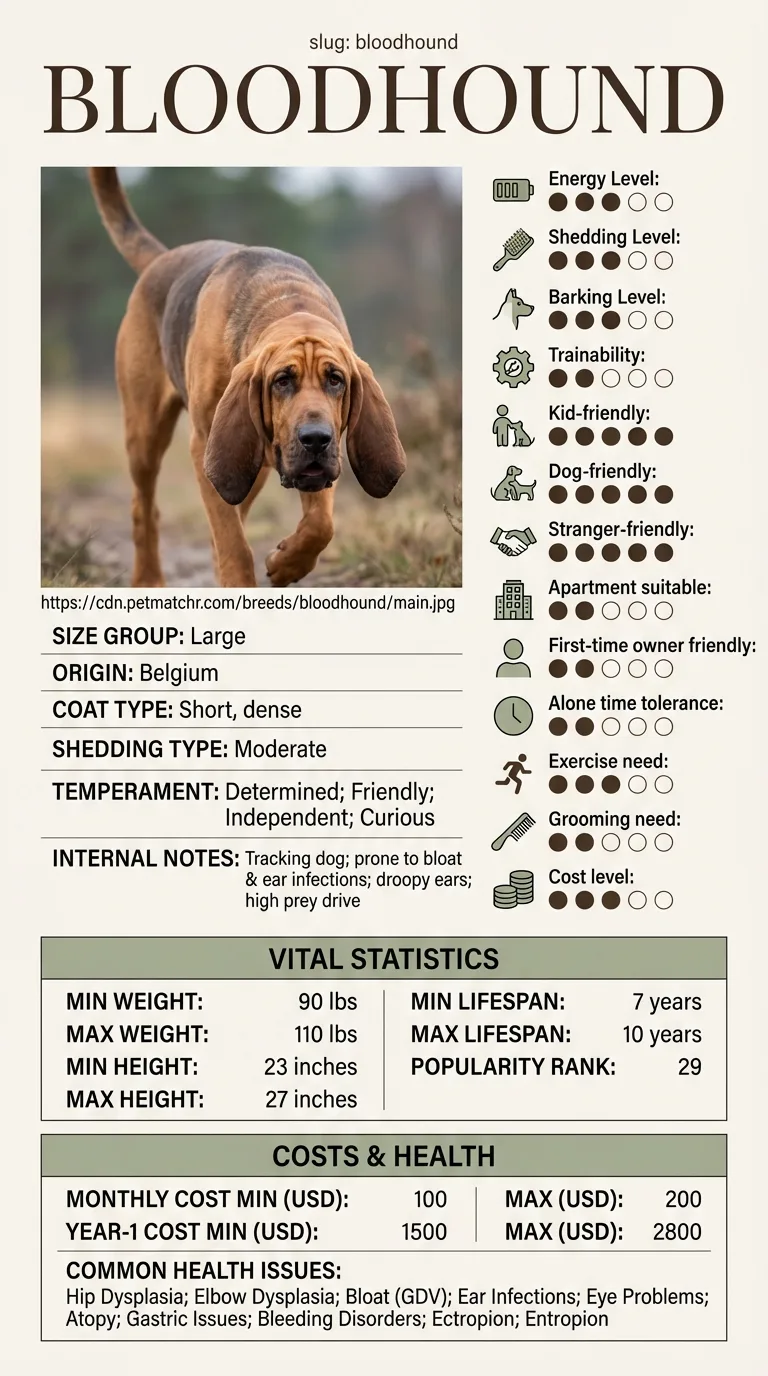
Yes, managing DCM can incur costs for regular vet visits, medications, and special diets. Monthly costs can range from $100 to $200. Planning for these expenses is important for responsible ownership.

Related DogBreedCompass guides

Related guides