Behavior
What are some quick tips for Bloodhound chondrodystrophy (cddy)?
Maintain a healthy diet and regular vet check-ups to monitor your Bloodhound's condition. Gentle exercise can help keep their joints flexible.

Quick answer
What are some quick tips for Bloodhound chondrodystrophy (cddy)?
Maintain a healthy diet and regular vet check-ups to monitor your Bloodhound's condition. Gentle exercise can help keep their joints flexible.
Bloodhound chondrodystrophy (CDDY) is a developmental disorder that affects bone growth. It can lead to serious health issues if not managed properly.
Owners of Bloodhounds facing CDDY often include first-time dog owners who may not be prepared for the special care needed. Busy families or individuals may also struggle to provide the necessary attention for training and management.
This guide is not medical advice. If your dog shows pain, sudden behavior change, or worsening symptoms, consult a licensed veterinarian.
Some links may be affiliate links. We may earn a commission at no extra cost to you. We only suggest products we believe are helpful for dog owners.
We research and check what we publish, but we do not warrant that any figure, date, price, or statement is accurate, complete, or current, and we accept no liability for any loss, cost, injury, or other harm arising from the use of this site. Use it as one reference among several. You remain responsible for your own decisions and for your dog's care - confirm anything that matters with a licensed veterinarian or another qualified professional before you act on it. Full disclaimer.
Check this first
If your Bloodhound shows any of these red-flag signs, call your vet right away:
- Severe limping or refusal to walk - Swelling in the joints or bones - Intense pain when touched or moved - Difficulty breathing or rapid breathing - Uncontrolled bleeding or signs of distress
These symptoms indicate something serious that needs professional help. On the other hand, if your dog is simply experiencing mild symptoms of chondrodystrophy, such as slight stiffness or occasional limping, you can monitor their condition at home. You might consider keeping your Bloodhound calm and limiting their activity for a few days.
Additionally, tracking their progress can help you decide if a vet visit is needed. Look for improvements or worsening symptoms. If mild symptoms persist or worsen, don’t hesitate to consult your vet for further advice on managing Bloodhound chondrodystrophy (cddy). This careful monitoring can help you avoid unnecessary stress for both you and your dog.
If any of these apply, call your vet or an emergency clinic now. The rest of this page is for the cases that are not an emergency.
Bloodhound chondrodystrophy (cddy) is a developmental disorder affecting the bones of this breed. Owners may notice physical changes, such as shorter limbs and a curved back, which can impact the dog's mobility and overall comfort. Daily life may involve watching for signs of discomfort, difficulty in activities, or reluctance to engage in play.
Chondrodystrophy is notably common in Bloodhounds, often appearing in early life. While not every Bloodhound will experience this, many may show symptoms as they age, making awareness critical for owners.
Bloodhounds are prone to chondrodystrophy (cddy) due to their genetic makeup. This condition is a developmental disorder that affects bone growth, leading to shorter legs and potential mobility issues. The breed's unique structure can also make them more susceptible to joint problems as they age.
Environmental factors can also contribute to cddy. Poor nutrition during puppyhood, lack of exercise, and obesity can exacerbate the symptoms. Additionally, improper breeding practices may increase the likelihood of inherited conditions, making it crucial to choose reputable breeders.
It's essential to consult a vet if you notice any unusual symptoms, such as limping, difficulty getting up, or changes in appetite. Regular check-ups can help monitor your Bloodhound's joint health and manage cddy effectively.
Avoiding these common mistakes can help your Bloodhound with chondrodystrophy (CDDY) improve more effectively.
Start here: Bloodhound Most Common Genetic Disorders: What to Screen For
See all Bloodhound health problems, which breeds are prone to chondrodystrophy cddy, or the full Bloodhound breed guide for temperament, exercise needs and ownership costs.
With consistent care and follow-up with your vet, you can start seeing improvements in your Bloodhound's behavior related to chondrodystrophy (CDDY) within 6 to 12 months.
Success means your Bloodhound is more comfortable and mobile, showing reduced symptoms and improved overall quality of life.
When Sarah adopted Brutus, a Bloodhound with chondrodystrophy (CDDY), she was overwhelmed. Brutus struggled with mobility and seemed to be in pain. After consulting with a vet, Sarah learned about specific exercises and training techniques tailored for dogs with CDDY. By incorporating gentle stretches and low-impact activities into their daily routine, and using positive reinforcement, Brutus began to respond positively. After several months, he was more active and seemed happier. Sarah also connected with a local dog group focused on health issues, which provided her with support and valuable tips. This journey taught her the importance of patience and understanding in managing Brutus's condition.
Key takeaway: With the right approach and support, managing chondrodystrophy (CDDY) in Bloodhounds can lead to a happier, healthier life for your furry friend.
Bloodhound chondrodystrophy (cddy) is a genetic condition that affects bone development. It can lead to shorter limbs and other skeletal abnormalities. If you suspect your Bloodhound has cddy, consult a veterinarian for a proper diagnosis.
Look for signs such as abnormal limb length, difficulty walking, or joint issues. A vet can perform tests to confirm if your Bloodhound has cddy. Early detection can help manage symptoms effectively.
Treatment often includes pain management, physical therapy, and sometimes surgery. Regular vet visits are crucial to monitor your dog's condition. Adjusting their exercise routine can also help maintain a healthy weight.
Since chondrodystrophy is genetic, it can't be prevented. Responsible breeding practices can reduce the incidence of this condition in future generations. Always choose a reputable breeder who screens for genetic disorders.
While you cannot stop cddy, you can manage it by maintaining a healthy diet and ensuring regular exercise. Keep your Bloodhound at a healthy weight to reduce stress on their joints. Follow your vet's advice for tailored treatment plans.
Focus on a balanced diet, regular vet visits, and gentle exercise. Consider using joint supplements if your vet agrees. Providing a comfortable resting area can also help alleviate discomfort.
For older Bloodhounds with chondrodystrophy (cddy), providing a comfortable resting area and low-impact exercise is essential. Consult your vet for joint supplements or medications that can help manage discomfort.
While there is no cure for Bloodhound chondrodystrophy (cddy), management options include pain relief, physical therapy, and weight management. Regular vet check-ups are crucial for monitoring and adjusting treatment as needed.
If you suspect your Bloodhound has chondrodystrophy (cddy), it's vital to schedule a vet appointment as soon as possible. Early diagnosis can help you implement a management plan to improve your dog's quality of life.
Maintain a healthy diet and regular vet check-ups to monitor your Bloodhound's condition. Gentle exercise can help keep their joints flexible.
Training can improve your Bloodhound's coordination and confidence. Use positive reinforcement techniques to encourage safe movement.
Ensure your home is safe and free from obstacles to prevent falls. Provide a comfortable space for resting that supports their joints.
Low-impact activities like swimming can be beneficial. Always consult your vet before starting any new exercise routine.
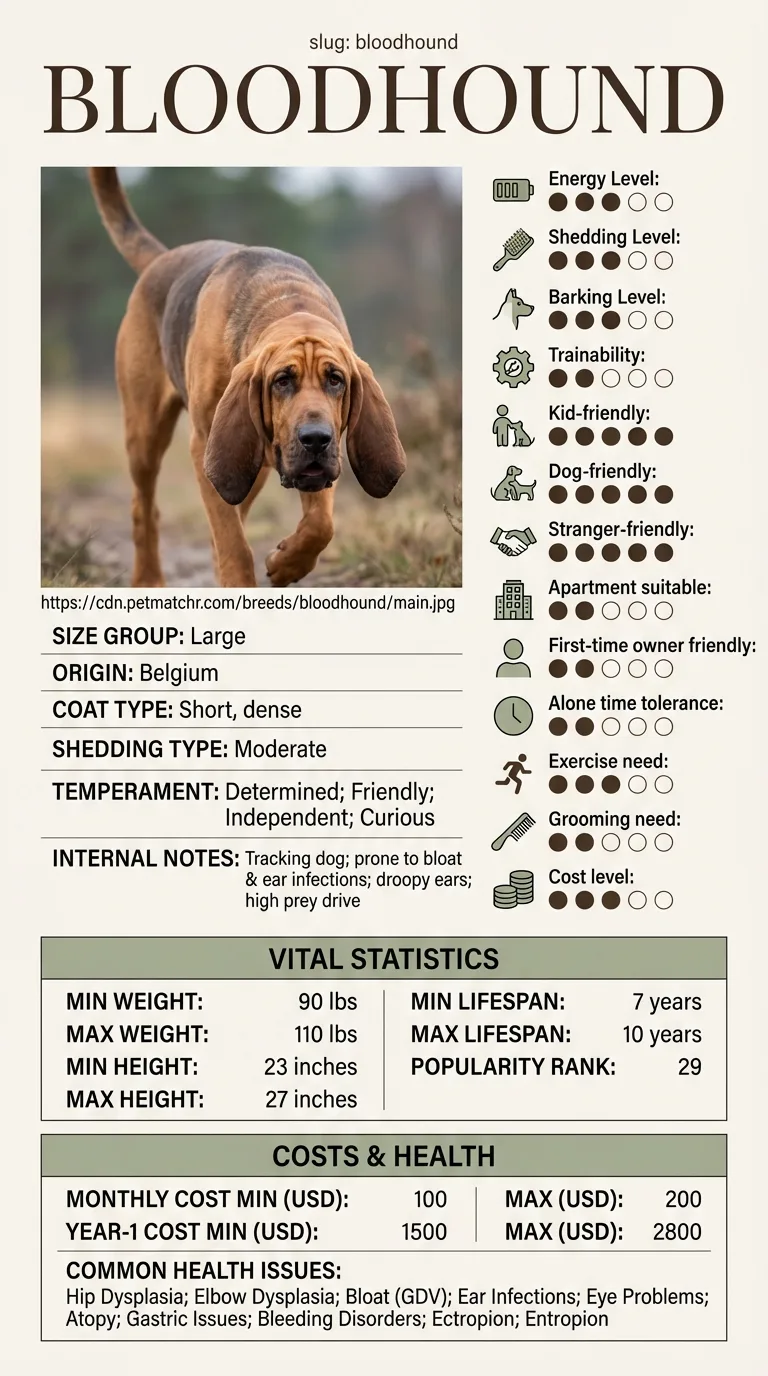
Monthly costs can range from $100 to $200, depending on treatments and vet visits. Be prepared for possible additional expenses for specialized care.
A one-page prep sheet for this condition: the signs, the questions to ask, what to get priced. Unlocks here.
You get: Vet visit prep sheet
No spam. One-click unsubscribe. See our privacy policy.
Preview page 1 before you decide.