DogBreedCompass
← Back to breed profile

Understanding Bernedoodle Myxomatous Mitral Valve Disease (MMVD)

Bernedoodle myxomatous mitral valve disease (MMVD) is a serious heart condition that affects many dogs in this breed. It's crucial to recognize the signs early to manage your dog's health effectively.

Understanding Bernedoodle Myxomatous Mitral Valve Disease (MMVD) infographic

Owners of Bernedoodles, particularly those with older dogs or those showing signs of heart issues, often face challenges with MMVD. Busy families or first-time dog owners may feel overwhelmed when trying to understand and manage their pet's health.

Important reminder

This guide is not medical advice. If your dog shows pain, sudden behavior change, or worsening symptoms, consult a licensed veterinarian.

Some links may be affiliate links. We may earn a commission at no extra cost to you. We only suggest products we believe are helpful for dog owners.

What this problem looks like

Bernedoodle myxomatous mitral valve disease (MMVD) is a common heart condition that affects this breed. Daily, you might notice symptoms like coughing, fatigue, or difficulty breathing. These signs can indicate that the heart isn't functioning properly, making it vital to monitor your dog's health closely.

Common triggers

  • Genetic predisposition
  • Age-related wear and tear on the heart
  • Obesity or poor diet
  • Stressful environments

MMVD is one of the most common health issues seen in Bernedoodles, particularly as they age. Many affected dogs can live happy lives with proper management, but awareness and early detection are crucial.

Why this happens

Breed factors

Bernedoodles are prone to myxomatous mitral valve disease (MMVD) due to their genetic background. This heart condition often results from inherited traits from their parent breeds, the Bernese Mountain Dog and the Poodle. As these breeds age, the risk of developing heart issues increases, especially in medium to larger dogs.

Environment factors

Environmental factors can also play a role in the development of MMVD. Poor diet, lack of exercise, and obesity can exacerbate heart problems. Additionally, high-stress environments may lead to increased anxiety, which can further impact a dog's heart health.

What you can try

At-home strategies

  • Maintain a balanced diet tailored for heart health. You can consult your vet for specific nutritional recommendations.
  • Ensure your Bernedoodle gets regular exercise, but tailor the intensity according to their energy level. Aim for daily walks and playtime to keep them active.
  • Monitor your dog's weight and body condition regularly. Keeping your Bernedoodle at a healthy weight helps reduce the strain on their heart.

When to consider a trainer

If your Bernedoodle shows signs of anxiety or behavioral issues related to MMVD, consider consulting a professional trainer. A trainer can help with techniques to reduce stress, making your dog feel more comfortable and secure.

When to talk to your vet

If you notice any symptoms such as coughing, fatigue, or difficulty breathing, it’s crucial to talk to your vet. They can evaluate your dog's heart health and suggest appropriate tests or treatments to manage MMVD.

Realistic expectations

It typically takes several months to manage Bernedoodle myxomatous mitral valve disease (MMVD) effectively. With proper veterinary care and lifestyle adjustments, owners can see gradual improvement in their dog's health and quality of life.

Success means your Bernedoodle is living comfortably, with improved energy levels and reduced symptoms. Regular vet check-ups and a dedicated health plan will help keep your dog feeling their best.

Mistakes that make this worse – Bernedoodle myxomatous mitral valve disease (mmvd)

Managing your Bernedoodle's myxomatous mitral valve disease (MMVD) can be tricky. Here are some common mistakes that can make the condition worse, along with safer alternatives to help your dog live a healthier life.

  • Ignoring symptoms: Not paying attention to coughing or lethargy can delay treatment. Regular vet check-ups can help catch issues early.
  • Over-exercising: Pushing your Bernedoodle too hard during play or walks can strain their heart. Keep exercise moderate and consult your vet for a tailored plan.
  • Skipping medications: If your vet prescribes medications, sticking to the schedule is crucial. Set reminders or use a pill organizer to avoid missed doses.
  • Feeding unhealthy treats: High-sodium treats can worsen heart conditions. Opt for low-sodium options or fresh fruits and veggies as alternatives.
  • Neglecting weight management: Overweight dogs face increased heart strain. Monitor your dog's diet and exercise to maintain a healthy weight.
  • Failing to create a calm environment: Stress can exacerbate symptoms. Provide a quiet space and soothing activities to help your Bernedoodle relax.
  • Not seeking specialist advice: General vets may not have the expertise for heart conditions. Consulting a veterinary cardiologist can provide more effective treatment options.

When Myxomatous Mitral Valve Disease (MMVD) is an Emergency

It's crucial to know when Bernedoodle myxomatous mitral valve disease (MMVD) needs immediate attention. If you notice any of the following red-flag signs, call your vet right away: sudden difficulty breathing, excessive coughing, fainting, or severe lethargy. These symptoms can indicate a significant worsening of the heart condition that may require urgent care.

On the other hand, if your Bernedoodle shows mild symptoms, such as occasional coughing or slight fatigue during play, you can monitor their condition at home. Keep a close eye on their energy levels, appetite, and behavior. It’s wise to create a plan to consult your vet, especially if the symptoms persist or worsen over time.

Regular vet check-ups are essential for managing MMVD effectively. Even if symptoms are mild, staying proactive can help catch any exacerbation early. If you're ever in doubt, it's better to err on the side of caution and reach out to your vet to discuss your concerns.

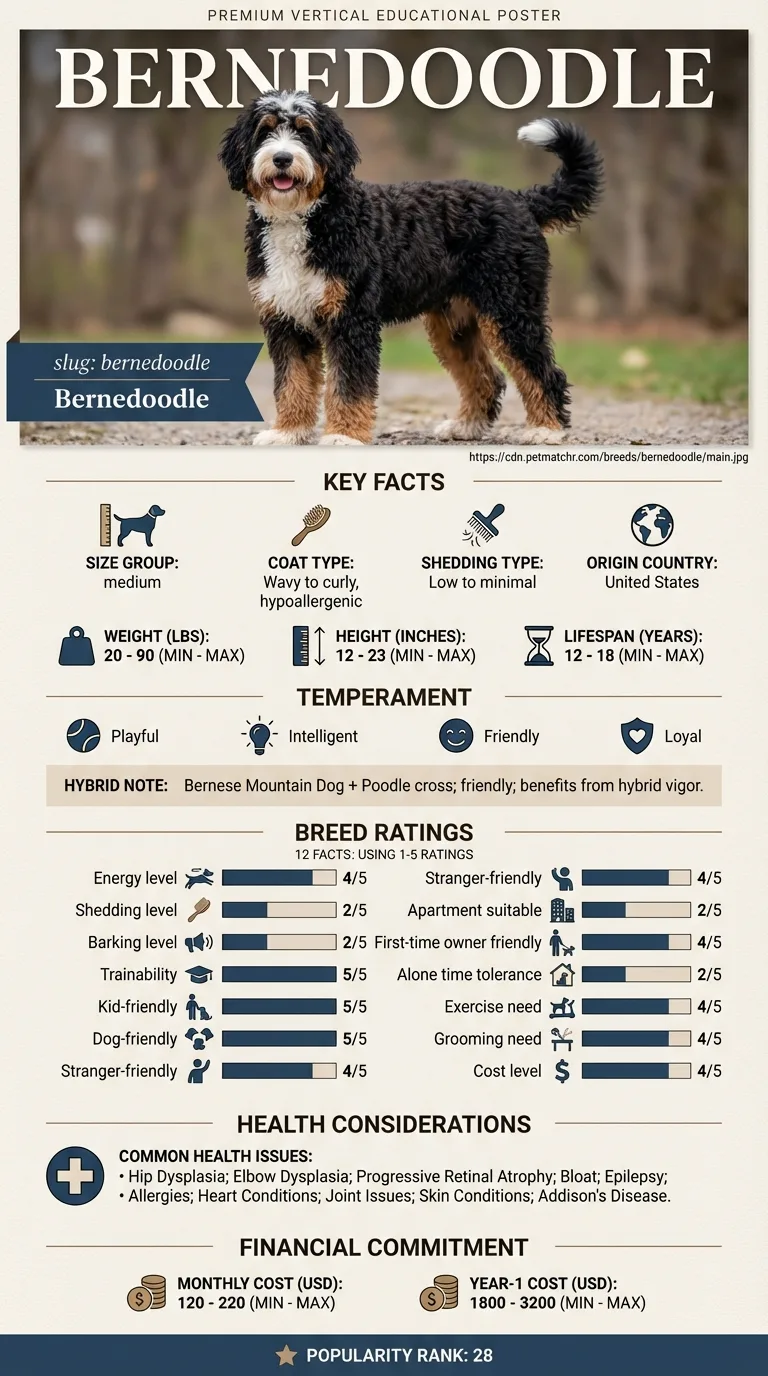
Understanding Bernedoodle Myxomatous Mitral Valve Disease (MMVD) - When Myxomatous Mitral Valve Disease (MMVD) is an Emergency

Maggie's Journey with MMVD

When Sarah adopted Maggie, her Bernedoodle, she was overjoyed. However, a few months later, Maggie was diagnosed with myxomatous mitral valve disease (MMVD). Initially overwhelmed, Sarah quickly learned about the condition and adjusted Maggie's diet, added gentle exercise to her routine, and maintained regular vet visits. Over time, Maggie showed noticeable improvements in her energy and mood, making their bond even stronger.

Key takeaway: Understanding and adapting to your dog's health needs can significantly enhance their quality of life.

Frequently asked questions

Why does my Bernedoodle have myxomatous mitral valve disease (mmvd)?

Myxomatous mitral valve disease (mmvd) is common in Bernedoodles due to their genetic background. This heart condition often develops as they age, particularly in medium to large breeds. Regular veterinary check-ups can help identify early signs. This answer relates to Bernedoodle myxomatous mitral valve disease (mmvd).

How can I recognize symptoms of mmvd in my Bernedoodle?

Symptoms of mmvd in Bernedoodles can include coughing, fatigue, or difficulty breathing. You might also notice a decrease in exercise tolerance or unusual lethargy. If you see these signs, consult your vet for a thorough evaluation.

What can I do to help manage my Bernedoodle's mmvd?

Managing mmvd in your Bernedoodle involves regular veterinary care and medication as prescribed. A heart-healthy diet and appropriate exercise are also important. Keeping your dog calm and avoiding strenuous activities can help reduce strain on the heart.

Are there specific training techniques for Bernedoodles with mmvd?

Training techniques for Bernedoodles with mmvd should focus on gentle, low-impact activities. Avoid high-energy training sessions and instead engage them in mentally stimulating games. Use positive reinforcement to encourage calm behavior.

Can mmvd be prevented in Bernedoodles?

While mmvd cannot be completely prevented, early detection through routine vet visits can help manage the condition. Genetic testing for potential heart issues before breeding can also reduce the likelihood of mmvd in future generations.

What are the early signs of myxomatous mitral valve disease (MMVD) in Bernedoodles?

Early signs of myxomatous mitral valve disease (MMVD) in Bernedoodles may include a persistent cough, difficulty breathing, or reduced exercise tolerance. If you notice any of these symptoms, it's important to consult your veterinarian for a thorough evaluation.

Can my Bernedoodle live a normal life with MMVD?

Yes, many Bernedoodles with myxomatous mitral valve disease (MMVD) can live a relatively normal life with proper management. Regular veterinary check-ups and following your vet's recommendations for diet, exercise, and medication can help maintain your dog's quality of life.

How can I support my older Bernedoodle with MMVD?

Supporting an older Bernedoodle with myxomatous mitral valve disease (MMVD) involves adjusting their lifestyle. Provide a comfortable resting place, monitor their exercise levels, and maintain regular vet visits to ensure their heart health is managed effectively.

What is the long-term prognosis for a Bernedoodle diagnosed with MMVD?

The long-term prognosis for a Bernedoodle with myxomatous mitral valve disease (MMVD) varies based on the severity of the condition and treatment. With proper care, many dogs can live several years after diagnosis, but ongoing veterinary support is crucial for monitoring their health.

Are there any specific dietary recommendations for Bernedoodles with MMVD?

Yes, a diet low in sodium can be beneficial for Bernedoodles with myxomatous mitral valve disease (MMVD). Consult your veterinarian for a tailored diet plan that supports your dog's heart health while ensuring they receive all necessary nutrients.

Quick answers

View more answers
Health

What are quick tips for managing Bernedoodle myxomatous mitral valve disease (mmvd)?

Keep your Bernedoodle on a heart-healthy diet and ensure regular check-ups with your vet. Monitor for symptoms like coughing or lethargy, and adjust exercise levels accordingly.

Health

How often should I take my Bernedoodle to the vet for mmvd monitoring?

Regular vet visits should be at least every six months for Bernedoodles with mmvd. More frequent visits may be necessary if symptoms worsen.

Living

What lifestyle changes can help a Bernedoodle with mmvd?

Limit your Bernedoodle's strenuous activities and provide a calm, stress-free environment. Gentle walks and mental exercises are beneficial.

Health

Is there a specific diet that helps with mmvd in Bernedoodles?

A diet low in sodium and high in omega-3 fatty acids can support heart health. Consult your veterinarian for tailored dietary recommendations.

Related DogBreedCompass guides

  • Understanding Bernedoodle myxomatous mitral valve disease (mmvd)Learn more about how MMVD affects Bernedoodles and what you can do to manage it.
  • Bernedoodle behavior problemsIf you're worried about your Bernedoodle's behavior due to health issues, this guide can help.
  • Bernedoodle training tipsExplore tips on training your Bernedoodle to prevent anxiety related to health issues.
  • Bernedoodle cost breakdownFind out about the costs associated with owning a Bernedoodle, especially if dealing with health concerns.
  • Bernedoodle separation anxiety guideThis guide will help you understand how to manage isolation anxiety in Bernedoodles.

Related guides