Health
What should I feed my Belgian Malinois with x-scid?
Provide a high-quality, balanced diet rich in nutrients to support their immune system. Consult your vet for specific dietary recommendations.

Quick answer
What should I feed my Belgian Malinois with x-scid?
Provide a high-quality, balanced diet rich in nutrients to support their immune system. Consult your vet for specific dietary recommendations.
Belgian Malinois x-scid, or X-SCID, is a rare but serious health condition that affects your dog's immune system. This can lead to extreme vulnerability to infections.
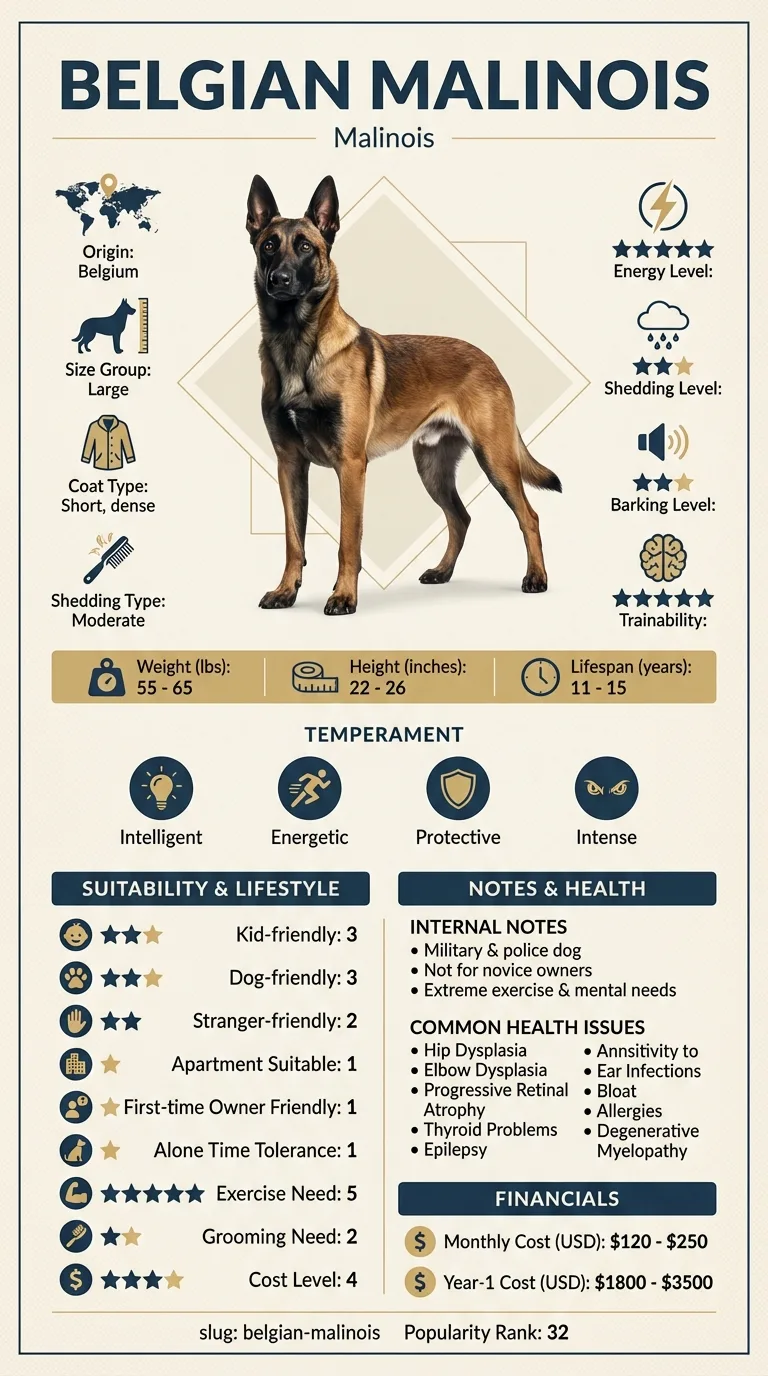
Typically, owners of Belgian Malinois face the challenges of this condition, especially those who may not be aware of the breed's specific health risks. First-time owners or those unfamiliar with genetic disorders may find it particularly overwhelming.
This guide is not medical advice. If your dog shows pain, sudden behavior change, or worsening symptoms, consult a licensed veterinarian.
Some links may be affiliate links. We may earn a commission at no extra cost to you. We only suggest products we believe are helpful for dog owners.
We research and check what we publish, but we do not warrant that any figure, date, price, or statement is accurate, complete, or current, and we accept no liability for any loss, cost, injury, or other harm arising from the use of this site. Use it as one reference among several. You remain responsible for your own decisions and for your dog's care - confirm anything that matters with a licensed veterinarian or another qualified professional before you act on it. Full disclaimer.
Check this first
Call your vet immediately if you notice any of the following red flags: - Persistent fever or signs of severe illness. - Unexplained weight loss or failure to thrive. - Frequent infections that don’t respond to treatment. - Severe lethargy or lack of appetite.
These symptoms indicate that your dog may be in a critical condition requiring urgent care. On the other hand, if your Belgian Malinois shows mild symptoms, such as occasional sneezing, a minor cough, or slight lethargy, it may be best to monitor them for a few days. Ensure they are hydrated and maintaining a balanced diet.
Keep a close eye on your dog and if symptoms worsen or new ones appear, don’t hesitate to consult your vet. Having a plan for regular check-ups and watching for changes can help manage milder cases effectively. Always prioritize your dog's health and well-being when in doubt.
If any of these apply, call your vet or an emergency clinic now. The rest of this page is for the cases that are not an emergency.
Belgian Malinois x-scid, or X-Severe Combined Immunodeficiency, is a rare but serious condition affecting this intelligent and energetic breed. Dogs with x-scid have a compromised immune system, making them vulnerable to infections and diseases. Daily life for these dogs can involve frequent vet visits and strict care routines to manage their health.
X-scid is quite rare in Belgian Malinois, but it's essential for owners to be aware of the signs and symptoms. Regular check-ups and understanding the dog's health can help catch this condition early.
Belgian Malinois are known for their high energy and intelligence. These traits can sometimes lead to behavioral issues like anxiety or frustration if not properly channeled. The breed's protective nature can also make them sensitive to changes in their environment, contributing to stress.
Environmental factors like lack of socialization, insufficient exercise, or changes in routine can trigger anxiety in a Belgian Malinois. If they feel insecure or bored, they may exhibit signs of X-SCID, such as excessive barking or destructive behavior.
If you notice any sudden changes in behavior or health, such as lethargy or loss of appetite, it's wise to consult a vet. They can rule out any underlying health issues related to X-SCID or other conditions.
Avoiding these common mistakes can help improve your Belgian Malinois x-scid situation.
Start here: Belgian Malinois Most Common Genetic Disorders: Screening
See all Belgian Malinois health problems, which breeds are prone to x scid, or the full Belgian Malinois breed guide for temperament, exercise needs and ownership costs.
With consistent, proper care, you should see improvements in your Belgian Malinois x-scid's behavior within 3 to 6 months.
Success means your dog shows reduced anxiety, is more comfortable in various environments, and responds well to basic commands.
Sarah, a first-time dog owner, adopted Max, a Belgian Malinois with x-scid. At first, Max was extremely anxious, barking excessively and struggling to adapt to new experiences. Sarah felt overwhelmed and worried she had made a mistake. After researching and connecting with a trainer who specialized in anxious dogs, she learned to implement structured routines and positive reinforcement. Slowly, Max began to respond to commands and showed less anxiety around strangers. Sarah realized that patience and consistent training were key to Max's improvement.
Key takeaway: With the right training approach and a supportive environment, you can significantly improve your Belgian Malinois x-scid's behavior.
Belgian Malinois x-scid refers to a rare genetic condition called X-SCID, or Severe Combined Immunodeficiency. This condition affects the dog's immune system, making them highly susceptible to infections and diseases.
While you can't cure x-scid, you can manage its symptoms by maintaining a clean environment and minimizing exposure to infections. Regular vet visits are essential to monitor your dog's health and provide necessary treatments.
Treatment for Belgian Malinois x-scid often includes supportive care, such as antibiotics for infections. In some cases, a bone marrow transplant may be recommended, but this is a complex procedure and should be discussed with a specialist.
Yes, you can train a Belgian Malinois with x-scid, but it's crucial to adjust training sessions to their energy levels and health status. Focus on positive reinforcement and short, engaging sessions to keep them motivated.
Yes, X-SCID is a genetic condition that can be inherited. If you’re considering breeding, it's essential to have health screenings to avoid passing on this disease.
Supporting a Malinois with X-SCID involves regular vet check-ups and a strong focus on hygiene. Keeping their environment clean and minimizing exposure to infections is vital.
X-SCID typically manifests in young dogs, but older Malinois can have underlying health issues that may resemble X-SCID symptoms. If your older dog shows unusual signs, a vet visit is necessary.
If you suspect your Malinois has X-SCID, contact your veterinarian immediately. Early diagnosis and management can help improve their quality of life and provide necessary treatments.
Provide a high-quality, balanced diet rich in nutrients to support their immune system. Consult your vet for specific dietary recommendations.
Regular vet check-ups every 6 months are recommended for Belgian Malinois with x-scid to monitor their health and catch any issues early.
Keep your dog's living area clean, limit contact with other animals, and ensure vaccinations are up to date to help manage x-scid symptoms.
Preventing x-scid is challenging since it's genetic. Responsible breeding practices can reduce the risk of passing on this condition.
A one-page prep sheet for this condition: the signs, the questions to ask, what to get priced. Unlocks here.
You get: Vet visit prep sheet
No spam. One-click unsubscribe. See our privacy policy.
Preview page 1 before you decide.