DogBreedCompass
← Back to breed profile

Belgian Malinois Separation Anxiety: What You Need to Know

Belgian Malinois separation anxiety can be a tough challenge for owners. This condition causes distress when your dog is left alone, leading to behaviors like barking, chewing, or even accidents indoors.

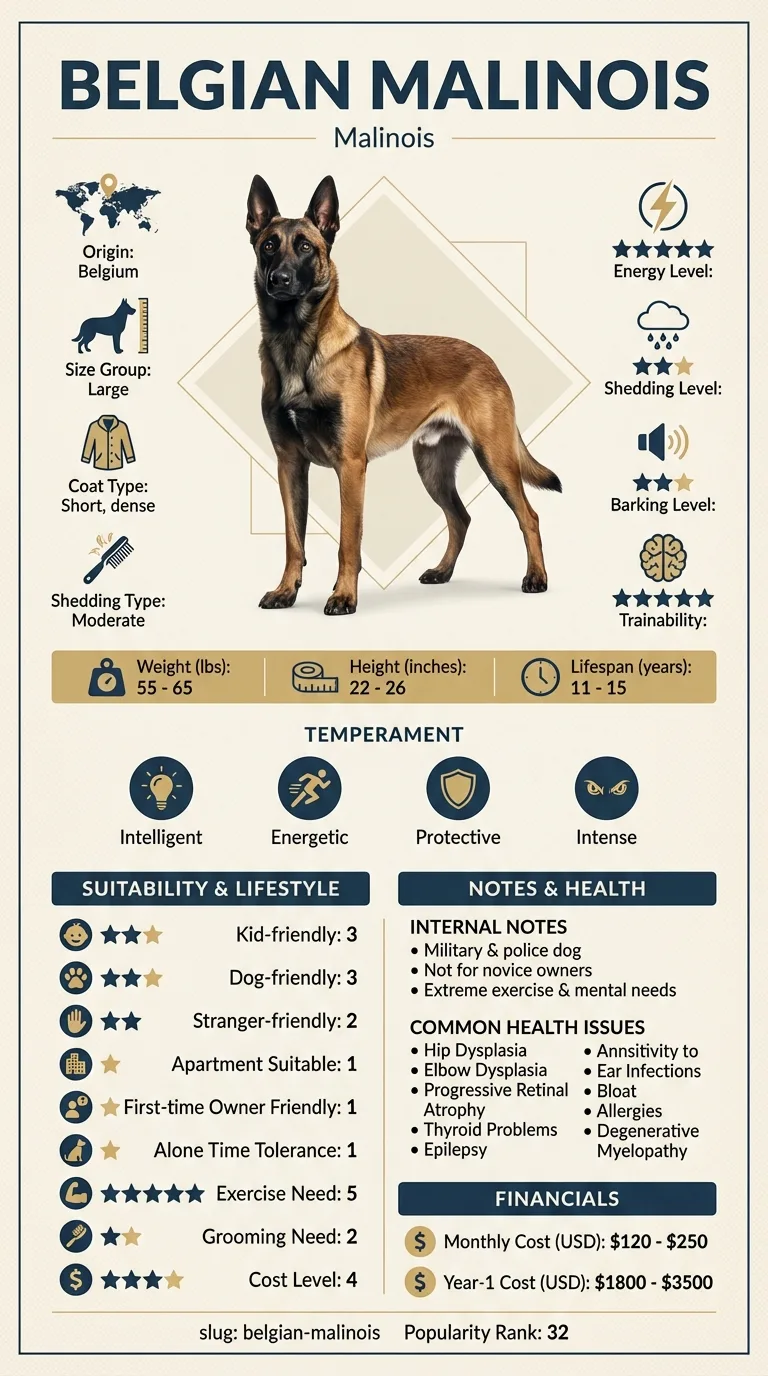
Belgian Malinois Separation Anxiety: What You Need to Know infographic

Owners who work long hours, travel frequently, or live in busy households may find their Malinois struggles with separation anxiety. This can lead to frustration and concern, as you want your furry friend to feel safe and secure.

Important reminder

This guide is not medical advice. If your dog shows pain, sudden behavior change, or worsening symptoms, consult a licensed veterinarian.

Some links may be affiliate links. We may earn a commission at no extra cost to you. We only suggest products we believe are helpful for dog owners.

What this problem looks like

Belgian Malinois separation anxiety can manifest in various distressing behaviors when left alone. Owners may notice their Malinois barking excessively, chewing furniture, or even trying to escape the home. This breed is known for its strong attachment to its owners, which makes them prone to anxiety when separated.

Common triggers

  • Long periods of alone time due to work or travel
  • Changes in the household, like new family members or moving
  • Lack of physical and mental stimulation before separation

Separation anxiety is quite common among Belgian Malinois, especially in those that are not adequately trained or socialized. Many owners report struggles with this issue, making it essential to address it early with appropriate training.

Why this happens

Breed factors

Belgian Malinois are highly intelligent and energetic dogs. Their need for mental and physical stimulation is significant. When they don’t get enough exercise, they may develop separation anxiety due to boredom or frustration.

Environment factors

Your dog's environment can play a big role in their anxiety. If they are not used to being alone or if there are sudden changes, like moving to a new home, it can heighten their distress. A noisy or chaotic household can also contribute to their feelings of insecurity.

What you can try

At-home strategies

  • Create a safe space for your Malinois with their favorite toys and a comfy bed. This can help them feel secure when you're not home.
  • Gradually increase the time they spend alone. Start with short periods and slowly extend them, allowing your dog to adjust.
  • Use interactive toys or puzzles that keep them engaged while you're away. This can help distract them and reduce anxiety.

When to consider a trainer

If your dog's separation anxiety doesn’t improve with at-home strategies, consider hiring a professional trainer. Look for someone experienced with Belgian Malinois and anxiety issues. Training can provide tailored techniques to help your dog feel more at ease.

When to talk to your vet

If your Belgian Malinois's anxiety leads to destructive behaviors or extreme distress, consult your vet. They can rule out health issues or suggest medications that may help. It’s essential to address severe anxiety to ensure your dog's well-being.

Realistic expectations

With consistent training and patience, you can see improvement in your Belgian Malinois' separation anxiety within 4 to 8 weeks.

Success means your dog is more comfortable being alone, showing less distress, and can stay calm for longer periods without excessive barking or destructive behaviors.

Mistakes that make this worse

Here are common mistakes that can worsen Belgian Malinois separation anxiety and how to avoid them.

  • Leaving for long periods without preparation - Simply walking out the door without any routine can increase anxiety. Instead, practice short departures and gradually extend the time apart.
  • Overindulging during reunions - Showering your dog with attention immediately upon returning can reinforce anxious behaviors. Instead, keep greetings calm and low-key to avoid heightening their excitement.
  • Ignoring signs of distress - Dismissing your dog's anxiety signals can lead to worsening behaviors. Pay attention to their cues and address the anxiety with appropriate training methods.
  • Using punishment for unwanted behaviors - Scolding or punishing your dog for barking or whining can increase anxiety. Focus on positive reinforcement and redirect their energy into constructive activities.
  • Not providing enough mental and physical stimulation - A bored dog is more likely to develop anxiety issues. Make sure to engage your Belgian Malinois with regular exercise and mental challenges each day.
  • Failing to create a safe space - Leaving your dog without a comfortable, secure place can escalate anxiety. Create a cozy area with their favorite items to help them feel safe when you're gone.

When Belgian Malinois Separation Anxiety Becomes an Emergency

Recognizing when your Belgian Malinois is experiencing severe separation anxiety is crucial. If your dog shows signs of distress that escalate to destructive behavior, excessive barking, or self-harm, it’s time to act quickly. These behaviors can indicate a serious emotional crisis, and you should contact your vet immediately for guidance.

Belgian Malinois Separation Anxiety: What You Need to Know - When Belgian Malinois Separation Anxiety Becomes an Emergency

When to Watch and Wait

In less severe cases, you might notice your Belgian Malinois whining or pacing when you leave. These signs can often be managed with gradual desensitization and training. Monitor your dog's behavior closely, and create a plan that includes short departures, positive reinforcement, and perhaps even a comforting item to ease their anxiety.

Belgian Malinois Separation Anxiety: What You Need to Know - When to Watch and Wait

A Journey with Max: Overcoming Separation Anxiety

Jessica, a busy nurse in Chicago, adopted Max, a lively Belgian Malinois. She quickly noticed that whenever she left home, Max would bark excessively and chew on furniture, clearly distressed. After researching, Jessica learned how to stop Belgian Malinois separation anxiety through gradual desensitization and crate training. She started by leaving him alone for just a few minutes and gradually increased the time. With consistent practice and positive reinforcement, Max learned to feel secure alone. Now, he enjoys his time resting while Jessica works long shifts.

Key takeaway: With patience and the right training techniques, it’s possible to help a Belgian Malinois overcome separation anxiety.

Frequently asked questions

Why does my Belgian Malinois have separation anxiety?

Belgian Malinois are highly intelligent and energetic dogs that thrive on companionship. They may develop separation anxiety if they are left alone for long periods or don’t receive enough mental and physical stimulation. This breed is particularly sensitive, so changes in routine or environment can also trigger anxiety.

How can I stop Belgian Malinois separation anxiety?

To help manage Belgian Malinois separation anxiety, gradually train your dog to be comfortable being alone. Start with short departures and slowly increase the time away while rewarding calm behavior. Providing enriching toys and mental exercises can also keep them engaged.

What training methods work for Belgian Malinois separation anxiety?

Positive reinforcement training is effective for Belgian Malinois separation anxiety. Use treats and praise when your dog is calm during your departures and arrivals. Additionally, consider crate training to create a safe space where they feel secure.

Are there any products that can help with separation anxiety in Belgian Malinois?

Yes, products like calming collars, anxiety wraps, and interactive toys can help alleviate separation anxiety. Pheromone diffusers may also create a calming environment. Always introduce new products gradually to avoid overwhelming your dog.

When should I seek professional help for my Belgian Malinois's anxiety?

If your dog’s separation anxiety persists despite your efforts, consider consulting a professional dog trainer or a veterinarian. They can provide tailored advice and may recommend behavioral therapy or medications if necessary.

Can separation anxiety develop in older Belgian Malinois?

Yes, separation anxiety can develop in older Belgian Malinois. Changes in their routine, health issues, or loss of a family member can trigger anxiety. It's important to monitor their behavior and consult a vet if you notice significant changes.

What are the signs of separation anxiety in a Belgian Malinois?

Signs of separation anxiety in a Belgian Malinois include excessive barking, destructive behavior, pacing, and attempts to escape. They may also show signs of distress when you prepare to leave, like following you around or whining. Recognizing these signs early can help you address the issue effectively.

How long does it take to train a Belgian Malinois with separation anxiety?

Training a Belgian Malinois with separation anxiety can take time and patience. It often requires consistent training sessions over several weeks or even months. Early intervention and positive reinforcement techniques are key to helping your dog feel more secure when left alone.

When should I consider medication for my Belgian Malinois's separation anxiety?

Medication should be considered if your Belgian Malinois's separation anxiety is severe and not improving with training. Consulting with a vet can help determine if medication is necessary, as they can recommend the best approach based on your dog's specific needs.

Can I use crate training for a Belgian Malinois with separation anxiety?

Crate training can be effective for a Belgian Malinois with separation anxiety, but it must be done correctly. The crate should feel like a safe space, not a punishment. Gradually introducing the crate and using it positively can help reduce anxiety when you're not home.

Quick answers

View more answers
Behavior

What are some quick tips for Belgian Malinois separation anxiety?

Start by practicing short absences to build your dog's confidence. Use puzzle toys to keep them busy while you're away. Gradually increase the time you're gone, rewarding calm behavior.

Living

How long can a Belgian Malinois be left alone?

Ideally, a Belgian Malinois should not be left alone for more than 2-4 hours. They require regular exercise and mental stimulation to thrive, so longer separations can lead to anxiety.

Behavior

What are signs of separation anxiety in Belgian Malinois?

Signs include excessive barking, destructive behavior, and attempts to escape when left alone. They may also drool or become overly clingy before you leave.

Related DogBreedCompass guides

Related guides