Behavior
What are quick tips for managing gastrointestinal disorders in Belgian Malinois?
Monitor their diet carefully and avoid sudden food changes. Regular vet visits can help catch issues early, and providing a calm environment is crucial.

Quick answer
What are quick tips for managing gastrointestinal disorders in Belgian Malinois?
Monitor their diet carefully and avoid sudden food changes. Regular vet visits can help catch issues early, and providing a calm environment is crucial.
Belgian Malinois gastrointestinal disorders can be challenging for owners. These issues include conditions like inflammatory bowel disease and acid reflux, which can affect your dog's health and happiness.
Typically, owners of Belgian Malinois who are first-time pet parents or those not familiar with the breed's specific health needs struggle with these gastrointestinal issues. Busy families or individuals with active lifestyles might find it particularly difficult to manage their dog's dietary and health needs.
This guide is not medical advice. If your dog shows pain, sudden behavior change, or worsening symptoms, consult a licensed veterinarian.
Some links may be affiliate links. We may earn a commission at no extra cost to you. We only suggest products we believe are helpful for dog owners.
We research and check what we publish, but we do not warrant that any figure, date, price, or statement is accurate, complete, or current, and we accept no liability for any loss, cost, injury, or other harm arising from the use of this site. Use it as one reference among several. You remain responsible for your own decisions and for your dog's care - confirm anything that matters with a licensed veterinarian or another qualified professional before you act on it. Full disclaimer.
Check this first
If your Belgian Malinois is experiencing gastrointestinal disorders, it's crucial to know when to act quickly. Emergency signs include severe vomiting, especially if it's accompanied by blood, or persistent diarrhea that leads to dehydration. If your dog appears lethargic, has a bloated stomach, or is in significant pain, you should call your vet immediately.
Monitoring your dog's behavior is essential. If they refuse to eat or drink for more than 24 hours, or if they have sudden weight loss, these are also red flags. In cases where your dog shows mild symptoms like occasional vomiting or slight diarrhea but is still active and drinking water, you may be able to manage it at home with a careful watch.
In such situations, keep a close eye on their food intake and behavior. If symptoms persist for more than a day or worsen, it’s time to consult your vet. Being proactive can make a difference in your dog's health.
If any of these apply, call your vet or an emergency clinic now. The rest of this page is for the cases that are not an emergency.
Belgian Malinois gastrointestinal disorders can be a significant challenge for owners. Symptoms may include vomiting, diarrhea, and loss of appetite. These issues often stem from dietary sensitivities, stress, or underlying health problems.
Gastrointestinal disorders are fairly common in Belgian Malinois, especially given their sensitive stomachs. Many owners report experiencing these issues at some point, making awareness and proactive management essential.
Belgian Malinois are known for their high energy and intense nature. This can lead to stress-related gastrointestinal disorders, especially if they are not given enough physical or mental stimulation. Their sensitive digestive systems may also react poorly to sudden diet changes or low-quality food.
Environmental factors play a big role in gastrointestinal health. Stressful situations, such as frequent changes in routine or a chaotic home environment, can trigger digestive issues. Additionally, exposure to harmful substances or spoiled food can cause gastrointestinal upset.
If your Malinois experiences frequent vomiting, diarrhea, or shows signs of pain, contact your vet immediately. Ongoing gastrointestinal disorders can lead to serious health concerns and may require medical intervention.
Avoiding common pitfalls can help manage your Belgian Malinois's gastrointestinal disorders. Here are some mistakes to be aware of.
Start here: Belgian Malinois Most Common Genetic Disorders: Screening
See all Belgian Malinois health problems, which breeds are prone to gastrointestinal disorders, or the full Belgian Malinois breed guide for temperament, exercise needs and ownership costs.
You can expect to see improvements in your Belgian Malinois's gastrointestinal health within 4 to 6 weeks of implementing dietary changes and a consistent care routine.
Success means your dog has regular, healthy bowel movements, shows increased energy, and is no longer experiencing discomfort after meals.
Jenna, a busy vet tech in San Diego, adopted Max, a spirited Belgian Malinois. She quickly noticed he was frequently having upset stomachs and irregular bowel movements. After several vet visits, they diagnosed him with gastrointestinal disorders. Determined to help Max, Jenna revamped his diet to include high-quality, easily digestible food. She also started to monitor his eating habits and ensured he had a consistent feeding schedule. Within a month, Max showed significant improvement—his energy levels spiked, and he was more playful than ever. Jenna's routine adjustments transformed not just Max's health but also their bond.
Key takeaway: With patience and the right dietary changes, you can effectively manage gastrointestinal disorders in your Belgian Malinois.
Belgian Malinois can experience gastrointestinal disorders due to various factors. Common causes include dietary sensitivities, stress, or underlying health issues. It's essential to monitor their diet and consult a vet for persistent symptoms.
To manage gastrointestinal disorders in your Belgian Malinois, start with a balanced diet tailored for their needs. Gradually introduce new foods and avoid sudden changes. Regular vet check-ups are crucial for identifying and treating any underlying conditions.
Training techniques that promote calmness and reduce stress can help. Incorporate structured routines, positive reinforcement, and mental stimulation activities to keep your Malinois relaxed. This can alleviate anxiety-related gastrointestinal issues.
Yes, stress can significantly contribute to gastrointestinal disorders in Belgian Malinois. Changes in their environment, lack of exercise, or insufficient mental stimulation can lead to anxiety, which may manifest as digestive issues.
To improve your Belgian Malinois's diet, choose high-quality, digestible foods rich in nutrients. Avoid fillers and allergens, and consider feeding smaller, more frequent meals to ease digestion and reduce the risk of gastrointestinal disorders.
Common signs include vomiting, diarrhea, loss of appetite, and lethargy. If your Malinois is exhibiting any of these symptoms consistently, it’s a good idea to consult your vet.
Yes, stress can significantly impact your dog's digestive health. High-energy breeds like the Belgian Malinois may experience gastrointestinal issues due to anxiety or stress, so managing their environment is key.
Older dogs can be more susceptible to gastrointestinal disorders due to age-related changes in their digestive systems. Regular vet check-ups can help catch any issues early.
Switching to a high-quality, easily digestible dog food can often help. You might also consider smaller, more frequent meals to ease their digestion, but always consult your vet before making significant dietary changes.
Training your Belgian Malinois to follow commands like 'leave it' can prevent them from consuming harmful substances. Consistent reinforcement and positive training techniques are essential for success.
Monitor their diet carefully and avoid sudden food changes. Regular vet visits can help catch issues early, and providing a calm environment is crucial.
Yes, avoid foods with artificial additives, fillers, and common allergens like wheat or soy. Stick to high-quality, hypoallergenic diets.
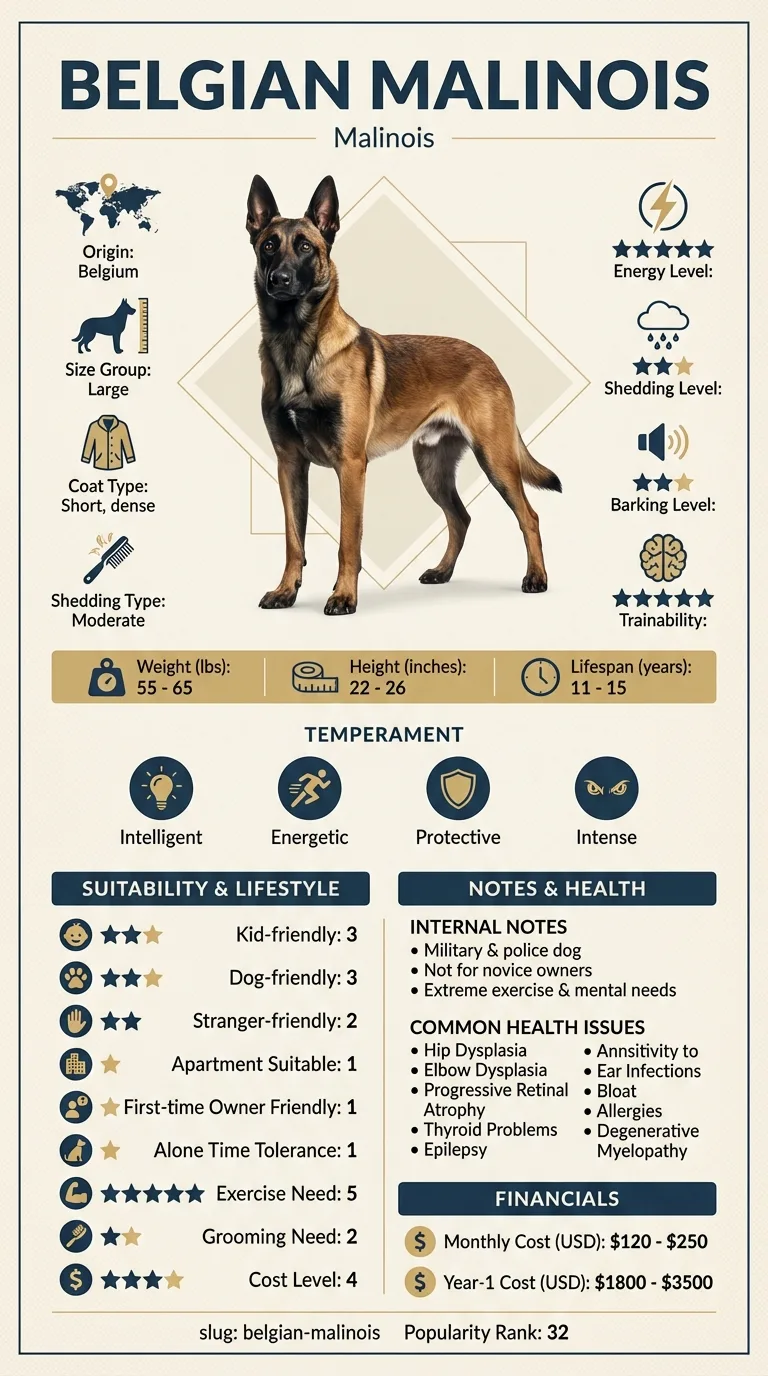
Managing gastrointestinal disorders can range from $120 to $250 monthly, depending on food quality and vet visits.
Training can help by reducing stress and anxiety. Incorporate routines and positive reinforcement to create a calming environment.
Consult a veterinarian for a thorough examination and tailored recommendations. They can help identify any underlying health issues.
A one-page prep sheet for this condition: the signs, the questions to ask, what to get priced. Unlocks here.
You get: Vet visit prep sheet
No spam. One-click unsubscribe. See our privacy policy.
Preview page 1 before you decide.