Health
How can I manage my Belgian Malinois's arthritis symptoms?
Regular vet check-ups, a balanced diet, and weight management are key to managing arthritis symptoms effectively.

Quick answer
How can I manage my Belgian Malinois's arthritis symptoms?
Regular vet check-ups, a balanced diet, and weight management are key to managing arthritis symptoms effectively.
Belgian Malinois arthritis is a common condition that can affect your dog's mobility and quality of life. Understanding this issue is crucial for their well-being.
Owners of Belgian Malinois, especially those with older dogs or those who have led an active lifestyle, may notice their pet struggling with mobility. Busy families or first-time dog owners might find it hard to identify the symptoms, leading to delayed care.
This guide is not medical advice. If your dog shows pain, sudden behavior change, or worsening symptoms, consult a licensed veterinarian.
Some links may be affiliate links. We may earn a commission at no extra cost to you. We only suggest products we believe are helpful for dog owners.
We research and check what we publish, but we do not warrant that any figure, date, price, or statement is accurate, complete, or current, and we accept no liability for any loss, cost, injury, or other harm arising from the use of this site. Use it as one reference among several. You remain responsible for your own decisions and for your dog's care - confirm anything that matters with a licensed veterinarian or another qualified professional before you act on it. Full disclaimer.
Check this first
Understanding when Belgian Malinois arthritis becomes an emergency is crucial for your dog's health. Certain signs indicate immediate veterinary attention is necessary. Look out for severe limping, inability to stand or walk, or noticeable swelling around the joints. If your dog seems to be in extreme pain, vocalizes more than usual, or experiences sudden behavioral changes, these are red flags that require urgent care.
On the other hand, not every sign of arthritis indicates a crisis. Mild stiffness after long periods of rest, occasional limping, or slight reluctance to jump can often be monitored at home. If your dog shows these milder symptoms but is still able to engage in regular activities and doesn’t appear to be in acute distress, you can create a plan to manage their condition. Regular check-ins with your vet for pain management strategies and exercise modifications can help keep your dog comfortable and active.
It's always best to err on the side of caution. Keeping a close eye on your Belgian Malinois can help you catch any worsening symptoms early. If you're ever unsure, don’t hesitate to contact your vet for advice.
If any of these apply, call your vet or an emergency clinic now. The rest of this page is for the cases that are not an emergency.
Belgian Malinois arthritis is a painful condition that affects their joints, making movement difficult and uncomfortable. This breed is known for its high energy and activity levels, but arthritis can slow them down significantly. Owners may notice their Malinois limping, having trouble getting up, or being less willing to play.
Arthritis is a common issue in Belgian Malinois, especially as they age. Many dogs develop some form of arthritis by the age of 7 or 8. Keeping an eye on their weight and exercise can help manage this issue.
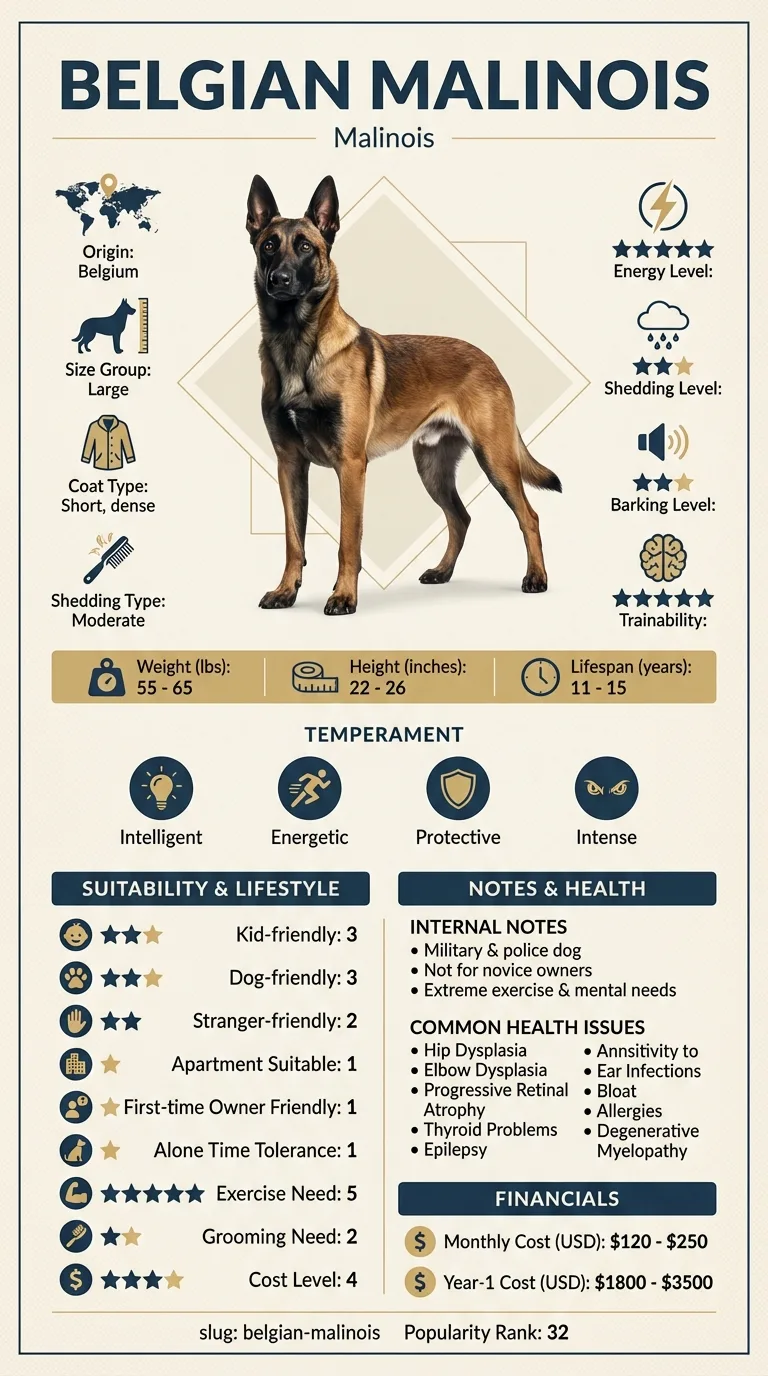
Belgian Malinois are large, active dogs that can be prone to joint issues like arthritis due to their intense exercise needs and physical demands. Their genetic predisposition may include conditions like hip or elbow dysplasia, which can lead to early-onset arthritis.
Environmental factors such as injury, obesity, or inadequate exercise can also contribute to arthritis in Belgian Malinois. If they don't receive the right amount of physical activity or if they live in a space where they can't move freely, their joints may suffer.
If you notice persistent limping, swelling, or difficulty in getting up, it’s essential to consult your vet. They can assess the severity of the arthritis and recommend appropriate treatments, including medication or therapy.
Certain behaviors can unintentionally worsen your Belgian Malinois's arthritis. Here are some common mistakes to avoid and safer alternatives.
Start here: Belgian Malinois Most Common Genetic Disorders: Screening
See all Belgian Malinois health problems, which breeds are prone to arthritis, or the full Belgian Malinois breed guide for temperament, exercise needs and ownership costs.
Managing Belgian Malinois arthritis typically takes 2 to 6 months of consistent care and adjustments to see noticeable improvements.
Success means your dog will experience less pain, improved mobility, and a happier, more active lifestyle. Regular vet check-ups and a tailored exercise routine will help monitor progress.
When Sarah adopted Max, her Belgian Malinois, he was energetic and playful. But as he aged, Max developed arthritis, making it difficult for him to walk and play. Sarah consulted her vet, who recommended a mix of medication, physical therapy, and gentle exercises. She learned to adjust Max's activity levels and created a routine that included short walks and low-impact activities. Over time, Max regained some mobility and seemed much happier. Sarah felt relieved to see her dog enjoying life again.
Key takeaway: With proper care and a tailored approach, it is possible to manage Belgian Malinois arthritis and help your dog live a more comfortable life.
Belgian Malinois can develop arthritis due to age, genetics, or previous injuries. This condition is common in large breeds, especially as they get older. Regular veterinary check-ups can help catch issues early.
Look for signs like limping, difficulty rising, or being less active. If your dog seems reluctant to play or shows discomfort when moving, it might be time for a vet visit. Observing their behavior can provide crucial clues.
Treatments may include weight management, anti-inflammatory medications, and joint supplements. Physical therapy can also help improve mobility. Always consult your vet to tailor a plan for your dog's needs.
Yes, gentle training exercises can maintain flexibility and strength without straining the joints. Focus on low-impact activities like swimming or controlled leash walks. Avoid high-impact sports that could worsen the condition.
Providing a comfortable bed and avoiding slippery floors can help. Maintain a consistent routine with moderate exercise to keep joints moving. Consider weight management as extra pounds can put additional strain on their joints.
Early signs of arthritis in a Belgian Malinois can include stiffness after rest, difficulty in climbing stairs, or reluctance to play. You may also notice them favoring one leg or being less active than usual. Observing these changes early can help in managing their condition effectively.
Yes, a Belgian Malinois with arthritis can still exercise, but it should be moderated. Low-impact activities like gentle walks or swimming can be beneficial. Always consult your vet to create a tailored exercise plan that keeps your dog healthy without overdoing it.
Signs that your older Belgian Malinois may be in pain from arthritis include whining, difficulty getting up, and changes in their eating habits. They may also avoid jumping or playing as much as they used to. If you notice these behaviors, it's important to consult your vet.
Certain diets can help manage arthritis in Belgian Malinois. Look for foods rich in omega-3 fatty acids, which can reduce inflammation. Always consult your vet for personalized dietary recommendations that suit your dog's specific health needs.
Consider pain medication for your Belgian Malinois with arthritis if they show signs of persistent pain or discomfort, such as limping or reluctance to move. Consulting your vet is essential to determine the best treatment plan that includes both medication and alternative therapies.
Regular vet check-ups, a balanced diet, and weight management are key to managing arthritis symptoms effectively.
Incorporate joint supplements and low-impact exercises to help. Keep their environment comfortable and safe to prevent injuries.
In severe cases, surgery may be recommended, but it’s essential to discuss all options with your vet first.
Swimming, short walks, and gentle stretching can help maintain mobility without causing stress on the joints.
You may see increased costs due to vet visits, medications, and special diet needs. Budgeting for these expenses is important.
A one-page prep sheet for this condition: the signs, the questions to ask, what to get priced. Unlocks here.
You get: Vet visit prep sheet
No spam. One-click unsubscribe. See our privacy policy.
See a sample page before you decide.
Early access list
The free prep sheet covers the same-day warning signs, a symptom log and the questions to ask. We are considering a fuller kit that adds a cost worksheet for the usual tests and treatments (US price ranges with their sources) and a plain-English guide to ways of covering the bill. It is not built yet; this list tells us whether it is worth building.
One email, no spam, unsubscribe anytime. Information only, not veterinary advice.