Start with short absences and gradually increase the time you're away. Use interactive toys to keep them occupied and reward calm behavior with treats. Consider a safe space like a crate for comfort.
Beagle separation anxiety can make leaving your dog a real challenge. This behavior can lead to distress and destructive habits when left alone.
This is especially difficult for first-time dog owners, busy professionals, or families who need to be away from home for extended periods. They often find themselves dealing with barking, chewing, or even potty accidents caused by their Beagle’s anxiety.
Important reminder
This guide is not medical advice. If your dog shows pain, sudden behavior change, or worsening symptoms, consult a licensed veterinarian.
Some links may be affiliate links. We may earn a commission at no extra cost to you. We only suggest products we believe are helpful for dog owners.
We research and check what we publish, but we do not warrant that any figure, date, price, or statement is accurate, complete, or current, and we accept no liability for any loss, cost, injury, or other harm arising from the use of this site. Use it as one reference among several. You remain responsible for your own decisions and for your dog's care - confirm anything that matters with a licensed veterinarian or another qualified professional before you act on it. Full disclaimer.
What this problem looks like
Beagle separation anxiety is a common issue that manifests when Beagles become distressed when left alone. Daily signs might include barking, howling, chewing furniture, or even having accidents in the house. Beagles are social dogs that thrive on companionship, so being alone for extended periods can trigger their anxiety.
Common triggers
Long work hours of the owner
Moving to a new home
Changes in the owner's routine
Lack of socialization or companionship
Separation anxiety is quite common in Beagles, particularly because they are known for their strong attachment to their families. Many Beagle owners report struggling with this issue, especially during the first few months after adopting their dog.
Why this happens
Breed factors
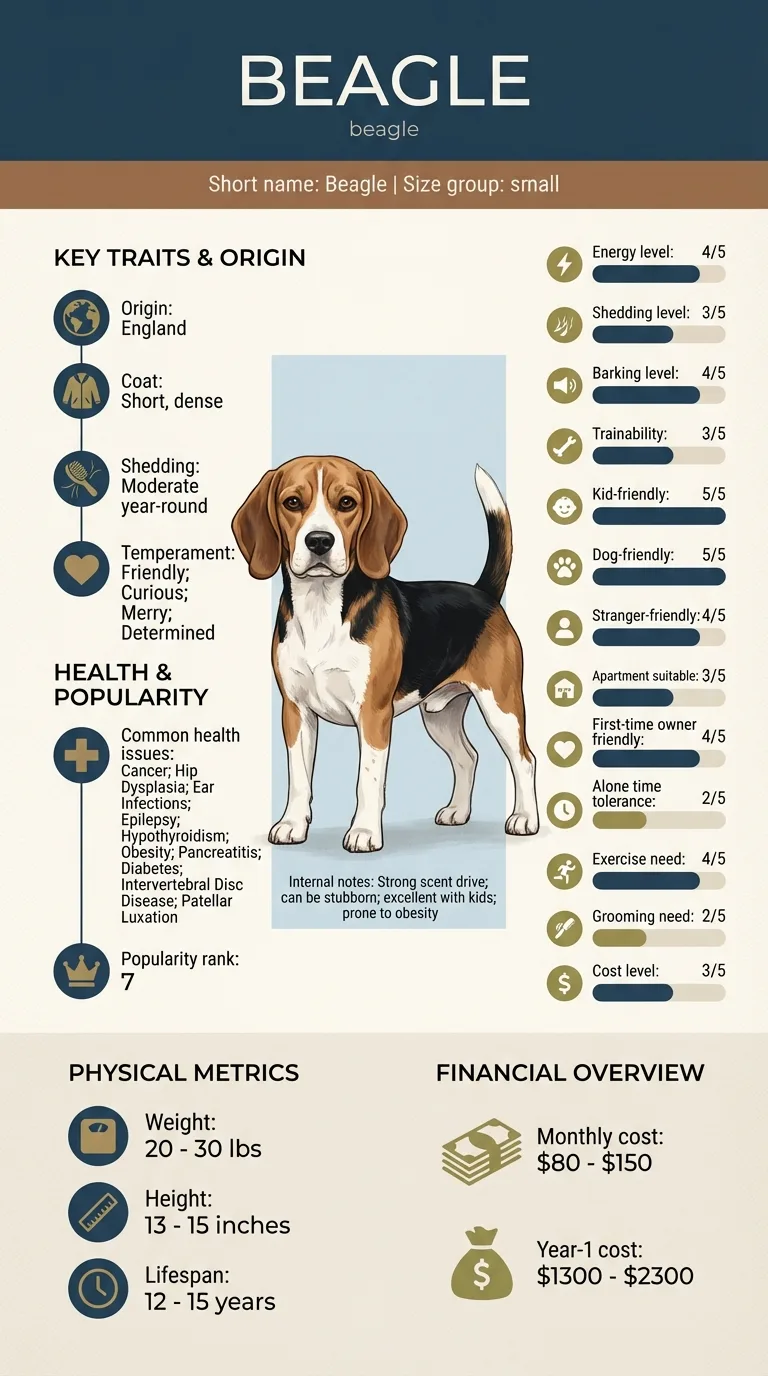
Beagles are social dogs that thrive on companionship. Their friendly and curious nature makes them particularly sensitive to being left alone. They often develop separation anxiety because they can't handle extended periods without their human family.
Environment factors
Factors like a lack of socialization, inconsistent training, or sudden changes in routine can worsen Beagle separation anxiety. If they are frequently left alone in a small space or have minimal mental stimulation, this can lead to stress and anxiety when their owners leave.
What you can try
At-home strategies
Create a safe space: Set up a comfortable area with toys and blankets where your Beagle can feel secure when you leave.
Practice short departures: Start leaving your Beagle alone for short periods and gradually increase the time as they become more comfortable.
Use puzzle toys: Engage your Beagle's mind with interactive toys that dispense treats to keep them busy while you're away.
Establish a routine: Stick to a consistent schedule for feeding, walks, and playtime to help your Beagle feel more secure.
When to consider a trainer
If your Beagle's separation anxiety persists despite your efforts, consider hiring a professional trainer. A trainer can provide personalized techniques and support to help your dog adjust.
When to talk to your vet
If your Beagle's anxiety leads to destructive behavior or extreme distress, consult your vet. They can evaluate if medical intervention or medication is needed to help manage your dog's anxiety.
With consistent training, you may start to see improvements in your Beagle's separation anxiety within 4 to 8 weeks.
Success means your Beagle can comfortably stay alone for short periods without excessive barking or destructive behavior.
Mistakes that make Separation Anxiety worse
Avoid these common mistakes that can worsen Beagle separation anxiety. Instead, consider safer alternatives to help your furry friend feel more at ease when left alone.
Leaving your Beagle alone for long periods. This can increase anxiety. Instead, gradually increase the time you leave them alone to help them adjust.
Ignoring their signs of distress. If your Beagle is barking or whining, it's essential to acknowledge these behaviors. Try to comfort them before leaving instead of just walking out.
Using punishment for anxious behavior. Punishing a Beagle for destructive actions can make anxiety worse. Focus on positive reinforcement and redirection instead.
Not providing enough exercise before leaving. A tired Beagle is less likely to experience anxiety. Ensure they get sufficient exercise and mental stimulation before you head out.
Failing to establish a routine. Inconsistency can heighten anxiety in dogs. Create a predictable schedule for feeding, walks, and alone time to help them feel secure.
Overly emotional goodbyes. Long, emotional farewells can signal to your Beagle that something is wrong. Keep goodbyes short and upbeat to reduce anxiety.
Neglecting training. Lack of basic obedience training can contribute to anxiety. Invest time in Beagle separation anxiety training to build their confidence.
When Beagle Separation Anxiety is an Emergency
Beagle separation anxiety can vary in severity, and it's crucial to know when to take action. If your Beagle shows extreme distress, such as incessant barking, destructive behavior, or attempts to escape, it may be time to call your vet. These signs can indicate that the anxiety is affecting their health or safety.
On the other hand, if your Beagle displays mild anxiety, like whining when you leave but settles down after a short time, it might be manageable. You can monitor their behavior and implement training techniques. It's important to create a calm environment and gradually help your Beagle get used to being alone.
Look for red flags like loss of appetite, excessive drooling, or self-harm. If your Beagle exhibits these symptoms, contact your vet immediately. They can help assess the situation and recommend appropriate treatments or behavior modification strategies.
Beagle Separation Anxiety: Causes and Solutions - When Beagle Separation Anxiety is an Emergency
Samantha's Journey with Benny
Samantha adopted Benny, a lively Beagle, hoping for a furry companion. However, every time she left for work, Benny would bark loudly and chew on furniture. After researching ways to stop Beagle separation anxiety, Samantha implemented a training routine. She began by leaving him alone for just 10 minutes and gradually increased the time. With patience and positive reinforcement, Benny learned to relax during her absences. After a couple of months, he could stay alone for up to three hours without panicking.
Key takeaway: Consistency and gradual exposure are key to helping your Beagle overcome separation anxiety.
Frequently asked questions
Why does my Beagle have separation anxiety?
Beagles are social dogs that thrive on companionship. When left alone for long periods, they may experience distress due to their strong attachment to their owners. Factors like changes in routine, lack of socialization, or previous abandonment can also contribute to their anxiety.
How can I stop my Beagle's separation anxiety?
To help your Beagle, start with gradual desensitization. Begin by leaving them alone for short periods and gradually increase the duration. Positive reinforcement, like treats or praise when they stay calm, can also be effective in training.
What are some training tips for Beagle separation anxiety?
Consider crate training to create a safe space for your Beagle. Use interactive toys to keep them engaged while you are away. Hiring a trainer who specializes in anxiety issues can also provide tailored strategies.
Are there medications for Beagle separation anxiety?
In some cases, medications can help manage severe separation anxiety in Beagles. Consult your veterinarian to discuss options, as they can recommend appropriate medications and dosages based on your dog's specific needs.
How do I know if my Beagle has separation anxiety?
Signs of separation anxiety in Beagles include excessive barking, chewing, or digging when left alone. You may also notice accidents in the house or destructive behavior. If these behaviors occur consistently, it may indicate anxiety.
Can older Beagles develop separation anxiety?
Yes, older Beagles can develop separation anxiety, especially if there are significant changes in their environment or routine. They may become more attached to their owners as they age. It's important to monitor any new behaviors and consult a vet or trainer if needed.
How can I help my Beagle feel more secure when I leave?
To help your Beagle feel more secure, create a comfortable space for them with their favorite toys and a cozy bed. You can also practice short departures and gradually increase the time you're away. This helps them learn that it's okay to be alone.
When should I consult a vet about my Beagle's anxiety?
If your Beagle's separation anxiety leads to severe destructive behavior or health issues, it's time to consult a vet. They can help rule out any underlying health problems or recommend treatment options like medication or behavior training. Don't wait if your dog's distress seems overwhelming.
What training methods are effective for Beagle separation anxiety?
Effective training methods for Beagle separation anxiety include positive reinforcement and desensitization techniques. Start with short absences and reward your Beagle for calm behavior. Gradually increase the duration while providing treats or toys to help them associate your departures with positive experiences.
Start with short absences and gradually increase the time you're away. Use interactive toys to keep them occupied and reward calm behavior with treats. Consider a safe space like a crate for comfort.
Living
How do I comfort my Beagle during stressful times?
Create a calming environment with familiar scents, like an old shirt, and play soft music. Ensuring they have a safe, cozy spot can also help ease their stress.
Behavior
What products can help with Beagle separation anxiety?
Look for calming chews or anxiety wraps designed for dogs. Interactive toys that dispense treats can keep your Beagle mentally stimulated while you're away.
Training
Can training help with separation anxiety in Beagles?
Yes, training can significantly reduce separation anxiety. Gradual desensitization and positive reinforcement techniques can help your Beagle feel more secure when left alone.
Related DogBreedCompass guides
Beagle separation anxiety guide – Learn effective strategies and techniques for addressing your Beagle's separation anxiety.
Beagle behavior problems – Understand the reasons behind your Beagle's behavior and how to address them.