Behavior
What are quick tips for Beagle progressive retinal atrophy (pra-rcd3)?
Use consistent verbal commands and maintain a clutter-free space to help your Beagle navigate safely. Regular vet check-ups are essential to monitor their condition.
Beagle progressive retinal atrophy (PRA-rcd3) is a serious eye condition that leads to vision loss over time.
Owners of Beagles often face challenges related to their dog's declining vision. This can be particularly tough for families with active lifestyles or those who enjoy outdoor adventures, as their Beagle may become hesitant or fearful in new environments.
This guide is not medical advice. If your dog shows pain, sudden behavior change, or worsening symptoms, consult a licensed veterinarian.
Some links may be affiliate links. We may earn a commission at no extra cost to you. We only suggest products we believe are helpful for dog owners.
Beagle progressive retinal atrophy (pra-rcd3) is a genetic condition that leads to gradual vision loss. This condition can affect daily life, as Beagles may bump into furniture, struggle to navigate in low light, or hesitate when approaching new spaces. It's crucial to recognize the signs early, as they can significantly impact a dog's confidence and overall well-being.
Progressive retinal atrophy (pra-rcd3) is relatively common in Beagles, with studies suggesting that a notable percentage may be affected as they age. Being aware of this condition is vital for Beagle owners to ensure proper care and support.
Beagles are prone to genetic conditions like Progressive Retinal Atrophy (PRA-rcd3), which can lead to vision loss. This hereditary issue is linked to specific genes that affect the retina, impacting their sight as they age. If your Beagle has a family history of eye problems, they might be at a higher risk.
Environmental factors can also contribute to your Beagle's eye health. Poor nutrition, lack of proper veterinary care, and exposure to harmful substances may exacerbate existing conditions. Regular check-ups and a balanced diet can help reduce the impact of these environmental factors.
If your Beagle shows signs of anxiety or confusion due to their vision loss, a professional trainer experienced with special needs dogs can help. They can teach you how to communicate effectively and adjust training methods to suit your Beagle's changing abilities.
Consult your vet if you notice significant changes in your Beagle's behavior or vision. Early intervention is crucial for managing PRA-rcd3. Your vet may recommend specific treatments or therapies to slow the progression of the condition.
You may start seeing changes in your Beagle's vision within the first year of diagnosis. Over time, adjustments in your daily routine and environment can help them adapt. Expect to see improvements in their confidence and comfort level within 3 to 6 months as you implement training and support.
Success means your Beagle learns to navigate their surroundings confidently, using their other senses effectively. They may still experience some vision loss, but with the right adaptations, they can maintain a happy and fulfilling life.
Understanding common mistakes can help you better manage your Beagle's progressive retinal atrophy (PRA-rcd3). Here are some behaviors to avoid and safer alternatives.
If you notice your Beagle showing sudden changes in behavior related to vision, it’s essential to assess the situation carefully. Emergency signs include sudden disorientation, inability to navigate familiar environments, or bumping into objects. If your Beagle is showing these symptoms, call your vet immediately.
On the other hand, mild cases of Beagle progressive retinal atrophy (PRA-RCD3) may show gradual vision changes, like difficulty seeing in low light. In these situations, you can monitor your dog’s behavior over time. Provide them with a safe, familiar environment and avoid introducing new obstacles that could lead to confusion.
Understanding the difference between these scenarios can help you respond appropriately. If your dog seems to be adapting well to reduced vision and isn’t showing distress, it might be manageable with supportive care. However, don’t hesitate to reach out to your vet for guidance if you're unsure about what you’re witnessing.

When Sarah adopted Max, her Beagle, she was excited about their adventures together. However, a few months later, Max started bumping into furniture and seemed disoriented. After a vet confirmed he had progressive retinal atrophy (PRA-rcd3), Sarah felt overwhelmed. She began researching how to stop Beagle progressive retinal atrophy (PRA-rcd3) and found that training and environmental adjustments could help. By rearranging her home and using verbal cues, Sarah helped Max become more confident in navigating his space. Slowly, he adapted and even learned to play fetch using sound.
Key takeaway: With patience and the right strategies, owners can help Beagles with PRA-rcd3 adapt to their changing vision, ensuring they lead happy lives.
Beagle progressive retinal atrophy (pra-rcd3) is a genetic condition that leads to gradual vision loss in Beagles. This disease affects the retina, causing it to deteriorate over time, which can eventually lead to blindness.
You may notice your Beagle having difficulty navigating in low light, bumping into objects, or showing reluctance to go out at night. Other signs include dilated pupils and an apparent lack of response to visual stimuli.
A veterinarian can diagnose pra-rcd3 through a thorough eye examination, which may include tests like electroretinography. Genetic testing is also available to confirm the condition.
Currently, there is no cure for Beagle progressive retinal atrophy (pra-rcd3). Management focuses on ensuring a safe environment for your dog and helping them adjust to vision loss.
To help your Beagle, maintain a consistent environment and use verbal cues to guide them. Training to enhance their other senses can also be beneficial, and consider consulting with a dog trainer experienced in handling vision loss.
Beagle progressive retinal atrophy (pra-rcd3) is typically inherited and results from specific genetic mutations. If your Beagle comes from a line with a history of this condition, they might be at higher risk.
The prognosis varies, but many Beagles can adapt well to vision loss. With support, they can continue to lead happy, fulfilling lives despite their condition.
Early signs of Beagle progressive retinal atrophy (pra-rcd3) include difficulty seeing in low light, bumping into furniture, or hesitance to navigate stairs. If you notice your Beagle behaving this way, it's essential to consult your vet for a proper diagnosis.
Yes, older Beagles may experience a more rapid progression of progressive retinal atrophy (pra-rcd3). This can lead to significant vision loss, so regular vet check-ups are crucial to monitor their eye health as they age.
To help your Beagle adjust to vision loss, keep their environment consistent and free of obstacles. You can also use verbal cues and scent markers to guide them around the house.
Currently, there is no cure for Beagle progressive retinal atrophy (pra-rcd3). However, early detection and management strategies like supplements or environmental adaptations can help improve their quality of life.
If you notice any changes in your Beagle's vision, such as difficulty seeing in different lighting or unusual behavior, you should see a vet immediately. Timely intervention can make a significant difference in managing progressive retinal atrophy (pra-rcd3).
Use consistent verbal commands and maintain a clutter-free space to help your Beagle navigate safely. Regular vet check-ups are essential to monitor their condition.
Focus on training that enhances your Beagle's other senses, such as smell and hearing. Consider using scent trails or sound cues to guide them.
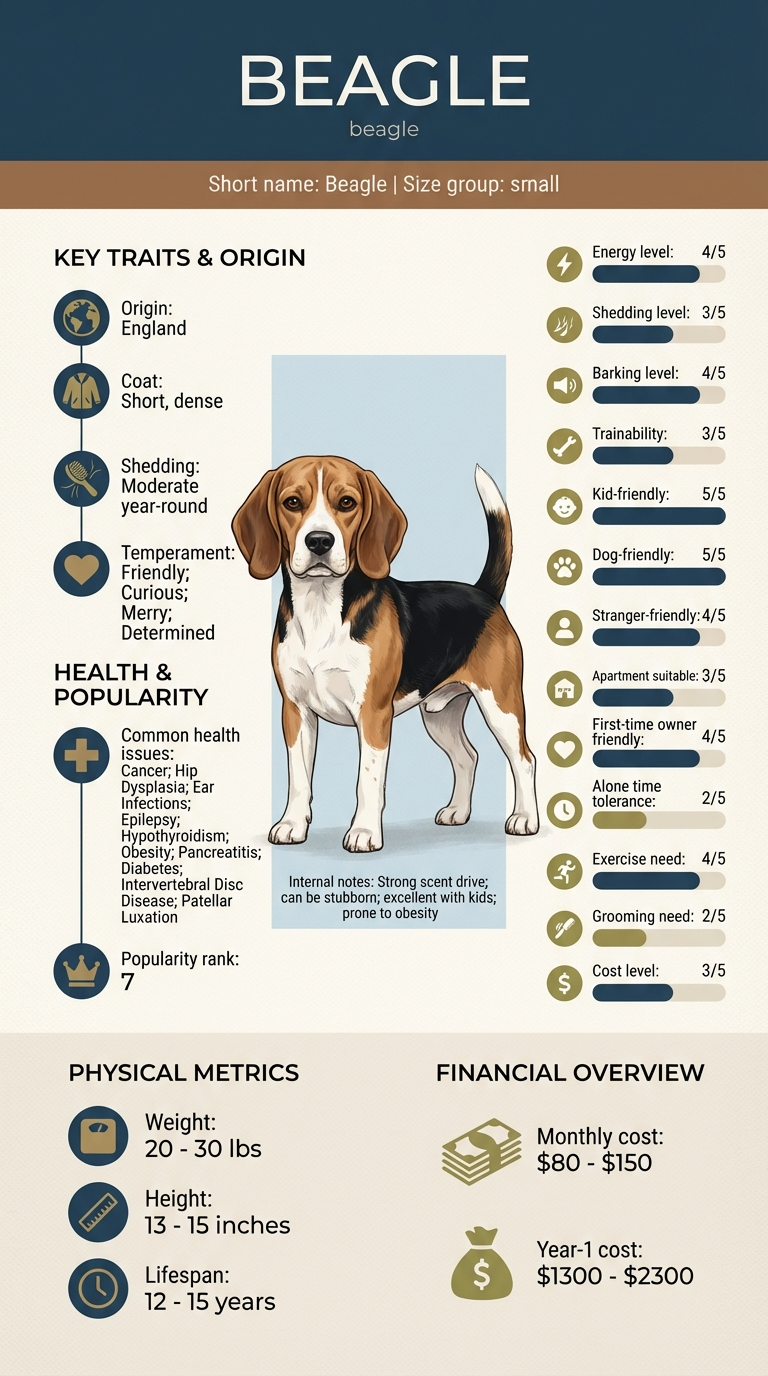
While management costs vary, regular vet visits and specialized training can add to your monthly expenses. Expect to spend between $80 and $150 monthly on basic care.
Create a safe and familiar environment, use consistent pathways, and provide lots of love and support to help your Beagle adjust.