DogBreedCompass
← Back to breed profile

Beagle Patellar Luxation: What You Need to Know

Beagle patellar luxation is a painful knee issue that can affect your dog's mobility and quality of life.

Beagle Patellar Luxation: What You Need to Know infographic

Many Beagle owners, especially first-time dog parents, may struggle with this issue. They often notice their dog limping or hesitating to jump, which can be concerning and frustrating.

Important reminder

This guide is not medical advice. If your dog shows pain, sudden behavior change, or worsening symptoms, consult a licensed veterinarian.

Some links may be affiliate links. We may earn a commission at no extra cost to you. We only suggest products we believe are helpful for dog owners.

What this problem looks like

Beagle patellar luxation is a common knee issue affecting this breed, where the kneecap dislocates from its normal position. This condition can lead to pain and difficulty in movement, making everyday activities a challenge for your Beagle. Owners may notice their dog limping, skipping, or holding up a leg, especially after exercise or play.

Common triggers

  • Rapid changes in direction during play
  • Overexertion during exercise
  • Genetic predisposition due to the Beagle's structure

Patellar luxation is quite common among Beagles, with estimates suggesting it affects around 20% of the breed. This means that if you're a Beagle owner, it’s important to be aware of the signs and seek veterinary advice if you suspect this issue.

Why this happens

Breed factors

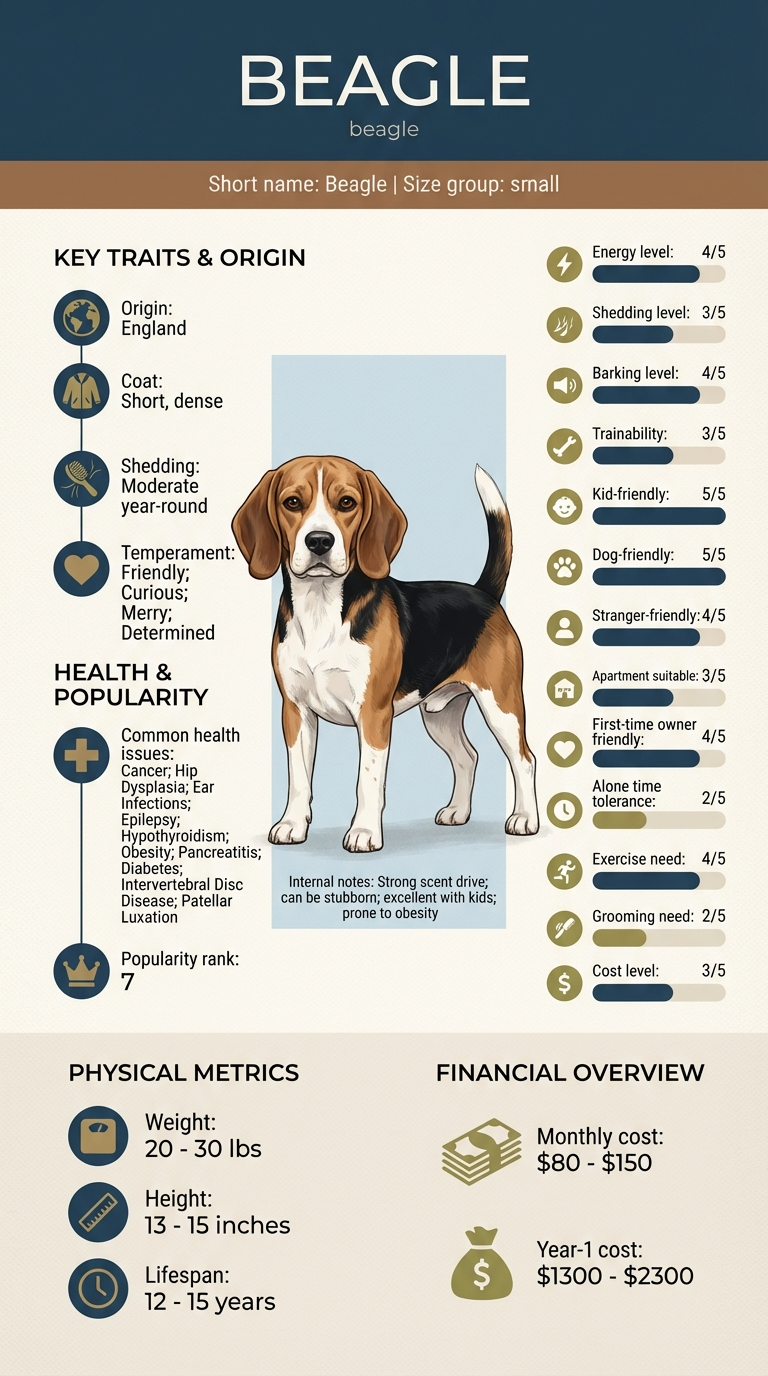
Beagles are small dogs with a tendency toward patellar luxation due to their conformation. Their round, short legs can make them more prone to knee cap dislocations. Additionally, Beagles often have a playful nature that can lead to jumping and running, increasing the risk of this condition.

Environment factors

The environment can also play a significant role in patellar luxation. Factors like slippery floors, rough play surfaces, and insufficient exercise can contribute to joint instability. If a Beagle is overweight, the extra weight can exacerbate the issue, leading to more frequent dislocations.

What you can try

At-home strategies

  • Keep your Beagle at a healthy weight to reduce stress on their knees. Monitor their diet and limit treats.
  • Create a safe play environment by using non-slip mats. This will help prevent accidents that could lead to dislocations.
  • Incorporate gentle exercises like short walks and swimming into their routine. This strengthens the muscles around the knee and improves stability.

When to consider a trainer

If your Beagle continues to show signs of discomfort or if their behavior changes, it might be time to consult a professional trainer. A trainer can develop a tailored exercise plan that focuses on strengthening their legs.

When to talk to your vet

Talk to your vet if your Beagle frequently experiences patellar luxation or shows signs of pain, like limping or reluctance to play. A vet can assess the severity and recommend treatments, including physical therapy or surgery if necessary.

Realistic expectations

With consistent training and care, you can expect to see improvements in your Beagle's patellar luxation within 4 to 6 weeks. For severe cases, surgical options may require several months of recovery.

Success looks like reduced limping, increased mobility, and your Beagle being able to play and walk comfortably without signs of pain.

Mistakes that make this worse

Avoiding common pitfalls can help manage Beagle patellar luxation effectively. Here are key mistakes to steer clear of.

  • Ignoring Signs of Pain: Many owners overlook limping or reluctance to play. Always pay attention to your Beagle's behavior and consult a vet if you notice these signs.
  • Over-Exercising: While Beagles need regular exercise, too much can strain their knees. Opt for shorter, more frequent walks instead of long runs.
  • Skipping Vet Visits: Some owners delay seeking help from a veterinarian. Regular check-ups can catch issues early, preventing worsening of patellar luxation.
  • Using Inappropriate Training Techniques: Harsh training methods can increase anxiety and worsen behavior problems. Use positive reinforcement instead to encourage good behavior.
  • Neglecting Weight Management: Beagles are prone to obesity, which puts extra stress on their joints. Keep their diet balanced and monitor their weight closely.
  • Choosing the Wrong Activities: Activities like jumping or rough play can aggravate knee issues. Focus on low-impact games that are easier on their joints.
  • Not Providing Enough Support: Some owners don’t take preventive measures like joint supplements. Consider these options to provide extra support for your Beagle's joints.

When Beagle Patellar Luxation is an Emergency

Understanding when Beagle patellar luxation becomes an emergency can help you act quickly. If your Beagle is limping, shows pain when moving, or is unable to put weight on their leg, these can be red flags. Other signs include swelling around the knee, a noticeable change in behavior, or if they seem unusually lethargic. In these cases, you should contact your vet immediately.

On the other hand, if your Beagle is occasionally limping but still shows interest in playing and eating, this may be more manageable. You can monitor this condition by keeping a close eye on their activity levels and adjusting their playtime as needed. Establishing a routine of gentle exercise and rest can help maintain their mobility without causing pain. However, if you notice any worsening symptoms, it’s best to seek veterinary advice sooner rather than later.

Beagle Patellar Luxation: What You Need to Know - When Beagle Patellar Luxation is an Emergency

Emily's Journey with Max's Patellar Luxation

Emily, a busy nurse in Chicago, noticed her Beagle, Max, limping after playtime. After a vet visit, she learned he had patellar luxation. Initially overwhelmed, she researched training methods and modified Max's exercise routine. Emily also worked on strength-building exercises with Max, which helped stabilize his knee. Within weeks, she saw him running around the park again, tail wagging. This experience taught her to be patient and proactive in his training and care.

Key takeaway: With dedication and the right approach, even challenging health issues like patellar luxation can improve significantly.

Frequently asked questions

What is Beagle patellar luxation?

Beagle patellar luxation occurs when the kneecap dislocates from its normal position. This can cause pain and difficulty in walking. It's a common issue in small breeds like Beagles.

Why does my Beagle have patellar luxation?

Patellar luxation in Beagles can happen due to genetic factors or developmental issues. Weak ligaments or improper alignment of the knee joint can also contribute to the problem. Regular vet check-ups can help catch these issues early.

How can I treat Beagle patellar luxation?

Treatment options for Beagle patellar luxation include weight management, physical therapy, and in some cases, surgery. Regular exercise and low-impact activities can also strengthen the muscles around the knee. Consult your vet for the best approach based on your dog's condition.

Can Beagle patellar luxation be prevented?

While not all cases are preventable, maintaining a healthy weight and ensuring proper exercise can help. Avoiding rough play that puts stress on their knees is important. Regular vet visits can also help detect issues before they become serious.

Is Beagle patellar luxation serious?

Patellar luxation can vary in severity. Mild cases may not require surgery, but severe cases can lead to ongoing pain and mobility issues. Early intervention is key to managing this problem effectively.

What causes patellar luxation in Beagles?

Beagle patellar luxation is often caused by genetic factors or structural abnormalities in the knee joint. Activities that put stress on the knees, like jumping or rough play, can also contribute to this condition.

How can I tell if my Beagle has patellar luxation?

Signs of Beagle patellar luxation include limping, difficulty walking, or the knee cap appearing to slip out of place. If you notice these symptoms, it's crucial to consult a vet for a proper diagnosis.

Is surgery necessary for patellar luxation in Beagles?

Surgery for Beagle patellar luxation may be recommended if the condition is severe or causes significant pain. Your vet will assess the situation and suggest the best course of action based on your dog's specific needs.

Can training help with Beagle patellar luxation?

Beagle patellar luxation training focuses on strengthening the muscles around the knee to provide better support. While training can help, it's essential to consult with a vet for a comprehensive treatment plan.

What are the long-term effects of patellar luxation in Beagles?

Long-term effects of Beagle patellar luxation can include chronic pain and arthritis if not managed properly. Regular vet check-ups and a tailored exercise plan can help maintain your dog's mobility and quality of life.

Quick answers

View more answers
Behavior

What are quick tips for Beagle patellar luxation?

To manage Beagle patellar luxation, ensure your dog maintains a healthy weight and gets regular, low-impact exercise. Avoid activities that put stress on their knees, like jumping or running on hard surfaces.

Health

How can I tell if my Beagle is in pain from patellar luxation?

Signs of pain in a Beagle with patellar luxation may include limping, reluctance to walk, or whining when moving. If you notice these behaviors, consult your vet for an evaluation.

Costs

What is the cost of treating Beagle patellar luxation?

The treatment cost for Beagle patellar luxation can range from $200 for conservative management to over $1,500 for surgery. Regular vet check-ups will help keep costs manageable.

Training

How can training help with Beagle patellar luxation?

Training your Beagle to follow commands can help manage their activity levels and prevent injury. Teaching them to avoid jumping and to walk on a leash can reduce strain on their knees.

Related DogBreedCompass guides

  • why does my Beagle have patellar luxationUnderstanding the causes and treatments can help you manage your Beagle's health better.
  • how to stop Beagle patellar luxationLearn effective training methods to prevent and manage patellar luxation in Beagles.
  • Beagle behavior problemsExplore common behavior problems in Beagles and how to address them.
  • Beagle cost breakdownIf you're considering getting a Beagle, check out the potential costs involved.
  • Beagle separation anxiety guideFind solutions for separation anxiety, a common issue for Beagles.

Related guides